Kirjojen hintavertailu. Mukana 12 083 983 kirjaa ja 12 kauppaa.

Kirjahaku

Etsi kirjoja tekijän nimen, kirjan nimen tai ISBN:n perusteella.

1000 tulosta hakusanalla Kevin Messerschmidt

The Internet and the Law

The Internet and the Law

Kevin Rogers

Red Globe Press
2011
nidottu
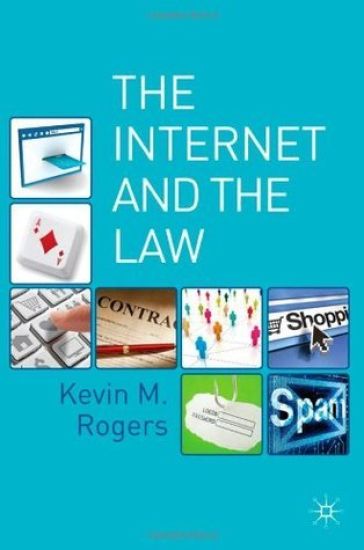
This sector-leading text covers Internet Law in its broadest terms, providing a concise yet comprehensive introduction to what is an exciting, fast-moving and complex area of law. Analysis focuses on each of the important elements within the subject, from the implications of online contracting, distance selling and online payment, to issues arising from the emergence of Web 2.0 and the growth of social networking sites. The author also considers data protection issues, freedom of expression and defamation, and the treatment of Internet-related crimes. The text is underpinned throughout by wide-ranging references which will prove invaluable to students at both undergraduate and postgraduate level, whilst the clarity and immediate nature of the coverage will provide illumination for all readers who have an interest in the subject.The text is supported by end-of-chapter summaries, suggested further reading and questions for consideration. A useful companion website featuring regular updates on the latest developments in the subject, and containing all weblinks listed in the text, can be found at: www.palgrave.com/law/rogers
Perspectives in Entrepreneurship

Perspectives in Entrepreneurship

Kevin Mole; Monder Ram

Red Globe Press
2011
nidottu
This core textbook presents different ways of thinking about entrepreneurship: instead of topics such as finance or opportunities, the book focuses on perspectives or ways of seeing. Written by leading experts, the text examines the emergence and development of entrepreneurship as an academic discipline and takes a critical look at the varying positions in the field as well as their overall contribution to entrepreneurship as a whole. Through twelve chapters, written from such wide ranging perspectives as feminism, psychology, institutionalism, critical realism and evolution, the book provides a clear and accessible framework that encourages students’ critical engagement with the subject.This is an essential textbook for upper level undergraduate and postgraduate students of entrepreneurship.
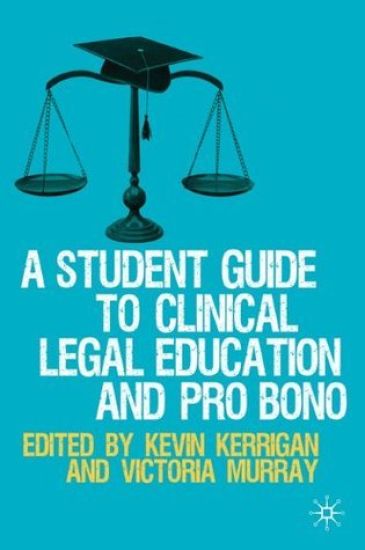
A Student Guide to Clinical Legal Education and Pro Bono

A Student Guide to Clinical Legal Education and Pro Bono

Kevin Kerrigan; Victoria Murray

Red Globe Press
2011
nidottu
Clinical legal education – the participation by law students in the giving of legal advice and representation to actual clients – is playing an increasingly important role within UK law schools. Pro bono - the provision of free legal advice or representation for those who may otherwise have no access to justice - is a vital part of the legal profession's commitment to the rule of law.This book is written by members of staff at Northumbria University's ground-breaking legal clinic, the Student Law Office. The authors, all of whom are qualified solicitors, have applied their long experience of clinical legal education into providing an authoritative and practical guide to all aspects of the subject, from valuable advice on establishing a law clinic and the professional and ethical issues involved, to practical skills such as interviewing, drafting and advocacy.The text includes detailed lists of further reading and a series of practical activities at the end of each chapter. A companion website featuring useful supplementary material can be found at www.palgrave.com/law/lawclinic
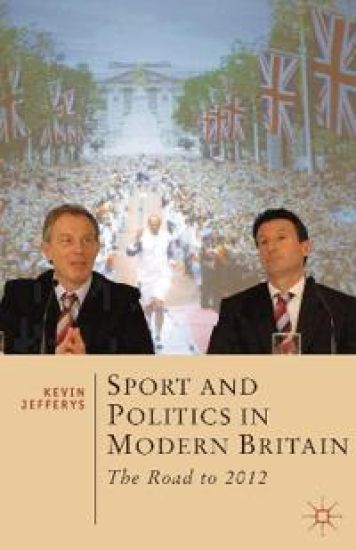
Sport and Politics in Modern Britain

Sport and Politics in Modern Britain

Kevin Jefferys

Red Globe Press
2012
nidottu
Sport has a huge social and cultural significance in contemporary Britain. This insightful study provides the first exploration of the causes and consequences of the increased interaction between sport and the state since 1945.Kevin Jefferys sets policy towards sport within the evolving socio-political context of post-war Britain and balances an appreciation of continuity and change from the 'austerity Games' of 1948 through to the multi-billion pound extravaganza of the London 2012 Olympics. Ideal for students, historians, social scientists and sport enthusiasts alike, Sport and Politics in Modern Britain provides the fullest assessment yet of this important topic, bringing sport sharply into focus as a contested domain in public and political debate.
Schizophrenia

Schizophrenia

Kevin Silber

Red Globe Press
2014
nidottu
This comprehensive introduction to schizophrenia is an ideal starting point for students. It covers the theoretical foundations of different perspectives of schizophrenia, including medical, evolutionary and social, to give readers a solid grounding and then discusses the various forms of treatments and the arguments surrounding each perspective.
The Postmodern Fairytale

The Postmodern Fairytale

Kevin Paul Smith

Palgrave Macmillan
2007
sidottu
Why is Shrek one of the greatest selling DVDs of all time? Why are shampoo advertisements based on Sleeping Beauty? Why is it that the same simple stories keep being told? This study attempts to explain why fairy tales keep popping up in the most unexpected places and why the best storytellers begin their tales with 'once upon a time'.
Interzones

Interzones

Kevin Mumford

Columbia University Press
1997
sidottu
Interzones is an innovative account of how the color line was drawn--and how it was crossed--in twentieth-century American cities. Kevin Mumford chronicles the role of vice districts in New York and Chicago as crucibles for the shaping of racial categories and racial inequalities. Focusing on Chicago's South Side and Levee districts, and Greenwich Village and Harlem in New York at the height of the Progressive era, Mumford traces the connections between the Great Migration, the commercialization of leisure, and the politics of reform and urban renewal. Interzones is the first book to examine in depth the combined effects on American culture of two major transformations: the migration north of southern blacks and the emergence of a new public consumer culture. Mumford writes an important chapter in Progressive-era history from the perspectives of its most marginalized and dispossessed citizens. Recreating the mixed-race underworlds of brothels and dance halls, and charting the history of a black-white sexual subculture, Mumford shows how fluid race relations were in these "interzones." From Jack Johnson and the "white slavery" scare of the 1910's to the growth of a vital gay subculture and the phenomenon of white slumming, he explores in provocative detail the connections between political reforms and public culture, racial prejudice and sexual taboo, the hardening of the color line and the geography of modern inner cities. The complicated links between race and sex, and reform and reaction, are vividly displayed in Mumford's look at a singular moment in the settling of American culture and society.
Interzones

Interzones

Kevin Mumford

Columbia University Press
1997
pokkari
Interzones is an innovative account of how the color line was drawn--and how it was crossed--in twentieth-century American cities. Kevin Mumford chronicles the role of vice districts in New York and Chicago as crucibles for the shaping of racial categories and racial inequalities. Focusing on Chicago's South Side and Levee districts, and Greenwich Village and Harlem in New York at the height of the Progressive era, Mumford traces the connections between the Great Migration, the commercialization of leisure, and the politics of reform and urban renewal. Interzones is the first book to examine in depth the combined effects on American culture of two major transformations: the migration north of southern blacks and the emergence of a new public consumer culture. Mumford writes an important chapter in Progressive-era history from the perspectives of its most marginalized and dispossessed citizens. Recreating the mixed-race underworlds of brothels and dance halls, and charting the history of a black-white sexual subculture, Mumford shows how fluid race relations were in these "interzones." From Jack Johnson and the "white slavery" scare of the 1910's to the growth of a vital gay subculture and the phenomenon of white slumming, he explores in provocative detail the connections between political reforms and public culture, racial prejudice and sexual taboo, the hardening of the color line and the geography of modern inner cities. The complicated links between race and sex, and reform and reaction, are vividly displayed in Mumford's look at a singular moment in the settling of American culture and society.
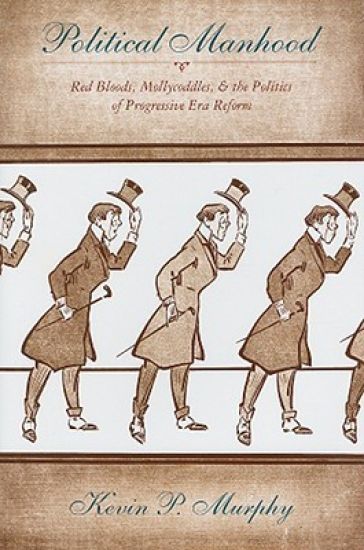
Political Manhood

Political Manhood

Kevin Murphy

Columbia University Press
2008
sidottu
In a 1907 lecture to Harvard undergraduates, Theodore Roosevelt warned against becoming "too fastidious, too sensitive to take part in the rough hurly-burly of the actual work of the world." Roosevelt asserted that colleges should never "turn out mollycoddles instead of vigorous men," and cautioned that "the weakling and the coward are out of place in a strong and free community." A paradigm of ineffectuality and weakness, the mollycoddle was "all inner life," whereas his opposite, the "red blood," was a man of action. Kevin P. Murphy reveals how the popular ideals of American masculinity coalesced around these two distinct categories. Because of its similarity to the emergent "homosexual" type, the mollycoddle became a powerful rhetorical figure, often used to marginalize and stigmatize certain political actors. Issues of masculinity not only penetrated the realm of the elite, however. Murphy's history follows the redefinition of manhood across a variety of classes, especially in the work of late nineteenth-century reformers, who trumpeted the virility of the laboring classes. By highlighting this cross-class appropriation, Murphy challenges the oppositional model commonly used to characterize the relationship between political "machines" and social and municipal reformers at the turn of the twentieth century. He also revolutionizes our understanding of the gendered and sexual meanings attached to political and ideological positions of the Progressive Era.
Political Manhood

Political Manhood

Kevin P. Murphy

Columbia University Press
2010
pokkari
In a 1907 lecture to Harvard undergraduates, Theodore Roosevelt warned against becoming "too fastidious, too sensitive to take part in the rough hurly-burly of the actual work of the world." Roosevelt asserted that colleges should never "turn out mollycoddles instead of vigorous men," and cautioned that "the weakling and the coward are out of place in a strong and free community." A paradigm of ineffectuality and weakness, the mollycoddle was "all inner life," whereas his opposite, the "red blood," was a man of action. Kevin P. Murphy reveals how the popular ideals of American masculinity coalesced around these two distinct categories. Because of its similarity to the emergent "homosexual" type, the mollycoddle became a powerful rhetorical figure, often used to marginalize and stigmatize certain political actors. Issues of masculinity not only penetrated the realm of the elite, however. Murphy's history follows the redefinition of manhood across a variety of classes, especially in the work of late nineteenth-century reformers, who trumpeted the virility of the laboring classes. By highlighting this cross-class appropriation, Murphy challenges the oppositional model commonly used to characterize the relationship between political "machines" and social and municipal reformers at the turn of the twentieth century. He also revolutionizes our understanding of the gendered and sexual meanings attached to political and ideological positions of the Progressive Era.
The Fate of Wonder

The Fate of Wonder

Kevin Cahill

Columbia University Press
2011
sidottu
Kevin M. Cahill reclaims one of Ludwig Wittgenstein's most passionately pursued endeavors: to reawaken a sense of wonder around human life and language and its mysterious place in the world. Following the philosopher's spiritual and cultural criticism and tying it more tightly to the overall evolution of his thought, Cahill frames an original interpretation of Wittgenstein's engagement with Western metaphysics and modernity, better contextualizing the force of his work. Cahill synthesizes several approaches to Wittgenstein's life and thought. He stresses the nontheoretical aspirations of the philosopher's early and later writings, combining key elements from the so-called resolute readings of the Tractatus with the "therapeutic" readings of Philosophical Investigations. Cahill shows how continuity in Wittgenstein's cultural and spiritual concerns informed if not guided his work between these texts, and in his reading of the Tractatus, Cahill identifies surprising affinities with Martin Heidegger's Being and Time-a text rarely associated with Wittgenstein's early formulations. In his effort to recapture wonder, Wittgenstein both avoided and undermined traditional philosophy's reliance on theory. As Cahill relates the steps of this bold endeavor, he forms his own innovative, analytical methods, joining historicist and contextualist approaches to text-based, immanent readings. The result is an original, sustained examination of Wittgenstein's thought.
Race and Real Estate

Race and Real Estate

Kevin Mcgruder

Columbia University Press
2015
sidottu
Through the lens of real estate transactions from 1890 to 1920, Kevin McGruder offers an innovative perspective on Harlem's history and reveals the complex interactions between whites and African Americans at a critical time of migration and development. During these decades Harlem saw a dramatic increase in its African American population, and although most histories speak only of the white residents who met these newcomers with hostility, this book uncovers a range of reactions. Although some white Harlem residents used racially restrictive real estate practices to inhibit the influx of African Americans into the neighborhood, others believed African Americans had a right to settle in a place they could afford and helped facilitate sales. These years saw Harlem change not into a "ghetto," as many histories portray, but into a community that became a symbol of the possibilities and challenges black populations faced across the nation. This book also introduces alternative reasons behind African Americans' migration to Harlem, showing that they came not to escape poverty but to establish a lasting community. Owning real estate was an essential part of this plan, along with building churches, erecting youth-serving facilities, and gaining power in public office. In providing a fuller, more nuanced history of Harlem, McGruder adds greater depth in understanding its development and identity as both an African American and a biracial community.
Race and Real Estate

Race and Real Estate

Kevin McGruder

Columbia University Press
2017
pokkari
Through the lens of real estate transactions from 1890 to 1920, Kevin McGruder offers an innovative perspective on Harlem's history and reveals the complex interactions between whites and African Americans at a critical time of migration and development. During these decades Harlem saw a dramatic increase in its African American population, and although most histories speak only of the white residents who met these newcomers with hostility, this book uncovers a range of reactions. Although some white Harlem residents used racially restrictive real estate practices to inhibit the influx of African Americans into the neighborhood, others believed African Americans had a right to settle in a place they could afford and helped facilitate sales. These years saw Harlem change not into a "ghetto," as many histories portray, but into a community that became a symbol of the possibilities and challenges black populations faced across the nation. This book also introduces alternative reasons behind African Americans' migration to Harlem, showing that they came not to escape poverty but to establish a lasting community. Owning real estate was an essential part of this plan, along with building churches, erecting youth-serving facilities, and gaining power in public office. In providing a fuller, more nuanced history of Harlem, McGruder adds greater depth in understanding its development and identity as both an African American and a biracial community.
Prison Movies

Prison Movies

Kevin Kehrwald

Columbia University Press
2017
sidottu
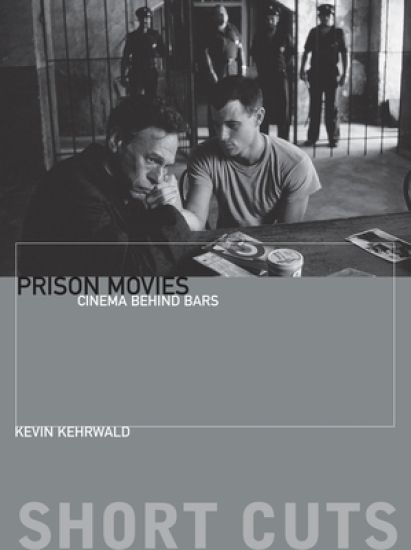
Prison Movies: Cinema Behind Bars traces the public fascination with incarceration from the silent era to the present. Often considered an offshoot of the gangster film, the prison film precedes the gangster film and is in many ways its opposite. Rather than focusing on tragic figures heading for a fall, the prison film focuses on fallen characters seeking redemption. The gangster's perverse pursuit of the American dream is irrelevant to the prisoner for whom that dream has already failed. At their core, prison films are about self-preservation at the hands of oppressive authority. Like history itself, prison films display long stretches of idleness punctuated by eruptions of violence, dangerous moments that signify liberation and the potential for change. The enclosed world of the prison is a highly effective microcosm, one that forces characters and audiences alike to confront vexing issues of race, class, gender, and sexuality. These portrayals of men and women behind bars have thrived because they deal with such fundamental human themes as freedom, individuality, power, justice, and mercy. Films examined include The Big House (1930), I Want to Live! (1958), The Defiant Ones (1958), Cool Hand Luke (1967), Midnight Express (1978), Escape from Alcatraz (1979), The Shawshank Redemption (1994), and Starred Up (2013).
Prison Movies

Prison Movies

Kevin Kehrwald

Wallflower Press
2017
pokkari
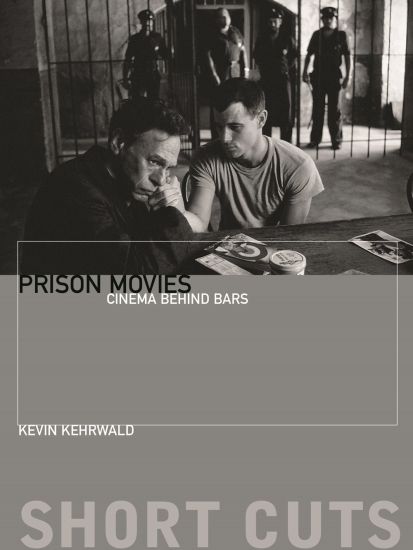
Prison Movies: Cinema Behind Bars traces the public fascination with incarceration from the silent era to the present. Often considered an offshoot of the gangster film, the prison film precedes the gangster film and is in many ways its opposite. Rather than focusing on tragic figures heading for a fall, the prison film focuses on fallen characters seeking redemption. The gangster's perverse pursuit of the American dream is irrelevant to the prisoner for whom that dream has already failed. At their core, prison films are about self-preservation at the hands of oppressive authority. Like history itself, prison films display long stretches of idleness punctuated by eruptions of violence, dangerous moments that signify liberation and the potential for change. The enclosed world of the prison is a highly effective microcosm, one that forces characters and audiences alike to confront vexing issues of race, class, gender, and sexuality. These portrayals of men and women behind bars have thrived because they deal with such fundamental human themes as freedom, individuality, power, justice, and mercy. Films examined include The Big House (1930), I Want to Live! (1958), The Defiant Ones (1958), Cool Hand Luke (1967), Midnight Express (1978), Escape from Alcatraz (1979), The Shawshank Redemption (1994), and Starred Up (2013).
The Shining

The Shining

Kevin Donnelly

Columbia University Press
2018
pokkari
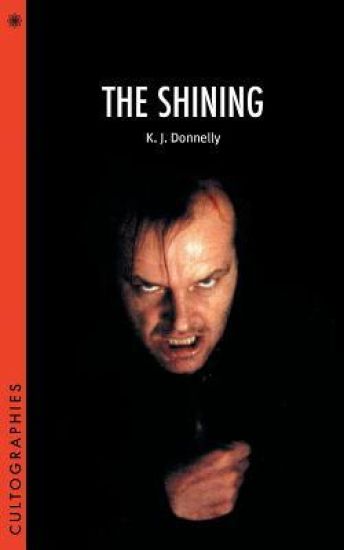
Stanley Kubrick’s The Shining (1980) is an esteemed member of the twentieth century’s pantheon of outstanding films while also perhaps being the director’s most accessible film. It is a rarity in that on the one hand it was a successful mainstream horror film about a violent father in a deserted and haunted hotel, but on the other is a more rarefied and esoteric object for cult audiences who are convinced that the film means something totally different. Indeed, the film appears replete with enigmatic and provocative allusions, which provide The Shining with an almost unmatched sense of resonance. Seeing the film as a vehicle for secret messages has led to a myriad of different interpretations, which has helped elevate the film’s cult status over the years to make it a special case in cinema. Indeed, it is so singular that it arguably even redefines the notion of cult film. This volume investigates The Shining’s most fascinating aspects as a film while also addressing the range of meanings and interpretations assigned to the film, looking into what has made it one of the key cult films of the last half century.
Parks for Profit

Parks for Profit

Kevin Loughran

Columbia University Press
2022
sidottu
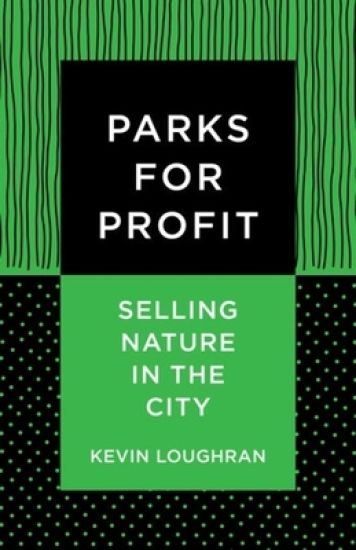
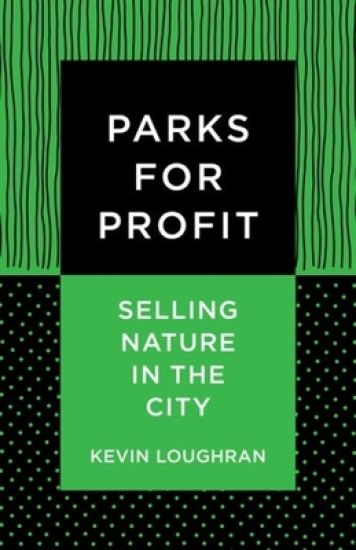
A new kind of city park has emerged in the early twenty-first century. Postindustrial parks transform the derelict remnants of an urban past into distinctive public spaces that meld repurposed infrastructure, wild-looking green space, and landscape architecture. For their proponents, they present an opportunity to turn disused areas into neighborhood anchors, with a host of environmental and community benefits. Yet there are clear economic motives as well—successful parks have helped generate billions of dollars of city tax revenues and real estate development.Kevin Loughran explores the High Line in New York, the Bloomingdale Trail/606 in Chicago, and Buffalo Bayou Park in Houston to offer a critical perspective on the rise of the postindustrial park. He reveals how elites deploy the popularity and seemingly benign nature of parks to achieve their cultural, political, and economic goals. As urban economies have become restructured around finance, real estate, tourism, and cultural consumption, parks serve as civic shields for elite-oriented investment. Tracing changing ideas about cities and nature and underscoring the centrality of race and class, Loughran argues that postindustrial parks aestheticize past disinvestment while serving as green engines of gentrification.A wide-ranging investigation of the political, cultural, and economic forces shaping park development, Parks for Profit reveals the social inequalities at the heart of today’s new urban landscape.
Parks for Profit

Parks for Profit

Kevin Loughran

Columbia University Press
2022
pokkari
A new kind of city park has emerged in the early twenty-first century. Postindustrial parks transform the derelict remnants of an urban past into distinctive public spaces that meld repurposed infrastructure, wild-looking green space, and landscape architecture. For their proponents, they present an opportunity to turn disused areas into neighborhood anchors, with a host of environmental and community benefits. Yet there are clear economic motives as well—successful parks have helped generate billions of dollars of city tax revenues and real estate development.Kevin Loughran explores the High Line in New York, the Bloomingdale Trail/606 in Chicago, and Buffalo Bayou Park in Houston to offer a critical perspective on the rise of the postindustrial park. He reveals how elites deploy the popularity and seemingly benign nature of parks to achieve their cultural, political, and economic goals. As urban economies have become restructured around finance, real estate, tourism, and cultural consumption, parks serve as civic shields for elite-oriented investment. Tracing changing ideas about cities and nature and underscoring the centrality of race and class, Loughran argues that postindustrial parks aestheticize past disinvestment while serving as green engines of gentrification.A wide-ranging investigation of the political, cultural, and economic forces shaping park development, Parks for Profit reveals the social inequalities at the heart of today’s new urban landscape.
Philip Payton

Philip Payton

Kevin McGruder

Columbia University Press
2021
sidottu
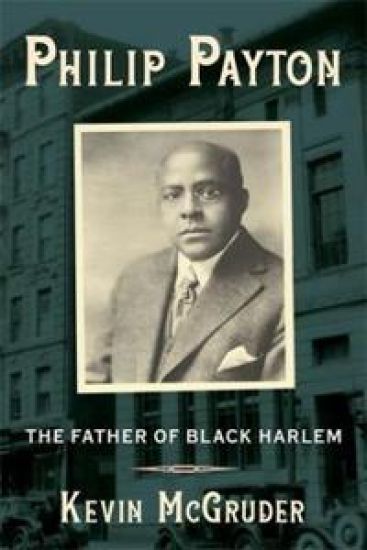
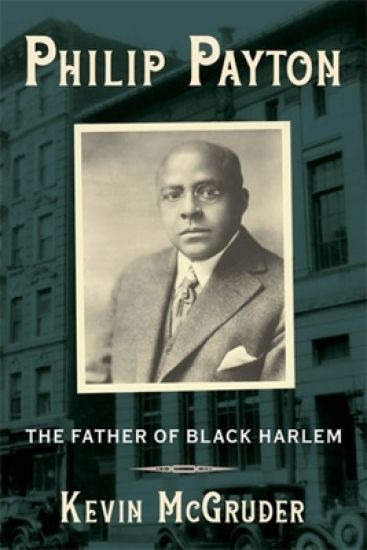
At the turn of the early twentieth century, Harlem—the iconic Black neighborhood—was predominantly white. The Black real estate entrepreneur Philip Payton played a central role in Harlem’s transformation. He founded the Afro-American Realty Company in 1903, vowing to vanquish housing discrimination. Yet this ambitious mission faltered as Payton faced the constraints of white capitalist power structures.In this biography, Kevin McGruder explores Payton’s career and its implications for the history of residential segregation. Payton stood up for the right of Black people to live in Harlem in the face of vocal white resistance. Through skillful use of print media, he branded Harlem as a Black community and attracted interest from those interested in racial uplift. Yet while Payton “opened” Harlem streets, his business model depended on continued racial segregation. Like white real estate investors, he benefited from the lack of housing options available to desperate Black tenants by charging higher rents. Payton developed a specialty in renting all-Black buildings, rather than the integrated buildings he had once envisioned, and his personal successes ultimately entrenched Manhattan’s racial boundaries. McGruder highlights what Payton’s story shows about the limits of seeking advancement through enterprise in a capitalist system deeply implicated in racial inequality.At a time when understanding the roots of residential segregation has become increasingly urgent, this biography sheds new light on the man and the forces that shaped Harlem.
Philip Payton

Philip Payton

Kevin McGruder

Columbia University Press
2021
pokkari
At the turn of the early twentieth century, Harlem—the iconic Black neighborhood—was predominantly white. The Black real estate entrepreneur Philip Payton played a central role in Harlem’s transformation. He founded the Afro-American Realty Company in 1903, vowing to vanquish housing discrimination. Yet this ambitious mission faltered as Payton faced the constraints of white capitalist power structures.In this biography, Kevin McGruder explores Payton’s career and its implications for the history of residential segregation. Payton stood up for the right of Black people to live in Harlem in the face of vocal white resistance. Through skillful use of print media, he branded Harlem as a Black community and attracted interest from those interested in racial uplift. Yet while Payton “opened” Harlem streets, his business model depended on continued racial segregation. Like white real estate investors, he benefited from the lack of housing options available to desperate Black tenants by charging higher rents. Payton developed a specialty in renting all-Black buildings, rather than the integrated buildings he had once envisioned, and his personal successes ultimately entrenched Manhattan’s racial boundaries. McGruder highlights what Payton’s story shows about the limits of seeking advancement through enterprise in a capitalist system deeply implicated in racial inequality.At a time when understanding the roots of residential segregation has become increasingly urgent, this biography sheds new light on the man and the forces that shaped Harlem.