Kirjojen hintavertailu. Mukana 12 390 323 kirjaa ja 12 kauppaa.

Kirjahaku

Etsi kirjoja tekijän nimen, kirjan nimen tai ISBN:n perusteella.

1000 tulosta hakusanalla Margarette Stevens

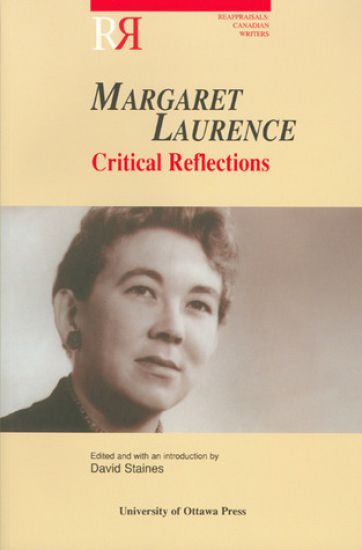
Margaret Laurence

Margaret Laurence

University of Ottawa Press
2001
pokkari
This book highlights the accomplishments of one of Canada's most acclaimed and beloved fiction writers, Margaret Laurence. The essays in this collection explore her body of work as well as her influence on young Canadian writers today.
Margaret Atwood

Margaret Atwood

University of Ottawa Press
2006
pokkari
Margaret Atwood enjoys a unique prominence in Canadian letters. With over thirty books to her credit, in genres ranging from children's writing to dystopic novels, she is as creatively diverse as she is internationally acclaimed. Her success, however, has been double-edged: the very popularity that makes her such a prominent figure in the literary world also renders her vulnerable to claims of being a 'sell-out', as she relates in her Empson lectures. "The Open Eye" negotiates the space between these positions, acknowledging Atwood's remarkable achievement while considering how it impacts on national politics and identity. The range of perspectives in this volume is stimulating and enlightening. "The Open Eye" begins with a focus on Atwood as she presents herself and is presented in Canada and abroad, and then proceeds to consider, more broadly, the intersection of life and literature that Atwood's works and persona effect. It offers fresh insight into Atwood's early writing, redresses the critical void regarding her poetry and shorter prose pieces, and provides a critical base from which readers can assess Atwood's most recent novels. A common thread throughout these essays is the recognition of Atwood's importance in the literary realm in general, and in Canadian literature more particularly.
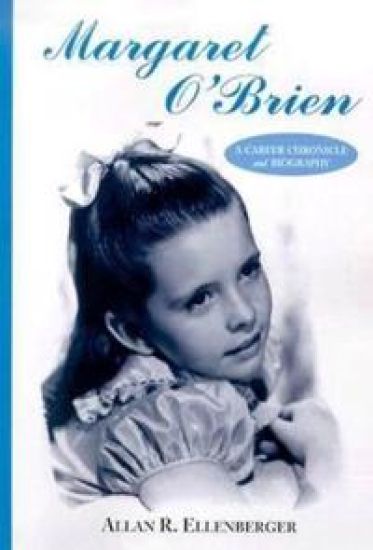
Margaret O'Brien

Margaret O'Brien

Allan R. Ellenberger

McFarland Co Inc
2004
pokkari
Among Hollywood's child stars are some talented children, normal and pleasant who find fame in film. Margaret O'Brien is one; her career began in 1941. The fresh-faced moppet quickly became a sensation and won the 1944 Academy Award for Outstanding Child Actress. As Adele in Jane Eyre (1944) and Beth in Little Women (1949), Margaret endeared herself to millions. Despite the strain of growing up on screen, O'Brien continues to perform today. This reference work details O'Brien's remarkable and varied career on stage, screen, and television: it includes a biography and a complete listing of all her film, radio, stage, and television appearances, as well as references to her in magazines and newspapers. Each entry includes complete production information, as well as reviews and behind-the-scenes commentary. Included are forewords by Robert Young and O'Brien herself, who provided much of the information in this book. Dozens of photos, including many from O'Brien's personal collection, illustrate the text and show the varied stages of a career that includes both famous roles and famous friendships.
Margaret Mahler

Margaret Mahler

Alma Halbert Bond

McFarland Co Inc
2008
pokkari
Margaret Mahler was from a young age intrigued by the theories of Sigmund Freud and Hungarian psychoanalysts such as Sandor Ferenzci, with whom she became acquainted while a student in Budapest. Forced to flee Europe and rising anti-Semitism, Margaret and her husband, Paul, came to the United States in 1938. It was after this move that Mahler performed her most significant research and developed concepts such as the ground-breaking theory of separation-individuation, an idea which was given credence by Mahler's own relationship with her father. This volume details the life and work of Margaret Mahler focusing on her life's ambition--her psychoanalytical work. Her experiences with the Philadelphia Institute and her definitive research through the Masters Children's Clinic are also discussed.
The Letters of Margaret Fuller

The Letters of Margaret Fuller

Margaret Fuller

Cornell University Press
1983
sidottu
The first letters in Volume I are those of a seven-year-old child; the last were written by an uncommonly well-educated woman ready for a larger challenge than schoolteaching could offer her. The letters tell the story of her work with Amos Bronson Alcott and his experimental Temple School, of the early days of her friendship with Ralph Waldo Emerson, of the beginnings of her life as a writer, and of her important work as translator and critic of Goethe.
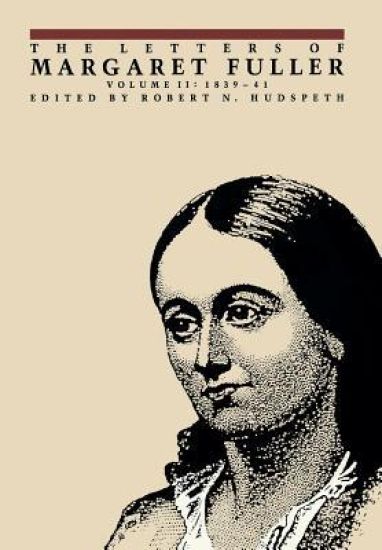
The Letters of Margaret Fuller

The Letters of Margaret Fuller

Margaret Fuller

Cornell University Press
1983
sidottu
This second volume publishes all of Margaret Fuller's letters written from 1839 to 1841—the years in which she first began to achieve fame as a writer and an editor. Addressed to such eminent figures as Ralph Waldo Emerson, Henry David Thoreau, William H. Channing, Elizabeth Peabody, and Frederic H. hedge as well as to Fuller's family and intimate friends, these letters record the years of her involvement in the Transcendentalist Club—a group of liberal clergymen and writers who gathered to discuss theology, literature, and philosophy. In 1839 the Club decided to found a magazine, The Dial; Fuller became the editor, and at last she had a forum for her innovative views of literature and of literary criticism. These are also the years of her famous "conversations" for women—weekly discussions of mythology which were attended by twenty-five of the most prominent women in the area. The letters chronicle the most emotionally turbulent period in her life. In the course of little more than a year she was rejected by the man she loved, Samuel G. Ward, who then married her close friend Anna Barker; she was rebuffed by Emerson as well; and she underwent a profound religious experience that she felt changed her life.
The Letters of Margaret Fuller

The Letters of Margaret Fuller

Margaret Fuller

Cornell University Press
1984
sidottu
The third volume of this major series opens with Fuller's decision in early 1842 to resign her post as editor of The Dial, after she realized she would never be paid for her work there. It closes with her in New York, having accepted Horace Greeley's invitation to work as a book reviewer for The Daily Tribune. Her position was nearly without precedent for a woman, and she wrote enthusiastically of her job that it provided "a more various view of life than any I ever before was in." She found herself in a larger world: the new tasks of daily journalism replaced the demands of The Dial, and a mass audience replaced her coterie of intellectual readers. These were prolific years for Fuller, during which she wrote on a wide variety of subjects, and the letters chronicle her progress on a number of projects, among them her travel book, Summer on the Lakes, in 1843, which grew out of a trip to the Midwest; her translation of Bettina von Arnim's Die Günderode; and her essays on contemporary poetry, fiction, and drama. She devoted the fall of 1844 to expanding "The Great Lawsuit," an essay she had written for The Dial; the letters document how the piece grew to become her most important book—Woman in the Nineteenth Century, a provocative study of woman's role in American life.
The Letters of Margaret Fuller

The Letters of Margaret Fuller

Margaret Fuller

Cornell University Press
1987
sidottu
From 1844 to 1847 Margaret Fuller served as review editor for Horace Greeley's New-York Herald Tribune—and herself reviewed books by Edgar Allan Poe and Herman Melville among others—and published Papers on Literature and Art, a volume of her own essays. She became known as something of a radical in literary circles, allying herself with George Sand, Emerson, and Goethe, and with the Young America poets, Evert A. Duyckinck, Cornelius Mathews, and William Gilmore Simms. In August 1846 Fuller left for Europe with her friends Marcus and Rebecca Spring. Her letters describe her meetings there with Thomas Carlyle, George Sand, Lamennais, and the aging Wordsworth, and with such political figures as the exiles Giuseppe Mazzini and Adam Mickiewicz. Often the letters expand upon topics addressed in her public writing. Her life in these years, however, is dominated by her love for the German businessman James Nathan. The nearly fifty letters she wrote to him in 1845 and 1846 show her startling willingness to take a subservient role and her longing for emotional acceptance. Dreams of a lasting relationship with Nathan end in Europe with his betrothal to another woman, but by the spring of 1847 she had recovered from her deep disappointment and gone on to achieve great personal growth, both in her consciousness of herself as a woman and in political awareness. By the time this volume comes to a close she has met Giovanni Ossoli, a man who shares her ideals and offers her emotional security.
The Letters of Margaret Fuller

The Letters of Margaret Fuller

Margaret Fuller

Cornell University Press
1988
sidottu
The fifth volume of the collected letters of Margaret Fuller traces a period of great emotional turbulence, reflecting the personal struggles she faced in motherhood and the external strife of revolutionary Europe in 1848. The book opens as she takes up residence in Rome, where she continued to write essays for the New-York Daily Tribune and kept up a steady flow of commentary on the political situation for her family and friends. Among Fuller's correspondents are Ralph Waldo Emerson, Giovanni Ossoli, William Wetmore Story, Giuseppe Mazzini, Horace Greeley, George William Curtis, and Elizabeth Barrett Browning. Many of the letters were written in Italian and are translated here for the first time. Since Fuller was more centrally involved in the Italian Risorgimento than any other American, they constitute an entirely new documentary source for historians of nineteenth-century Italy.
Margaret Newman

Margaret Newman

Joanne Marchione

SAGE Publications Inc
1993
nidottu
As nursing expands its scientific base and moves into more qualitative approaches, it is important that nursing students have the opportunity to know more about the nurse theorists that offer qualitative theories and methods. One such theorist is Margaret Newman. In Margaret Newman, Joanne Marchione offers an exceptional discussion on this preeminent nursing theorist. Marchione skillfully describes the origin of Newman's theory, the assumptions underlying the theory, the major concepts of meta-paradigm of nursing--including the nursing process--and propositions of the conceptual model itself. Also included are examples for application to practice and research (based on the author's years of continuous experimentation and application of Newman's theory), a bibliography of classic works, critiques and research, and a glossary of important terms.
Margaret Sanger

Margaret Sanger

Jean H Baker

Hill Wang
2012
pokkari
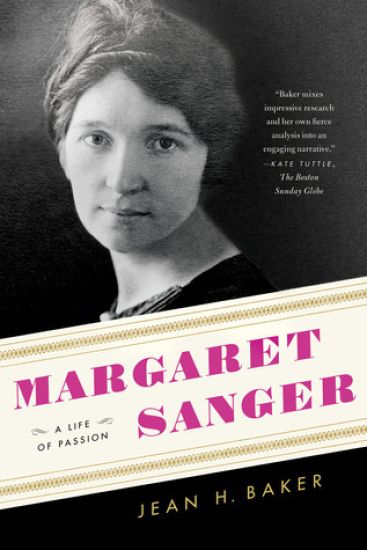
Undoubtedly the most influential advocate for birth control even before the term existed, Margaret Sanger ignited a movement that has shaped our society to this day. Yet her star has waned. A frequent target of so-called family values activists, she has also been neglected by progressives, who cite her socialist leanings and purported belief in eugenics. In this captivating biography, the renowned feminist historian Jean H. Baker rescues Sanger from such critiques and restores her to the vaunted place in history she once held.Trained as a nurse, Sanger saw the dangers of unplanned pregnancy and pioneered the first family planning clinic, the forerunner to Planned Parenthood. The movement she started spread across the country, eventually becoming a vast international organization with her as its spokeswoman. Baker demonstrates that Sanger's staunch advocacy of women's privacy and freedom extended to her personal life as well: after abandoning the trappings of home and family for a globe-trotting life, she became notorious for the sheer number of her romantic entanglements. That she lived long enough to witness the advent of "free love" and the creation of the birth control pill which finally made planned pregnancy a reality is only fitting."
Margaret Drabble, Existing Within Structures

Margaret Drabble, Existing Within Structures

Mary Hurley Moran; Molly Hurley Moran

SOUTHERN ILLINOIS UNIVERSITY PRESS
1983
sidottu
Though often proclaimed a "woman's writer," Margaret Drabble is "ultimately concerned with larger philosophical and psychological issues"--the most important being the question of the human will. Moran sees Drabble's fiction as being "focused more on the problems which confront both men and women, of living in the bewildering contemporary world."It is a world of IRA terrorism, aborted fetuses, and suicide, but it is also a world of homecoming parties, homebaked bread, and waterfalls. It is a world where "in spite of the fact that a human being is a tiny, powerless speck in a turbulent, menacing universe, there are redeeming qualities to the position. There is both beauty and humor in the condition of being human. Drabble's novels hold up for our admiration people who perceive these qualities of life in spite of its pre­vailing gloom."For Drabble, the psychological and physical connections of family provide both spiritual and psychological solace. "Although the family curtails individual freedom, by influencing one's character and imposing familial responsibilities, it is ultimately a bulwark against life's tur­bulence and uncertainties."
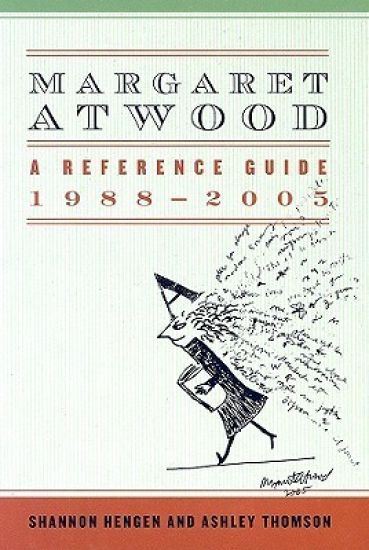
Margaret Atwood

Margaret Atwood

Shannon Hengen; Ashley Thomson

Scarecrow Press
2007
sidottu
Authors Shannon Hengen and Ashley Thomson have assembled a reference guide that covers all of the works written by the acclaimed Canadian author Margaret Atwood since 1988, including her novels Cat's Eye, The Robber Bride, Alias Grace, and the 2000 Booker Prize winner, The Blind Assassin. Rather than just including Atwood's books, this guide includes all of Atwood's works, including articles, short stories, letters, and individual poetry. Adaptations of Atwood's works are also included, as are some of her more public quotations. Secondary entries (i.e. interviews, scholarly resources, and reviews) are first sorted by type, and then arranged alphabetically by author, to allow greater ease of navigation. The individual chapters are organized chronologically, with each subdivided into seven categories: Atwood's Works, Adaptations, Quotations, Interviews, Scholarly Resources, Reviews of Atwood's Works, and Reviews of Adaptations of Atwood's Works. The book also includes a chapter entitled "Atwood on the Web," as well as extensive author and subject indexes. This new bibliography significantly enhances access to Atwood material, a feature that will be welcomed by university, public, and school librarians. Margaret Atwood: A Reference Guide 1988-2005 will appeal not only to Atwood scholars, but to students and fans of one of Canada's greatest writers.
Margaret Holzmann's Iconic Knit Blankets and More

Margaret Holzmann's Iconic Knit Blankets and More

Margaret Holzmann

STACKPOLE BOOKS
2025
nidottu
Margaret Holzmann, author of the wildly popular Geometric Knit Blankets, is back, this time with themed designs featuring cats, dogs, houses, Christmas trees and candy canes, among other highly graphic, colourful designs. 30+ patterns for blankets and pillows, plus table runners and tops featuring icons from the blanket designs, all in Margaret’s signature style.
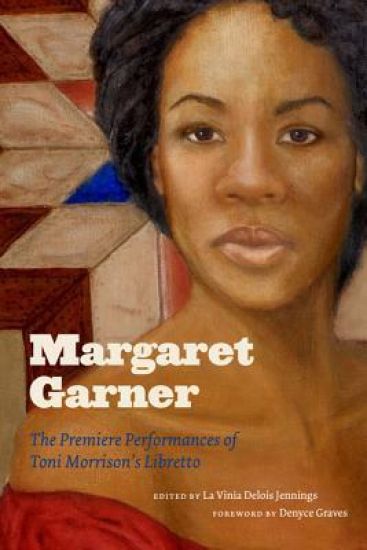
Margaret Garner

Margaret Garner

Denyce Graves

University of Virginia Press
2016
sidottu
In January 1856, Margaret Garner—an enslaved woman on a Kentucky plantation—ran with members of her family to the free state of Ohio. As slave catchers attempted to capture the fugitives in Cincinnati, Garner cut the throat of her two-and-a-half-year-old daughter to prevent her return to slavery. Toni Morrison first imaginatively treated Margaret Garner’s infanticide in her Pulitzer Prize–winning novel Beloved (1987). In 2004, it became the subject of her libretto Margaret Garner: Opera in Two Acts, a lyrical text designed to be paired with music and sung operatically. Grammy Award–winning composer Richard Danielpour had tapped Morrison to write the libretto for his opera Margaret Garner: A New American Opera, which world premiered in Detroit in 2005.La Vinia Delois Jennings’s edited volume records key events, debates, and critical assessments of Morrison's success with Garner’s story as a libretto. It also includes essays by individuals who played central roles in bringing the opera to the stage and recovering Garner's story. The collection opens with a foreword by mezzo-soprano Denyce Graves, for whom Danielpour composed the title role. The other contributors range from literary and opera scholars to specialists in American slavery studies and scholars of Toni Morrison's oeuvre. Their essays position her libretto within the African American operatic and libretto tradition, a tradition not fully known to performance scholars and heretofore unexamined.