Kirjojen hintavertailu. Mukana 12 390 323 kirjaa ja 12 kauppaa.

Kirjahaku

Etsi kirjoja tekijän nimen, kirjan nimen tai ISBN:n perusteella.

1000 tulosta hakusanalla Mario Rimoni

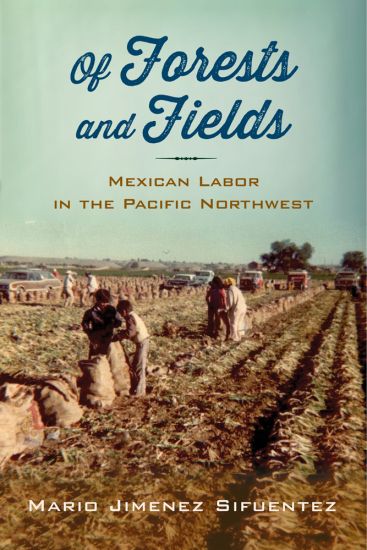
Of Forests and Fields

Of Forests and Fields

Mario Jimenez Sifuentez

Rutgers University Press
2016
nidottu
2016 Choice Oustanding Academic Title Just looking at the Pacific Northwest’s many verdant forests and fields, it may be hard to imagine the intense work it took to transform the region into the agricultural powerhouse it is today. Much of this labor was provided by Mexican guest workers, Tejano migrants, and undocumented immigrants, who converged on the region beginning in the mid-1940s. Of Forests and Fields tells the story of these workers, who toiled in the fields, canneries, packing sheds, and forests, turning the Pacific Northwest into one of the most productive agricultural regions in the country. Employing an innovative approach that traces the intersections between Chicana/o labor and environmental history, Mario Sifuentez shows how ethnic Mexican workers responded to white communities that only welcomed them when they were economically useful, then quickly shunned them. He vividly renders the feelings of isolation and desperation that led to the formation of ethnic Mexican labor organizations like the Pineros y Campesinos Unidos Noroeste (PCUN) farm workers union, which fought back against discrimination and exploitation. Of Forests and Fields not only extends the scope of Mexican labor history beyond the Southwest, it offers valuable historical precedents for understanding the struggles of immigrant and migrant laborers in our own era. Sifuentez supplements his extensive archival research with a unique set of first-hand interviews, offering new perspectives on events covered in the printed historical record. A descendent of ethnic Mexican immigrant laborers in Oregon, Sifuentez also poignantly demonstrates the links between the personal and political, as his research leads him to amazing discoveries about his own family history...www.mariosifuentez.com
Of Forests and Fields

Of Forests and Fields

Mario Jimenez Sifuentez

Rutgers University Press
2016
sidottu
2016 Choice Oustanding Academic Title Just looking at the Pacific Northwest’s many verdant forests and fields, it may be hard to imagine the intense work it took to transform the region into the agricultural powerhouse it is today. Much of this labor was provided by Mexican guest workers, Tejano migrants, and undocumented immigrants, who converged on the region beginning in the mid-1940s. Of Forests and Fields tells the story of these workers, who toiled in the fields, canneries, packing sheds, and forests, turning the Pacific Northwest into one of the most productive agricultural regions in the country. Employing an innovative approach that traces the intersections between Chicana/o labor and environmental history, Mario Sifuentez shows how ethnic Mexican workers responded to white communities that only welcomed them when they were economically useful, then quickly shunned them. He vividly renders the feelings of isolation and desperation that led to the formation of ethnic Mexican labor organizations like the Pineros y Campesinos Unidos Noroeste (PCUN) farm workers union, which fought back against discrimination and exploitation. Of Forests and Fields not only extends the scope of Mexican labor history beyond the Southwest, it offers valuable historical precedents for understanding the struggles of immigrant and migrant laborers in our own era. Sifuentez supplements his extensive archival research with a unique set of first-hand interviews, offering new perspectives on events covered in the printed historical record. A descendent of ethnic Mexican immigrant laborers in Oregon, Sifuentez also poignantly demonstrates the links between the personal and political, as his research leads him to amazing discoveries about his own family history...www.mariosifuentez.com
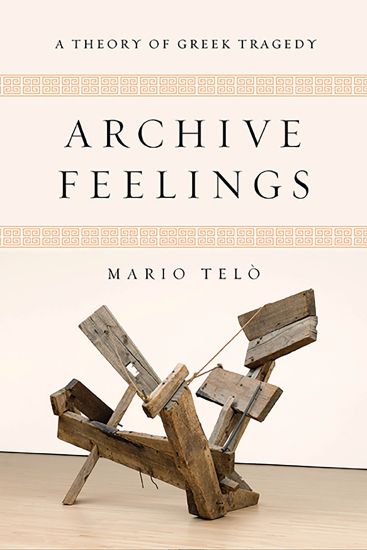
Archive Feelings

Archive Feelings

Mario Telò

Ohio State University Press
2020
sidottu
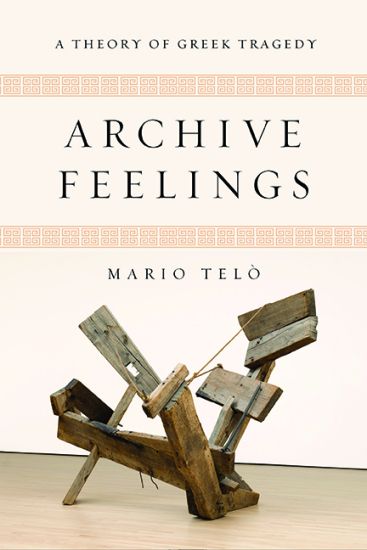
Do we take pleasure in reading ancient Greek tragedy despite the unsettling content or because of it? Does a safe aesthetic distance protect us from tragic suffering, or does the proximity to death tap into something more primal? Aristotle proposed catharsis, an emotional cleansing-or, in later interpretations, a sense of equilibrium-as tragedy's outcome, and Sigmund Freud and Jacques Lacan, grand theorists of the forces of anti-mastery in human and nonhuman existence, surprisingly agreed. Notwithstanding this deferral to Aristotle, their theorizations of the death drive-together with Jacques Derrida's notion of the archive as a place of conservation that inevitably fails-provide the groundwork for a radically new way of understanding tragic aesthetics. With bold readings of thirteen plays by Aeschylus, Sophocles, and Euripides, including the Oedipus cycle, the Oresteia, Medea, and Bacchae; an eclectic synthesis of Freud, Lacan, Derrida, Zizek, Deleuze, and other critical theorists; and an engagement with art, architecture, and film, Mario Tel 's Archive Feelings: A Theory of Greek Tragedy locates Greek tragedy's aesthetic allure beyond catharsis in a vertiginous sense of giddy suspension, in a spiral of life and death that resists equilibrium, stabilization, and all forms of normativity. In so doing, Tel forges a new model of tragic aesthetics.
Reading Death in Ancient Rome

Reading Death in Ancient Rome

Mario Erasmo

Ohio State University Press
2020
pokkari
In Reading Death in Ancient Rome, Mario Erasmo considers both actual funerary rituals and their literary depictions in epic, elegy, epitaphs, drama, and prose works as a form of participatory theater in which the performers and the depicters of rituals engage in strategies to involve the viewer/reader in the ritual process, specifically by invoking and playing on their cultural associations at a number of levels simultaneously. He focuses on the associative reading process-the extent to which literary texts allude to funeral and burial ritual, the narrative role played by the allusion to recreate a fictive version of the ritual, and how the allusion engages readers' knowledge of the ritual or previous literary intertexts. Such a strategy can advance a range of authorial agendas by inviting readers to read and reread assumptions about both the surrounding Roman culture and earlier literature invoked through intertextual referencing. By (re)defining their relation to the dead, readers assume various roles in an ongoing communion with the departed. Reading Death in Ancient Rome makes an important and innovative contribution to semiotic theory as applied to classical texts and to the emerging field of mortality studies. It should thus appeal to classicists as well as to advanced undergraduate and graduate students in art history and archeology.
Archive Feelings

Archive Feelings

Mario Telò

OHIO STATE UNIVERSITY PRESS
2023
pokkari
Do we take pleasure in reading ancient Greek tragedy despite the unsettling content or because of it? Does a safe aesthetic distance protect us from tragic suffering, or does the proximity to death tap into something more primal? Aristotle proposed catharsis, an emotional cleansing-or, in later interpretations, a sense of equilibrium-as tragedy's outcome, and Sigmund Freud and Jacques Lacan, grand theorists of the forces of anti-mastery in human and nonhuman existence, surprisingly agreed. Notwithstanding this deferral to Aristotle, their theorizations of the death drive-together with Jacques Derrida's notion of the archive as a place of conservation that inevitably fails-provide the groundwork for a radically new way of understanding tragic aesthetics. With bold readings of thirteen plays by Aeschylus, Sophocles, and Euripides, including the Oedipus cycle, the Oresteia, Medea, and Bacchae; an eclectic synthesis of Freud, Lacan, Derrida, Zizek, Deleuze, and other critical theorists; and an engagement with art, architecture, and film, Mario Tel 's Archive Feelings: A Theory of Greek Tragedy locates Greek tragedy's aesthetic allure beyond catharsis in a vertiginous sense of giddy suspension, in a spiral of life and death that resists equilibrium, stabilization, and all forms of normativity. In so doing, Tel forges a new model of tragic aesthetics.
Legal Positivism

Legal Positivism

Mario (EDT) Jori

New York University Press
1992
sidottu
The aim of this collection of essays on legal positivism is to complete the already easily available English material on this subject. This is not a collection of writings by legal positivists, but about legal positivism.
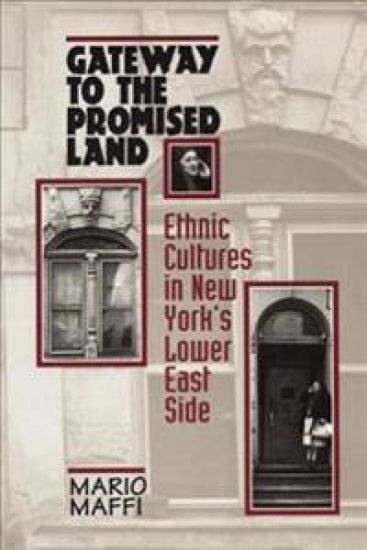
Gateway to the Promised Land

Gateway to the Promised Land

Mario Maffi

New York University Press
1995
pokkari
The cultural diversity of America is often summed up by way of a different metaphors: Melting Pot, Patchwork, Quilt, Mosaic--none of which capture the symbiotics of the city. Few neighborhoods personify the diversity these terms connote more than New York City's Lower East Side. This storied urban landscape, today a vibrant mix of avant garde artists and street culture, was home, in the 1910s, to the Wobblies and served, forty years later, as an inspiration for Allen Ginsberg's epic Howl. More recently, it has launched the career of such bands as the B-52s and been the site of one of New York's worst urban riots. In this diverse neighborhood, immigrant groups from all over the world touched down on American soild for the first time and established roots that remain to this day: Chinese immigrants, Italians, and East European Jews at the turn of the century and Puerto Ricans in the 1950s. Over the last hundred years, older communities were transformed and new ones emerged. Chinatown and Little Italy, once solely immigrant centers, began to attract tourists. In the 1960s, radical young whites fled an expensive, bourgeois lifestyle for the urban wilderness of the Lower East Side.Throughout its long and complex history, the Lower East Side has thus come to represent both the compulsion to assimilate American culture, and the drive to rebel against it. Mario Maffi here presents us with a captivating picture of the Lower East Side from the unique perspective of an outsider. The product of a decade of research, Gateway to the Promised Land will appeal to cultural historians, urban, and American historians, and anyone concerned with the challenges America, as an increasingly multicultural society, faces.
Gateway to the Promised Land

Gateway to the Promised Land

Mario Maffi

New York University Press
1995
sidottu
The cultural diversity of America is often summed up by way of a different metaphors: Melting Pot, Patchwork, Quilt, Mosaic--none of which capture the symbiotics of the city. Few neighborhoods personify the diversity these terms connote more than New York City's Lower East Side. This storied urban landscape, today a vibrant mix of avant garde artists and street culture, was home, in the 1910s, to the Wobblies and served, forty years later, as an inspiration for Allen Ginsberg's epic Howl. More recently, it has launched the career of such bands as the B-52s and been the site of one of New York's worst urban riots. In this diverse neighborhood, immigrant groups from all over the world touched down on American soild for the first time and established roots that remain to this day: Chinese immigrants, Italians, and East European Jews at the turn of the century and Puerto Ricans in the 1950s. Over the last hundred years, older communities were transformed and new ones emerged. Chinatown and Little Italy, once solely immigrant centers, began to attract tourists. In the 1960s, radical young whites fled an expensive, bourgeois lifestyle for the urban wilderness of the Lower East Side.Throughout its long and complex history, the Lower East Side has thus come to represent both the compulsion to assimilate American culture, and the drive to rebel against it. Mario Maffi here presents us with a captivating picture of the Lower East Side from the unique perspective of an outsider. The product of a decade of research, Gateway to the Promised Land will appeal to cultural historians, urban, and American historians, and anyone concerned with the challenges America, as an increasingly multicultural society, faces.
The Accounts of the British Empire

The Accounts of the British Empire

Mario Tiberi

CRC Press Inc
2017
sidottu
The fundamental role of Great Britain's economy in the international economic system in the century preceding the First World War is demonstrated by a number of variables, which have drawn the interest of many scholars. The focus here is on capital flows. The main difficulty encountered in this work arose from a shortage of documentation on economic data in the historical period under consideration, which has been tentatively reconstructed, on the basis of a number of estimates, subjected to a close comparative scrutiny. The book provides a valid guide to anyone wishing to improve their understanding of the so-called "pax britannica" which, at that time, rested on the canons of free trade and the gold standard. This historical period is considered by many to be the first experience of capitalist globalization. In this sense the book is also intended to provide useful reading for those who want to reflect on the possible future evolution of the world economy.
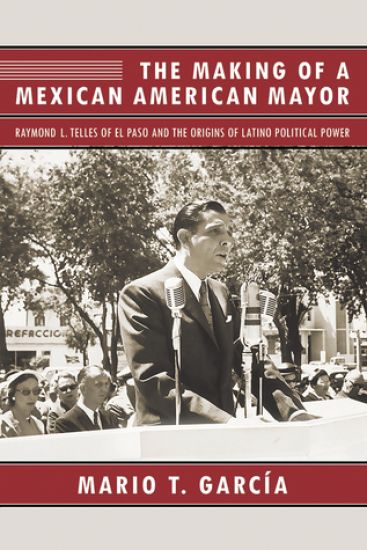
The Making of a Mexican American Mayor

The Making of a Mexican American Mayor

Mario T. García

University of Arizona Press
2018
nidottu
Raymond L. Telles was the first Mexican American mayor of a major U.S. city. Elected mayor of El Paso in 1957 and serving for two terms, he went on to become the first Mexican American ambassador in U.S. history, heading the U.S. delegation to Costa Rica. Historian Mario T. García brings Telles's remarkable story to life in this newly updated edition of his pioneering biography, The Making of a Mexican American Mayor. In the border metropolis of El Paso, more than half the population is Mexican American, yet this group had been denied effective political representation. Mexican Americans broke this barrier and achieved the ""politics of status"" through Telles's stunning 1957 victory. This book captures the excitement of that long-awaited election. The Making of a Mexican American Mayor also examines Telles's story as a microcosm of the history of Mexican Americans before and after World War II—the Mexican American Generation. As mayor and ambassador, Telles symbolized this generation's striving for political participation, and his legacy is evident in the growing number of Latinas/os holding office today.
Literature as History

Literature as History

Mario T. García

University of Arizona Press
2018
nidottu
Historical documents—and, for that matter, historical sources—exist in many forms. The traditional archival sources such as official documents, newspapers, correspondence, and diaries can be supplemented by personal archives, oral histories, and even works of fiction in order for historians to illuminate the past.Literature as History offers a critical new path for Chicano and Latino history. Historian Mario T. García analyzes prominent works of Chicano fiction, nonfiction, and autobiographical literature to explore how they can sometimes reveal even more about ordinary people's lives. García argues that this approach can yield personal insights into historical events that more formal documents omit, lending insights into such diverse issues as gender identity, multiculturalism, sexuality, and the concerns of the working class.In a stimulating and imaginative look at the intersection of history and literature, García discusses the meaning and intent of narratives. Literature as History represents a unique way to rethink history. García, a leader in the field of Chicano history and one of the foremost historians of his generation, explores how Chicano historians can use Chicano and Latino literature as important historical sources. Autobiography, testimonio, and fiction are the genres the author researches to obtain new and insightful perspectives on Chicano history at the personal and grassroots levels. Breaking the boundaries between history and literature, García provides a thought-provoking discussion of what constitutes a historical source.
Connecting Cities with Macro-economic Concerns

Connecting Cities with Macro-economic Concerns

Mario Polese; Mila Freire

World Bank Publications
2003
nidottu
This book examines the influence of local public services on the economics of cities. The relationship between economic development and urbanization is indisputable; less clear, however, are the ways in which cities directly contribute to economic growth and employment creation. Current economic thinking holds that the ability of cities to create wealth depends on ""agglomeration economies;"" that is, the geographic concentration of industries and people which enables economic actors to come together, interact, and become productive. However, this ability to promote productive interaction depends on several factors, one of which is the provision of local public services. The book argues that the quality of local services significantly influences the productivity of a city, and of its business firms. Inferior local services increase the cost of interaction, erode the effects of agglomeration, and diminish wealth-creation potential. This study attempts to assess the costs of inferior local public services to firms. Based on surveys conducted in five cities - Belo Horizonte (Brazil), Montreal (Canada), Puebla (Mexico), San Jose (Costa Rica), and San Salvador (El Salvador) - it examines the complex issues surrounding local service provision, and illustrates how inferior local services affect firms and, in turn, the ability of firms to contribute to wealth.
Storytelling Globalization from the Chaco and Beyond
For more than fifteen years, Mario Blaser has been involved with the Yshiro people of the Paraguayan Chaco as they have sought to maintain their world in the face of conservation and development programs promoted by the state and various nongovernmental organizations. In this ethnography of the encounter between modernizing visions of development, the place-based “life projects” of the Yshiro, and the agendas of scholars and activists, Blaser argues for an understanding of the political mobilization of the Yshiro and other indigenous peoples as part of a struggle to make the global age hospitable to a “pluriverse” containing multiple worlds or realities. As he explains, most knowledge about the Yshiro produced by non-indigenous “experts” has been based on modern Cartesian dualisms separating subject and object, mind and body, and nature and culture. Such thinking differs profoundly from the relational ontology enacted by the Yshiro and other indigenous peoples. Attentive to people’s unique experiences of place and self, the Yshiro reject universal knowledge claims, unlike Western modernity, which assumes the existence of a universal reality and refuses the existence of other ontologies or realities. In Storytelling Globalization from the Chaco and Beyond, Blaser engages in storytelling as a knowledge practice grounded in a relational ontology and attuned to the ongoing struggle for a pluriversal globality.
Storytelling Globalization from the Chaco and Beyond
For more than fifteen years, Mario Blaser has been involved with the Yshiro people of the Paraguayan Chaco as they have sought to maintain their world in the face of conservation and development programs promoted by the state and various nongovernmental organizations. In this ethnography of the encounter between modernizing visions of development, the place-based “life projects” of the Yshiro, and the agendas of scholars and activists, Blaser argues for an understanding of the political mobilization of the Yshiro and other indigenous peoples as part of a struggle to make the global age hospitable to a “pluriverse” containing multiple worlds or realities. As he explains, most knowledge about the Yshiro produced by non-indigenous “experts” has been based on modern Cartesian dualisms separating subject and object, mind and body, and nature and culture. Such thinking differs profoundly from the relational ontology enacted by the Yshiro and other indigenous peoples. Attentive to people’s unique experiences of place and self, the Yshiro reject universal knowledge claims, unlike Western modernity, which assumes the existence of a universal reality and refuses the existence of other ontologies or realities. In Storytelling Globalization from the Chaco and Beyond, Blaser engages in storytelling as a knowledge practice grounded in a relational ontology and attuned to the ongoing struggle for a pluriversal globality.
Flat and Corrugated Diaphragm Design Handbook

Flat and Corrugated Diaphragm Design Handbook

Mario Di Giovanni

CRC Press Inc
1982
sidottu
Flat and Corrugated Diaphragm Design Handbook provides simple, useful methods for diaphragmdesign, performance evaluation, and material selection. The text is a practical andcomplete guide to solving on-the-job problems faced by instrument designers; structural engineersdesigning plates, panels, and floors; and mechanical engineers designing flexural pivots,couplings, and elastic elements.A leading design engineer has written this authoritative reference for the benefit of his colleaguesin the engineering community. Each chapter is user-oriented and features clear, stepby-step techniques which are easily translated into improved diaphragm design. The text includesa simple algebraic presentation of performance characteristics, and computer results ofspecific shapes, profiles, and corrugation depths. Special topics, such as the use of diaphragmsas pressure summing devices and the design of semiconductor diaphragms for solid state transducers,receive outstanding coverage in this book. Each discussion contains many detailed examplesand illustrations.Flat and Corrugated Diaphragm Design Handbook is a vital addition to both the workbenchand the library of every practicing design engineer. This volume is also an excelJent textbookfor a course on instrument design and application for senior-level engineering students.
Complex Analysis

Complex Analysis

Mario Gonzalez

CRC Press Inc
1991
sidottu
A selection of some important topics in complex analysis, intended as a sequel to the author's Classical complex analysis (see preceding entry). The five chapters are devoted to analytic continuation; conformal mappings, univalent functions, and nonconformal mappings; entire function; meromorphic fu