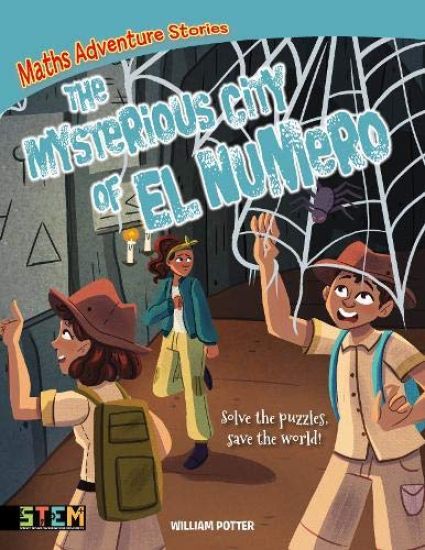
Join daring explorers Daisy and Dale Deed as they set off on a mathematical adventure! They're racing to find the mysterious city of El Numero-a mythical, mysterious place that can only be found by solving number puzzles. Our intrepid heroes will need your help to solve the cryptic clues. Help them to solve mathematical riddles, navigate number mazes, and crack cunning codes!This awesome book will make you a maths explorer, too!
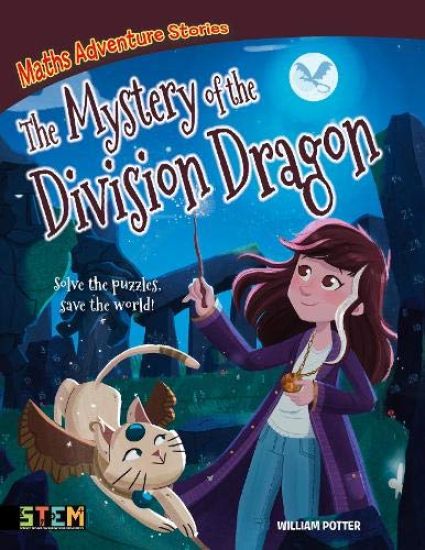
Anna Kadabra is a mathmagical detective. When a mysterious, number-themed robbery takes place, she decides to take the case! Join Anna and her sphinx-kitten Cleo, in this action-packed adventure story-which will put your number skills to the test.As she hunts for clues, Anna will have to look out for the Division Dragon's tricks and traps. Help her to crack number codes, navigate maths maps, and solve perplexing pattern puzzles!Thanks to this enchanting book, you'll soon be a wizard at maths, just like Anna!
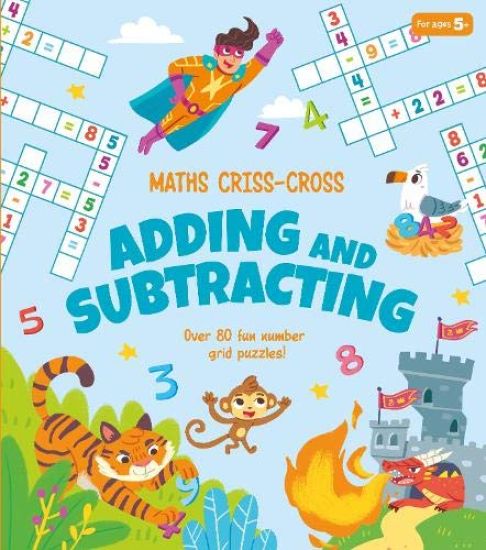
Criss-cross puzzles are a unique and inventive to improve your maths skills. Simply fill out the missing numbers in the grids to complete the adding and subtracting sums. This vibrantly illustrated, ingeniously designed book transforms maths practice into a game that young readers will love. As they solve the puzzles, kids will be boosting the speed at which they can solve simple problems, and supercharging their mental maths ability.The book also contains a fun fact on every page, linked to the vibrant illustrations. For bright sparks aged 5+.
Criss-cross puzzles are a unique and inventive to improve your maths skills. Simply fill out the missing numbers in the grids to complete the multiplication sums.This vibrantly illustrated, ingeniously designed book transforms maths practice into a game that young readers will love. As they solve the puzzles, kids will be boosting the speed at which they can solve simple problems, and supercharging their mental maths ability.The book also contains a fun fact on every page, linked to the vibrant illustrations. For bright sparks aged 5+.
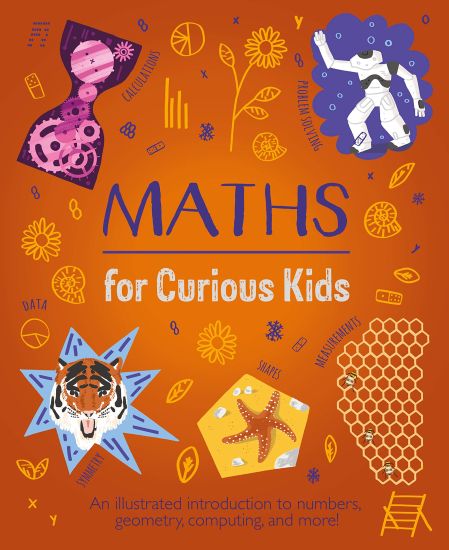
Young readers can discover the extraordinary ways in which math shapes our world in this beautifully illustrated full-colour guide. From the Fibonacchi sequence to weather forecasts, this accessible hardcover book is packed with clear and engaging explanations of mathematical principles. Learn about the genius minds who transformed the field, such as Isaac Newton and Alan Turing, as well as how math has shaped modern science. Big new concepts pop off the page, thanks to vibrant diagrams and an engaging, energetic prose style. Includes:• Famous mathematicians • The math behind prime and negative numbers • The mathematics behind applied sciences, including computers, wormholes, flight and moreWith a glossary of key terms, this wide-ranging guide supports STEM learning and is perfect for readers aged 8-12. ABOUT THE SERIES: The Curious Kids series draws together wonderfully illustrated guides to STEM topics. With a smart, modern style in a jacketed hardcover format, these vibrant guides will help young readers take their math and science skills to the next level.
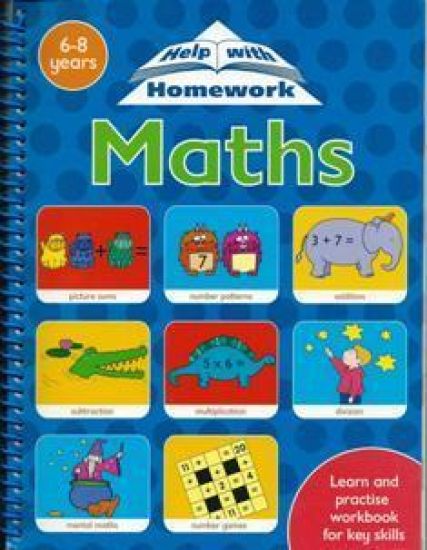
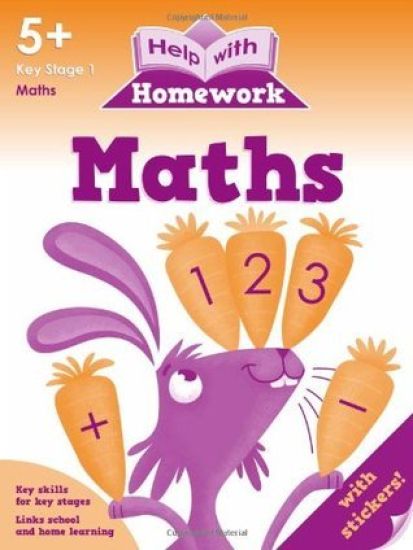
Maths. These bumper books include the titles Maths and English. Both titles includea selection of the single titles from the original Help with Homework Series. Providing opportunities for repeat practice of key skills and learning activities. To be worked through with an adult or to be used by children independently.
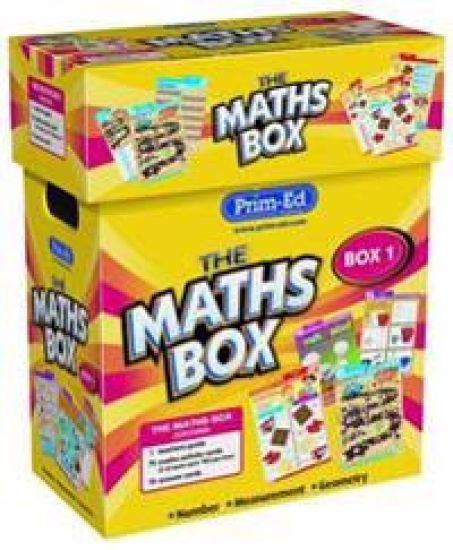
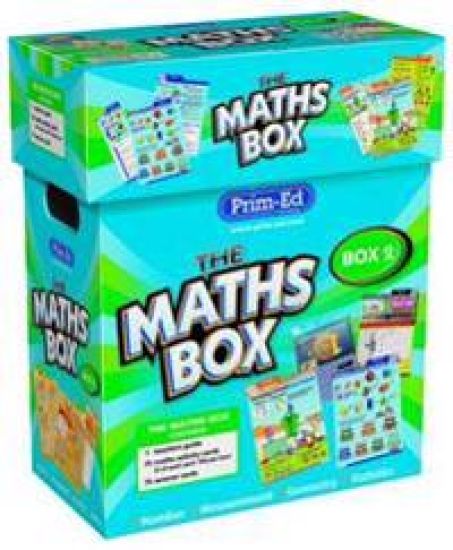
The Maths Box series is a set of six boxes of cards, one for each of the year groups 1-6. This series has been written to support the teaching and learning of the new Mathematics National Curriculum for England, and there is at least one card for each programme of study objective.
The Maths Box series is a set of six boxes of cards, one for each of the year groups 1-6. This series has been written to support the teaching and learning of the new Mathematics National Curriculum for England, and there is at least one card for each programme of study objective.
The two volumes of Maths for Chemists provide an excellent resource for all undergraduate chemistry students but are particularly focussed on the needs of students who may not have studied mathematics beyond GCSE level (or equivalent). The texts are introductory in nature and adopt a sympathetic approach for students who need support and understanding in working with the diverse mathematical tools required in a typical chemistry degree course. The early chapters of Maths for Chemists Volume I: Numbers, Functions and Calculus provide a succinct introduction to the important mathematical skills of algebraic manipulation, trigonometry, numbers, functions, units and the general grammar of maths. Later chapters build on these basic mathematical principles as a foundation for the development of differential and integral calculus. In spite of the introductory nature of this volume, some of the more important mathematical tools required in quantum chemistry are deliberately included, through a gradual introduction to, and development of, the concept of the eigenvalue problem. Ideal for the needs of undergraduate chemistry students, Tutorial Chemistry Texts is a major series consisting of short, single topic or modular texts concentrating on the fundamental areas of chemistry taught in undergraduate science courses. Each book provides a concise account of the basic principles underlying a given subject, embodying an independent-learning philosophy and including worked examples.
One in a series of age-ranged test pads that have been specially compiled to complement the workbook titles in the same series. The exercises in the pads will help to reinforce learning from the workbooks and test children's knowledge of these key areas of study. Fun sticker badges and reward stars will encourage motivation and build confidence.
There are strong links between music and mathematics dating back to Pythagoras and beyond. This book draws together the two disciplines outlining the key methods and concepts that underpin the subjects from one of the earliest uses of a musical cryptogram to computer music in the twenty-first century.Maths and Music is divided into sections, each one exploring a different mathematical aspect of music: rhythm; symmetry; scales; form and structure; and finally some musical curiosities. Musical examples are taken from across the world, from ancient and medieval music through to popular music of the twenty-first century. In all, the book covers over 200 pieces of music ranging from classical symphonies to electronic dance music with numerous musical excerpts given. There are clear explanations throughout along with glossaries of musical and mathematical terms.
This volume is designed to assist anyone with the mathematics involved in map making. It starts from an elementary standpoint and progresses to give the student a sufficient level of understanding to cope with most topics encountered by the map maker, including those of elementary surveying. The material is in two carefully cross-referenced parts. Mathematical topics and concepts are presented in the first part, enabling the relevance of each topic to be made clear, while the second part contains a glossary and formulae summaries with several appendices.
One of five textbooks for use in school and at home. Each left-hand page shows methods with worked examples. The corresponding right-hand page gives questions for the student to try. Topics covered include: finding square roots; Pythagoras' theroem; matrices; vectors; and probability.
One of five textbooks for use in school and at home. Each left-hand page shows methods with worked examples. The corresponding right-hand page gives questions for the student to try. Topics covered include: average (mean); clocks and calendars; set notation and Venn diagrams; and angles.
One of five textbooks for use in school and at home. Each left-hand page shows methods with worked examples. The corresponding right-hand page gives questions for the student to try. Topics covered include: algebra; brackets and factorization; fractions involving letters; and substitution.
One of five textbooks for use in school and at home. Each left-hand page shows methods with worked examples. The corresponding right-hand page gives questions for the student to try. Topics covered include: factors; ratio; linear measurement; decimal places; and plane figures.