Kirjojen hintavertailu. Mukana 11 342 296 kirjaa ja 12 kauppaa.

Kirjahaku

Etsi kirjoja tekijän nimen, kirjan nimen tai ISBN:n perusteella.

1000 tulosta hakusanalla Megan Cuthbert

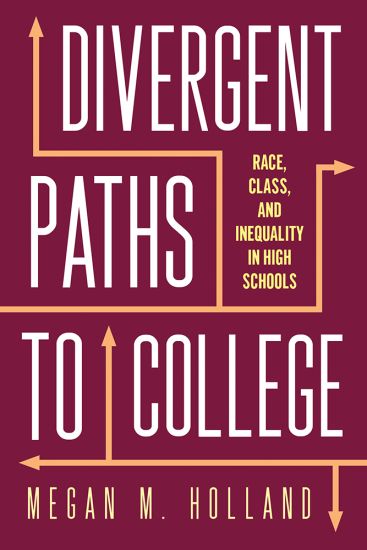
Divergent Paths to College

Divergent Paths to College

Megan M Holland

Rutgers University Press
2019
sidottu
In Divergent Paths to College, Megan M. Holland examines how high schools structure different pathways that lead students to very different college destinations based on race and class. She finds that racial and class inequalities are reproduced through unequal access to key sources of information, even among students in the same school and even in schools with well-established college-going cultures. As the college application process becomes increasingly complex and high-stakes, social capital, or relationships with people who can provide information as well as support and guidance, becomes much more critical. Although much has been written about the college-bound experience, we know less about the role that social capital plays, and specifically how high schools can serve as organizational brokers of social ties. The relationships that high schools cultivate between students and higher education institutions by inviting college admissions officers into their schools to market to students, is a particularly critical, yet unexplored source of college information.
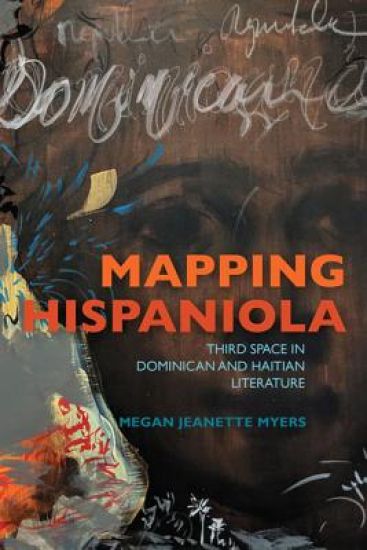
Mapping Hispaniola

Mapping Hispaniola

Megan J. Myers

University of Virginia Press
2019
sidottu
Because of their respective histories of colonization and independence, the Spanish-speaking Dominican Republic has developed into the largest economy of the Caribbean, while Haiti, occupying the western side of their shared island of Hispaniola, has become one of the poorest countries in the Americas. While some scholars have pointed to such disparities as definitive of the island’s literature, Megan Jeanette Myers challenges this reduction by considering how certain literary texts confront the dominant and, at times, exaggerated anti-Haitian Dominican ideology.Myers examines the antagonistic portrayal of the two nations—from the anti-Haitian rhetoric of the intellectual elites of Dominican dictator Rafael Trujillo’s rule to the writings of Julia Alvarez, Junot Díaz, and others of the Haitian diaspora—endeavoring to reposition Haiti on the literary map of the Dominican Republic and beyond. Focusing on representations of the Haitian-Dominican dynamic that veer from the dominant history, Mapping Hispaniola disrupts the "magnification" and repetition of a Dominican anti-Haitian narrative.
Mapping Hispaniola

Mapping Hispaniola

Megan J. Myers

University of Virginia Press
2019
pokkari
Because of their respective histories of colonization and independence, the Spanish-speaking Dominican Republic has developed into the largest economy of the Caribbean, while Haiti, occupying the western side of their shared island of Hispaniola, has become one of the poorest countries in the Americas. While some scholars have pointed to such disparities as definitive of the island’s literature, Megan Jeanette Myers challenges this reduction by considering how certain literary texts confront the dominant and, at times, exaggerated anti-Haitian Dominican ideology.Myers examines the antagonistic portrayal of the two nations—from the anti-Haitian rhetoric of the intellectual elites of Dominican dictator Rafael Trujillo’s rule to the writings of Julia Alvarez, Junot Díaz, and others of the Haitian diaspora—endeavoring to reposition Haiti on the literary map of the Dominican Republic and beyond. Focusing on representations of the Haitian-Dominican dynamic that veer from the dominant history, Mapping Hispaniola disrupts the "magnification" and repetition of a Dominican anti-Haitian narrative.
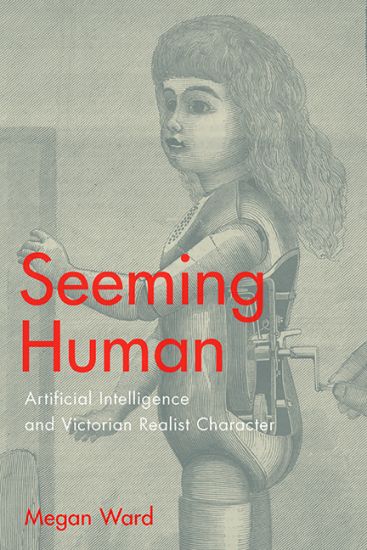
Seeming Human

Seeming Human

Megan Ward

Ohio State University Press
2018
sidottu
Seeming Human: Artificial Intelligence and Victorian Realist Character offers a new theory of realist character through character's unexpected afterlife: the intelligent machine. The book contends that mid-twentieth-century versions of artificial intelligence (AI) offer a theory of verisimilitude omitted by traditional histories of character, which often focus on the development of interiority and the shift from "flat" to "round" characters in the Victorian era. Instead, by reading character through AI, Megan Ward's Seeming Human argues that routinization, predictability, automation, and even flatness are all features of realist characters. Early artificial intelligence movements such as cybernetics, information theory, and the Turing test define ways of seeming-rather than being-human. Using these theories of verisimilitude to read Victorian novelists such as Elizabeth Gaskell, Margaret Oliphant, Anthony Trollope, Thomas Hardy, and Henry James, Seeming Human argues that mechanicity has been perceived as anti-realist because it is the element that we least want to identify as human. Because AI produces human-like intelligence, it makes clear that we must actually turn to machines in order to understand what makes realist characters seem so human.
Ecologies of Harm

Ecologies of Harm

Megan Eatman

Ohio State University Press
2020
sidottu
Ecologies of Harm: Rhetorics of Violence in the United States examines violent spectacles and their quotidian manifestations in order to better understand violence's cultural work and persistence. Starting with the supposition that violence is communicative andmeant to "send a message"--be it to deter, to scare, or to threaten--Megan Eatman goes one step further to argue that violence needs to be understood on a deeper level: as direct, structural, cultural, and constitutive across modes, a formulation that requires rethinking its rhetorical aims as less about conscious persuasion and more about the gradual shaping of public identity. While Eatman looks to examples of violent spectacles to make her case (lynching, capital punishment, and torture in the War on Terror), it is in her analysis of more mundane responses to these forms of violence (congressional debates, court documents, visual art, and memorial performance) where the key to her argument lies--as she shows how circulating violence in these ways produces violent rhetorical ecologies that facilitate some modes of being while foreclosing others. Through this ecological approach, Ecologies of Harm offers a new understanding of the debates surrounding legacies of violence, examines how rhetoric and violence function together, and explores implications of their entanglement for antiviolence work.
Ecologies of Harm

Ecologies of Harm

Megan Eatman

Ohio State University Press
2020
pokkari
Ecologies of Harm: Rhetorics of Violence in the United States examines violent spectacles and their quotidian manifestations in order to better understand violence's cultural work and persistence. Starting with the supposition that violence is communicative andmeant to "send a message"--be it to deter, to scare, or to threaten--Megan Eatman goes one step further to argue that violence needs to be understood on a deeper level: as direct, structural, cultural, and constitutive across modes, a formulation that requires rethinking its rhetorical aims as less about conscious persuasion and more about the gradual shaping of public identity. While Eatman looks to examples of violent spectacles to make her case (lynching, capital punishment, and torture in the War on Terror), it is in her analysis of more mundane responses to these forms of violence (congressional debates, court documents, visual art, and memorial performance) where the key to her argument lies--as she shows how circulating violence in these ways produces violent rhetorical ecologies that facilitate some modes of being while foreclosing others. Through this ecological approach, Ecologies of Harm offers a new understanding of the debates surrounding legacies of violence, examines how rhetoric and violence function together, and explores implications of their entanglement for antiviolence work.
Twenty Square Feet of Skin

Twenty Square Feet of Skin

Megan Baxter

OHIO STATE UNIVERSITY PRESS
2023
pokkari
"A pensive inquiry, often breathtakingly beautiful and relatable, into how and where and with whom we fit." -Kirkus The essays in Twenty Square Feet of Skin tell their stories through the body-encased as it is in "that greatest of organs, that membrane that protects the individual from the universe"-as Megan Baxter's entr e to and home within the larger world that surrounds her. What does a tattoo mean? How can plastic surgery transform? What is the history of pedicures? Where does the mind wander on a long run? Through every example, Baxter writes toward a greater understanding of how self-knowledge is forged through physical experiences. With the input of Prince, Walt Whitman, Don Johnson, Andrew Wyeth, Meriwether Lewis, and others, Baxter reflects on love, identity, and belonging by looking closely at her skin, toenails, and DNA. Playful, wandering, and deeply felt, Twenty Square Feet of Skin weaves a strange, rich tapestry of flesh and bones, art and body, skin and scar. In embracing the beauty and peril of physicality in crystalline detail, Baxter asks us all to ponder what makes us human within these frail, flawed, powerful, and wonderful bodies of ours.
Fight Like a Girl

Fight Like a Girl

Megan Seely

New York University Press
2007
sidottu
A blueprint for the next generation of feminist activists Fight Like a Girl offers a fearless vision for the future of feminism. By boldly detailing what is at stake for women and girls today, Megan Seely outlines the necessary steps to achieve true political, social and economic equity for all. Reclaiming feminism for a new generation, Fight Like a Girl speaks to young women who embrace feminism in substance but not necessarily in name. With an eye toward what it takes to create actual change, Seely offers a practical guide for how to get involved, take action and wage successful events and campaigns. The book is full of valuable resources for novice and committed activists alike, including such features as “How to Write a Press Release,” “Guidelines to a Good Media Interview,” “A Feminist Shopping Guide,” and a list of over 100 Fabulous Feminist Resources, including organizations, websites, and events to attend. Each chapter is full of ideas, both big and small, for ways to get involved, get active, and make a difference. Exploring such issues as body image and self-acceptance, education and empowerment, health and sexuality, political representation, economic justice, and violence against women, Fight Like a Girl looks at the challenges that women and girls face while emphasizing the strength that they independently, and collectively, embody. Seely delves into the politics of the feminist movement, exploring both women's history and current–day realities with easy-to-follow lists and timelines like those on “Women Who Made a Difference,” “Chronology of the U.S. Women's Movement,” and “Do's and Don'ts for Young Feminists.” A Third Wave manifesto as well as an introduction to feminism for a new generation, Fight Like A Girl is a powerful blueprint for young women today.
Female Soldiers in Sierra Leone

Female Soldiers in Sierra Leone

Megan H. MacKenzie

New York University Press
2012
sidottu
The eleven-year civil war in Sierra Leone from 1991 to 2002 was incomprehensibly brutal—it is estimated that half of all female refugees were raped and many thousands were killed. While the publicity surrounding sexual violence helped to create a general picture of women and girls as victims of the conflict, there has been little effort to understand female soldiers' involvement in, and experience of, the conflict. Female Soldiers in Sierra Leone draws on interviews with 75 former female soldiers and over 20 local experts, providing a rare perspective on both the civil war and post-conflict development efforts in the country. Megan MacKenzie argues that post-conflict reconstruction is a highly gendered process, demonstrating that a clear recognition and understanding of the roles and experiences of female soldiers are central to both understanding the conflict and to crafting effective policy for the future.
The Captain's Widow of Sandwich

The Captain's Widow of Sandwich

Megan Taylor Shockley

New York University Press
2010
sidottu
In 1852 Hannah Rebecca Crowell married sea captain William Burgess and set sail. Within three years, Rebecca Burgess had crossed the equator eleven times and learned to navigate a vessel. In 1856, 22-year-old Rebecca saved the ship Challenger as her husband lay dying from dysentery. The widow returned to her family's home in Sandwich, Massachusetts, where she refused all marriage proposals and died wealthy in 1917. This is the way Burgess recorded her story in her prodigious journals and registers, which she donated to the local historical society upon her death, but there is no other evidence that this dramatic event occurred exactly this way. In The Captain's Widow of Sandwich, Megan Taylor Shockley examines how Burgess constructed her own legend and how the town of Sandwich embraced that history as its own. Through careful analysis of myriad primary sources, Shockley also addresses how Burgess dealt with the conflicting gender roles of her life, reconciling her traditionally masculine adventures at sea and her independent lifestyle with the accepted ideals of the period's "Victorian woman."
Orientalists, Propagandists, and Ilustrados

Orientalists, Propagandists, and Ilustrados

Megan C. Thomas

University of Minnesota Press
2012
sidottu
The writings of a small group of scholars known as the ilustrados are often credited for providing intellectual grounding for the Philippine Revolution of 1896. Megan C. Thomas shows that the ilustrados’ anticolonial project of defining and constructing the “Filipino” involved Orientalist and racialist discourses that are usually ascribed to colonial projects, not anticolonial ones. According to Thomas, the work of the ilustrados uncovers the surprisingly blurry boundary between nationalist and colonialist thought. By any measure, there was an extraordinary flowering of scholarly writing about the peoples and history of the Philippines in the decade or so preceding the revolution. In reexamining the works of the scholars José Rizal, Pardo de Tavera, Isabelo de los Reyes, Pedro Paterno, Pedro Serrano Laktaw, and Mariano Ponce, Thomas situates their writings in a broader account of intellectual ideas and politics migrating and transmuting across borders. She reveals how the ilustrados both drew from and refashioned the tools and concepts of Orientalist scholarship from Europe. Interrogating the terms “nationalist” and “nationalism,” whose definitions are usually constructed in the present and then applied to the past, Thomas offers new models for studying nationalist thought in the colonial world.
Orientalists, Propagandists, and Ilustrados

Orientalists, Propagandists, and Ilustrados

Megan C. Thomas

University of Minnesota Press
2012
nidottu
The writings of a small group of scholars known as the ilustrados are often credited for providing intellectual grounding for the Philippine Revolution of 1896. Megan C. Thomas shows that the ilustrados’ anticolonial project of defining and constructing the “Filipino” involved Orientalist and racialist discourses that are usually ascribed to colonial projects, not anticolonial ones. According to Thomas, the work of the ilustrados uncovers the surprisingly blurry boundary between nationalist and colonialist thought. By any measure, there was an extraordinary flowering of scholarly writing about the peoples and history of the Philippines in the decade or so preceding the revolution. In reexamining the works of the scholars José Rizal, Pardo de Tavera, Isabelo de los Reyes, Pedro Paterno, Pedro Serrano Laktaw, and Mariano Ponce, Thomas situates their writings in a broader account of intellectual ideas and politics migrating and transmuting across borders. She reveals how the ilustrados both drew from and refashioned the tools and concepts of Orientalist scholarship from Europe. Interrogating the terms “nationalist” and “nationalism,” whose definitions are usually constructed in the present and then applied to the past, Thomas offers new models for studying nationalist thought in the colonial world.
Ruin Nation

Ruin Nation

Megan Kate Nelson

University of Georgia Press
2012
sidottu
During the Civil War, cities, houses, forests, and soldiers’ bodies were transformed into “dead heaps of ruins,” novel sights in the southern landscape. How did this happen, and why? And what did Americans—northern and southern, black and white, male and female—make of this proliferation of ruins? Ruin Nation is the first book to bring together environmental and cultural histories to consider the evocative power of ruination as an imagined state, an act of destruction, and a process of change.Megan Kate Nelson examines the narratives and images that Americans produced as they confronted the war’s destructiveness. Architectural ruins—cities and houses—dominated the stories that soldiers and civilians told about the “savage” behavior of men and the invasions of domestic privacy. The ruins of living things—trees and bodies—also provoked discussion and debate. People who witnessed forests and men being blown apart were plagued by anxieties about the impact of wartime technologies on nature and on individual identities.The obliteration of cities, houses, trees, and men was a shared experience. Nelson shows that this is one of the ironies of the war’s ruination—in a time of the most extreme national divisiveness people found common ground as they considered the war’s costs. And yet, very few of these ruins still exist, suggesting that the destructive practices that dominated the experiences of Americans during the Civil War have been erased from our national consciousness.
Trembling Earth

Trembling Earth

Megan Kate Nelson

University of Georgia Press
2009
pokkari
This innovative history of the Okefenokee Swamp reveals it as a place where harsh realities clashed with optimism, shaping the borderland culture of southern Georgia and northern Florida for over two hundred years.From the formation of the Georgia colony in 1732 to the end of the Great Depression, the Okefenokee Swamp was a site of conflict between divergent local communities. Coining the term “ecolocalism” to describe how local cultures form out of ecosystems and in relation to other communities, Megan Kate Nelson offers a new view of the Okefenokee, its inhabitants, and its rich and telling record of thwarted ambitions, unintended consequences, and unresolved questions.The Okefenokee is simultaneously terrestrial and aquatic, beautiful and terrifying, fertile and barren. This peculiar ecology created discord as human groups attempted to overlay firm lines of race, gender, and class on an area of inherent ambiguity and blurred margins. Rice planters, slaves, fugitive slaves, Seminoles, surveyors, timber barons, Swampers, and scientists came to the swamp with dreams of wealth, freedom, and status that conflicted in varied and complex ways. Ecolocalism emerged out of these conflicts between communities within the Okefenokee and other borderland swamps.Nelson narrates the fluctuations, disconnections, and confrontations embedded in the muck of the swamp and the mire of its disorderly history, and she reminds us that it is out of such places of intermingling and uncertainty that cultures are forged.
Ruin Nation

Ruin Nation

Megan Kate Nelson

University of Georgia Press
2012
pokkari
During the Civil War, cities, houses, forests, and soldiers’ bodies were transformed into “dead heaps of ruins,” novel sights in the southern landscape. How did this happen, and why? And what did Americans—northern and southern, black and white, male and female—make of this proliferation of ruins? Ruin Nation is the first book to bring together environmental and cultural histories to consider the evocative power of ruination as an imagined state, an act of destruction, and a process of change.Megan Kate Nelson examines the narratives and images that Americans produced as they confronted the war’s destructiveness. Architectural ruins—cities and houses—dominated the stories that soldiers and civilians told about the “savage” behavior of men and the invasions of domestic privacy. The ruins of living things—trees and bodies—also provoked discussion and debate. People who witnessed forests and men being blown apart were plagued by anxieties about the impact of wartime technologies on nature and on individual identities.The obliteration of cities, houses, trees, and men was a shared experience. Nelson shows that this is one of the ironies of the war’s ruination—in a time of the most extreme national divisiveness people found common ground as they considered the war’s costs. And yet, very few of these ruins still exist, suggesting that the destructive practices that dominated the experiences of Americans during the Civil War have been erased from our national consciousness.
Mobile Home

Mobile Home

Megan Harlan

University of Georgia Press
2020
pokkari
Uprooting ourselves and putting down roots elsewhere has become second nature. Americans are among the most mobile people on the planet, moving house an average of nine times in adulthood. Mobile Home explores one family’s extreme and often international version of this common experience. Inspired by Megan Harlan’s globe-wandering childhood—during which she lived in seventeen homes across four continents, ranging in location from the Alaskan tundra to a Colombian jungle, a posh flat in London to a doublewide trailer near the Arabian Gulf—Mobile Home maps the emotional structures and metaphysical geographies of home. In ten interconnected essays, Harlan examines cultural histories that include Bedouin nomadic traditions and modern life in wheeled mobile homes, the psychology of motels and suburban tract housing, and the lived meanings within the built landscapes of Manhattan, Stonehenge, and the Winchester Mystery House. More personally, she traces the family histories that drove her parents to seek so many new horizons—and how those places shaped her upbringing. Her mother viewed houses as a kind of large-scale plastic art ever in need of renovating, while her father was a natural adventurer and loved nothing more than to travel, choosing a life of flight that also helped to mask his addiction to alcohol. These familial experiences color Harlan’s current journey as a mother attempting to shape a flourishing, rooted world for her son. Her memoir in essays skillfully explores the flexible, continually inventive natures of place, family, and home.
Straight Into Darkness

Straight Into Darkness

Megan Volpert

UNIVERSITY OF GEORGIA PRESS
2022
pokkari
As Megan Volpert stood over train tracks preparing to surrender to the psychedelic blindness of simple human misery, of all the Heartbreakers tracks available to come through her headphones, “Straight Into Darkness” is the one that did. In this highly philosophical and deeply personal exploration of one obscure Tom Petty song, Volpert’s essays comb through the musical, historical, rhetorical, and sociological implications of a forgotten gem in a legendary catalog with satisfying results.Through this epic celebration of the fortieth anniversary of the Long After Dark album, Petty and Volpert each emerge as modern mystics who argue that in the face of powerlessness, we rebel anyway. Volpert judges the forty years of Petty’s career with one finger on the pulse of Bob Dylan and an occasional whiff of Bruce Springsteen, looking at the sometimes-violent mob scene of concerts as a type of transcendent communion. Straight Into Darkness offers a compelling vision of rock and roll fandom where the songwriter’s hardworking sense of humor is enough to save us from absurdity. All you need is Albert Camus and a couple of chords.