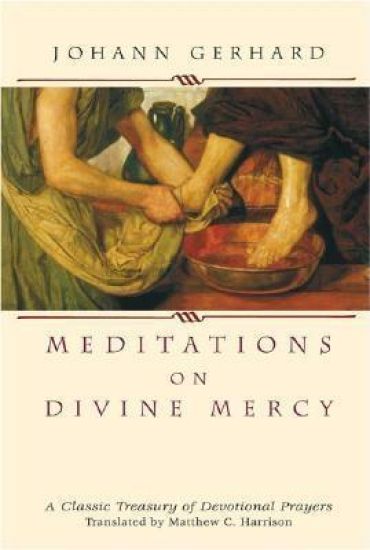
Meditations on Divine Mercy is a book of 45 prayers that Johann Gerhard wrote prior to 1612. Translated from the German by Rev. Dr. Matthew C. Harrison, this book is available for English readers to enjoy and appreciate. Additional features include a chapter on the purpose and benefits of prayer, as well as an explanation of the blessing and historic aspects of daily meditation.
The instant New York Times bestseller Every porcine wonder was once a piglet Celebrate the joy of a new arrival with this endearing picture-book prequel to the New York Times best-selling Mercy Watson series. Mr. Watson and Mrs. Watson live ordinary lives. Sometimes their lives feel a bit too ordinary. Sometimes they wish something different would happen. And one day it does, when someone unpredictable finds her way to their front door. In a delightful origin story for the star of the Mercy Watson series, a tiny piglet brings love (and chaos) to Deckawoo Drive -- and the Watsons' lives will never be the same.
The Heartwarming Drama Continues in the Song of Blessing SeriesAnji Baard Moen, a recent widow, returns from Norway with her children. She quickly settles back into life in Blessing, teaching Norwegian history in the high school and writing articles for the Blessing Gazette. When tragedy strikes, Anji steps in to run the newspaper and soon finds a kindred spirit in the widower who owns the printing press. As they spend time together, Anji wonders if there's something more than friendship growing between them.But Anji has also caught the eye of a recent arrival to Blessing. He has put his carpentry skills to good use on the town's building projects, including Anji's house. But Anji is torn between her feelings of loyalty to someone who needs her and the chance to build a new life with this intriguing newcomer.Where will her choice take her?
Austin Returns with a Multi-Generational Historical NovelGeesje de Jonge crossed the ocean at age seventeen with her parents and a small group of immigrants from the Netherlands to settle in the Michigan wilderness. Fifty years later, in 1897, she's asked to write a memoir of her early experiences as the town celebrates its anniversary. Reluctant at first, she soon uncovers memories and emotions hidden all these years, including the story of her one true love. At the nearby Hotel Ottawa Resort on the shore of Lake Michigan, twenty-three-year-old Anna Nicholson is trying to ease the pain of a broken engagement to a wealthy Chicago banker. But her time of introspection is disturbed after a violent storm aboard a steamship stirs up memories of a childhood nightmare. As more memories and dreams surface, Anna begins to question who she is and whether she wants to return to her wealthy life in Chicago. When she befriends a young seminary student who is working at the hotel for the summer, she finds herself asking him all the questions that have been troubling her.Neither Geesje nor Anna, who are different in every possible way, can foresee the life-altering surprises awaiting them before the summer ends.
Having returned to Chicago, young socialite Anna Nicholson can't seem to focus on her upcoming marriage. The new information she's learned about her birth mother continues to pull at her, and she hires Pinkerton detectives to help her find the truth. But as she meets people who once knew her mother and hears stories about the past, Anna soon discovers that some secrets are better left hidden.At the same time, unflattering stories about Anna are leaked by someone who would love to see her disgraced and her engagement broken. And as Anna tries to share her faith with her society friends, she understands that her choice to seek God's purpose for her life isn't as simple as she had hoped.When things are at their darkest, Anna knows she can turn to her grandmother, Geesje de Jonge, back in Holland, Michigan. Geesje's been helping new Dutch immigrants, including a teen with a haunted past, adjust to America. She only hopes that her wisdom can help all these young people through the turmoil they face.
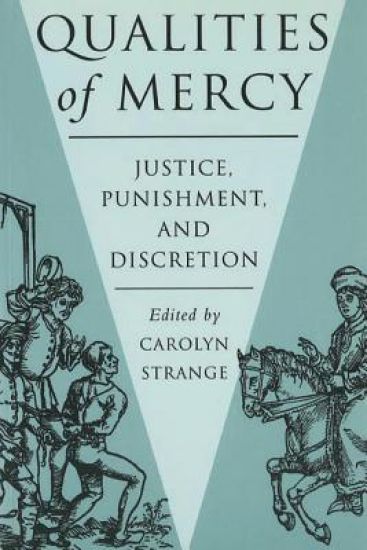
Qualities of Mercy deals with the history of mercy, theremittance of punishments in the criminal law. The writers probe thediscretionary use of power and inquire how it has been exercised tospare convicted criminals from the full might of the law. Drawing onthe history of England, Canada, and Australia in periods when bothcapital and corporal punishment were still practised, they show thatcontrary to common assumptions the past was not a time of unmitigatedterror and they ask what inspired restraint in punishment. Theyconclude that the ability to decide who lived and died -- through theexercise or denial of mercy -- reinforced the power structure. The essays are an important contribution to current public policydebates. If today's move towards unyielding and harsher punishmentproceeds, including campaigns to reinstate capital punishment, mercyalone will fail to neutralize the inequities of criminal justice. Onlyprofound cultural shifts and transitions of sensibility have the forceto stem the tide of unprecedented punitiveness.
Qualities of Mercy deals with the history of mercy, theremittance of punishments in the criminal law. The writers probe thediscretionary use of power and inquire how it has been exercised tospare convicted criminals from the full might of the law. Drawing onthe history of England, Canada, and Australia in periods when bothcapital and corporal punishment were still practised, they show thatcontrary to common assumptions the past was not a time of unmitigatedterror and they ask what inspired restraint in punishment. Theyconclude that the ability to decide who lived and died -- through theexercise or denial of mercy -- reinforced the power structure. The essays are an important contribution to current public policydebates. If today's move towards unyielding and harsher punishmentproceeds, including campaigns to reinstate capital punishment, mercyalone will fail to neutralize the inequities of criminal justice. Onlyprofound cultural shifts and transitions of sensibility have the forceto stem the tide of unprecedented punitiveness.
From Michael Landon Jr. and Cindy Kelley, authors of "The Silent Gift" and creators of the hit television film "Love Comes Softly," comes an exciting historical romance set in post-Civil War, and filled with suspense and faith-building values. At the war's end, a young woman suffers an accident that leaves her unconscious and alone. Waking with amnesia, she takes the name Mercy and wants more than anything to find out the truth of her past. But then a handsome stranger arrives, who may hold the key to everything she has forgotten. What he knows could devastate her future, and even end her life. Written by two proven storytellers, "Traces of Mercy" is perfect for anyone who loves historical fiction, prairie-based tales, or just a good romance.
Presents the text of a play that focuses on two gay lovers, one in an exhausting battle with AIDS, and two friends who join together to help the man with AIDS end his life
When Hillevi, a young, inexperienced midwife, moves from the university town of Uppsala to the wilderness of Svartvattnet (Blackwater) to be with her unofficial fiancé, she is ill prepared for what awaits her. In this frigid, austere, and isolated territory, she encounters the overwhelming and unpredictable forces of nature and demoralizing poverty and ignorance while also gaining access to the unfamiliar world of nomadic Sami reindeer herders. A single traumatic event, never fully confronted, has devastating and far-reaching repercussions, but Hillevi also finds unexpected warmth and love. Incorporating elements of the jojk oral tradition of Sami culture, God’s Mercy is a thoroughly engrossing story about the capriciousness of memory, the resilience of the human psyche, and the endless wonder of the wild.
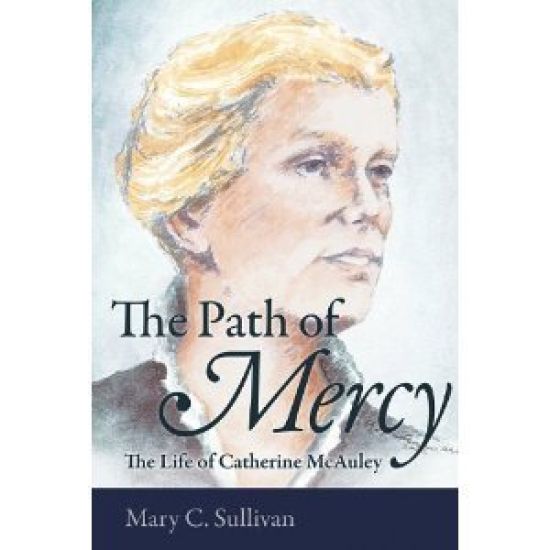
Breaking new ground in presenting the life of Catherine McAuley (1778?-1841), the Dublin woman who founded the Sisters of Mercy, Mary C. Sullivan has written the first full-length, documented narrative of McAuley in more than fifty years. This work places McAuley in her Irish context, particularly in post-penal Dublin, where the destitution, epidemics, and lack of basic education, especially of poor women and young girls, led her to a life of practical mercifulness.Using extensive primary sources and questioning aspects of earlier accounts, The Path of Mercy illumines Catherine's personality and details her life. It recounts her efforts, using her inheritance from her foster parents, to address the poverties of Irish people in her time. Together with those who eventually joined her when she founded the Sisters of Mercy in 1831, she sheltered homeless women, taught them employable skills, opened a school for the daughters of the very poor, and visited the sick and dying in the slums of Dublin. Later she founded the same works of mercy in nine other towns in Ireland, and in two cities in England.An intelligent, courageous, humorous woman, she was, even when exhausted by the rigors of her travel and ministries, always moved to ""get up again,"" as she said, for the sake of those in need. She wrote poems and letters to novices and others, urged the community to ""dance every evening,"" and never wished to be called ""Reverend Mother."" At age sixty-three she died of tuberculosis in the Baggot Street convent. During the past 180 years more than 55,000 Sisters of Mercy have served among the poor and needy throughout the world.
If God is truly merciful and loving, perfect in goodness, how can he consign human beings created in his own image to eternal torment in hell? God’s goodness seems incompatible with inflicting horrible evil upon those who oppose his will and defy his law. If to this paradox we add the metaphysical requirement that God be perfect in goodness, the eternal evil of hell seems to be contradictory to God’s own nature. Catholic philosopher Adrian Reimers takes on these challenges in Hell and the Mercy of God, drawing on relevant sources from Aristotle to Aquinas, from Dante to Tolkien, from Wagner to John Paul II, along with Billie Holliday, The Godfather, and the music of George Gershwin. He presents a philosophical theology, grounded in Scripture, of the nature of goodness and evil, exploring various types of pain, the seven capital sins, the resurrection of the body, the meaning of mammon, the core meaning of idolatry, the psychology of Satan and those who choose his path, and the moral responsibility of the human person. These reflections illuminate the intelligibility of orthodox Catholic teachings on the goodness of God and the reality of hell. Hell is not an arbitrary imposition set up for human rule-breakers but a continuation of a freely chosen way of life manifest even in this world. Examples from history, art, and contemporary culture lead the author to conclude that anyone who does not believe in the reality of hell is not paying enough attention. And yet, mercy and hope remain triumphant, because, just as Christ offers entrance into paradise to the “good thief” Dismas on the cross, God continues to offer repentance and salvation to all who live.
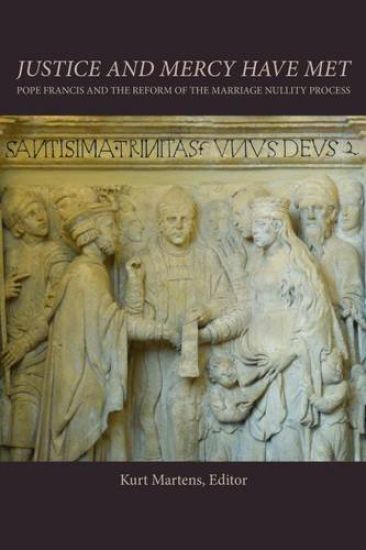
With the promulgation of the motu proprio Mitis iudex Dominus Iesus for the Latin Church and the motu proprio Mitis et misericors Iesus for the Eastern Catholic Churches, both dated August 15, 2015, Pope Francis addressed the calls during the Third Extraordinary General Assembly of the Synod of Bishops (October 5–19, 2014) for a simplified procedure for the declaration of the nullity of marriages. Pope Francis introduced a briefer process to be conducted by the diocesan bishop and he simplified the current ordinary nullity process. The new procedural norms went into effect on December 8, 2015. New legislation always challenges first and foremost the practitioner: how is the new legislation to be understood and applied? Immediately after the new law was made public, a number of articles on this new legislation were published in The Jurist. The School of Canon Law of The Catholic University of America organized a March 2016 Workshop on the very topic of this important procedural reform. These articles are now brought together in one volume to assist those who work with these norms in the various tribunals dealing with marriage cases. It is hoped that this volume will be of great service to all those who serve the people of God in the ministry of justice, and that these contributions will truly be a help in understanding and applying the new norms.
It is often assumed that the law and religion address different spheres of human life. Religion and ethics articulate complex systems of moral reasoning that concern norms, deliberation of ends, cultivation of disposition, and transformation of moral agency. Law, in contrast, seeks to govern human conduct through procedural justice, rights, and public good. ""Doing Justice to Mercy"" challenges this assumption by presenting the reader with an urgent conversation between the law and religion that yields a constructive approach, both theoretically and practically, to the complex role of mercy in our legal process. Authored by legal practitioners, activists, and theorists in addition to theologians and ethicists, the essays collected here are informed by timeless principles, and yet they could not be timelier. The trend in sentencing moves toward an increased severity, and the number of incarcerated people in the United States is at an all-time high. In the half-decade since 9/11, moreover, homeland security has established itself as a permanent fixture in our lives. In this atmosphere, the current volume seeks initially to clarify how justice and mercy intertwine in relation to a number of issues, such as rehabilitation, the death penalty, domestic violence, and war crimes. Exploring the legal, philosophical, and theological grounds for mercy in our courts, the discussion then moves to the practical ways in which mercy may be implemented.
It is often assumed that the law and religion address different spheres of human life. Religion and ethics articulate complex systems of moral reasoning that concern norms, deliberation of ends, cultivation of disposition, and transformation of moral agency. Law, in contrast, seeks to govern human conduct through procedural justice, rights, and public good. ""Doing Justice to Mercy"" challenges this assumption by presenting the reader with an urgent conversation between the law and religion that yields a constructive approach, both theoretically and practically, to the complex role of mercy in our legal process. Authored by legal practitioners, activists, and theorists in addition to theologians and ethicists, the essays collected here are informed by timeless principles, and yet they could not be timelier. The trend in sentencing moves toward an increased severity, and the number of incarcerated people in the United States is at an all-time high. In the half-decade since 9/11, moreover, homeland security has established itself as a permanent fixture in our lives. In this atmosphere, the current volume seeks initially to clarify how justice and mercy intertwine in relation to a number of issues, such as rehabilitation, the death penalty, domestic violence, and war crimes. Exploring the legal, philosophical, and theological grounds for mercy in our courts, the discussion then moves to the practical ways in which mercy may be implemented.
Where Justice and Mercy Meet: Catholic Opposition to the Death Penalty comprehensively explores the Catholic stance against capital punishment in new and important ways. The broad perspective of this book has been shaped in conversation with the Catholic Mobilizing Network to End the Use of the Death Penalty, as well as through the witness of family members of murder victims and the spiritual advisors of condemned inmates.The book offers the reader new insight into the debates about capital punishment; provides revealing, and sometimes surprising, information about methods of execution; and explores national and international trends and movements related to the death penalty. It also addresses how the death penalty has been intertwined with racism, the high percentage of the mentally disabled on death row, and how the death penalty disproportionately affects the poor.The foundation for the church's position on the death penalty is illuminated by discussion of the life and death of Jesus, Scripture, the Mass, the Catechism of the Catholic Church, and the teachings of Pope John Paul II. Written for concerned Catholics and other interested readers, the book contains contemporary stories and examples, as well as discussion questions to engage groups in exploring complex issues.
Many academics have assumed that America's Southern Baptists expressed little social conscience. This study challenges this view, arguing that Southern Baptists in the late 19th and early 20th centuries were more attentive to social concerns than has been supposed.