

Kirjahaku
Etsi kirjoja tekijän nimen, kirjan nimen tai ISBN:n perusteella.
1000 tulosta hakusanalla Michael D. Call

Are You the Master of Your Domain? The Ultimate 1990's Trivia Book
Michael D. Craig
Createspace Independent Publishing Platform
2017
nidottu
What do you remember about the "Go-Go 90s"? The Spice Girls? Lewinskygate? Melrose Place? The O.J. Simpson Trial? Grunge Rock? The 1990s was an unforgettable decade, so why not test your knowledge of the Clinton Years and find out how much useless information your brain can store Do you remember: What was Kramer's first name on Seinfeld? Who was the never-fully seen neighbor on Home Improvement?What film featured the phrase "Hakuna Matata"? What NBA bad boy did Madonna date during the 90s? If you know the answers to these questions, you will pass the test

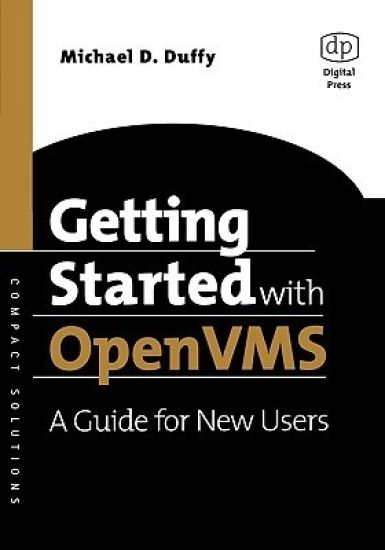
OpenVMS professionals have long enjoyed a robust, full-featured operating system running the most mission-critical applications in existence. However, many of today's graduates may not yet have had the opportunity to experience it for themselves. Intended for an audience with some knowledge of operating systems such as Windows, UNIX and Linux, Getting Started with OpenVMS introduces the reader to the OpenVMS approach. Part 1 is a practical introduction to get the reader started using the system. The reader will learn the OpenVMS terminology and approach to common concepts such as processes and threads, queues, user profiles, command line and GUI interfaces and networking. Part 2 provides more in-depth information about the major components for the reader desiring a more technical description. Topics include process structure, scheduling, memory management and the file system. Short sections on the history of OpenVMS, including past, present, and future hardware support (like the Intel Itanium migration), are included. OpenVMS is considered in different roles, such as a desktop system, a multi-user system, a network server, and in a combination of roles.
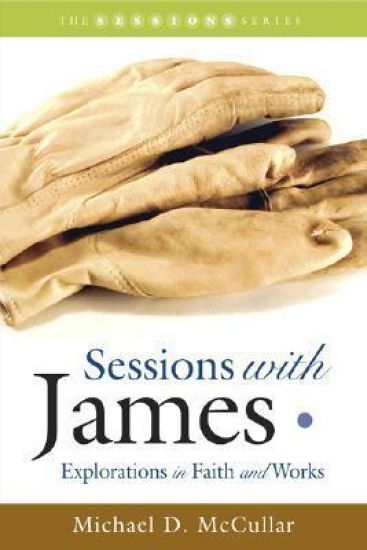

Sessions with Timothy & Titus is an eight-session study unit designed to provide a compelling preview to the books of 1& 2 Timothy and Titus. Each session is followed by a thought-provoking page of questions that allow for a deeper experience of the scriptural passages. These resource pages can be used by seminar leaders during preparation and group discussion, as well as in individual Bible study.Michael McCullar takes readers on a journey through Paul's two letters to Timothy and his letter to Titus. Commonly referred to as the Pastoral Epistles, these personal letters served as guidance to a pair of young, inexperienced church leaders who required structured guidance and encouragement. Students of these letters today, however, will find that Paul's advice to Timothy and Titus contain timeless teachings for leaders of any age.
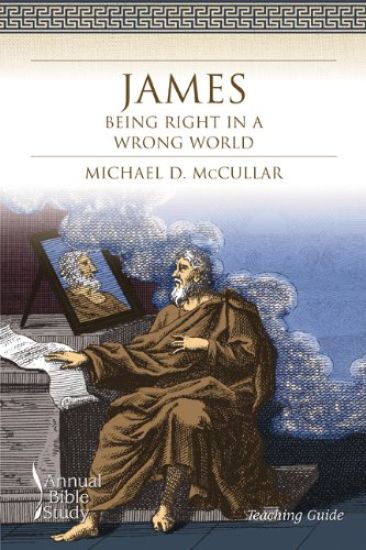
James wrote in an extraordinary time in history and to a unique people. Unlike Paul, who wrote primarily to congregations defined by Gentile believers, James wrote to a dispersed and persecuted fellowship of Hebrew Christians who would soon endure even more difficulty in the coming years. James's letter had a two-fold intent: 1) Encourage these new believers to remain strong in the face of increasing persecution. 2) Equip them to continue in the faith throughout eras of hardship. If the dispersed believers lived exemplary lives among unfamiliar people in new areas, they could be living witnesses to the reality of Jesus as the Hebrew Messiah. According to James, the way of God is accepting the reality of persecution and applying faith to each and every instance. This "holification" of suffering that had been modeled by Jesus could indeed provide excellent witness to the reality of their faith. As James "tells it like it is" he consistently offers paths to effective living that can only be accessed through a personal relationship with God. Michael D. McCullar is the executive pastor of Johns Creek Baptist Church, Alpharetta, Georgia. He is a graduate of the University of Alabama-Birmingham, New Orleans Baptist Seminary, and Oxford Graduate School. He is the author of Sessions with James, Sessions with Corinthians, Sessions with Timothy & Titus, A Christian's Guide to Islam, and co-author of Building Blocks for Sunday School Growth and Sessions with Mark.
Sessions with Ephesians
Michael D McCullar; William L Self
Smyth Helwys Publishing, Incorporated
2015
pokkari
Sessions with Ephesians is a nine-session study unit designed to explore Paul's response to a young congregation in need of a definable doctrine and a theological document to meet the needs of an expanding church that was literally being invaded by divisive and contrary philosophies. Each session is followed by thought-provoking questions that allow for a deeper experience of the scriptural passages. Ephesians has been called "the most contemporary book in the Bible." Strip it of just a few first-century references and it would be easily applicable to the modern church. It was, however, directed to the church of Paul's day that struggled with issues of inclusion and moving beyond the constraints of ancient Judaism. In this letter we see where God wants to take the church, and, if we truly internalize its words, we see our own unique role in God's plans.

In this volume, Dr. Michael D. Press publishes the complete Iron Age corpus of terracotta anthropomorphic and zoomorphic figurines from the Leon Levy Expedition. Adapting a methodology of typology, iconography, and iconology, Press lays out his theoretical framework for analyzing and understanding the figurines of Ashkelon and those from Philistine cultures. Throughout this study, which covers nearly six centuries of Philistine life, the well-dated archaeological contexts of the figurines are stressed as much as their form and decoration. With an uncanny eye for form and detail, Press succeeds in changing our understanding of Philistine iconography while providing a model of method and theory that could be applied to the coroplastic art of many cultures.
The economic boom of the 1990s created huge wealth for the bosses, but benefited workers hardly at all. At the same time, the bosses were able to take the political initiative and even the moral high ground, while workers were often divided against each other. This new book by leading labor analyst Michael D. Yates seeks to explain how this happened, and what can be done about it. Essential to both tasks is "naming the system"--the system that ensures that those who do the work do not benefit from the wealth they produce. Yates draws on recent data to show that the growing inequality--globally, and within the United States--is a necessary consequence of capitalism, and not an unfortunate side-effect that can be remedied by technical measures. To defend working people against ongoing attacks--on their working conditions, their living standards, and their future and that of their children--and to challenge inequality, it is necessary to understand capitalism as a system and for labor to challenge the political dominance of capitalist interests.Naming the System examines contemporary trends in employment and unemployment, in hours of work, and in the nature of jobs. It shows how working life is being reconfigured today, and how the effects of this are masked by mainstream economic theories. It uses numerous concrete examples to relate larger theoretical issues to everyday experience of the present-day economy. And it sets out the strategic options for organized labor in the current political context, in which the U.S.-led war on terrorism threatens to eclipse the anti-globalization movement.
The road trip is a staple of modern American literature. But nowhere in American literature, until now, has a left-wing economist hit the road, observing and interpreting the extraordinary range and spectacle of U.S. life, bringing out its conflicts and contradictions with humor and insight. Disillusioned with academic life after thirty-two years teaching economics, Michael D. Yates took early retirement in 2001, with a pension account that had doubled during the dot.com frenzy of the late 1990s. He and his wife Karen sold their house, got rid of their belongings, and have moved around the country since then, often spending months at a time on the road. Michael and Karen spent the summer of 2001 in Yellowstone National Park, where Michael worked as a hotel front-desk clerk. They moved to Manhattan for a year, where he worked for Monthly Review. From there they went to Portland, Oregon, to explore the Pacific Northwest. After five months of travel in Summer and Fall 2004, they settled in Miami Beach. Ahead of the 2005 hurricane season, they went back on the road, settling this time in Colorado. "Cheap Motels and a Hotplate" is both an account of their adventures and a penetrating examination of work and inequality, race and class, alienation and environmental degradation in the small towns and big cities of the contemporary United States.
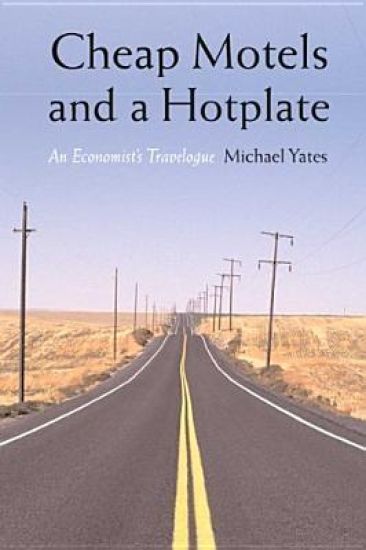
The road trip is a staple of modern American literature. But nowhere in American literature, until now, has a left-wing economist hit the road, observing and interpreting the extraordinary range and spectacle of U.S. life, bringing out its conflicts and contradictions with humor and insight. Disillusioned with academic life after thirty-two years teaching economics, Michael D. Yates took early retirement in 2001, with a pension account that had doubled during the dot.com frenzy of the late 1990s. He and his wife Karen sold their house, got rid of their belongings, and have moved around the country since then, often spending months at a time on the road. Michael and Karen spent the summer of 2001 in Yellowstone National Park, where Michael worked as a hotel front-desk clerk. They moved to Manhattan for a year, where he worked for Monthly Review. From there they went to Portland, Oregon, to explore the Pacific Northwest. After five months of travel in Summer and Fall 2004, they settled in Miami Beach. Ahead of the 2005 hurricane season, they went back on the road, settling this time in Colorado. "Cheap Motels and a Hotplate" is both an account of their adventures and a penetrating examination of work and inequality, race and class, alienation and environmental degradation in the small towns and big cities of the contemporary United States.
In this new edition of Why Unions Matter, Michael D. Yates shows why unions still matter. Unions mean better pay, benefits, and working conditions for their members; they force employers to treat employees with dignity and respect; and at their best, they provide a way for workers to make society both more democratic and egalitarian. Yates uses simple language, clear data, and engaging examples to show why workers need unions, how unions are formed, how they operate, how collective bargaining works, the role of unions in politics, and what unions have done to bring workers together across the divides of race, gender, religion, and sexual orientation. The new edition not onlyupdates the first, but also examines the record of the New Voice slate that took control of the AFL-CIO in 1995, the continuing decline in union membership and density, the Change to Win split in 2005, the growing importance of immigrant workers, the rise of worker centers, the impacts of and labor responses to globalization, and the need for labor to have an independent political voice. This is simply the best introduction to unions on the market.

In early 2011, the nation was stunned to watch Wisconsin's state capitol in Madison come under sudden and unexpected occupation by union members and their allies. The protests to defend collective bargaining rights were militant and practically unheard of in this era of declining union power. Nearly forty years of neoliberalism and the most severe economic crisis since the Great Depression have battered the labor movement, and workers have been largely complacent in the face of stagnant wages, slashed benefits and services, widening unemployment, and growing inequality. That is, until now. Under pressure from a union-busting governor and his supporters in the legislature, and inspired by the massive uprisings in Tunisia and Egypt, workers in Wisconsin shook the nation with their colossal display of solidarity and outrage. Their struggle is still ongoing, but there are lessons to be learned from the Wisconsin revolt. This timely book brings together some of the best labor journalists and scholars in the United States, many of whom were on the ground at the time, to examine the causes and impact of events, and suggest how the labor movement might proceed in this new era of union militancy.
“Michael Yates’s passion and respect for the class he came out of delivers a book that is especially accessible without retreating from the complexities and internal contradictions of working class life and organization—a book committed not only to defending workers, but also to building on their potentials to transform society.”—Sam Gindin, former chief economist, Canadian Auto Workers Union; Packer Visitor in Social Justice, Political Science Dept., York University, Toronto One of the horrors of the capitalist system is that slave labor, which was central to the formation and growth of capitalism itself, is still fully able to coexist alongside wage labor. But, as Karl Marx points out, it is the fact of being paid for one's work that validates capitalism as a viable socio-economic structure. Beneath this veil of “free commerce” – where workers are paid only for a portion of their workday, and buyers and sellers in the marketplace face each other as “equals” – lies a foundation of immense inequality. Yet workers have always rebelled. They've organized unions, struck, picketed, boycotted, formed political organizations and parties – sometimes they have actually won and improved their lives. But, Marx argued, because capitalism is the apotheosis of class society, it must be the last class society: it must, therefore, be destroyed. And only the working class, said Marx, is capable of creating that change. In his timely and innovative book, Michael D. Yates asks if the working class can, indeed, change the world. Deftly factoring in such contemporary elements as sharp changes in the rise of identity politics and the nature of work, itself, Yates asks if there can, in fact, be a thing called the working class? If so, how might it overcome inherent divisions of gender, race, ethnicity, religion, location – to become a cohesive and radical force for change? Forcefully and without illusions, Yates supports his arguments with relevant, clearly explained data, historical examples, and his own personal experiences. This book is a sophisticated and prescient understanding of the working class, and what all of us might do to change the world.
“Michael Yates’s passion and respect for the class he came out of delivers a book that is especially accessible without retreating from the complexities and internal contradictions of working class life and organization—a book committed not only to defending workers, but also to building on their potentials to transform society.”—Sam Gindin, former chief economist, Canadian Auto Workers Union; Packer Visitor in Social Justice, Political Science Dept., York University, Toronto One of the horrors of the capitalist system is that slave labor, which was central to the formation and growth of capitalism itself, is still fully able to coexist alongside wage labor. But, as Karl Marx points out, it is the fact of being paid for one's work that validates capitalism as a viable socio-economic structure. Beneath this veil of “free commerce” – where workers are paid only for a portion of their workday, and buyers and sellers in the marketplace face each other as “equals” – lies a foundation of immense inequality. Yet workers have always rebelled. They've organized unions, struck, picketed, boycotted, formed political organizations and parties – sometimes they have actually won and improved their lives. But, Marx argued, because capitalism is the apotheosis of class society, it must be the last class society: it must, therefore, be destroyed. And only the working class, said Marx, is capable of creating that change. In his timely and innovative book, Michael D. Yates asks if the working class can, indeed, change the world. Deftly factoring in such contemporary elements as sharp changes in the rise of identity politics and the nature of work, itself, Yates asks if there can, in fact, be a thing called the working class? If so, how might it overcome inherent divisions of gender, race, ethnicity, religion, location – to become a cohesive and radical force for change? Forcefully and without illusions, Yates supports his arguments with relevant, clearly explained data, historical examples, and his own personal experiences. This book is a sophisticated and prescient understanding of the working class, and what all of us might do to change the world.
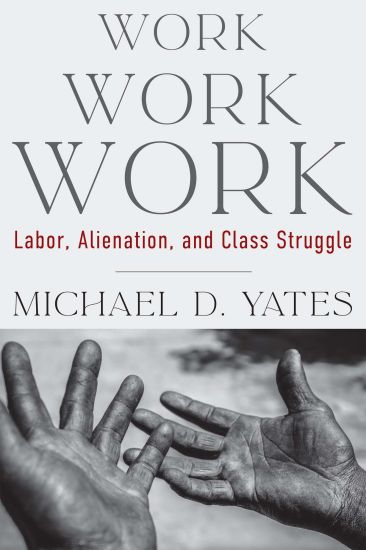
Explains the reality of labor markets and the nature and necessity of class struggle For most economists, labor is simply a commodity, bought and sold in markets like any other – and what happens after that is not their concern. Individual prospective workers offer their services to individual employers, each acting solely out of self-interest and facing each other as equals. The forces of demand and supply operate so that there is neither a shortage nor a surplus of labor, and, in theory, workers and bosses achieve their respective ends. Michael D. Yates, in Work Work Work: Labor, Alienation, and Class Struggle, offers a vastly different take on the nature of the labor market. This book reveals the raw truth: The labor market is in fact a mere veil over the exploitation of workers. Peek behind it, and we clearly see the extraction, by a small but powerful class of productive property-owning capitalists, of a surplus from a much larger and propertyless class of wage laborers. Work Work Work offers us a glimpse into the mechanisms critical to this subterfuge: In every workplace, capital implements a comprehensive set of control mechanisms to constrain those who toil from defending themselves against exploitation. These include everything from the herding of workers into factories to the extreme forms of surveillance utilized by today’s “captains of industry” like the Waltons family (of the Walmart empire) and Jeff Bezos. In these strikingly lucid and passionately written chapters, Yates explains the reality of labor markets, the nature of work in capitalist societies, and the nature and necessity of class struggle, which alone can bring exploitation – and the system of control that makes it possible – to a final end.

Explains the reality of labor markets and the nature and necessity of class struggle For most economists, labor is simply a commodity, bought and sold in markets like any other – and what happens after that is not their concern. Individual prospective workers offer their services to individual employers, each acting solely out of self-interest and facing each other as equals. The forces of demand and supply operate so that there is neither a shortage nor a surplus of labor, and, in theory, workers and bosses achieve their respective ends. Michael D. Yates, in Work Work Work: Labor, Alienation, and Class Struggle, offers a vastly different take on the nature of the labor market. This book reveals the raw truth: The labor market is in fact a mere veil over the exploitation of workers. Peek behind it, and we clearly see the extraction, by a small but powerful class of productive property-owning capitalists, of a surplus from a much larger and propertyless class of wage laborers. Work Work Work offers us a glimpse into the mechanisms critical to this subterfuge: In every workplace, capital implements a comprehensive set of control mechanisms to constrain those who toil from defending themselves against exploitation. These include everything from the herding of workers into factories to the extreme forms of surveillance utilized by today’s “captains of industry” like the Waltons family (of the Walmart empire) and Jeff Bezos. In these strikingly lucid and passionately written chapters, Yates explains the reality of labor markets, the nature of work in capitalist societies, and the nature and necessity of class struggle, which alone can bring exploitation – and the system of control that makes it possible – to a final end.