
Kirjahaku
Etsi kirjoja tekijän nimen, kirjan nimen tai ISBN:n perusteella.
1000 tulosta hakusanalla Michelle Perry

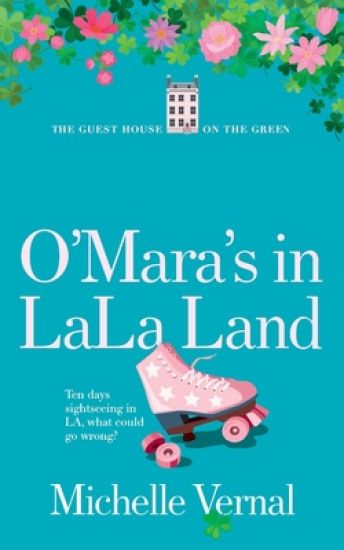
Welcome to the guesthouse on the Green, where Mammy and her girls will make you feel part of the family. Settle in and enjoy your stay at O'Mara's, where stories abound, romance lurks and laughter sounds. One of the O'Mara girls is expecting, but who?Mammy O'Mara, upon inadvertently finding out her daughter's pregnant, immediately calls a family conference with disastrous results. At a time when the sisters need each other the most, they're at loggerheads, and for one of them, her future as a single mammy is terrifying.Bronagh Hanrahan, O'Mara's receptionist, wonders why her beau, Leonard, is reluctant to introduce her to his sister, Joan. Her curiosity gets the better of her, and she takes matters into her own hands. Joan, she decides, is a woman desperately in need of help.Sometimes you can't fix what's broken, though. Or can you?
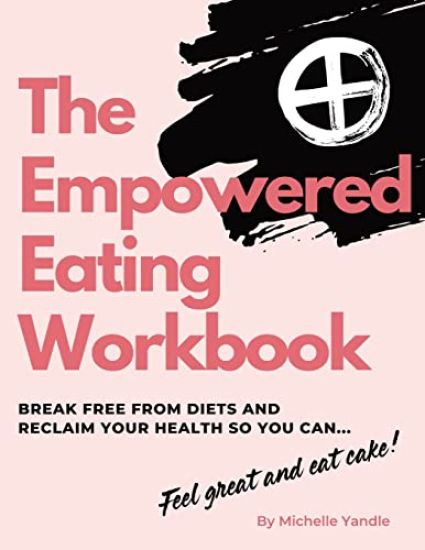
The Empowered Eating Workbook is a life-changing manual for anyone who struggles with food and their body. Based on ancient principles, this modern approach to food and health will bridge the gap between "knowing" and "doing" and change the way you look at yourself and dieting for good. The Empowered Eating Programme used alongside this workbook is ideal for anyone who suffers from any food issues including overeating, yo-yo dieting, or issues with weight and body size. It provides a long-term solution for physical, emotional, spiritual and intellectual health, one simple step at a time. This book will explore: Guidelines to help you eat "instinctively" so that you can customize your food choices to those that empower you and make you feel amazing. Strategies to help you feel in charge of your food choices and no longer feel helpless around food. Tips to help you let go of obsessive thinking around food so that you can simply get more enjoyment from it and achieve your health goals without diet, restriction or deprivation. Learn how to get more joy out of life through self care and other lifestyle supports so that food will ultimately lose its power. Michelle Yandle is a registered health coach, educator, mindful eating instructor and holds a graduate diploma in education and a graduate degree in Holistic Performance Nutrition. Michelle has authored 5 books and travels internationally to speak about Empowered Eating. Learn more at www.michelleyandle.com

Welcome to the guesthouse on the Green, where Mammy and her girls will make you feel part of the family. Settle in and enjoy your stay at O'Mara's, where stories abound, romance lurks and laughter sounds. Aisling O'Mara. She's married to a Ronan Keating look-a-like, and okay, he can't sing to save himself, but he does think the world of her. Her life would be perfect if it weren't for the fact Mother Nature hasn't seen fit to bestow a child upon them yet. The tick-tock of her biological clock is getting louder, and she's determined to make it happen. But at what cost?Ita Finnegan. O'Mara's Director of Housekeeping, wants to be happy. She's decided the key to finding happiness is to find love, and she's hatched a plan to meet her perfect match. But how can she expect someone else to love her when she doesn't like herself very much?Meanwhile, Mammy O'Mara is planning a quiet soiree with neighbours and family to introduce herself and Donal to the neighbourhood, but, somehow, it's morphed into the Howth House party of the year. Oh, and you're invited

Doug's plans for retirement have been put on hold as he feels duty bound through friendship and guilt to go to Columbia and rescue his old friend Paulo.Follow the twists and turns of the drama that only a Columbian cartel can bring. Enter Jane, whose master plan is to seek the revenge of her husband's death as the killer is now hiding in Australia.Could this woman be the next love of Doug's life?

Sally Gelee is a commitment phobe looking for lasting love.She works in a rest home, it's a nice, safe environment; the men there aren't fast enough to catch her and they pose no threat. Being a commitment-phobe, that suits her, but she's also a hopeless romantic searching for forever love.Sally keeps a box of exs in the garage; a catalogue of her past dating disasters, to remind her of what she doesn't want in a relationship. She uses a thigh test find Mr Right, if his thigh doesn't feel right then he's not the one. It can't just be a nice thigh; it has to be the right thigh.Just when she thinks she has finally found her dream man - he plays hard to get. Meanwhile her stalker ex, Gone Don, won't stay gone and pops up at random, freaking her out. And, the new next- door neighbour is a right cretin.Will she manage to conquer her commitment phobia and find lasting love, or will she run?


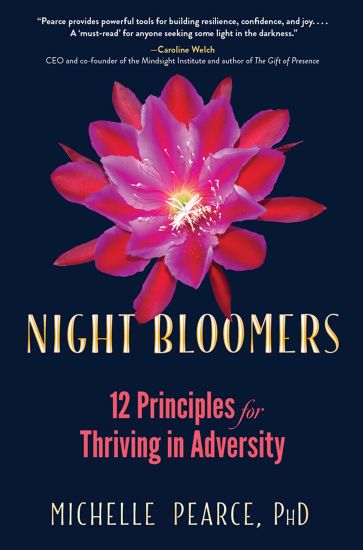
A clinical psychologist specializing in behavioral medicine presents a dozen practical approaches to transforming loss, pain, and suffering into positive growth and hope. Just as some flowers only bloom in the dark, so too, some people only grow by experiencing tough times. Each chapter explains an empirically based principle for handling adversity, followed by writing prompts designed to help readers experience the axiom personally. Tools such as self-reflection, meaning-making, narrative creation, benefit-finding, and inspired value-based action help readers move through their trauma toward a new exuberance for life.
The Symbolist art movement of the late nineteenth century forms an important bridge between Impressionism and Modernism. But because Symbolism, more than the two movements it links, emphasizes ideas over objects and events, it has suffered from vague and conflicting definitions. In "Symbolist Art in Context", Michelle Facos offers a clearly written, comprehensive, and accessible description of this challenging subject. Reaching back into Romanticism for Symbolism's origins, Facos argues that Symbolism enabled artists (including Munch and Gauguin) to confront an increasingly uncertain and complex world - one to which pessimists responded with themes of decadence and degeneration and optimists with idealism and reform.
Set against the cultural and political backdrop of interwar Europe and the Americas, "Poetry in Pieces" is the first major study of the Peruvian poet Cesar Vallejo (1892-1938) to appear in English in more than thirty years. Vallejo lived and wrote in two distinct settings - Peru and Paris - which were continually crisscrossed by new developments in aesthetics, politics, and practices of everyday life; his poetry and prose therefore need to be read in connection with modernity in all its forms and spaces. Michelle Clayton combines close readings of Vallejo's writings with cultural, historical, and theoretical analysis, connecting Vallejo - and Latin American poetry - to the broader panorama of international modernism and the avant-garde, and to writers and artists such as Rainer Maria Rilke, James Joyce, Georges Bataille, and Charlie Chaplin. "Poetry in Pieces" sheds new light on one of the key figures in twentieth-century Latin American literature, while exploring ways of rethinking the parameters of international lyric modernity.

Every year over 200 million peasants flock to China's urban centers, providing a profusion of cheap labor that helps fuel the country's staggering economic growth. Award-winning journalist Michelle Dammon Loyalka follows the trials and triumphs of eight such migrants - including a vegetable vendor, an itinerant knife sharpener, a free-spirited recycler, and a cash-strapped mother - offering an inside look at the pain, self-sacrifice, and uncertainty underlying China's dramatic national transformation. At the heart of the book lies each person's ability to "eat bitterness" - a term that roughly means to endure hardships, overcome difficulties, and forge ahead. These stories illustrate why China continues to advance, even as the rest of the world remains embroiled in financial turmoil. At the same time, "Eating Bitterness" demonstrates how dealing with the issues facing this class of people constitutes China's most pressing domestic challenge.
Every year over 200 million peasants flock to China's urban centers, providing a profusion of cheap labor that helps fuel the country's staggering economic growth. Award-winning journalist Michelle Dammon Loyalka follows the trials and triumphs of eight such migrants - including a vegetable vendor, an itinerant knife sharpener, a free-spirited recycler, and a cash-strapped mother - offering an inside look at the pain, self-sacrifice, and uncertainty underlying China's dramatic national transformation. At the heart of the book lies each person's ability to "eat bitterness" - a term that roughly means to endure hardships, overcome difficulties, and forge ahead. These stories illustrate why China continues to advance, even as the rest of the world remains embroiled in financial turmoil. At the same time, Eating Bitterness demonstrates how dealing with the issues facing this class of people constitutes China's most pressing domestic challenge.

Today the West tends to understand the Middle East primarily in terms of geopolitics: Islam, oil, and nuclear weapons. But in the nineteenth century it was imagined differently. The interplay of geography and politics found definition in a broader set of concerns that understood the region in terms of the moral, humanitarian, and religious commitments of the British empire. Smyrna's Ashes re-evaluates how this story of the "Eastern Question" shaped the cultural politics of geography, war, and genocide in the mapping of a larger Middle East after World War I.

This major study of Kant provides a detailed examination of the development and function of the doctrine of transcendental illusion in his theoretical philosophy. The author shows that a theory of 'illusion' plays a central role in Kant's arguments about metaphysical speculation and scientific theory. Indeed, she argues that we cannot understand Kant unless we take seriously his claim that the mind inevitably acts in accordance with ideas and principles that are 'illusory'. Taking this claim seriously, we can make much better sense of Kant's arguments and reach a deeper understanding of the role he allots human reason in science.
At first glance, Paul's words to the Corinthians about being the body of Christ seem simple and straightforward. He compares them with a human body so that they may be encouraged to work together, each member contributing to the good of the whole according to his or her special gift. However, the passage raises several critical questions which point to its deeper implications. Does Paul mean that the community is 'like' a body or is he saying that they are in some sense a real body? What is the significance of being specifically the body of Christ? Is the primary purpose of the passage to instruct on the correct use of spiritual gifts or is Paul making a statement about the identity of the Christian community? Michelle Lee examines Paul's instructions in 1 Corinthians 12-14 against the backdrop of Hellenistic moral philosophy, and especially Stoicism.
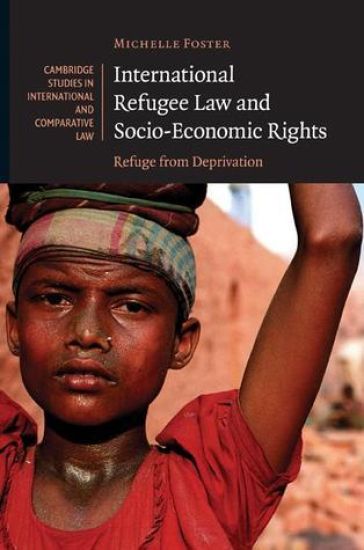
International Refugee Law and Socio-Economic Rights
Michelle Foster
Cambridge University Press
2009
pokkari
A range of emerging refugee claims is beginning to challenge the boundaries of the Refugee Convention regime and question traditional distinctions between 'economic migrants' and 'political refugees'. This book, first published in 2007, identifies the conceptual and analytical challenges presented by claims based on socio-economic deprivation, and undertakes an assessment of the extent to which these challenges may be overcome by a creative interpretation of the Refugee Convention, consistent with correct principles of international treaty interpretation. The central argument is that, notwithstanding the dichotomy between 'economic migrants' and 'political refugees', the Refugee Convention is capable of accommodating a more complex analysis which recognizes that many claims based on socio-economic deprivation are indeed properly considered within the purview of the Refugee Convention. This, the first book to consider these issues, will be of great interest to refugee law scholars, advocates, decision-makers and non-governmental organizations.

From Nurturing the Nation to Purifying the Volk
Michelle Mouton
Cambridge University Press
2009
pokkari
Fearing that the future of the nation was at stake following the First World War, German policymakers vastly expanded social welfare programs to shore up women and families. Just over a decade later, the Nazis seized control of the state and created a radically different, racially driven gender and family policy. This book explores Weimar and Nazi policy to highlight the fundamental, far-reaching change wrought by the Nazis and the disparity between national family policy design and its implementation at the local level. Relying on a broad range of sources - including court records, sterilization files, church accounts, and women's oral histories - it demonstrates how local officials balanced the benefits of marriage, divorce, and adoption against budgetary concerns, church influence, and their own personal beliefs. Throughout both eras individual Germans collaborated with, rebelled against, and evaded state mandates, in the process fundamentally altering the impact of national policy.
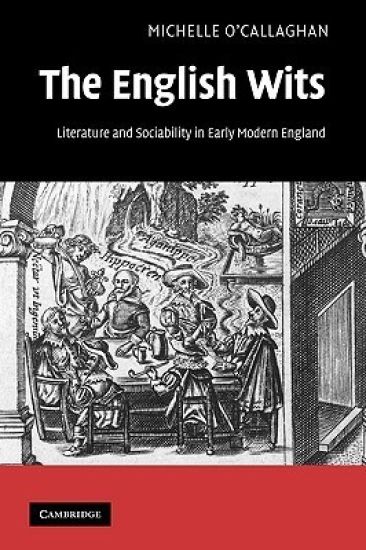
In the late sixteenth and early seventeenth centuries the Inns of Court and fashionable London taverns developed a culture of clubbing, urban sociability and wit. The convivial societies that emerged created rituals to define social identities and to engage in literary play and political discussion. Michelle O'Callaghan argues that the lawyer-wits, including John Hoskyns, in company with authors such as John Donne, Ben Jonson and Thomas Coryate, consciously reinvigorated humanist traditions of learned play. Their experiments with burlesque, banquet literature, parody and satire resulted in a volatile yet creative dialogue between civility and licence, and between pleasure and the violence of scurrilous words. The wits inaugurated a mode of literary fellowship that shaped the history and literature of sociability in the seventeenth century. This study will provide many insights for historians and literary scholars of the period.