Kirjojen hintavertailu. Mukana 12 390 323 kirjaa ja 12 kauppaa.

Kirjahaku

Etsi kirjoja tekijän nimen, kirjan nimen tai ISBN:n perusteella.

1000 tulosta hakusanalla N. A. M. Rodger

The Car of Destiny

The Car of Destiny

C. N. Williamson; A. M. Williamson

Createspace Independent Publishing Platform
2016
nidottu
"Motor to Biarritz? You must be mad," said Dick Waring. "Why?" I asked; though I knew why as well as he. "A nice way to receive an invitation." "If you must know, it's because the King of Spain will be there, visiting his English fianc e," Dick answered. "I wish him happiness," said I. "I hear he's a fine young fellow. Why isn't there room in Biarritz for the King and for me?" "The detectives won't think there is, nor will they give you credit for your generous sentiments," said Dick.

Mallarmé on Fashion

Mallarmé on Fashion

A. M. Cain; P. N. Furbank

Berg Publishers
2004
sidottu
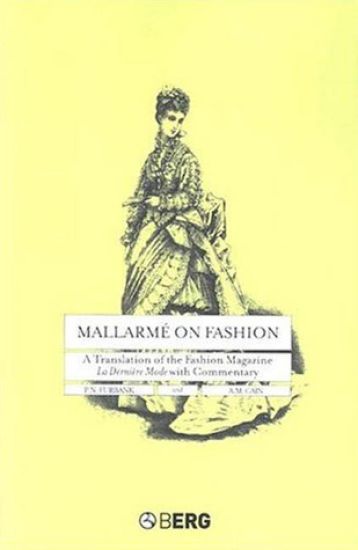
In the later months of 1874, the great French poet, Stephane Mallarme, undertook a highly idiosyncratic project - the publication of a fashion magazine (La Derniere Mode) that he almost single-handedly wrote and edited. Using a variety of feminine and masculine pseudonyms to theorize about the concept of fashion and to report and advise on womens clothing, popular vacation destinations, home furnishings and entertainment, Mallarme created a spectacularly original work that lies somewhere between Baudelaires seminal treatment of fashion in his essay on modernity, The Painter of Modern Life, and The Fashion System, Barthes brilliant semiology of clothing in the latter twentieth century. But the distinguishing feature of Mallarms magazine, and what differentiates it from the writing of Baudelaire and Barthes, is that it explores the nature of fashion from the inside. It is a genuine fashion magazine aspiring to lead fashion, though at the same time, by ingenious and appealing ironies, subtly satirizing this whole genre of writing. Various theories have been entertained about the work in the past, such as its being a prose poem, or alternatively a hoax or a mere money-making venture, but the present translators, in their commentary, argue that such guesses are hopelessly off the mark. Complete with the original artwork and a contextualizing introduction and commentary, Furbank and Cains definitive translation of one of French literatures greatest puzzles and surprises represents a major contribution to students, critics, theoreticians, and intellectual historians alike.
Mallarmé on Fashion

Mallarmé on Fashion

A. M. Cain; P. N. Furbank

Berg Publishers
2004
nidottu
In the later months of 1874, the great French poet, Stephane Mallarme, undertook a highly idiosyncratic project - the publication of a fashion magazine (La Derniere Mode) that he almost single-handedly wrote and edited. Using a variety of feminine and masculine pseudonyms to theorize about the concept of fashion and to report and advise on womens clothing, popular vacation destinations, home furnishings and entertainment, Mallarme created a spectacularly original work that lies somewhere between Baudelaires seminal treatment of fashion in his essay on modernity, The Painter of Modern Life, and The Fashion System, Barthes brilliant semiology of clothing in the latter twentieth century. But the distinguishing feature of Mallarms magazine, and what differentiates it from the writing of Baudelaire and Barthes, is that it explores the nature of fashion from the inside. It is a genuine fashion magazine aspiring to lead fashion, though at the same time, by ingenious and appealing ironies, subtly satirizing this whole genre of writing. Various theories have been entertained about the work in the past, such as its being a prose poem, or alternatively a hoax or a mere money-making venture, but the present translators, in their commentary, argue that such guesses are hopelessly off the mark.Complete with the original artwork and a contextualizing introduction and commentary, Furbank and Cains definitive translation of one of French literatures greatest puzzles and surprises represents a major contribution to students, critics, theoreticians, and intellectual historians alike.
Advanced Chemical and Creep Modeling for Alkali-Aggregate Reaction in Concrete

Advanced Chemical and Creep Modeling for Alkali-Aggregate Reaction in Concrete

Fernando A. N. Silva; Rodrigo F. Roma; Mohamed K. Bourbatache; Mahfoud Tahlaiti; João M. P. Q. Delgado; António C. Azevedo

Springer International Publishing AG
2024
sidottu
This book presents the numerical results of the use of the chemical model to analyse the advancement of the reaction and the mechanical model to simulate creep and shrinkage phenomena in COMSOL Multiphysics®, as a way to reassess concrete structures suffering from those mechanisms. Both models were implemented separately to evaluate their responses and compare them with the theoretical results and experimental benchmarks presented in the literature. The numerical simulation results showed excellent agreement with the experimental results data, with maximum disagreement not exceeding 10%, indicating that the implementation of the developed numerical models behaved very efficiently.
Advanced Chemical and Creep Modeling for Alkali-Aggregate Reaction in Concrete

Advanced Chemical and Creep Modeling for Alkali-Aggregate Reaction in Concrete

Fernando A. N. Silva; Rodrigo F. Roma; Mohamed K. Bourbatache; Mahfoud Tahlaiti; João M. P. Q. Delgado; António C. Azevedo

Springer International Publishing AG
2025
nidottu
This book presents the numerical results of the use of the chemical model to analyse the advancement of the reaction and the mechanical model to simulate creep and shrinkage phenomena in COMSOL Multiphysics®, as a way to reassess concrete structures suffering from those mechanisms. Both models were implemented separately to evaluate their responses and compare them with the theoretical results and experimental benchmarks presented in the literature. The numerical simulation results showed excellent agreement with the experimental results data, with maximum disagreement not exceeding 10%, indicating that the implementation of the developed numerical models behaved very efficiently.