Where do our conventional understandings of health, illness, and the body stem from? What makes them authoritative? How are the boundaries set around these areas of life unsettled in the changing historical and political contexts of science, technology, and health care delivery? These questions are at the heart of Troubling Natural Categories, a collection of essays honouring the tradition of Margaret Lock, one of the preeminent medical anthropologists of our time. Throughout her career, Lock has investigated how medicine sets boundaries around what is deemed "normal" and "natural," and how, in turn, these ideas shape our technical and moral understandings of life, sickness, and death. In this book, nine established medical anthropologists - all former students of Lock - critically engage with her work, offering ethnographic and historical analyses that problematize taken-for-granted constructs in health and medicine in a range of global settings. The essays elaborate cutting-edge themes within medical anthropology, including the often disturbing, inherently political nature of biomedicine and biotechnology, the medicalization of mental health processes, and the formation of uniquely "local biologies" through the convergence of bodily experience, scientific discourse, and new technologies of care. Troubling Natural Categories not only affirms Margaret Lock's place at the forefront of scholarship but, with these essays, carves out new intellectual directions in the medical social sciences. Contributors include Sean Brotherton, Vinh-Kim Nguyen, Junko Kitanaka, Stephanie Lloyd, Dominique Behague, and Annette Leibing.
Where do our conventional understandings of health, illness, and the body stem from? What makes them authoritative? How are the boundaries set around these areas of life unsettled in the changing historical and political contexts of science, technology, and health care delivery? These questions are at the heart of Troubling Natural Categories, a collection of essays honouring the tradition of Margaret Lock, one of the preeminent medical anthropologists of our time. Throughout her career, Lock has investigated how medicine sets boundaries around what is deemed "normal" and "natural," and how, in turn, these ideas shape our technical and moral understandings of life, sickness, and death. In this book, nine established medical anthropologists - all former students of Lock - critically engage with her work, offering ethnographic and historical analyses that problematize taken-for-granted constructs in health and medicine in a range of global settings. The essays elaborate cutting-edge themes within medical anthropology, including the often disturbing, inherently political nature of biomedicine and biotechnology, the medicalization of mental health processes, and the formation of uniquely "local biologies" through the convergence of bodily experience, scientific discourse, and new technologies of care. Troubling Natural Categories not only affirms Margaret Lock's place at the forefront of scholarship but, with these essays, carves out new intellectual directions in the medical social sciences. Contributors include Sean Brotherton, Vinh-Kim Nguyen, Junko Kitanaka, Stephanie Lloyd, Dominique Behague, and Annette Leibing.
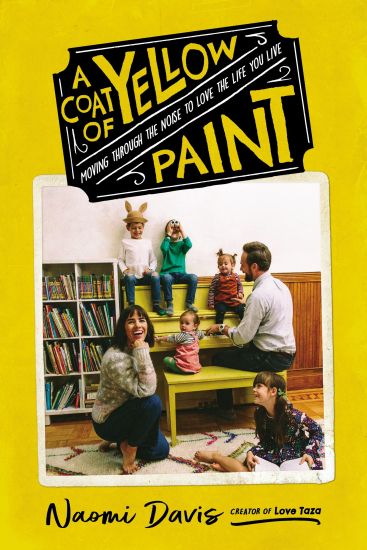
Life doesn’t come with an instruction book for the role of perfect wife and mother. However, as Love Taza creator Naomi Davis?discovered on her journey from newlywed Juilliard dancer to mother of five, a joyful life is a work of art that only you can create for yourself.When Naomi launched the popular blog Love Taza a decade ago, she had no way of knowing where that first blog post would lead or the millions of lives she’d impact.In A Coat of Yellow Paint, Naomi details an exploration of her faith, personal heartaches, challenges balancing a home life with career, motherhood, and her struggles with infertility.Along the way, Naomi illustrates the urgency of celebrating life’s most important things––family, faith, friendship, and an upright piano painted bright yellow––ignoring the critics.Through stories time-stamped?as intimate and vulnerable essays, Naomi shares life lessons she’s learned, including how to:communicate openly and honestly in your marriage and friendshipsbe confident in the choices you make as a mother--and why you’re more than “just a mom”overcome criticism--including from yourself--on body image, infertility, and doing “enough”make childhood feel magical and seek out adventures with your little ones navigate spiritual upheaval and reclaim your faithfind more soulfulness in your social media and online experienceIf you dream of a life celebrating family, self, and work in a way that feels right for you, A Coat of Yellow Paint will?inspire you to drown out the noise of others’ opinions and expectations--so you can be empowered to love your life.
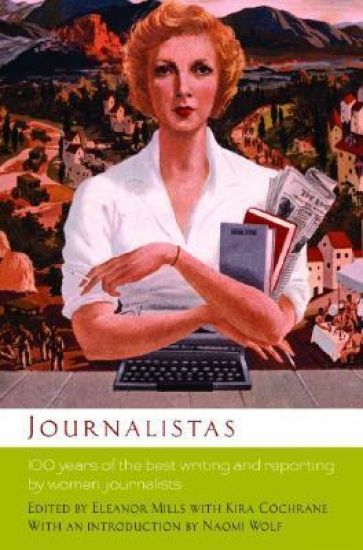
A collection of some of the past century's most influential or controversial journalism by women includes Emma "Red" Goldman's 1916 piece on birth control, Eleanor Roosevelt's call for greater tolerance after the 1943 race riots, and Naomi Wolf's feminism studies as published in Beauty Myth. Original.
Written for public health professionals and students, the Dictionary of Public Health Education and Health Promotion, Second Edition, includes definitions for terms and concepts frequently used in public health education and promotion. The book offers both students and professionals a handy resource and contains a wide range of health education¾related terminologies and effectively eliminates the need for wading through scores of books or articles to find a definition. The book also provides an easily used reference for those working in research or design of public health interventions and Offers a reference list of the terms found most often in the professional literatureIncludes key terms used in related public health disciplines such as epidemiology, health administration, biostatistics, environmental health, and behavioral sciencesPresents terms relevant to the four settings of health promotion and education—community, workplace, primary care, and schoolProvides a useful study aid when preparing for the exam to become a Certified Health Education Specialist (CHES)
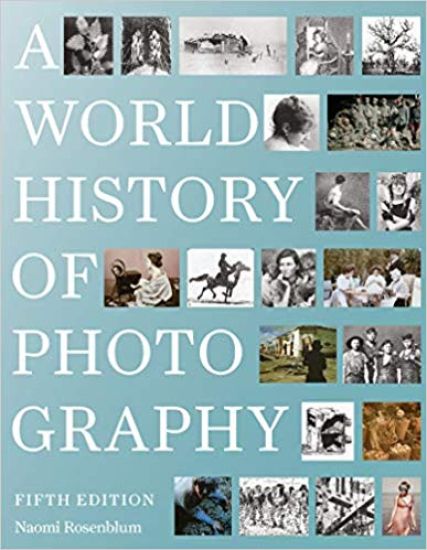
Naomi Rosenblum's classic history of photography traces the evolution of this young art form chronologically and thematically. Exploring the diverse roles that photography has played in the communication of ideas, Rosenblum devotes special attention to topics such as portraiture, documentation, advertising, and photojournalism, and to the camera as a means of personal artistic expression. Her text is illustrated with nearly 900 images by photographers both celebrated and little known, arranged in stimulating juxtapositions that illuminate their visual power. This fifth edition of A World History of Photography is substantively revised and updated. The photography of the past several decades is reevaluated from a contemporary perspective, and international developments are covered in greater detail. The main strands of today's complex universe of digital image-making are masterfully summarised and placed in their historical context, and the careers of representative contemporary photographers are studied in depth. Thoughtfully written, carefully and abundantly illustrated, and provided with a full apparatus - including a chronology, glossary, and annotated bibliography - Rosenblum's volume remains the indispensable work on its subject.
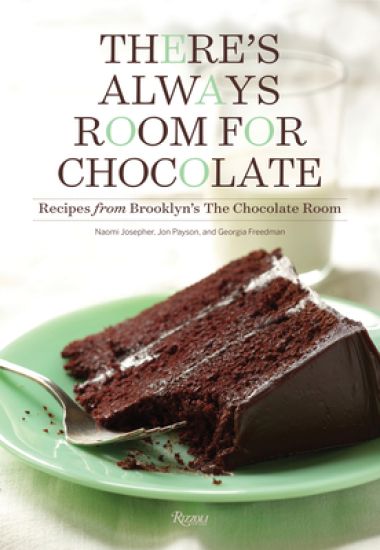
The Chocolate Room has become a place of pilgrimage for chocolate lovers from near and far, thanks to its simple mission: to create treats that bring back those original childhood memories of the pure joy of chocolate. Its chefs have a knack for reconstructing a classic American recipe in ways that improve on the original. Their showstopping Chocolate Layer Cake, for instance, is the cake all other chocolate cakes dream of being; it s made with a blackout pudding filling, three different kinds of chocolate, and a custardy ganache frosting. The book is filled with similar new twists that express the slightly irreverent and creatively whimsical spirit for which Brooklyn has become known: Chocolate Caramel Matzo, Chocolate Cuatro Leches Cake, and Chocolate Stout Gingerbread. Recipes reveal the secret tips behind signature favorites in every category from cakes and puddings to pies and cookies. Confections are geared to be achievable in the home: S mores bars, Rocky Road mounds, and Cookie Chip Chocolates. The book also features informative primers on important techniques including tempering chocolate, whipping cream and eggs, and assembling a cake. There s Always Room for Chocolate is set to become the new essential cookbook for all things chocolate.
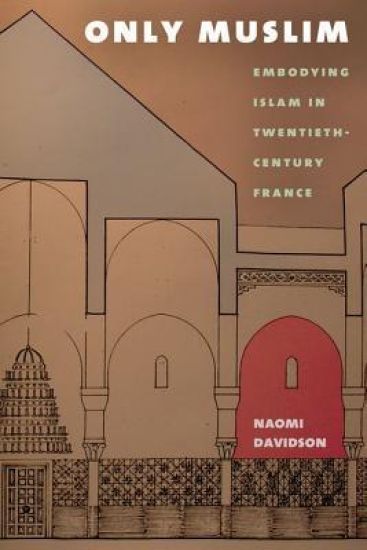
The French state has long had a troubled relationship with its diverse Muslim populations. In Only Muslim, Naomi Davidson traces this turbulence to the 1920s and 1930s, when North Africans first immigrated to French cities in significant numbers. Drawing on police reports, architectural blueprints, posters, propaganda films, and documentation from metropolitan and colonial officials as well as anticolonial nationalists, she reveals the ways in which French politicians and social scientists created a distinctly French vision of Islam that would inform public policy and political attitudes toward Muslims for the rest of the century—Islam français. French Muslims were cast into a permanent "otherness" that functioned in the same way as racial difference. This notion that one was only and forever Muslim was attributed to all immigrants from North Africa, though in time "Muslim" came to function as a synonym for Algerian, despite the diversity of the North and West African population. Davidson grounds her narrative in the history of the Mosquée de Paris, which was inaugurated in 1926 and epitomized the concept of Islam français. Built in official gratitude to the tens of thousands of Muslim subjects of France who fought and were killed in World War I, the site also provided the state with a means to regulate Muslim life throughout the metropole beginning during the interwar period. Later chapters turn to the consequences of the state's essentialized view of Muslims in the Vichy years and during the Algerian War. Davidson concludes with current debates over plans to build a Muslim cultural institute in the middle of a Parisian immigrant neighborhood, showing how Islam remains today a marker of an unassimilable difference.
The French state has long had a troubled relationship with its diverse Muslim populations. In Only Muslim, Naomi Davidson traces this turbulence to the 1920s and 1930s, when North Africans first immigrated to French cities in significant numbers. Drawing on police reports, architectural blueprints, posters, propaganda films, and documentation from metropolitan and colonial officials as well as anticolonial nationalists, she reveals the ways in which French politicians and social scientists created a distinctly French vision of Islam that would inform public policy and political attitudes toward Muslims for the rest of the century—Islam français. French Muslims were cast into a permanent "otherness" that functioned in the same way as racial difference. This notion that one was only and forever Muslim was attributed to all immigrants from North Africa, though in time "Muslim" came to function as a synonym for Algerian, despite the diversity of the North and West African population. Davidson grounds her narrative in the history of the Mosquée de Paris, which was inaugurated in 1926 and epitomized the concept of Islam français. Built in official gratitude to the tens of thousands of Muslim subjects of France who fought and were killed in World War I, the site also provided the state with a means to regulate Muslim life throughout the metropole beginning during the interwar period. Later chapters turn to the consequences of the state's essentialized view of Muslims in the Vichy years and during the Algerian War. Davidson concludes with current debates over plans to build a Muslim cultural institute in the middle of a Parisian immigrant neighborhood, showing how Islam remains today a marker of an unassimilable difference.
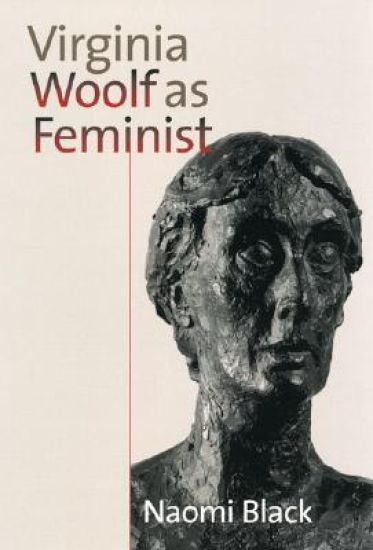
Before the Second World War and long before the second wave of feminism, Virginia Woolf argued that women's experience, particularly in the women's movement, could be the basis for transformative social change. Grounding Virginia Woolf's feminist beliefs in the everyday world, Naomi Black reclaims Three Guineas as a major feminist document. Rather than a book only about war, Black considers it to be the best, clearest presentation of Woolf's feminism. Woolf's changing representation of feminism in publications from 1920 to 1940 parallels her involvement with the contemporary women's movement (suffragism and its descendants, and the pacifist, working-class Women's Co-operative Guild). Black guides us through Woolf's feminist connections and writings, including her public letters from the 1920s as well as "A Society," A Room of One's Own, and the introductory letter to Life As We Have Known It. She assesses the lengthy development of Three Guineas from a 1931 lecture and the way in which the form and illustrations of the book serve as a feminist subversion of male scholarship. Virginia Woolf as Feminist concludes with a discussion of the continuing relevance of Woolf's feminism for third-millennium politics.
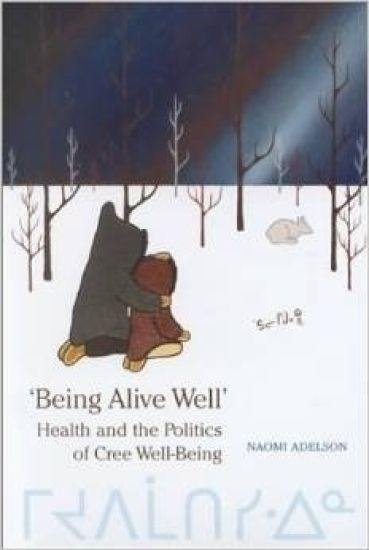
'Being Alive Well': Health and the Politics of Cree Well-Being is a critical medical anthropological analysis of health theory in the social sciences with specific reference to the James Bay Cree of northern Quebec. In it the author argues that definitions of health are not simply reflections of physiological soundness but convey broader cultural and political realities. The book begins with a treatise on the study of health in the social sciences and a call for a broader understanding of the cultural parameters of any definition of health. Following a chapter that outlines the history of the Whapmagoostui (Great Whale River) region and the people, Adelson presents the underlying symbolic foundations of a Cree concept of health, or miyupimaatisiiun. The core of this book is an ethnographic study of the Whapmagoostui Cree and their particular concept of "health" (miyupimaatisiiun or "being alive well"). That concept is mediated by history, cultural practices, and the contemporary world of the Cree, including their fundamental concerns about their land and culture. In the contemporary context, health – or more specifically, "being alive well" – for the Cree of Great Whale is an intimate fusion of social, political, and personal well-being, thus linking individual bodies to a larger socio-political reality.
In 1942 German Nazis and Polish collaborators drove nine-year-old Naomi Rosenberg and her family from the town of Goray, Poland, and into hiding. For nearly two years they were forced to take refuge in a crawl space beneath a barn. In this tense and moving memoir, the author tells of her terror and confusion as a child literally buried alive. Her family owed their survival to the reluctant and constantly wavering support of the barn owners, gentiles torn between compassion for Naomi's family and fear of a Nazi death sentence if the family was discovered.
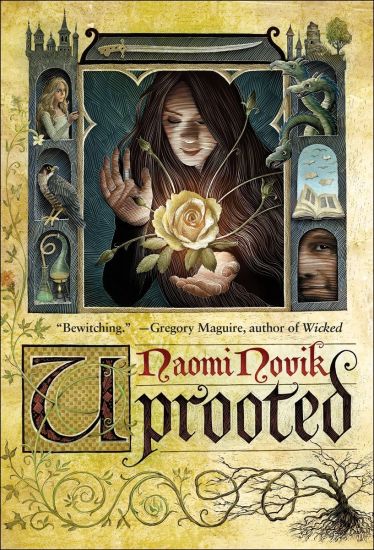
NEBULA AWARD WINNER - HUGO AWARD FINALIST - "If you want a fantasy with strong characters and brilliantly original variations on ancient stories, try Uprooted "--Rick Riordan "Breathtaking . . . a tale that is both elegantly grand and earthily humble, familiar as a Grimm fairy tale yet fresh, original, and totally irresistible."--Publishers Weekly (starred review) ONE OF THE BEST BOOKS OF THE YEAR: NPR, BuzzFeed, Tordotcom, BookPage, Library Journal, Publishers Weekly Agnieszka loves her valley home, her quiet village, the forests and the bright shining river. But the corrupted Wood stands on the border, full of malevolent power, and its shadow lies over her life. Her people rely on the cold, driven wizard known only as the Dragon to keep its powers at bay. But he demands a terrible price for his help: one young woman handed over to serve him for ten years, a fate almost as terrible as falling to the Wood. The next choosing is fast approaching, and Agnieszka is afraid. She knows--everyone knows--that the Dragon will take Kasia: beautiful, graceful, brave Kasia, all the things Agnieszka isn't, and her dearest friend in the world. And there is no way to save her. But Agnieszka fears the wrong things. For when the Dragon comes, it is not Kasia he will choose. Praise for Uprooted "Uprooted has leapt forward to claim the title of Best Book I've Read Yet This Year. . . . Moving, heartbreaking, and thoroughly satisfying, Uprooted is the fantasy novel I feel I've been waiting a lifetime for. Clear your schedule before picking it up, because you won't want to put it down."--NPR
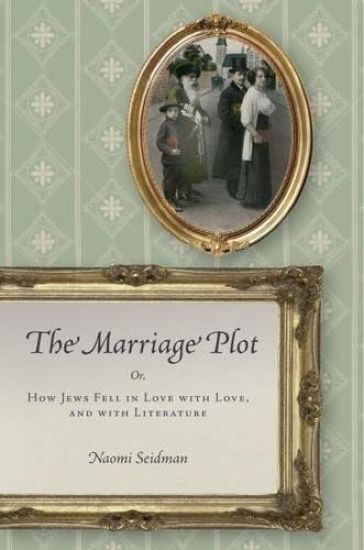
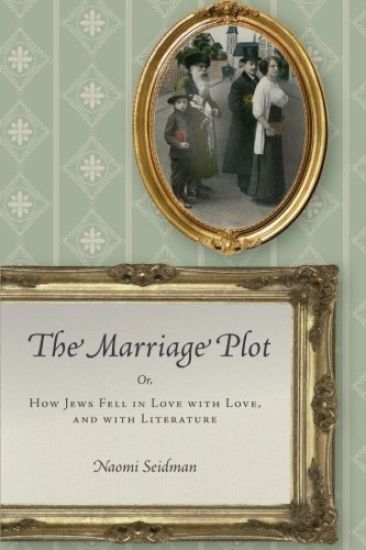
For nineteenth-century Eastern European Jews, modernization entailed the abandonment of arranged marriage in favor of the "love match." Romantic novels taught Jewish readers the rules of romance and the choreography of courtship. But because these new conceptions of romance were rooted in the Christian and chivalric traditions, the Jewish embrace of "the love religion" was always partial. In The Marriage Plot, Naomi Seidman considers the evolution of Jewish love and marriage though the literature that provided Jews with a sentimental education, highlighting a persistent ambivalence in the Jewish adoption of European romantic ideologies. Nineteenth-century Hebrew and Yiddish literature tempered romantic love with the claims of family and community, and treated the rules of gender complementarity as comedic fodder. Twentieth-century Jewish writers turned back to tradition, finding pleasures in matchmaking, intergenerational ties, and sexual segregation. In the modern Jewish voices of Sigmund Freud, Erica Jong, Philip Roth, and Tony Kushner, the Jewish heretical challenge to the European romantic sublime has become the central sexual ideology of our time.
For nineteenth-century Eastern European Jews, modernization entailed the abandonment of arranged marriage in favor of the "love match." Romantic novels taught Jewish readers the rules of romance and the choreography of courtship. But because these new conceptions of romance were rooted in the Christian and chivalric traditions, the Jewish embrace of "the love religion" was always partial. In The Marriage Plot, Naomi Seidman considers the evolution of Jewish love and marriage though the literature that provided Jews with a sentimental education, highlighting a persistent ambivalence in the Jewish adoption of European romantic ideologies. Nineteenth-century Hebrew and Yiddish literature tempered romantic love with the claims of family and community, and treated the rules of gender complementarity as comedic fodder. Twentieth-century Jewish writers turned back to tradition, finding pleasures in matchmaking, intergenerational ties, and sexual segregation. In the modern Jewish voices of Sigmund Freud, Erica Jong, Philip Roth, and Tony Kushner, the Jewish heretical challenge to the European romantic sublime has become the central sexual ideology of our time.
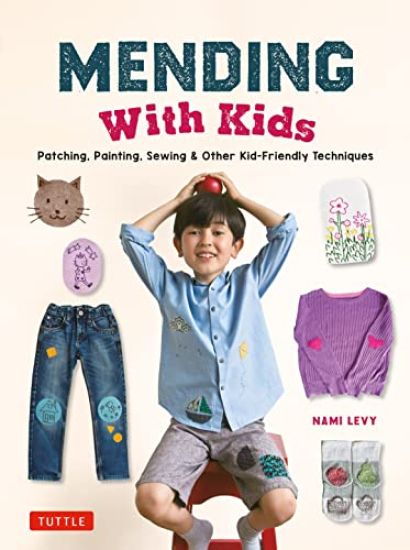
"A fun book for eco-conscious parents who aren't afraid of a little extra work in order to extend the life of their kids' clothes. Children can help with these projects as well." — Whitney Bates-Gomez, Library JournalKids are tough on their clothes…Fortunately, they're creative too!Mending With Kids shows you how to make kids' torn and stained clothes wearable again using a variety of simple sewing and decorating techniques that foster kids' participation. It includes helpful tips and techniques for patching, collage (with felt and fabrics), iron-ons, stenciling, darning, embroidery, hand-painting, and much more—including templates for making your own patches and stencils!Best of all, most of these techniques are easy enough for kids to join in and put their personal stamp on their clothes—which they absolutely love doing! And with your supervision, they'll pick up practical skills along the way.In this book, you'll find practical ideas and advice on clothes-savers like:Using added bands of fabric to cover, patch and lengthen jeans and trousers (kids outgrow them so fast!)Combining patching with embroidery to make a repair into a design elementEmbroidering around holes to make them look like part of the original design (make a worm hole in an embroidered apple, for instance!) Turning an iron-on patch into a canvas for your kid's artistry—just grab some permanent markers and have funCovering stains with a creative use of paint (use the stencil patterns in this book, or use ready-made stencils to add favorite animals, cars, flowers and more) And many other ideas that turn clothing repair into a shared adventure! It's a win-win-win collaboration—you, your kids, and this book!
A feminist theologian looks at the future of religion, declaring that feminism will eventually overthrow existing patriarchal religions, placing divinity within the individual and establishing a new mysticism
In the most comprehensive analysis of southeastern ecohomic growth to date, Niemi estimates state and regional gross product by major industry and uses these estimates to compare southeastern economic growth with the rest of the United States from 1950 to 1970. The author describes recent southeastern expansion and assesses the underlying causal factors.A UNC Press Enduring Edition -- UNC Press Enduring Editions use the latest in digital technology to make available again books from our distinguished backlist that were previously out of print. These editions are published unaltered from the original, and are presented in affordable paperback formats, bringing readers both historical and cultural value.