
Kirjahaku
Etsi kirjoja tekijän nimen, kirjan nimen tai ISBN:n perusteella.
1000 tulosta hakusanalla Napoleone Colajanni
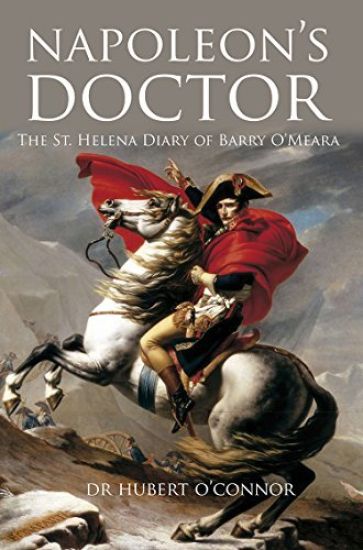
A fascinating glimpse into the mind of Napoleon in exile – his opinions on love and war, his reflections on the most important events of his life – by one of his closest confidantes In 1815, the young Dublin doctor Barry O’Meara accepted the opportunity of a lifetime to look after Napoleon Bonaparte in his banishment on St Helena. In one of the most isolated places on earth, doctor and patient became intimate friends. The core of Napoleon’s Doctor is the diary O’Meara kept, at Napoleon’s suggestion, while on St Helena. He records in lively detail many hours of Napoleon’s conversation, ranging from his views on class, religion and slavery to his love for Josephine and why Waterloo was lost. Napoleon was only fifty-one when he died on St Helena. This book ends with a detailed solution to a mystery that has plagued historians: was he poisoned by his British jailers?

'In war, let your great object be victory, not lengthy campaigns. Thus it may be known that the leader of armies is the arbiter of the people's fate, the man on whom it depends whether the nation shall be in peace or peril...' ("Sun Tzu The Art of War"). We speak of Caesar who conquered Gaul, not the legions; MacArthur who landed at Inchon, not the Marines - and we speak of Napoleon, one of history's most successful generals. Major General Jonathon Riley is supremely well qualified to write on Napoleon's generalship and has written an informed and insightful account. He opens with a short treatise on generalship in order to define Napoleon's achievement before moving on to the man himself. He examines Napoleon as a strategist; as a coalition commander; Napoleon's campaigns and Napoleon on the battlefield. Areas often ignored in the context of pre-industrial warfare - logistics and counter-insurgency - are also examined. Riley proceeds to three specific case studies beginning with Napoleon's first essay in generalship and the conquest of Piedmont; Napoleon at the height of his powers at the conquest of Prussia, to Napoleon's final defeats and the Battle of the Nations in 1813.
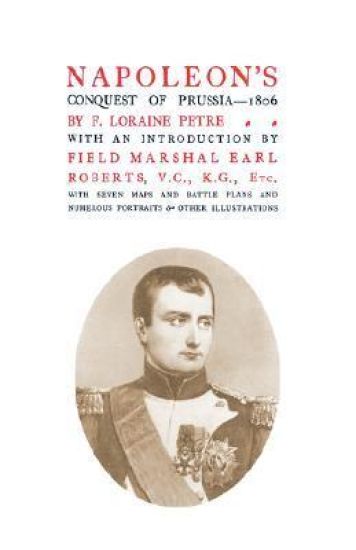
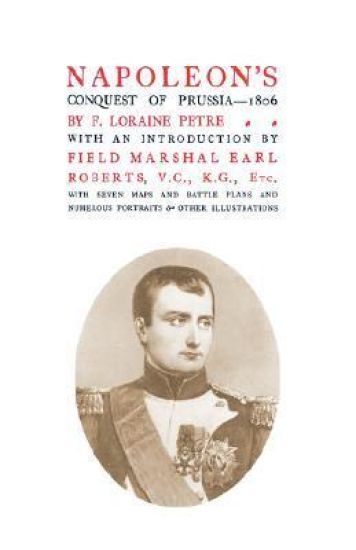
Napoleon's Conquest of Prussia 1806
F. Loraine Petre; K.G. Field-Marshal Lord Roberts V.C.
Naval Military Press Ltd
2007
sidottu
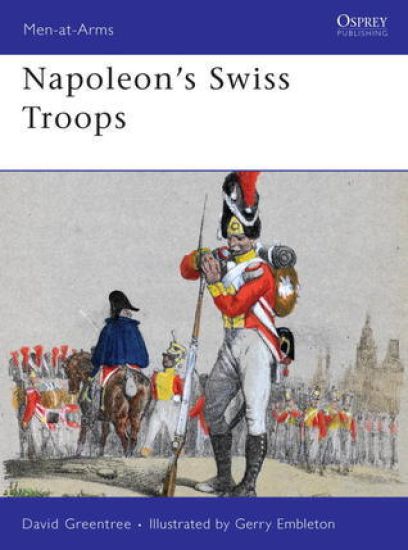
Ever since the 15th century Switzerland had been exporting professional soldiers to serve as mercenaries for foreign monarchies.Napoleon, therefore, was not the first to make full use of the martial qualities of the Swiss and obtained Swiss agreement to expand the recruitment of regiments for service in the French Army. Napoleon would use Swiss troops on the battlefields of Italy and Spain, and in 1812 re-organize the four original regiments into a single division for the invasion of Russia, with each regiment having three full-strength battalions.In November of 1812, meeting up with Napoleon's main force retreating from Moscow at the Berezina River, the Swiss on the west bank guarded the approaches to the pontoon bridges from the Russian attack to the south. Just 1,200 Swiss out of the approximately 8,000 that entered Russia were left to face, along with 8,000 other remnants of other units, the 30,000-strong Russian army. The Swiss held their ground and when their ammunition ran out they charged the Russians with bayonets.This book reveals the proud combat history of the Swiss troops of Napoleon's army as well as the colourful uniforms they wore.
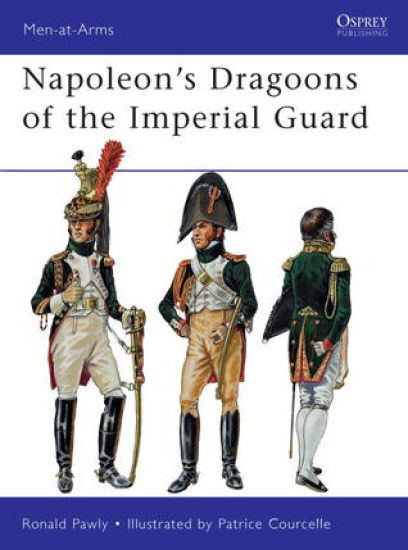
The Dragoons of Napoleon's Imperial Guard were a legendary regiment that fought with the Emperor in many famous battles across Europe.Dressed in distinctive green uniforms and classically inspired copper helmets, the Dragoons of the Imperial Guard were raised in 1806 by the same criteria as other Guard units – by selection of picked, literate veterans from Line regiments who had six to ten years of service, and citations for bravery in at least two campaigns. The following year they were named Dragons de l'Impératrice in a unique compliment to the Empress Josephine. As a ceremonial regiment it enjoyed many privileges, but it also saw combat on a number of occasions, including the battles of Essling and Wagram (1809), the Russian campaign (1812, when it suffered severe losses), at Bautzen, Wachau and Leipzig (1813), in the 1814 Campaign of France, and at Ligny and Waterloo (1815).Lavishly illustrated and based on a wealth of archival sources, this study by noted authority Ronald Pawly celebrates the colourful history and appearance of this regiment.