Kirjojen hintavertailu. Mukana 12 390 323 kirjaa ja 12 kauppaa.

Kirjahaku

Etsi kirjoja tekijän nimen, kirjan nimen tai ISBN:n perusteella.

1000 tulosta hakusanalla Nathan B. Talbot

Content, Cognition, and Communication

Content, Cognition, and Communication

Nathan Salmon

Clarendon Press
2007
sidottu
Nathan Salmon presents a selection of his essays from the early 1980s to 2006, on a set of closely connected topics central to analytic philosophy. The book is divided into four thematic sections. The first contains six essays on the theme of direct reference, and associated issues regarding names and descriptions, demonstratives and reflexivity. The four essays in the second section, under the heading of apriority, concern particular consequences of Millianism with respect to the semantic-epistemological status of certain special kinds of sentences. The five essays in the third section develop Salmon's project of reconciling Millianism with a host of problems posed by locutions of propositional attitude, especially by attributions of belief. The volume concludes with four essays about the distinction between meaning and use, or more generally, the distinction between semantics and pragmatics.

Metaphysics, Mathematics, and Meaning

Metaphysics, Mathematics, and Meaning

Nathan Salmon

Clarendon Press
2005
nidottu
Metaphysics, Mathematics, and Meaning brings together Nathan Salmon's influential papers on topics in the metaphysics of existence, non-existence, and fiction; modality and its logic; strict identity, including personal identity; numbers and numerical quantifiers; the philosophical significance of Gödel's Incompleteness theorems; and semantic content and designation. Including a previously unpublished essay and a helpful new introduction to orient the reader, the volume offers rich and varied sustenance for philosophers and logicians.
Content, Cognition, and Communication

Content, Cognition, and Communication

Nathan Salmon

Clarendon Press
2007
nidottu
Nathan Salmon presents a selection of his essays from the early 1980s to 2006, on a set of closely connected topics central to analytic philosophy. The book is divided into four thematic sections. The first contains six essays on the theme of direct reference, and associated issues regarding names and descriptions, demonstratives and reflexivity. The four essays in the second section, under the heading of apriority, concern particular consequences of Millianism with respect to the semantic-epistemological status of certain special kinds of sentences. The five essays in the third section develop Salmon's project of reconciling Millianism with a host of problems posed by locutions of propositional attitude, especially by attributions of belief. The volume concludes with four essays about the distinction between meaning and use, or more generally, the distinction between semantics and pragmatics.

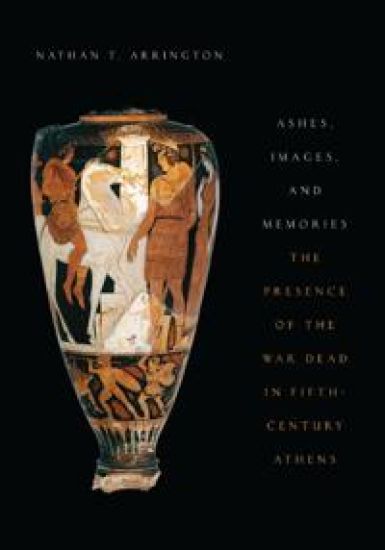
Ashes, Images, and Memories

Ashes, Images, and Memories

Nathan T. Arrington

Oxford University Press Inc
2015
sidottu
Ashes, Images, and Memories argues that the institution of public burial for the war dead and images of the deceased in civic and sacred spaces fundamentally changed how people conceived of military casualties in fifth-century Athens. In a period characterized by war and the threat of civil strife, the nascent democracy claimed the fallen for the city and commemorated them with rituals and images that shaped a civic ideology of struggle and self-sacrifice on behalf of a unified community. While most studies of Athenian public burial have focused on discrete aspects of the institution, such as the funeral oration, this book broadens the scope. It examines the presence of the war dead in cemeteries, civic and sacred spaces, the home, and the mind, and underscores the role of material culture--from casualty lists to white-ground lekythoi--in mediating that presence. This approach reveals that public rites and monuments shaped memories of the war dead at the collective and individual levels, spurring private commemorations that both engaged with and critiqued the new ideals and the city's claims to the body of the warrior. Faced with a collective notion of "the fallen, " families asserted the qualities, virtues, and family links of the individual deceased, and sought to recover opportunities for private commemoration and personal remembrance. Contestation over the presence and memory of the dead often followed class lines, with the elite claiming service and leadership to the community while at the same time reviving Archaic and aristocratic commemorative discourses. Although Classical Greek art tends to be viewed as a monolithic if evolving whole, this book depicts a fragmented and charged visual world.
Not Bread Alone

Not Bread Alone

Nathan Macdonald

Oxford University Press
2008
sidottu
In ancient Israel the production of food was a basic concern of almost every Israelite. Consequently, there are few pages in the Old Testament that do not mention food, and food provides some of the most important social, political and religious symbols in the biblical text. Not Bread Alone is the first detailed and wide-ranging examination of food and its symbolism in the Old Testament and the world of ancient Israel. Many of these symbols are very well-known, such as the forbidden fruit in the Garden of Eden, the abominable pig and the land flowing with milk and honey. Nathan MacDonald demonstrates that the breadth biblical symbolism associated with food reaches beyond these celebrated examples, providing a collection of interrelated studies that draw on work on food in anthropology or other historical disciplines. The studies maintain sensitivity to the literary nature of the text as well as the many historical-critical questions that arise when studying it. Topics examined include: the nature and healthiness of the ancient Israelite diet; the relationship between food and memory in Deuteronomy; the confusion of food, sex and warfare in Judges; the place of feasting in the Israelite monarchy; the literary motif of divine judgement at the table; the use of food in articulating Israelite identity in the post-exilic period. The concluding chapter shows how some of these Old Testament concerns find resonance in the New Testament.
The Music Parents' Survival Guide

The Music Parents' Survival Guide

Nathan Amy

Oxford University Press Inc
2014
sidottu
This book of parent-to-parent advice aims to encourage, support, and bolster the morale of one of music's most important back-up sections: music parents. Within these pages, more than 150 veteran music parents contribute their experiences, reflections, warnings, and helpful suggestions for how to walk the music-parenting tightrope: how to be supportive but not overbearing, and how to encourage excellence without becoming bogged down in frustration. Among those offering advice are the parents of several top musicians, including the mother of violinist Joshua Bell, the father of trumpeter Wynton Marsalis, the parents of cellist Alisa Weilerstein, and those of violinist Anne Akiko Meyers. The book also features advice from music educators and more than forty professional musicians, including Paula Robison, Sarah Chang, Anthony McGill, Jennifer Koh, Jonathan Biss, Toyin Spellman-Diaz, Marin Alsop, Christian McBride, Miguel Zenon, Stephanie Blythe, Lawrence Brownlee, and Kelli O'Hara. The topics they discuss span a wide range of issues faced by the parents of both instrumentalists and singers, from how to get started to encouraging effective practice habits, to how to weather the rough spots, cope with the cost of music training, deal with college and career concerns, and help young musicians discover the role that music can play in their lives. The parents who speak here reach a unanimous and overwhelming conclusion that music parenting is well worth the effort, and the experiences that come with it - everything from flying to New York on the weekends to searching a flute convention for the perfect instrument - enrich family life with a unique joy in music.
The Music Parents' Survival Guide

The Music Parents' Survival Guide

Nathan Amy

Oxford University Press Inc
2014
nidottu
This book of parent-to-parent advice aims to encourage, support, and bolster the morale of one of music's most important back-up sections: music parents. Within these pages, more than 150 veteran music parents contribute their experiences, reflections, warnings, and helpful suggestions for how to walk the music-parenting tightrope: how to be supportive but not overbearing, and how to encourage excellence without becoming bogged down in frustration. Among those offering advice are the parents of several top musicians, including the mother of violinist Joshua Bell, the father of trumpeter Wynton Marsalis, the parents of cellist Alisa Weilerstein, and those of violinist Anne Akiko Meyers. The book also features advice from music educators and more than forty professional musicians, including Paula Robison, Sarah Chang, Anthony McGill, Jennifer Koh, Jonathan Biss, Toyin Spellman-Diaz, Marin Alsop, Christian McBride, Miguel Zenon, Stephanie Blythe, Lawrence Brownlee, and Kelli O'Hara. The topics they discuss span a wide range of issues faced by the parents of both instrumentalists and singers, from how to get started to encouraging effective practice habits, to how to weather the rough spots, cope with the cost of music training, deal with college and career concerns, and help young musicians discover the role that music can play in their lives. The parents who speak here reach a unanimous and overwhelming conclusion that music parenting is well worth the effort, and the experiences that come with it - everything from flying to New York on the weekends to searching a flute convention for the perfect instrument - enrich family life with a unique joy in music.
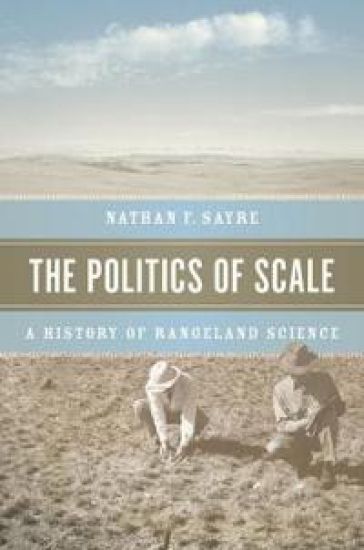
The Politics of Scale

The Politics of Scale

Nathan F. Sayre

University of Chicago Press
2017
sidottu
Rangelands are vast, making up one quarter of the United States and forty percent of the Earth's ice-free land. And while contemporary science has revealed a great deal about the environmental impacts associated with intensive livestock production from greenhouse gas emissions to land and water degradation far less is known about the historic role science has played in rangeland management and politics. Steeped in US soil, this first history of rangeland science looks to the origins of rangeland ecology in the late nineteenth-century American west, exploring the larger political and economic forces that together with scientific study produced legacies focused on immediate economic success rather than long-term ecological well being. During the late 1880s and early 1890s, a variety of forces from the Homestead Act of 1862 to the extermination of bison, foreign investment, and lack of government regulation promoted free-for-all access to and development of the western range, with disastrous environmental consequences. To address the crisis, government agencies turned to scientists, but as Nathan F. Sayre shows, range science grew in a politically fraught landscape. Neither the scientists nor the public agencies could escape the influences of bureaucrats and ranchers who demanded results, and the ideas that became scientific orthodoxy from fire suppression and predator control to fencing and carrying capacities contained flaws and blind spots that plague public debates about rangelands to this day. Looking at the global history of rangeland science through the Cold War and beyond, The Politics of Scale identifies the sources of past conflicts and mistakes and helps us to see a more promising path forward, one in which rangeland science is guided less by capital and the state and more by communities working in collaboration with scientists.
The Politics of Scale

The Politics of Scale

Nathan F. Sayre

University of Chicago Press
2017
nidottu
Rangelands are vast, making up one quarter of the United States and forty percent of the Earth's ice-free land. And while contemporary science has revealed a great deal about the environmental impacts associated with intensive livestock production from greenhouse gas emissions to land and water degradation far less is known about the historic role science has played in rangeland management and politics. Steeped in US soil, this first history of rangeland science looks to the origins of rangeland ecology in the late nineteenth-century American west, exploring the larger political and economic forces that together with scientific study produced legacies focused on immediate economic success rather than long-term ecological well being. During the late 1880s and early 1890s, a variety of forces from the Homestead Act of 1862 to the extermination of bison, foreign investment, and lack of government regulation promoted free-for-all access to and development of the western range, with disastrous environmental consequences. To address the crisis, government agencies turned to scientists, but as Nathan F. Sayre shows, range science grew in a politically fraught landscape. Neither the scientists nor the public agencies could escape the influences of bureaucrats and ranchers who demanded results, and the ideas that became scientific orthodoxy from fire suppression and predator control to fencing and carrying capacities contained flaws and blind spots that plague public debates about rangelands to this day. Looking at the global history of rangeland science through the Cold War and beyond, The Politics of Scale identifies the sources of past conflicts and mistakes and helps us to see a more promising path forward, one in which rangeland science is guided less by capital and the state and more by communities working in collaboration with scientists.
American Judaism

American Judaism

Nathan Glazer

University of Chicago Press
1988
nidottu
First published in 1957, Nathan Glazer's classic, historical study of Judaism in America has been described by the New York Times Book Review as "a remarkable story . . . told briefly and clearly by an objective historical mind, yet with a fine combination of sociological insight and religious sensitivity." Glazer's new introduction describes the drift away from the popular equation of American Judaism with liberalism during the last two decades and considers the threat of divisiveness within American Judaism. Glazer also discusses tensions between American Judaism and Israel as a result of a revivified Orthodoxy and the disillusionment with liberalism. "American Judaism has been arguably the best known and most used introduction to the study of the Jewish religion in the United States. . . . It is an inordinately clear-sighted work that can be read with much profit to this day."—American Jewish History (1987)
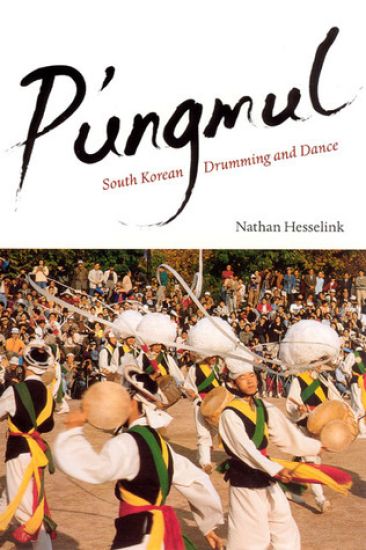
P'ungmul

P'ungmul

Nathan Hesselink

University of Chicago Press
2006
sidottu
Composed of a core set of two drums and two gongs, p'ungmul is a South Korean tradition of rural folk percussion. Steeped in music, dance, theater, and pageantry, but centrally focused on rhythm, such ensembles have been an integral part of village life in South Korea for centuries, serving as a musical accompaniment in the often overlapping and shifting contexts of labor, ritual, and entertainment. The first book to introduce Korean drumming and dance to the English-speaking world, Nathan Hesselink's "P'ungmul" offers detailed descriptions of its instrumentation, dance formations, costuming, actors, teaching lineages, and the complexities of training. Hesselink also evaluates how this tradition has taken on new roles and meanings in the twentieth and early twenty-first centuries, investigating the interrelated, yet contested spheres of history, memory, government policy, grassroots politics, opportunities for musical transmission, and performance practices and aesthetics. "P'ungmul" offers those interested in ethnomusicology, world music, anthropology, sociology, and Asian studies a special glimpse into the inner workings of a historically rich, artistically complex, and aesthetically and aurally beautiful Korean musical and dance tradition.
P'ungmul

P'ungmul

Nathan Hesselink

University of Chicago Press
2006
nidottu
Composed of a core set of two drums and two gongs, p'ungmul is a South Korean tradition of rural folk percussion. Steeped in music, dance, theater, and pageantry, but centrally focused on rhythm, such ensembles have been an integral part of village life in South Korea for centuries, serving as a musical accompaniment in the often overlapping and shifting contexts of labor, ritual, and entertainment. The first book to introduce Korean drumming and dance to the English-speaking world, Nathan Hesselink's "P'ungmul" offers detailed descriptions of its instrumentation, dance formations, costuming, actors, teaching lineages, and the complexities of training. Hesselink also evaluates how this tradition has taken on new roles and meanings in the twentieth and early twenty-first centuries, investigating the interrelated, yet contested spheres of history, memory, government policy, grassroots politics, opportunities for musical transmission, and performance practices and aesthetics. "P'ungmul" offers those interested in ethnomusicology, world music, anthropology, sociology, and Asian studies a special glimpse into the inner workings of a historically rich, artistically complex, and aesthetically and aurally beautiful Korean musical and dance tradition.
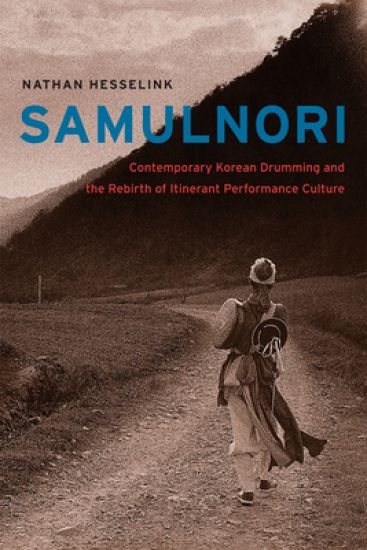
SamulNori – Contemporary Korean Drumming and the Rebirth of Itinerant Performance Culture
In 1978, four musicians crowded into a cramped basement theater in downtown Seoul, where they, for the first time, brought the rural percussive art of p'ungmul to a burgeoning urban audience. In doing so, they began a decades-long reinvention of tradition, one that would eventually create an entirely new genre of music and a national symbol for Korean culture. Nathan Hesselink's "SamulNori" traces this reinvention through the rise of the Korean supergroup of the same name, analyzing the strategies the group employed to transform a museum-worthy musical form into something that was both contemporary and historically authentic, unveiling an intersection of traditional and modern cultures and the inevitable challenges such a mix entails. Providing everything from musical notation to a history of urban culture in South Korea to an analysis of SamulNori's teaching materials and collaborations with Euro-American jazz quartet Red Sun, Hesselink offers a deeply researched study that highlights the need for traditions - if they are to survive - to embrace both preservation and innovation.
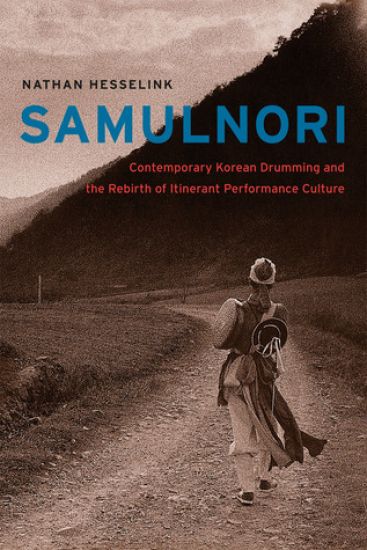
SamulNori

SamulNori

Nathan Hesselink

University of Chicago Press
2012
nidottu
In 1978, four musicians crowded into a cramped basement theater in downtown Seoul, where they, for the first time, brought the rural percussive art of p'ungmul to a burgeoning urban audience. In doing so, they began a decades-long reinvention of tradition, one that would eventually create an entirely new genre of music and a national symbol for Korean culture. Nathan Hesselink's "SamulNori" traces this reinvention through the rise of the Korean supergroup of the same name, analyzing the strategies the group employed to transform a museum-worthy musical form into something that was both contemporary and historically authentic, unveiling an intersection of traditional and modern cultures and the inevitable challenges such a mix entails. Providing everything from musical notation to a history of urban culture in South Korea to an analysis of SamulNori's teaching materials and collaborations with Euro-American jazz quartet Red Sun, Hesselink offers a deeply researched study that highlights the need for traditions - if they are to survive - to embrace both preservation and innovation.
World Population Growth and Aging

World Population Growth and Aging

Nathan Keyfitz; Wilhelm Flieger

University of Chicago Press
1991
sidottu
Drawing data from official sources in 60 countries, as well as from the United Nations and the World Bank, this compendium of statistical information on population, fertility, and mortality treats every one of the UN-recognized countries in at least summary form. With data from 1950 onward and projections through 2020, this volume extends the dataset of Nathan Keyfitz and Wilhelm Flieger's landmark work, World Population: An Analysis of Vital Data (1968), with virtually no overlap. All the life tables, standardized rates, and projections have been generated by uniform methods to ensure easy comparison among countries. More than 800 charts provide a foundation for analyzing the radical demographic changes now taking place: the historic lows of fertility in Germany and other industrial countries, Africa's persistently high fertility, and the worldwide extension of life expectancy. The product of cautious and painstaking labor, this work promises to be an important resource for further demographic research as well as a valuable comparative resource for studies of the status of global social welfare and the environment.
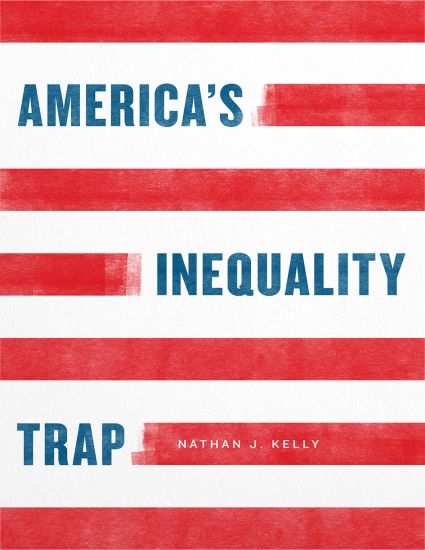
America's Inequality Trap

America's Inequality Trap

Nathan J Kelly

University of Chicago Press
2019
sidottu
The gap between the rich and the poor has grown dramatically in the United States and is now at its widest since at least the early 1900s. While by most measures the economy has been improving, soaring cost of living and stagnant wages have done little to assuage economic anxieties. Conditions like these seem designed to produce a generation-defining intervention to balance the economic scales and enhance opportunities for those at the middle and bottom of the country's economic ladder--but we have seen nothing of the sort. Nathan J. Kelly argues that a key reason for this is that rising concentrations of wealth create a politics that makes reducing economic inequality more difficult. Kelly convincingly shows that, when a small fraction of the people control most of the economic resources, they also hold a disproportionate amount of political power, hurtling us toward a self-perpetuating plutocracy, or an "inequality trap." Among other things, the rich support a broad political campaign that convinces voters that policies to reduce inequality are unwise and not in the average voter's interest, regardless of the real economic impact. They also take advantage of interest groups they generously support to influence Congress and the president, as well as state governments, in ways that stop or slow down reform. One of the key implications of this book is that social policies designed to combat inequality should work hand-in-hand with political reforms that enhance democratic governance and efforts to fight racism, and a coordinated effort on all of these fronts will be needed to reverse the decades-long trend.
America's Inequality Trap

America's Inequality Trap

Nathan J Kelly

University of Chicago Press
2019
pokkari
The gap between the rich and the poor has grown dramatically in the United States and is now at its widest since at least the early 1900s. While by most measures the economy has been improving, soaring cost of living and stagnant wages have done little to assuage economic anxieties. Conditions like these seem designed to produce a generation-defining intervention to balance the economic scales and enhance opportunities for those at the middle and bottom of the country's economic ladder--but we have seen nothing of the sort. Nathan J. Kelly argues that a key reason for this is that rising concentrations of wealth create a politics that makes reducing economic inequality more difficult. Kelly convincingly shows that, when a small fraction of the people control most of the economic resources, they also hold a disproportionate amount of political power, hurtling us toward a self-perpetuating plutocracy, or an "inequality trap." Among other things, the rich support a broad political campaign that convinces voters that policies to reduce inequality are unwise and not in the average voter's interest, regardless of the real economic impact. They also take advantage of interest groups they generously support to influence Congress and the president, as well as state governments, in ways that stop or slow down reform. One of the key implications of this book is that social policies designed to combat inequality should work hand-in-hand with political reforms that enhance democratic governance and efforts to fight racism, and a coordinated effort on all of these fronts will be needed to reverse the decades-long trend.
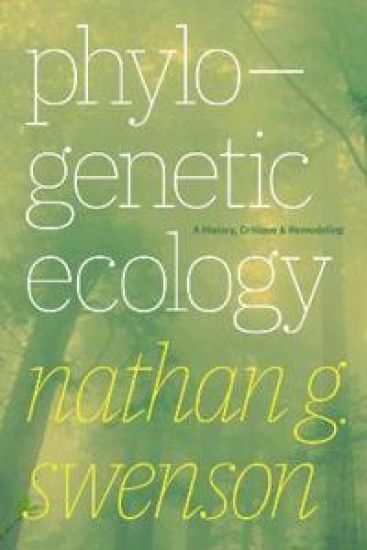
Phylogenetic Ecology

Phylogenetic Ecology

Nathan G Swenson

University of Chicago Press
2019
sidottu
Over the past decade, ecologists have increasingly embraced phylogenetics, the study of evolutionary relationships among species. As a result, they have come to discover the field's power to illuminate present ecological patterns and processes. Ecologists are now investigating whether phylogenetic diversity is a better measure of ecosystem health than more traditional metrics like species diversity, whether it can predict the future structure and function of communities and ecosystems, and whether conservationists might prioritize it when formulating conservation plans. In Phylogenetic Ecology, Nathan G. Swenson synthesizes this nascent field's major conceptual, methodological, and empirical developments to provide students and practicing ecologists with a foundational overview. Along the way, he highlights those realms of phylogenetic ecology that will likely increase in relevance--such as the burgeoning subfield of phylogenomics--and shows how ecologists might lean on these new perspectives to inform their research programs.
Phylogenetic Ecology

Phylogenetic Ecology

Nathan G Swenson

University of Chicago Press
2019
pokkari
Over the past decade, ecologists have increasingly embraced phylogenetics, the study of evolutionary relationships among species. As a result, they have come to discover the field's power to illuminate present ecological patterns and processes. Ecologists are now investigating whether phylogenetic diversity is a better measure of ecosystem health than more traditional metrics like species diversity, whether it can predict the future structure and function of communities and ecosystems, and whether conservationists might prioritize it when formulating conservation plans. In Phylogenetic Ecology, Nathan G. Swenson synthesizes this nascent field's major conceptual, methodological, and empirical developments to provide students and practicing ecologists with a foundational overview. Along the way, he highlights those realms of phylogenetic ecology that will likely increase in relevance--such as the burgeoning subfield of phylogenomics--and shows how ecologists might lean on these new perspectives to inform their research programs.
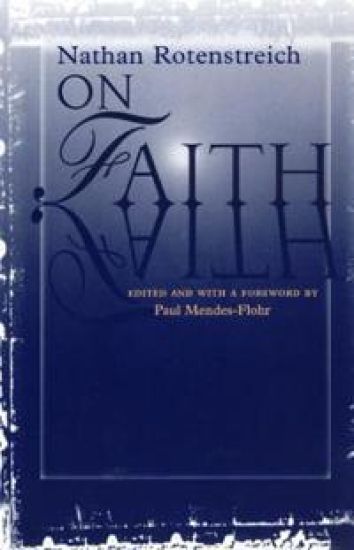
On Faith

On Faith

Nathan Rotenstreich

University of Chicago Press
1998
sidottu
This last work of Nathan Rotenstreich's attempts to detach the concept of faith from its religious underpinnings and consider it in its own right, as a human phenomenon and cognitive attitude. Faith, the author contends, should not be confused with its historical manifestations. By making faith a philosophical rather than a theological matter, he explores its essence as an awareness of how we relate within mundane reality to all that is beyond the human world. Arguing for the intentionality of faith, he shows how it structures a variety of relations that range from the experience of the holy to the nature of cults, traditional religion and the idea of servitude to God.