Kirjojen hintavertailu. Mukana 11 699 587 kirjaa ja 12 kauppaa.

Kirjahaku

Etsi kirjoja tekijän nimen, kirjan nimen tai ISBN:n perusteella.

1000 tulosta hakusanalla Nathaniel

Lefebvre for Architects

Lefebvre for Architects

Nathaniel Coleman

Routledge
2015
sidottu
While the work of Henri Lefebvre has become better known in the English-speaking world since the 1991 translation of his 1974 masterpiece, The Production of Space, his influence on the actual production of architecture and the city has been less pronounced. Although now widely read in schools of architecture, planning and urban design, Lefebvre’s message for practice remains elusive; inevitably so because the entry of his work into the Anglosphere has come with repression of the two most challenging aspects of his thinking: romanticism and Utopia, which simultaneously confront modernity while being progressive.Contemporary discomfort with romanticism and Utopia arguably obstructs the shift of Lefebvre’s thinking from being objects of theoretical interest into positions of actually influencing practices. Attempting to understand and act upon architecture and the city with Lefebvre but without Utopia and romanticism risks muting the impact of his ideas. Although Utopia may seem to have no place in the present, Lefebvre reveals this as little more than a self-serving affirmation that ‘there is no alternative’ to social and political detachment. Demanding the impossible may end in failure but as Lefebvre shows us, doing so is the first step towards other possibilities. To think with Lefebvre is to think about Utopia, doing so makes contact with what is most enduring about his project for the city and its inhabitants, and with what is most radical about it as well. Lefebvre for Architects offers a concise account of the relevance of Henri Lefebvre’s writing for the theory and practice of architecture, planning and urban design. This book is accessible for students and practitioners who wish to fully engage with the design possibilities offered by Lefebvre’s philosophy.

Lefebvre for Architects

Lefebvre for Architects

Nathaniel Coleman

Routledge
2014
nidottu
While the work of Henri Lefebvre has become better known in the English-speaking world since the 1991 translation of his 1974 masterpiece, The Production of Space, his influence on the actual production of architecture and the city has been less pronounced. Although now widely read in schools of architecture, planning and urban design, Lefebvre’s message for practice remains elusive; inevitably so because the entry of his work into the Anglosphere has come with repression of the two most challenging aspects of his thinking: romanticism and Utopia, which simultaneously confront modernity while being progressive.Contemporary discomfort with romanticism and Utopia arguably obstructs the shift of Lefebvre’s thinking from being objects of theoretical interest into positions of actually influencing practices. Attempting to understand and act upon architecture and the city with Lefebvre but without Utopia and romanticism risks muting the impact of his ideas. Although Utopia may seem to have no place in the present, Lefebvre reveals this as little more than a self-serving affirmation that ‘there is no alternative’ to social and political detachment. Demanding the impossible may end in failure but as Lefebvre shows us, doing so is the first step towards other possibilities. To think with Lefebvre is to think about Utopia, doing so makes contact with what is most enduring about his project for the city and its inhabitants, and with what is most radical about it as well. Lefebvre for Architects offers a concise account of the relevance of Henri Lefebvre’s writing for the theory and practice of architecture, planning and urban design. This book is accessible for students and practitioners who wish to fully engage with the design possibilities offered by Lefebvre’s philosophy.
Utopias and Architecture

Utopias and Architecture

Nathaniel Coleman

Routledge
2005
nidottu
Utopian thought, though commonly characterized as projecting a future without a past, depends on golden models for re-invention of what is. Through a detailed and innovative re-assessment of the work of three architects who sought to represent a utopian content in their work, and a consideration of the thoughts of a range of leading writers, Coleman offers the reader a unique perspective of idealism in architectural design. With unparalleled depth and focus of vision on the work of Le Corbusier, Louis I Kahn and Aldo van Eyck, this book persuasively challenges predominant assumptions in current architectural discourse, forging a new approach to the invention of welcoming built environments and transcending the limitations of both the postmodern and hyper-modern stance and orthodox modernist architecture.
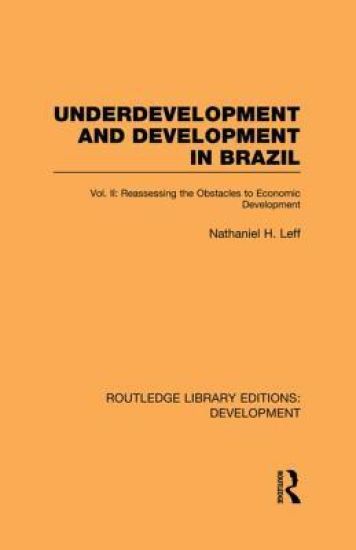
Underdevelopment and Development in Brazil: Volume II
First published in 1982, this work builds on the detailed economic history of Brazil in its companion volume: "Economic Structure and Change, 1822-1947", assessing and challenging the established interpretations. The book covers in depth the causes of the Northeast’s poor economic experience and the emergence of significant regional inequality in Brazil’s development. In his analysis of the role of Government in Brazil’s economic development, the author offers a fresh perspective on the importance of public finance constraints and on the tensions between centralisation and federalism.The study also deals with broader analytical interests, affording opportunity to examine the empirical relevance of long-term development models. In encompassing both the period of slow economic growth through much of the nineteenth century and the rapid economic development which began at the end of the century, the study is able to focus upon the conditions which led to the onset of sustained development in a major underdeveloped country, suggesting lessons for contemporary underdeveloped countries.
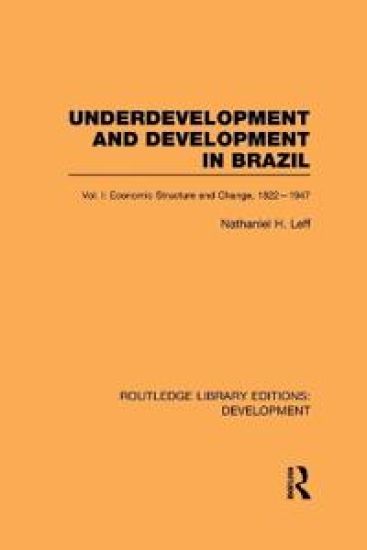
Underdevelopment and Development in Brazil: Volume I
First published in 1982, this work offers an analysis Brazil’s long-term economic history and development, spanning the period from independence to post-war industrial growth. The book focuses upon the classic problem of why Brazil failed to develop economically during the nineteenth century in a manner similar to the United States and other regions of recent settlement.This volume discusses in detail the principle features of Brazil’s economic landscape between 1822 and 1947, containing special coverage of topics such as slavery and the elastic supply of low cost labour from overseas; the inelastic supply of domestic output; the critical importance of the domestic agricultural sector and the lack of low-cost transportation; the reasons for the failure of international trade to act as an engine for generalized economic development; the special importance of economic infrastructure and public finance for the onset of sustained economic growth and structural change; and the central features of Brazilian development and industrialisation in the first half of the twentieth century.
The Celestial Railroad

The Celestial Railroad

Nathaniel Hawthorne

Signet Classics
2006
nidottu
Of Nathaniel Hawthorne's insight into the Puritan's simultaneous need for fulfillment and self-destruction, D. H. Lawrence wrote, "Nathaniel knew disagreeable things in his inner soul. He was careful to send them out in disguise." By means of artfully crafted and compelling tales, Hawthorne explored the destinies and concerns of early American settlers and citizens. In several of the stories in this collection, characters who hold themselves apart from their fellow man fall prey to the corroding desires of lust for perfection. Then they unwittingly commit evils--against themselves and others--in the name of pride. Edgar Allan Poe noted of Hawthorne's writing: "Every word tells, and there is not a word which does not tell."
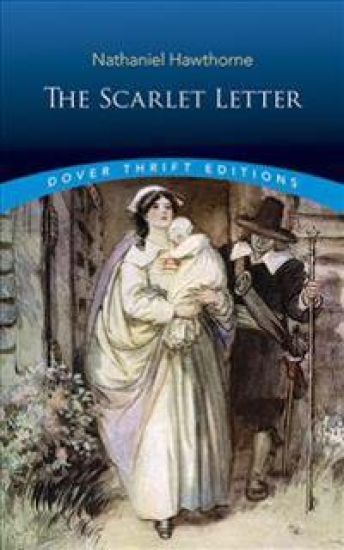
The Scarlet Letter

The Scarlet Letter

Nathaniel Hawthorne

Signet
2009
nidottu
Tremendously moving and rich in psychological insight, this tragic novel of sin and redemption addresses America's Puritan past. Depicting the struggle between mind and heart, Hawthorne has fashioned a masterpiece of American fiction. Revised reissue.
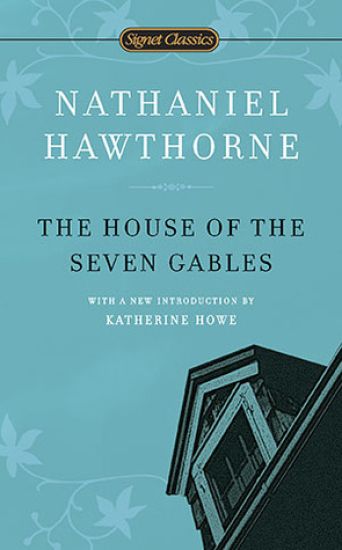
The House of the Seven Gables

The House of the Seven Gables

Nathaniel Hawthorne

Signet
2010
pokkari
This enduring novel of crime and retribution vividly reflects the social and moral values of New England in the 1840s. Nathaniel Hawthorne's gripping psychological drama concerns the Pyncheon family, a dynasty founded on pious theft, who live for generations under a dead man's curse until their house is finally exorcised by love. Hawthorne, by birth and education, was instilled with the Puritan belief in America's limitless promise. Yet - in part because of blemishes on his own family history - he also saw the darker side of the young nation. Like his twentieth-century heirs William Faulkner and F. Scott Fitzgerald, Hawthorne peered behind propriety's fa ade and exposed the true human condition.
Joy (Or Something Darker, but Like It)

Joy (Or Something Darker, but Like It)

Nathaniel Perry

THE UNIVERSITY OF MICHIGAN PRESS
2024
nidottu
Joy (Or Something Darker, but Like It), the first book of nonfiction by poet Nathaniel Perry, is a group of essays that considers poetry in the context of parenting—what poems and poets might teach us about parenting, what parenting might teach us about poetry, and also, what either of those things might have to teach us about simply being a relatively successful human being. While other poets have written about parenthood, few books consider how parenthood and poetry themselves intersect. The essays are affable and never technical, but take seriously the idea that thinking about poems might help us all think about our other roles in life, as parents, lovers, citizens, and friends. The book, in the end, imagines that this kind of insight is maybe one of the things most useful about poetry. It isn't, or at least doesn't have to be, always about itself; it can instead, surprisingly and wonderfully, be about us. Each of the twelve essays considers a different poet—Edward Thomas, Henry W. Longfellow, George Scarbrough, Elizabeth Bishop, Geoffrey Hill, Primus St. John, Robert Hayden, Elizabeth Coatsworth, Gwendolyn Brooks, Robert Frost, E.A. Robinson, and Belle Randall—and, alongside them, different concerns of parenting and living. Organized in chronological order, they track the growth of Nathaniel Perry’s own children who pop up from time to time in a believable way. Essays consider the idea of devotion and belief, the idea of imperfection, the small details we can focus on as parents, and the conceptions of the world we pass along to our children. Together these essays not only represent the author's personal canon of poets who have been important to him in his life and work, but also present a diverse slice of American poetry, in voice, form, identity, origin, and time period.
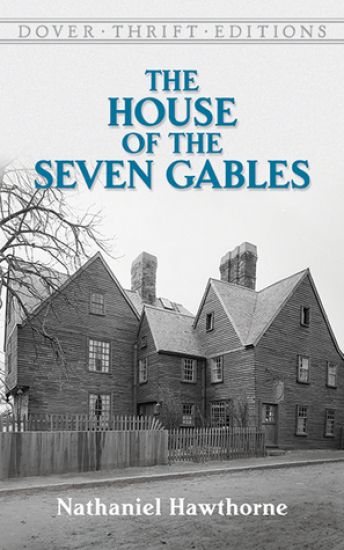
The House of the Seven Gables

The House of the Seven Gables

Nathaniel Hawthorne

Dover Publications Inc.
2003
nidottu
An old mansion in Salem, moss-covered and gabled, broods over the destiny of a distinguished but troubled New England family -- the Pynchons. A haunting centuries-old curse, a forceful probing of national and personal guilt, a romance between the young heroine and an attractive stranger -- all intertwine in this work that Henry James declared "the closest approach we are likely to have to the Great American Novel." "The story moves in soft September light, melting like a happy dream of Shakespeare." --Van Wyck Brooks
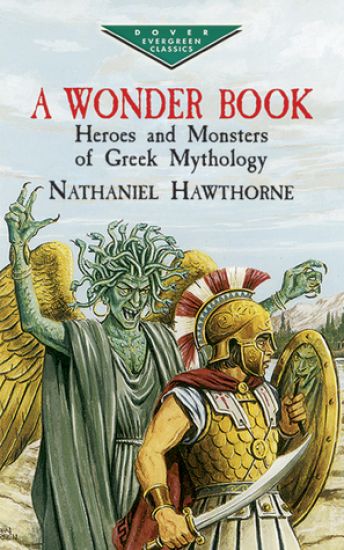
A Wonder Book

A Wonder Book

Nathaniel Hawthorne

Dover Publications Inc.
2004
nidottu
Evil creatures, magical feats, and adventure abound in this classic archive of 6 ancient tales. A captivating recounting for youngsters by one of America's greatest writers. "The Gorgon's Head," "The Golden Touch," "The Paradise of Children," "The Three Golden Apples," "The Miraculous Pitchers," and "The Chimaera."
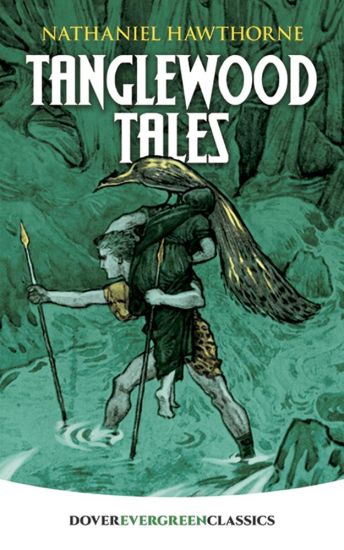
Tanglewood Tales

Tanglewood Tales

Nathaniel Hawthorne; Virginia Sterrett

Dover Publications Inc.
2017
nidottu
One of 19th-century America's greatest authors recounts timeless tales from Greek mythology in this delightful partner to A Wonder-Book for Girls and Boys. Nathaniel Hawthorne's evocative interpretations of traditional stories about heroes, sorceresses, kings, and other legendary characters provide young readers and listeners with a spellbinding introduction to classic myths.The adventures begin with "The Minotaur," the tale of an Athenian prince's conquest of a monstrous half-man, half-bull. Other stories include "The Pygmies," concerning a friendly giant and his small-minded neighbors; "The Dragon's Teeth," recounting the birth of a team of warriors and the founding of a city; "Circe's Palace," in which an enchantress matches wits with the trickster Ulysses; "The Pomegranate Seeds," a tale of the underworld; and "The Golden Fleece," the story of an aspiring king and his quest for the shining symbol that will win a throne.
Scarlet Letter

Scarlet Letter

Nathaniel Hawthorne

DOVER PUBLICATIONS INC.
2024
sidottu
An "A" for "adultery" marks Hester Prynne as an outcast from the society of colonial Boston. Although forced by the puritanical town fathers to wear a bright red badge of shame, Hester steadfastly resists their efforts to discover the identity of her baby's father. The return of her long-absent spouse brings new pressure on the young mother, as the aggrieved husband undertakes a long-term plot to reveal Hester's partner in adultery and force him to share her disgrace. Masterful in its symbolism and compelling in its character studies, Nathaniel Hawthorne's tale of punishment and reconciliation examines the concepts of sin, guilt, and pride. The Scarlet Letter was published to immediate acclaim in 1850. Its timeless exploration of moral and spiritual issues, along with its philosophical and psychological insights, keep it ever relevant for students of American literature and lovers of fiction.
The Maiden of Ludmir

The Maiden of Ludmir

Nathaniel Deutsch; Janusz Bardach

University of California Press
2003
sidottu
Hannah Rochel Verbermacher, a Hasidic holy woman known as the Maiden of Ludmir, was born in early-nineteenth-century Russia and became famous as the only woman in the three-hundred-year history of Hasidism to function as a rebbe - or charismatic leader - in her own right. Nathaniel Deutsch follows the traces left by the Maiden in both history and legend to fully explore her fascinating story for the first time. "The Maiden of Ludmir" offers powerful insights into the Jewish mystical tradition, into the Maiden's place within it, and into the remarkable Jewish community of Ludmir. Her biography ultimately becomes a provocative meditation on the complex relationships between history and memory, Judaism and modernity. History first finds the Maiden in the eastern European town of Ludmir, venerated by her followers as a master of the Kabbalah, teacher, and visionary, and accused by her detractors of being possessed by a dybbuk, or evil spirit. Deutsch traces the Maiden's steps from Ludmir to Ottoman Palestine, where she eventually immigrated and re-established herself as a holy woman. While the Maiden's story - including her adamant refusal to marry - recalls the lives of holy women in other traditions, it also brings to light the largely unwritten history of early-modern Jewish women. To this day, her transgressive behavior, a challenge to traditional Jewish views of gender and sexuality, continues to inspire debate and, sometimes, censorship within the Jewish community.
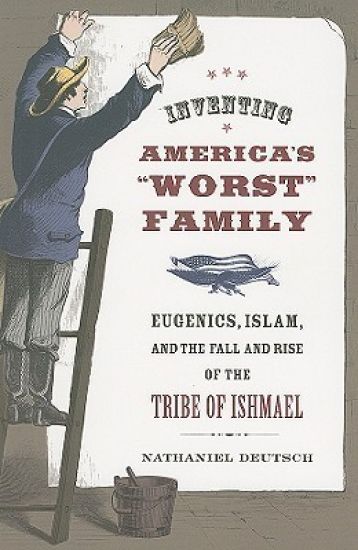
Inventing America's Worst Family

Inventing America's Worst Family

Nathaniel Deutsch

University of California Press
2009
pokkari
This book tells the stranger-than-fiction story of how a poor white family from Indiana was scapegoated into prominence as America's 'worst' family by the eugenics movement in the early twentieth century, then 'reinvented' in the 1970s as part of a vanguard of social rebellion. In what becomes a profoundly unsettling counter-history of the United States, Nathaniel Deutsch traces how the Ishmaels, whose patriarch fought in the Revolutionary War, were discovered in the slums of Indianapolis in the 1870s and became a symbol for all that was wrong with the urban poor. The Ishmaels, actually white Christians, were later celebrated in the 1970s as the founders of the country's first African American Muslim community. This bizarre and fascinating saga reveals how class, race, religion, and science have shaped the nation's history and myths.
To Be Cared For

To Be Cared For

Nathaniel Roberts

University of California Press
2016
sidottu
To Be Cared For offers a unique view into the conceptual and moral world of slum-bound Dalits ("untouchables") in the South Indian city of Chennai. Focusing on the decision by many women to embrace locally specific forms of Pentecostal Christianity, Nathaniel Roberts challenges dominant anthropological understandings of religion as a matter of culture and identity, as well as Indian nationalist narratives of Christianity as a "foreign" ideology that disrupts local communities. Far from being a divisive force, conversion integrates the slum community-Christians and Hindus alike-by addressing hidden moral fault lines that subtly pit residents against one another in a national context that renders Dalits outsiders in their own land."
To Be Cared For

To Be Cared For

Nathaniel Roberts

University of California Press
2016
pokkari
To Be Cared For offers a unique view into the conceptual and moral world of slum-bound Dalits ("untouchables") in the South Indian city of Chennai. Focusing on the decision by many women to embrace locally specific forms of Pentecostal Christianity, Nathaniel Roberts challenges dominant anthropological understandings of religion as a matter of culture and identity, as well as Indian nationalist narratives of Christianity as a "foreign" ideology that disrupts local communities. Far from being a divisive force, conversion integrates the slum community-Christians and Hindus alike-by addressing hidden moral fault lines that subtly pit residents against one another in a national context that renders Dalits outsiders in their own land."