
Kirjahaku
Etsi kirjoja tekijän nimen, kirjan nimen tai ISBN:n perusteella.
1000 tulosta hakusanalla Nathaniel Popper

An old mansion in Salem, moss-covered and gabled, broods over the destiny of a distinguished but troubled New England family -- the Pynchons. A haunting centuries-old curse, a forceful probing of national and personal guilt, a romance between the young heroine and an attractive stranger -- all intertwine in this work that Henry James declared "the closest approach we are likely to have to the Great American Novel." "The story moves in soft September light, melting like a happy dream of Shakespeare." --Van Wyck Brooks
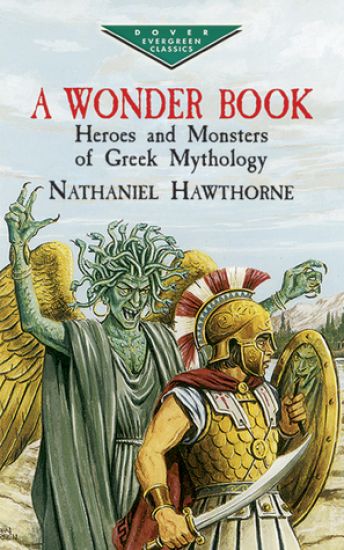
Evil creatures, magical feats, and adventure abound in this classic archive of 6 ancient tales. A captivating recounting for youngsters by one of America's greatest writers. "The Gorgon's Head," "The Golden Touch," "The Paradise of Children," "The Three Golden Apples," "The Miraculous Pitchers," and "The Chimaera."

The Secrets of Architectural Composition
Nathaniel Cortlandt Curtis
Dover Publications Inc.
2011
sidottu
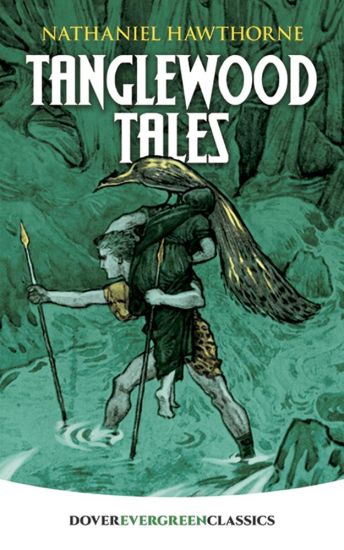
One of 19th-century America's greatest authors recounts timeless tales from Greek mythology in this delightful partner to A Wonder-Book for Girls and Boys. Nathaniel Hawthorne's evocative interpretations of traditional stories about heroes, sorceresses, kings, and other legendary characters provide young readers and listeners with a spellbinding introduction to classic myths.The adventures begin with "The Minotaur," the tale of an Athenian prince's conquest of a monstrous half-man, half-bull. Other stories include "The Pygmies," concerning a friendly giant and his small-minded neighbors; "The Dragon's Teeth," recounting the birth of a team of warriors and the founding of a city; "Circe's Palace," in which an enchantress matches wits with the trickster Ulysses; "The Pomegranate Seeds," a tale of the underworld; and "The Golden Fleece," the story of an aspiring king and his quest for the shining symbol that will win a throne.

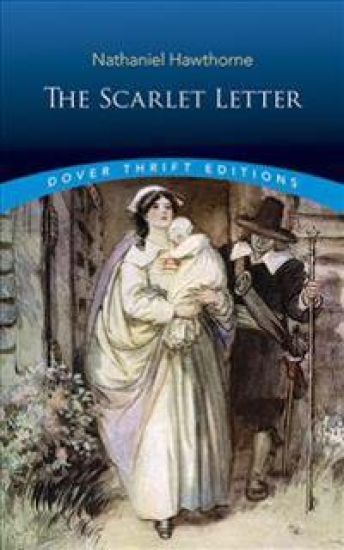
An "A" for "adultery" marks Hester Prynne as an outcast from the society of colonial Boston. Although forced by the puritanical town fathers to wear a bright red badge of shame, Hester steadfastly resists their efforts to discover the identity of her baby's father. The return of her long-absent spouse brings new pressure on the young mother, as the aggrieved husband undertakes a long-term plot to reveal Hester's partner in adultery and force him to share her disgrace. Masterful in its symbolism and compelling in its character studies, Nathaniel Hawthorne's tale of punishment and reconciliation examines the concepts of sin, guilt, and pride. The Scarlet Letter was published to immediate acclaim in 1850. Its timeless exploration of moral and spiritual issues, along with its philosophical and psychological insights, keep it ever relevant for students of American literature and lovers of fiction.
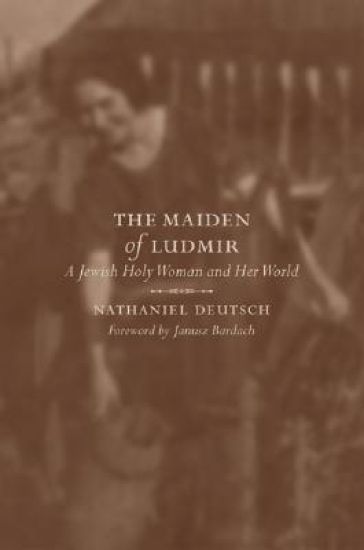
Hannah Rochel Verbermacher, a Hasidic holy woman known as the Maiden of Ludmir, was born in early-nineteenth-century Russia and became famous as the only woman in the three-hundred-year history of Hasidism to function as a rebbe - or charismatic leader - in her own right. Nathaniel Deutsch follows the traces left by the Maiden in both history and legend to fully explore her fascinating story for the first time. "The Maiden of Ludmir" offers powerful insights into the Jewish mystical tradition, into the Maiden's place within it, and into the remarkable Jewish community of Ludmir. Her biography ultimately becomes a provocative meditation on the complex relationships between history and memory, Judaism and modernity. History first finds the Maiden in the eastern European town of Ludmir, venerated by her followers as a master of the Kabbalah, teacher, and visionary, and accused by her detractors of being possessed by a dybbuk, or evil spirit. Deutsch traces the Maiden's steps from Ludmir to Ottoman Palestine, where she eventually immigrated and re-established herself as a holy woman. While the Maiden's story - including her adamant refusal to marry - recalls the lives of holy women in other traditions, it also brings to light the largely unwritten history of early-modern Jewish women. To this day, her transgressive behavior, a challenge to traditional Jewish views of gender and sexuality, continues to inspire debate and, sometimes, censorship within the Jewish community.
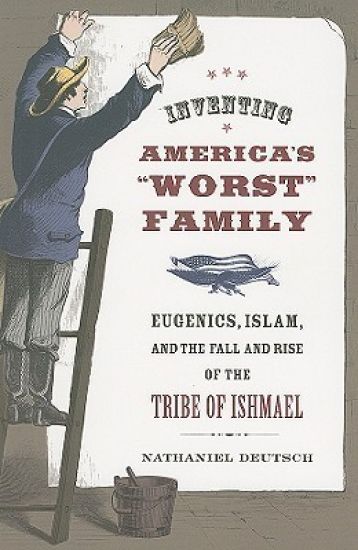
This book tells the stranger-than-fiction story of how a poor white family from Indiana was scapegoated into prominence as America's 'worst' family by the eugenics movement in the early twentieth century, then 'reinvented' in the 1970s as part of a vanguard of social rebellion. In what becomes a profoundly unsettling counter-history of the United States, Nathaniel Deutsch traces how the Ishmaels, whose patriarch fought in the Revolutionary War, were discovered in the slums of Indianapolis in the 1870s and became a symbol for all that was wrong with the urban poor. The Ishmaels, actually white Christians, were later celebrated in the 1970s as the founders of the country's first African American Muslim community. This bizarre and fascinating saga reveals how class, race, religion, and science have shaped the nation's history and myths.

To Be Cared For offers a unique view into the conceptual and moral world of slum-bound Dalits ("untouchables") in the South Indian city of Chennai. Focusing on the decision by many women to embrace locally specific forms of Pentecostal Christianity, Nathaniel Roberts challenges dominant anthropological understandings of religion as a matter of culture and identity, as well as Indian nationalist narratives of Christianity as a "foreign" ideology that disrupts local communities. Far from being a divisive force, conversion integrates the slum community-Christians and Hindus alike-by addressing hidden moral fault lines that subtly pit residents against one another in a national context that renders Dalits outsiders in their own land."
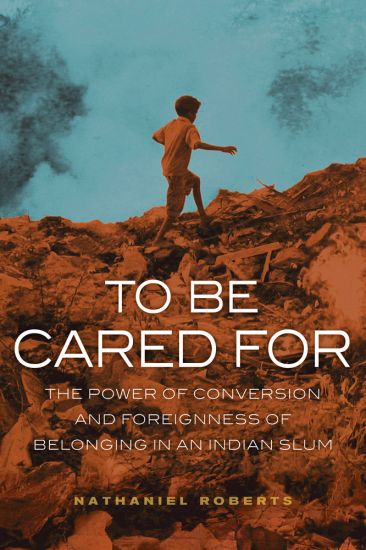
To Be Cared For offers a unique view into the conceptual and moral world of slum-bound Dalits ("untouchables") in the South Indian city of Chennai. Focusing on the decision by many women to embrace locally specific forms of Pentecostal Christianity, Nathaniel Roberts challenges dominant anthropological understandings of religion as a matter of culture and identity, as well as Indian nationalist narratives of Christianity as a "foreign" ideology that disrupts local communities. Far from being a divisive force, conversion integrates the slum community-Christians and Hindus alike-by addressing hidden moral fault lines that subtly pit residents against one another in a national context that renders Dalits outsiders in their own land."
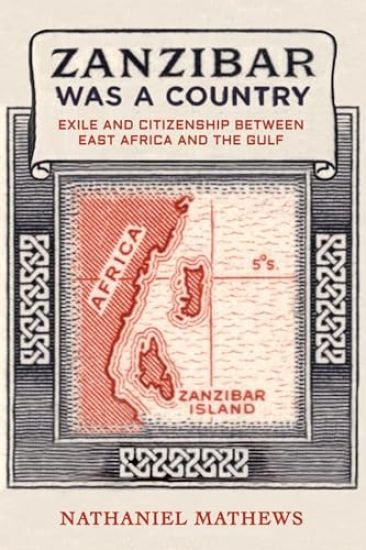
Zanzibar Was a Country traces the history of a Swahili-speaking Arab diaspora from East Africa to Oman. In Oman today, whole communities in Muscat speak Swahili, have recent East African roots, and practice forms of sociality associated with the urban culture of the Swahili coast. These "Omani Zanzibaris" offer the most significant contemporary example in the Gulf, as well as in the wider Indian Ocean region, of an Afro-Arab community that maintains a living connection to Africa in a diasporic setting. While they come from all over East Africa, a large number are postrevolution exiles and emigrés from Zanzibar. Their stories provide a framework for the broader transregional entanglements of decolonization in Africa and the Arabian Gulf. Using both vernacular historiography and life histories of men and women from the community, Nathaniel Mathews argues that the traumatic memories of the Zanzibar Revolution of 1964 are important to nation-building on both sides of the Indian Ocean.

Zanzibar Was a Country traces the history of a Swahili-speaking Arab diaspora from East Africa to Oman. In Oman today, whole communities in Muscat speak Swahili, have recent East African roots, and practice forms of sociality associated with the urban culture of the Swahili coast. These "Omani Zanzibaris" offer the most significant contemporary example in the Gulf, as well as in the wider Indian Ocean region, of an Afro-Arab community that maintains a living connection to Africa in a diasporic setting. While they come from all over East Africa, a large number are postrevolution exiles and emigrés from Zanzibar. Their stories provide a framework for the broader transregional entanglements of decolonization in Africa and the Arabian Gulf. Using both vernacular historiography and life histories of men and women from the community, Nathaniel Mathews argues that the traumatic memories of the Zanzibar Revolution of 1964 are important to nation-building on both sides of the Indian Ocean.
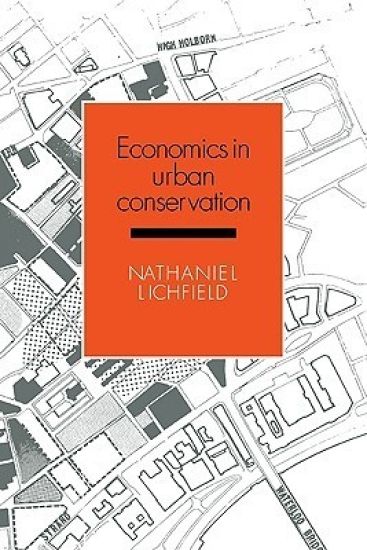
The role of economics in urban conservation is relatively underdeveloped. Professor Lichfield has added to his other pioneering studies in this innovative and important exposition of approach, method and techniques for the systematic application of economics in the conservation of urban areas. In order to establish an appropriate base for the economic analysis and application in parts III, IV and V of the book, the opening sections provide essential background information about the management and planning for conservation in the urban system in general and examine the special place of the cultural built heritage: those building and objects chosen by society for particular protection. Written in a highly accessible style, Economics in Urban Conservation makes a major contribution to an understanding of how economics in conservation can help in achieving a sensible balance between continuity and change in the built environment.
Discrepant Engagement addresses work by a number of authors not normally grouped under a common rubric - black writers from the United States and the Caribbean and the so-called Black Mountain poets. Nathaniel Mackey examines the ways in which the experimental aspects of their work advance a critique of the assumptions underlying conventional perceptions and practice. Arguing that the work of these writers engages the discrepancy between presumed norms and qualities of experience such norms fail to accommodate, Mackey highlights their valorization of dissonance, divergence and formal disruption. He advances a cross-cultural mix that is uncommon in studies of experimental writing, frequently bringing the works and ideas of the authors it addresses into dialogue and juxtaposition with one another, insisting that parallels, counterpoint and relevance to one another exist among writers otherwise separated by ethnic and regional boundaries.

Mathematical Theory of Entropy
Nathaniel F. G. Martin; James W. England
Cambridge University Press
2011
pokkari
Originally published in 1981, this excellent treatment of the mathematical theory of entropy gives an accessible exposition of the ways in which this idea has been applied to information theory, ergodic theory, topological dynamics and statistical mechanics. Scientists who want a quick understanding of how entropy is applied in disciplines not their own, or simply desire a better understanding of the mathematical foundation of the entropy function will find this to be a valuable book.

Mathematical Theory of Entropy
Nathaniel F. G. Martin; James W. England
Cambridge University Press
1984
sidottu
Originally published in 1981, this excellent treatment of the mathematical theory of entropy gives an accessible exposition of the ways in which this idea has been applied to information theory, ergodic theory, topological dynamics and statistical mechanics. Scientists who want a quick understanding of how entropy is applied in disciplines not their own, or simply desire a better understanding of the mathematical foundation of the entropy function will find this to be a valuable book.
Discrepant Engagement addresses work by a number of authors not normally grouped under a common rubric - black writers from the United States and the Caribbean and the so-called Black Mountain poets. Nathaniel Mackey examines the ways in which the experimental aspects of their work advance a critique of the assumptions underlying conventional perceptions and practice. Arguing that the work of these writers engages the discrepancy between presumed norms and qualities of experience such norms fail to accommodate, Mackey highlights their valorization of dissonance, divergence and formal disruption. He advances a cross-cultural mix that is uncommon in studies of experimental writing, frequently bringing the works and ideas of the authors it addresses into dialogue and juxtaposition with one another, insisting that parallels, counterpoint and relevance to one another exist among writers otherwise separated by ethnic and regional boundaries.

In the Hurricane's Eye: The Genius of George Washington and the Victory at Yorktown
Nathaniel Philbrick
VIKING
2018
sidottu
NEW YORK TIMES BESTSELLER "Nathaniel Philbrick is a masterly storyteller. Here he seeks to elevate the naval battles between the French and British to a central place in the history of the American Revolution. He succeeds, marvelously."--The New York Times Book Review The thrilling story of the year that won the Revolutionary War from the New York Times bestselling author of In the Heart of the Sea and Mayflower. In the concluding volume of his acclaimed American Revolution series, Nathaniel Philbrick tells the thrilling story of the year that won the Revolutionary War. In the fall of 1780, after five frustrating years of war, George Washington had come to realize that the only way to defeat the British Empire was with the help of the French navy. But coordinating his army's movements with those of a fleet of warships based thousands of miles away was next to impossible. And then, on September 5, 1781, the impossible happened. Recognized today as one of the most important naval engagements in the history of the world, the Battle of the Chesapeake--fought without a single American ship--made the subsequent victory of the Americans at Yorktown a virtual inevitability. A riveting and wide-ranging story, full of dramatic, unexpected turns, In the Hurricane's Eye reveals that the fate of the American Revolution depended, in the end, on Washington and the sea.
NEW YORK TIMES BESTSELLER "Travels with George . . . is quintessential Philbrick--a lively, courageous, and masterful achievement." --The Boston Globe Does George Washington still matter? Bestselling author Nathaniel Philbrick argues for Washington's unique contribution to the forging of America by retracing his journey as a new president through all thirteen former colonies, which were now an unsure nation. Travels with George marks a new first-person voice for Philbrick, weaving history and personal reflection into a single narrative. When George Washington became president in 1789, the United States of America was still a loose and quarrelsome confederation and a tentative political experiment. Washington undertook a tour of the ex-colonies to talk to ordinary citizens about his new government, and to imbue in them the idea of being one thing--Americans. In the fall of 2018, Nathaniel Philbrick embarked on his own journey into what Washington called "the infant woody country" to see for himself what America had become in the 229 years since. Writing in a thoughtful first person about his own adventures with his wife, Melissa, and their dog, Dora, Philbrick follows Washington's presidential excursions: from Mount Vernon to the new capital in New York; a monthlong tour of Connecticut, Massachusetts, New Hampshire, and Rhode Island; a venture onto Long Island and eventually across Georgia, South Carolina, and North Carolina. The narrative moves smoothly between the eighteenth and twenty-first centuries as we see the country through both Washington's and Philbrick's eyes. Written at a moment when America's founding figures are under increasing scrutiny, Travels with George grapples bluntly and honestly with Washington's legacy as a man of the people, a reluctant president, and a plantation owner who held people in slavery. At historic houses and landmarks, Philbrick reports on the reinterpretations at work as he meets reenactors, tour guides, and other keepers of history's flame. He paints a picture of eighteenth-century America as divided and fraught as it is today, and he comes to understand how Washington compelled, enticed, stood up to, and listened to the many different people he met along the way--and how his all-consuming belief in the union helped to forge a nation.

Travels with George: In Search of Washington and His Legacy
Nathaniel Philbrick
PENGUIN BOOKS
2022
nidottu
NEW YORK TIMES BESTSELLER "Travels with George . . . is quintessential Philbrick--a lively, courageous, and masterful achievement." --The Boston Globe Does George Washington still matter? Bestselling author Nathaniel Philbrick argues for Washington's unique contribution to the forging of America by retracing his journey as a new president through all thirteen former colonies, which were now an unsure nation. Travels with George marks a new first-person voice for Philbrick, weaving history and personal reflection into a single narrative. When George Washington became president in 1789, the United States of America was still a loose and quarrelsome confederation and a tentative political experiment. Washington undertook a tour of the ex-colonies to talk to ordinary citizens about his new government, and to imbue in them the idea of being one thing--Americans. In the fall of 2018, Nathaniel Philbrick embarked on his own journey into what Washington called "the infant woody country" to see for himself what America had become in the 229 years since. Writing in a thoughtful first person about his own adventures with his wife, Melissa, and their dog, Dora, Philbrick follows Washington's presidential excursions: from Mount Vernon to the new capital in New York; a monthlong tour of Connecticut, Massachusetts, New Hampshire, and Rhode Island; a venture onto Long Island and eventually across Georgia, South Carolina, and North Carolina. The narrative moves smoothly between the eighteenth and twenty-first centuries as we see the country through both Washington's and Philbrick's eyes. Written at a moment when America's founding figures are under increasing scrutiny, Travels with George grapples bluntly and honestly with Washington's legacy as a man of the people, a reluctant president, and a plantation owner who held people in slavery. At historic houses and landmarks, Philbrick reports on the reinterpretations at work as he meets reenactors, tour guides, and other keepers of history's flame. He paints a picture of eighteenth-century America as divided and fraught as it is today, and he comes to understand how Washington compelled, enticed, stood up to, and listened to the many different people he met along the way--and how his all-consuming belief in the union helped to forge a nation.