Kirjojen hintavertailu. Mukana 11 244 527 kirjaa ja 12 kauppaa.

Kirjahaku

Etsi kirjoja tekijän nimen, kirjan nimen tai ISBN:n perusteella.

1000 tulosta hakusanalla Neil T. Sinclair

The Citizens' Council

The Citizens' Council

Neil R. McMillen

University of Illinois Press
1994
nidottu
This in-depth account of the rise and decline of the Citizens' Councils of America details the organization's role in the massive resistance to school desegregation in the South following the 1954 Brown vs. Board of Education decision. Included are a new preface and updated bibliography. "A tour de force of research and narration. . . in highly readable style. [McMillen] . . . seems to have read everything the historical record has to offer on the subject and to have known exactly what to make of it. . . Himself squarely on the side of the future, he is sensitive to the anguish that prompted the hysteria of the misguided racist. . . . By any test, a masterful study." -- Journal of Southern History "Takes seriously the people who made the movement, when ridicule and caricature would have been an easier analytical technique. Solidly researched and well written. . . an intriguing story." -- Augustus M. Burns, Social Studies
Racing to a Cure

Racing to a Cure

Neil Ruzic

University of Illinois Press
2006
nidottu
Racing to a Cure is not a cancer memoir. It is a cancer cure memoir. In 1998 Neil Ruzic was diagnosed with mantle-cell lymphoma, the deadliest cancer of the lymph system, whose spread is reaching epidemic levels in the U.S. and Europe. Instead of following recommended courses of chemotherapy and radiation, he took control of his treatment by investigating cures being developed in the nation's cancer-research laboratories. Although chemotherapy harms the immune system and is increasingly demonstrated to be an ineffective long-term cure for the vast majority of cancers, it remains the standard treatment for most cancer patients. Ruzic, a former scientific magazine publisher and originator of a science center, refused to accept this status quo, and instead plunged into the world of cutting-edge treatments, exploring the frontiers of cancer science with revolutionary results. Ruzic went on the offensive: visiting scores of laboratories, gathering information, talking to researchers, and effectively becoming his own patient-care advocate. This book presents his findings. A scathing critique of the chemotherapy culture as well as unscientific "alternative" therapies, the book endorses state-of-the-art molecularly based technologies, making it an illuminating and necessary read for anyone interested in cancer research, especially patients and their families and physicians. Neil Ruzic was expected to die within two years of his initial diagnosis. Five years later he has been declared cancer-free and considers himself cured.
Bluegrass Odyssey

Bluegrass Odyssey

Neil V Rosenberg

University of Illinois Press
2006
nidottu
The fruit of four decades of collaboration between bluegrass music's premier photographer and premier historian, Bluegrass Odyssey is a satisfying and visually alluring journey into the heart of a truly American music. Combining more than two hundred of Carl Fleischhauer's photographs with Neil V. Rosenberg's expert commentary, this elegant visual documentary captures the music-making with the culture and community that foster it.
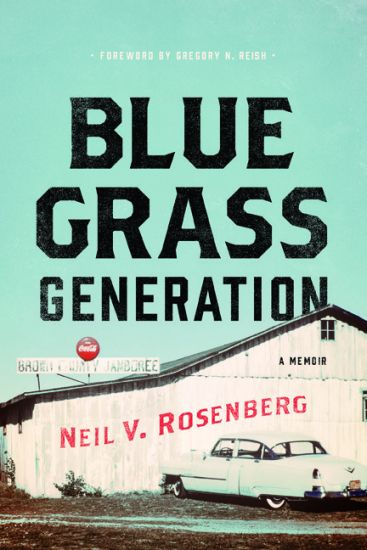
Bluegrass Generation

Bluegrass Generation

Neil V Rosenberg

University of Illinois Press
2018
nidottu
Neil V. Rosenberg met the legendary Bill Monroe at the Brown County Jamboree. Rosenberg's subsequent experiences in Bean Blossom put his feet on the intertwined musical and scholarly paths that made him a preeminent scholar of bluegrass music. Rosenberg's memoir shines a light on the changing bluegrass scene of the early 1960s. Already a fan and aspiring musician, his appetite for banjo music quickly put him on the Jamboree stage. Rosenberg eventually played with Monroe and spent four months managing the Jamboree. Those heights gave him an eyewitness view of nothing less than bluegrass's emergence from the shadow of country music into its own distinct art form. As the likes of Bill Keith and Del McCoury played, Rosenberg watched Monroe begin to share a personal link to the music that tied audiences to its history and his life--and helped turn him into bluegrass's foundational figure.An intimate look at a transformative time, Bluegrass Generation tells the inside story of how an American musical tradition came to be.
Industrial Strength Bluegrass

Industrial Strength Bluegrass

Neil V. Rosenberg

University of Illinois Press
2021
nidottu
In the twentieth century, Appalachian migrants seeking economic opportunities relocated to southwestern Ohio, bringing their music with them. Between 1947 and 1989, they created an internationally renowned capital for the thriving bluegrass music genre, centered on the industrial region of Cincinnati, Dayton, Hamilton, Middletown, and Springfield. Fred Bartenstein and Curtis W. Ellison edit a collection of eyewitness narratives and in-depth analyses that explore southwestern Ohio's bluegrass musicians, radio broadcasters, recording studios, record labels, and performance venues, along with the music's contributions to religious activities, community development, and public education. As the bluegrass scene grew, southwestern Ohio's distinctive sounds reached new fans and influenced those everywhere who continue to play, produce, and love roots music. Revelatory and multifaceted, Industrial Strength Bluegrass shares the inspiring story of a bluegrass hotbed and the people who created it. Contributors: Fred Bartenstein, Curtis W. Ellison, Jon Hartley Fox, Rick Good, Lily Isaacs, Ben Krakauer, Mac McDivitt, Nathan McGee, Daniel Mullins, Joe Mullins, Larry Nager, Phillip J. Obermiller, Bobby Osborne, and Neil V. Rosenberg.
Ordinary Whites in Apartheid Society

Ordinary Whites in Apartheid Society

Neil Roos

INDIANA UNIVERSITY PRESS
2024
sidottu
How were whites implicated in and shaped by apartheid culture and society, and how did they contribute to it? In Ordinary Whites in Apartheid Society, historian Neil Roos traces the lives of ordinary white people in South Africa during the apartheid years, beginning in 1948 when the National Party swept into power on the back of its catchall apartheid slogan. Drawing on his own family's story and others, Roos explores how working-class whites frequently defied particular aspects of the apartheid state but seldom opposed or even acknowledged the idea of racial supremacy, which lay at the heart of the apartheid society. This cognitive dissonance afforded them a way to simultaneously accommodate and oppose apartheid and allowed them to later claim they never supported the apartheid system. Ordinary Whites in Apartheid Society offers a telling reminder that the politics and practice of race, in this case apartheid-era whiteness, derive not only from the top, but also from the bottom.
Ordinary Whites in Apartheid Society

Ordinary Whites in Apartheid Society

Neil Roos

INDIANA UNIVERSITY PRESS
2024
pokkari
How were whites implicated in and shaped by apartheid culture and society, and how did they contribute to it? In Ordinary Whites in Apartheid Society, historian Neil Roos traces the lives of ordinary white people in South Africa during the apartheid years, beginning in 1948 when the National Party swept into power on the back of its catchall apartheid slogan. Drawing on his own family's story and others, Roos explores how working-class whites frequently defied particular aspects of the apartheid state but seldom opposed or even acknowledged the idea of racial supremacy, which lay at the heart of the apartheid society. This cognitive dissonance afforded them a way to simultaneously accommodate and oppose apartheid and allowed them to later claim they never supported the apartheid system. Ordinary Whites in Apartheid Society offers a telling reminder that the politics and practice of race, in this case apartheid-era whiteness, derive not only from the top, but also from the bottom.
Sir Humphrey's Legacy

Sir Humphrey's Legacy

Neil Record; David Laws

Institute of Economic Affairs
2006
nidottu
Whilst private sector pension schemes have been closing down rapidly in the last few years, public sector employees continue to enjoy 'gold plated' benefits. In addition, rates of ill health retirement in public sector pension schemes are extremely high. Proposed reforms to public sector schemes will make little difference to the benefits available to new employees and no difference at all to benefits of existing employees. Private sector taxpayers have to meet the cost of public sector pensions, so how has this divide between the standard of private and public sector pensions arisen? Part of the answer lies in the fact that the costs of public sector schemes are not properly accounted for.In this monograph, Neil Record estimates that public sector pension liabilities are about GBP1trillion - but the government publishes estimates of the liabilities of only half this level. The author argues that nothing can be done to deal with the liability accrued so far, but that action can be taken to make costs transparent in the future. If costs are made transparent we can start to change the nature of public sector schemes, to the benefit of workers and taxpayers alike. Further reform proposals are discussed by commentators Philip Booth and Nick Silver.
An Introduction to Bioinformatics Algorithms

An Introduction to Bioinformatics Algorithms

Neil C. Jones; Pavel A. Pevzner

MIT Press
2004
sidottu
An introductory text that emphasizes the underlying algorithmic ideas that are driving advances in bioinformatics.This introductory text offers a clear exposition of the algorithmic principles driving advances in bioinformatics. Accessible to students in both biology and computer science, it strikes a unique balance between rigorous mathematics and practical techniques, emphasizing the ideas underlying algorithms rather than offering a collection of apparently unrelated problems. The book introduces biological and algorithmic ideas together, linking issues in computer science to biology and thus capturing the interest of students in both subjects. It demonstrates that relatively few design techniques can be used to solve a large number of practical problems in biology, and presents this material intuitively. An Introduction to Bioinformatics Algorithms is one of the first books on bioinformatics that can be used by students at an undergraduate level. It includes a dual table of contents, organized by algorithmic idea and biological idea; discussions of biologically relevant problems, including a detailed problem formulation and one or more solutions for each; and brief biographical sketches of leading figures in the field. These interesting vignettes offer students a glimpse of the inspirations and motivations for real work in bioinformatics, making the concepts presented in the text more concrete and the techniques more approachable.PowerPoint presentations, practical bioinformatics problems, sample code, diagrams, demonstrations, and other materials can be found at the Author's website.
Technical Debt in Practice

Technical Debt in Practice

Neil Ernst; Julian Delange

MIT Press
2021
nidottu
The practical implications of technical debt for the entire software life cycle; with examples and case studies. Technical debt in software is incurred when developers take shortcuts and make ill-advised technical decisions in the initial phases of a project, only to be confronted with the need for costly and labor-intensive workarounds later. This book offers advice on how to avoid technical debt, how to locate its sources, and how to remove it. It focuses on the practical implications of technical debt for the entire software life cycle, with examples and case studies from companies that range from Boeing to Twitter. Technical debt is normal; it is part of most iterative development processes. But if debt is ignored, over time it may become unmanageably complex, requiring developers to spend all of their effort fixing bugs, with no time to add new features--and after all, new features are what customers really value. The authors explain how to monitor technical debt, how to measure it, and how and when to pay it down. Broadening the conventional definition of technical debt, they cover requirements debt, implementation debt, testing debt, architecture debt, documentation debt, deployment debt, and social debt. They intersperse technical discussions with Voice of the Practitioner sidebars that detail real-world experiences with a variety of technical debt issues.
A Pluralist Theory of Perception

A Pluralist Theory of Perception

Neil Mehta

MIT PRESS LTD
2024
nidottu
A new theory of perception that posits that conscious perception consists not of a single kind of awareness, but of two radically different kinds deployed in concert. Most contemporary theories of perception, including leading forms of representationalism and naive realism, are monistic they assume that to consciously perceive is to deploy only one kind of sensory awareness. In A Pluralist Theory of Perception, Neil Mehta instead argues for pluralism, which says that to consciously perceive is to deploy two very different kinds of sensory awareness in concert. Mehta argues that pluralism can simultaneously explain what is common to all forms of consciousness and what is distinctive about conscious perception. Mehta's preferred version of pluralism, which he calls rich pluralism, says that conscious perception is constituted by successful sensory representation and deep awareness. Successful sensory representation is a representational form of awareness whose targets include particulars. It is found in perceptions, whether conscious or unconscious, but not in hallucinations. By contrast, deep awareness is a nonrepresentational form of sensory awareness whose targets are certain universals--the sensory qualities. Deep awareness constitutes one kind of consciousness, it is common to conscious perceptions and hallucinations, and it reveals part of the essences of its targets. Mehta argues that although rich pluralism appears to be less parsimonious than monism, it is not. All monistic theories that are explanatorily adequate end up being even more complex than rich pluralism. Thus, rich pluralism is the most spartan theory that can shoulder the explanatory load.
Camouflage

Camouflage

Neil Leach

MIT Press
2006
pokkari
An exploration of the urge in human beings to feel at home in the world, and the role that architecture plays in this process.We human beings are governed by the urge to conform and blend in with our surroundings. We follow fashion. We become part of cultures of conformity-religious communities, military groups, sports teams; we take on corporate identities. Likewise, we seem to have the capacity to grow into our built environment, to familiarize ourselves with it, and eventually to find ourselves at home there. We have a chameleonlike urge to adapt, and, given the increasing mobility of contemporary life, we are constantly having to do so.The desire for camouflage is a desire to feel connected-to find our place in the world and to feel at home. In Camouflage Neil Leach analyzes this desire and its consequences for architectural concerns. Design, Leach argues, can aid the process of assimilation we go through when we adapt to our surroundings. Design can provide a form of connectivity-a mediation between us and our environment-and it can contribute to a sense of belonging. Architecture, and indeed all forms of design and creativity-fashion, art, cinema, and others-can be an effective realm for forging a sense of belonging and establishing an identity.Camouflage offers a range of overlapping and intersecting theoretical perspectives-from an overview of psychoanalytic insights to an account of the magical properties of architectural models-that together suggest a way to rethink our relationship to the world and the role that design plays in that relationship.
Eucharist in Pre-Norman Ireland

Eucharist in Pre-Norman Ireland

Neil Xavier O'Donoghue

University of Notre Dame Press
2011
nidottu
A significant body of scholarship addresses pre-Norman Irish life and history, including the archaeology, art, and architecture from the time of St. Patrick (d. 493) to the arrival of the Normans in the twelfth century. While the place of the church and its organization in pre-Norman Ireland have been extensively studied, relatively little has been published on the eucharistic liturgy as celebrated in the pre-Norman church or on the attitudes of its worshippers to the Eucharist. But, as Neil Xavier O'Donoghue notes, many of Ireland's national treasures—including the Ardagh Chalice, the Book of Kells, and Cormac's Chapel—date from this time and are directly connected with the celebration of the Eucharist. Additionally, many of the textual and archaeological sources for the study of pre-Norman Ireland—saints' lives, penitentials, monastic rules, manuscripts, eucharistic vessels, church buildings, and ecclesiastical complexes—directly relate to the Eucharist. There has been no attempt to provide a useful synthesis since F. E. Warren's 1881 Liturgy and Ritual of the Celtic Church. O'Donoghue's The Eucharist in Pre-Norman Ireland provides a necessary, updated synthesis, one that incorporates advances made in liturgical studies and liturgical theology since the early twentieth century. In addition to reassessing and supplementing the texts discussed by Warren, O'Donoghue considers the social dimension of the Eucharist, its treatment in art and architecture, and its treatment as reflected by the spirituality of the time, placing this new analysis within a better understood Western European cultural and liturgical context. Most importantly, O'Donoghue shows that pre-Norman Ireland was very much a part of the Western (Gallican) liturgical tradition; he argues that what we know of the Eucharist in Ireland must be integrated into what we know of it in Britain and Gaul in order to understand the central role of the Eucharist in the Christianization of the West.
Eucharist in Pre-Norman Ireland

Eucharist in Pre-Norman Ireland

Neil Xavier O'Donoghue

UNIVERSITY OF NOTRE DAME PRESS
2022
sidottu
A significant body of scholarship addresses pre-Norman Irish life and history, including the archaeology, art, and architecture from the time of St. Patrick (d. 493) to the arrival of the Normans in the twelfth century. While the place of the church and its organization in pre-Norman Ireland have been extensively studied, relatively little has been published on the eucharistic liturgy as celebrated in the pre-Norman church or on the attitudes of its worshippers to the Eucharist. But, as Neil Xavier O'Donoghue notes, many of Ireland's national treasures—including the Ardagh Chalice, the Book of Kells, and Cormac's Chapel—date from this time and are directly connected with the celebration of the Eucharist. Additionally, many of the textual and archaeological sources for the study of pre-Norman Ireland—saints' lives, penitentials, monastic rules, manuscripts, eucharistic vessels, church buildings, and ecclesiastical complexes—directly relate to the Eucharist. There has been no attempt to provide a useful synthesis since F. E. Warren's 1881 Liturgy and Ritual of the Celtic Church. O'Donoghue's The Eucharist in Pre-Norman Ireland provides a necessary, updated synthesis, one that incorporates advances made in liturgical studies and liturgical theology since the early twentieth century. In addition to reassessing and supplementing the texts discussed by Warren, O'Donoghue considers the social dimension of the Eucharist, its treatment in art and architecture, and its treatment as reflected by the spirituality of the time, placing this new analysis within a better understood Western European cultural and liturgical context. Most importantly, O'Donoghue shows that pre-Norman Ireland was very much a part of the Western (Gallican) liturgical tradition; he argues that what we know of the Eucharist in Ireland must be integrated into what we know of it in Britain and Gaul in order to understand the central role of the Eucharist in the Christianization of the West.
Monumental Intolerance

Monumental Intolerance

Neil McWilliam

Pennsylvania State University Press
2000
sidottu
Little known today, Jean Baffier (1851–1920) was never far from the headlines during his own lifetime. Born into a poor peasant family, he became a self-taught sculptor whose work ranged from decorative objects to portrayals of peasant life and public monuments. But Baffier would probably not have received wide public attention if he had not also become a folklorist, a promoter of regional culture, and a militant nationalist with beliefs so violent that he attempted a political assassination. Monumental Intolerance explores the full gamut of Baffier’s activities and shows that he was pursuing a vast scheme of national purification and rebirth. Neil McWilliam’s discussion of the historical issues surrounding Baffier opens an extraordinary perspective on the culture wars and political struggles of a turbulent period in French history.This book will interest the art-historical community and historians of fin-de-siècle France.
Of Cannibals and Kings

Of Cannibals and Kings

Neil L. Whitehead

Pennsylvania State University Press
2011
pokkari
Of Cannibals and Kings collects the very earliest accounts of the native peoples of the Americas, including selections from the descriptions of Columbus’s first two voyages; documents reflecting the initial colonial occupation in Haiti, Venezuela, and Guyana; and the first ethnographic account of the Taínos by the missionary Ramón Pané. This primal anthropology directly guided a rapacious discovery of the lands of both wild cannibals and golden kings.
Brilliant Business Writing

Brilliant Business Writing

Neil Taylor

Pearson Education Limited
2011
pokkari
Full of tips, examples and exercises that will transform your writing from the same old same old into something that'll mark you out from the crowd. Get the confidence and creativity to take your business writing from something that does the job into something that's brilliant. Brilliant outcomesProduce business writing people actually want to readPersuade and inspire people, sell more, or get that jobGet a distinctive, powerful and engaging writing voice