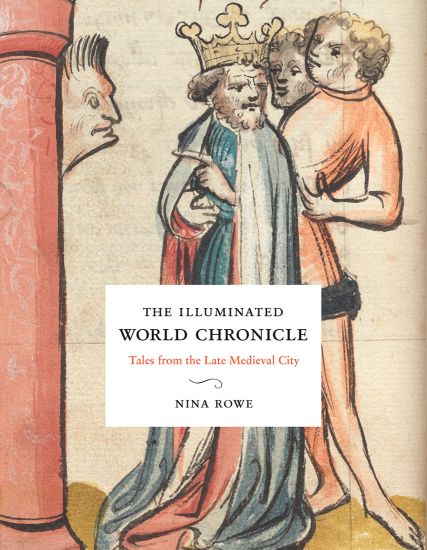
A look into an enchanting, underexplored genre of illustrated manuscripts that reveals new insights into urban life in the Middle Ages In this innovative study, Nina Rowe examines a curious genre of illustrated book that gained popularity among the newly emergent middle class of late medieval cities. These illuminated World Chronicles, produced in the Bavarian and Austrian regions from around 1330 to 1430, were the popular histories of their day, telling tales from the Bible, ancient mythology, and the lives of emperors in animated, vernacular verse, enhanced by dynamic images. Rowe’s appraisal of these understudied books presents a rich world of storytelling modes, offering unprecedented insight into the non-noble social strata in a transformative epoch. Through a multidisciplinary approach, Rowe also shows how illuminated World Chronicles challenge the commonly held view of the Middle Ages as socially stagnant and homogeneously pious. Beautifully illustrated and backed by abundant and accessible analyses of social, economic, and political conditions, this book highlights the engaging character of secular literature during the late medieval era and the relationship of illustrated books to a socially diverse and vibrant urban sphere.
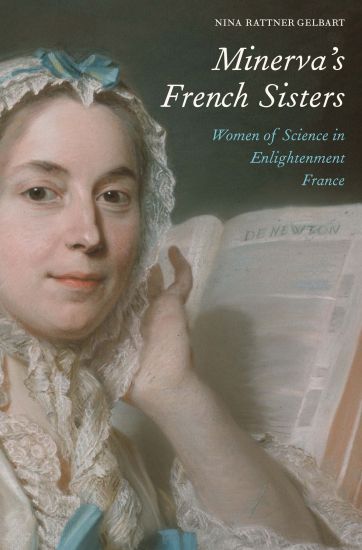
A fascinating collective biography of six female scientists in eighteenth-century France, whose stories were largely written out of history “Of the 72 scientific names engraved on the Eiffel Tower, none is female. Omissions include the six Enlightenment women dubbed ‘Minerva’s sisters’ by historian Nina Gelbart in her pioneering, evocative rescue.”—Nature This book presents the stories of six intrepid Frenchwomen of science in the Enlightenment whose accomplishments—though celebrated in their lifetimes--have been generally omitted from subsequent studies of their period: mathematician and philosopher Elisabeth Ferrand, astronomer Nicole Reine Lepaute, field naturalist Jeanne Barret, garden botanist and illustrator Madeleine Françoise Basseporte, anatomist and inventor Marie-Marguerite Biheron, and chemist Geneviève d’Arconville. By adjusting our lens, we can find them. In a society where science was not yet an established profession for men, much less women, these six audacious and inspiring figures made their mark on their respective fields of science and on Enlightenment society, as they defied gender expectations and conventional norms. Their boldness and contributions to science were appreciated by such luminaries as Franklin, the philosophes, and many European monarchs. The book is written in an unorthodox style to match the women’s breaking of boundaries.
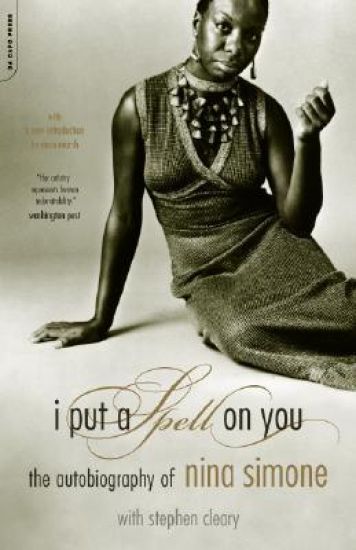
A gorgeous, inimitable singer and songwriter, Nina Simone (1933-2003) changed the face of both music and race relations in America. She struck a chord with bluesy jazz ballads like "Put a Little Sugar in My Bowl" and powerful protest songs such as "Mississippi Goddam" and "To Be Young, Gifted, and Black," the anthem of the American Civil Rights movement. Coinciding with the re-release of her famous Philips Recordings, here are the reflections of the "High Priestess of Soul" on her own life.
Award-winning author and journalist Nina Burleigh's mesmerizing literary investigation of the murder of Meredith Kercher, the controversial prosecution, the conviction and twenty-six-year sentence of Amanda Knox, the machinations of Italian justice, and the underground depravity and clash of cultures in one of central Italy's most beloved cities.The sexually violent murder of twenty-one-year-old British student Meredith Kercher in Perugia, Italy, on the night of November 1, 2007, became an international sensation when one of Kercher's housemates, twenty-year-old Seattle native Amanda Knox, as well as her Italian boyfriend and a troubled local man Knox said she "vaguely" knew, was arrested and charged with the murder. When Perugia authorities concluded that the murder was part of a dark, twisted rite--a "sex game"--led by the American with an uncanny resemblance to Perugia's Madonna, they unleashed a media frenzy from Rome to London to New York and Seattle. The story drew an international cult obsessed with "Foxy Knoxy," a pretty honor student on a junior year abroad, who either woke up one morning into a nightmare of superstition and misogyny--the dark side of Italy--or participated in something unspeakable. The investigation begins in the old stone cottage overlooking bucolic olive groves where Kercher's body was found in her locked bedroom. It winds through the shadowy, arched alleys of Perugia, a city of art that is also a magnet for tens of thousands of students who frequent its bars, clubs, and drug bazaar on the steps of the Duomo. It climaxes in an up-close account of Italy's dysfunctional legal system, as the trial slowly unfolds at the town's Tribunale, and the prosecution's thunderous final appeal to God before the quivering girl defendant resembles a scene from the Inquisition. To reveal what actually happened on that terrible night after Halloween, Nina Burleigh lived in Perugia, attended the trial, and corresponded with the incarcerated defendants. She also delved deeply into the history, secrets, and customs of Perugia, renowned equally for its Etruscan tunnels, early Christian art, medieval sorcerers, and pagan roots. A New York Times bestseller, The Fatal Gift of Beauty is the thoughtful, compelling examination of an enduring mystery, an ancient, storied place, and a disquieting facet of Italian culture: an obsession with female eroticism. By including the real story of Rudy Guede, it is also an acute window into the minds and personalities of the accused killers and of the conservative Italian magistrate striving to make sense of an inexplicable act of evil. But at its core is an indelible portrait of Amanda Knox, the strangely childlike, enigmatic beauty, whose photogenic face became the focal point of international speculation about the shadow side of youth and freedom.
Nina Pelikan Straus explores Dostoevsky's major works with a focus on his women characters, his references to rape and men's abuse of females, and his construction of 'the feminine'. Intended not to impose feminist ideology upon the writer, but rather to enlarge feminist discourse through Dostoevsky, the chapters explore new readings with a sense of their positioning at the end of a century without subsuming the woman question within a larger frame. Dostoevsky and the Woman Question makes a unique contribution to the new, but growing, field of gender studies within Slavic studies.
Rather than treating the Great Awakening and the Enlightenment as defining opposites in 18th century American culture, this study argues that the imperatives of the great revival actually shaped the pursuit of enlightened science. Reid-Maroney traces the interwoven histories of the two movements by reconstructing the intellectual world of the Philadelphia circle. Prophets of the Enlightenment had long tried to resolve pressing questions about the limitations of human reason and the sources of our knowledge about the created order of things. The leaders of the Awakening addressed those questions with a new urgency and, in the process, determined the character of the Enlightenment emerging in Philadelphia's celebrated culture of science.Tracing the influence of evangelical sensibility and the development of a Calvinist parallel to the philosophical skepticism of enlightened Scots, Reid-Maroney finds that the Philadelphians' love of science rested on a radical critique of human reason, even while it acknowledged that reason was the dignifying and distinguishing property of human nature. Benjamin Rush alluded to an enlightenment wrought by grace in his image of the Kingdom of Christ and the Empire of Reason. In the post-Revolutionary period, the redemptive Enlightenment of the Philadelphia circle reached its greatest cultural power as a vision for scientific progress in the new republic.
Establishing and maintaining a meaningful, satisfying, and enduring intimate relationship can be elusive for many people. Time and again, they are drawn to lovers with whom the relationship is futile, ending with hurt feelings and regrets. In this work, Nina Brown shares her longtime experience as a professional counselor to help those who ask: Why do I keep picking unsuitable lovers? Brown calls them dead-end lovers, and in this work she shows us, not only how to spot them early and avoid them, but also what it is—what psychological needs we have —that attracts us to them.Guided by decades of counseling those with relationship problems, Brown includes 17 clear signals of unsuitability, and tells us how to spot the five types of unsuitable lovers: Hurting and Needy, Risk-Taking and Rebellious, Charming and Manipulative, Self-absorbed, or Exotic and Different. To help us understand why we are drawn to them, she explains the personal psychological lures and attractions we may have—from Being a Saver, to Searching for Excitement, Craving Attention and Admiration, Finding a Mirror, and Rebellion against Convention. She also explains why entering into a relationship expecting to change another person is most often just an exercise in futility.Perhaps most important, Brown details how we can move ahead and find true intimacy by pinpointing the components of a satisfying and meaningful intimate relationship, increasing interpersonal effectiveness, strengthening our psychological boundaries, resisting lures, managing emotions, and becoming aware of potential personal romantic illusions.
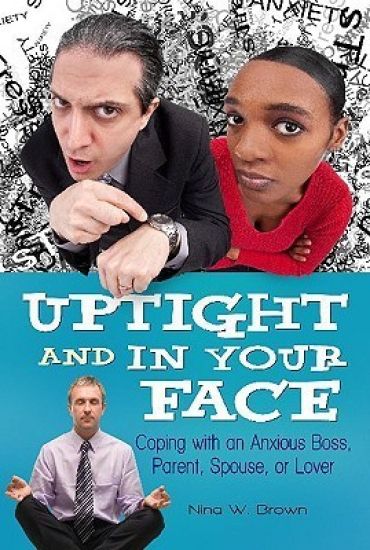
Dealing with uptight, high-stress people in your workplace, family, or home can be an enormous challenge, but this book provides invaluable insight and practical advice enabling readers to handle these "problem" personality types successfully. It is often stated that communication is the most important aspect of creating an effective relationship or achieving goals when working with another individual or within a team. But how does one communicate with someone who is too intense, anxious, or self-absorbed to hear anything you're trying to say? In Uptight and In Your Face: Coping with an Anxious Boss, Parent, Spouse, or Lover the author presents an invaluable tutorial to successfully interact with the most frustrating and taxing people in your life. This text examines the five most common types of uptight people to illustrate how the underlying patterns of intensity, anxiety, and self-absorption are displayed. Considerable attention is given to help readers understand how they may be contributing to their own distress. The final chapters present numerous coping and self-development strategies that will help reduce or eliminate many of the detrimental effects of interacting with high-stress people. Descriptions of complex psychological concepts are explained in everyday language.
To All the Boys I've Loved Before meets Since You've Been Gone in this effervescent romance about childhood best friends reconnecting, full of sunny days, warm nights, first kisses, and mended hearts.Lou Patterson and Sam Alvarez were inseparable-the best of friends-until the most embarrassing middle school promposal ever. Now, four years later, Lou is an introverted romantic who's bearing the weight of her mother's expectations. Meanwhile, Sam is the golden boy with plenty of friends who's still mourning the death of his father.When Lou finds the bucket list she and Sam wrote together as kids, she's disappointed to see that she hasn't accomplished a single one of her goals. Go to a party? Nope. Pull the greatest prank of all time? Still no. Learn how to be a really good kisser? Definitely not.Lou sets out to finish the list, and in a stroke of fate, Sam decides to tag along, stirring up old arguments and some very new feelings. But with the bucket list to guide them, Sam and Lou might just be able to find a way toward the future and each other.
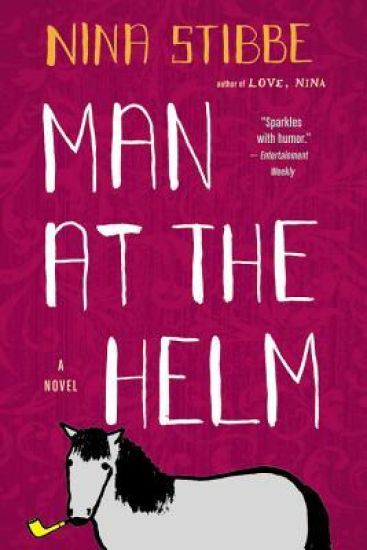
A New York Times Notable Book of 2015: From the writer of the hugely acclaimed Love, Nina comes a sharply funny debut novel about a gloriously eccentric family. Soon after her parents' separation, nine-year-old Lizzie Vogel moves with her siblings and newly single mother to a tiny village in the English countryside, where the new neighbors are horrified by their unorthodox ways and fatherless household. Lizzie's theatrical mother only invites more gossip by spending her days drinking whiskey, popping pills, and writing plays. The one way to fit in, the children decide, will be to find themselves a new man at the helm. The first novel from a remarkably gifted writer with a voice all her own, Man at the Helm is a hilarious and occasionally heartbreaking portrait of childhood in an unconventional family.
From Nina Stibbe, the acclaimed author of Love, Nina and Man at the Helm comes "another deft helping of absurd social comedy and unconventional wisdom" (Kirkus). After succeeding in her quest to help her unconventional mother find a new "man at the helm," 15-year old Lizzie Vogel gets more than she bargained for when she takes a job as a junior nurse at Paradise Lodge, a ramshackle refuge for the elderly that has seen better days. What begins as a way to get spending money (for important items like real coffee and beer shampoo) quickly turns into the education of a lifetime as Lizzie encounters a colorful cast of eccentric characters. But when Paradise Lodge faces a crisis, Lizzie must find a way to save her job before she loses the only place she's ever felt like she belongs. A hilarious, heartfelt coming-of-age tale, PARADISE LODGE proves that it's never too early--or too late--to grow up.
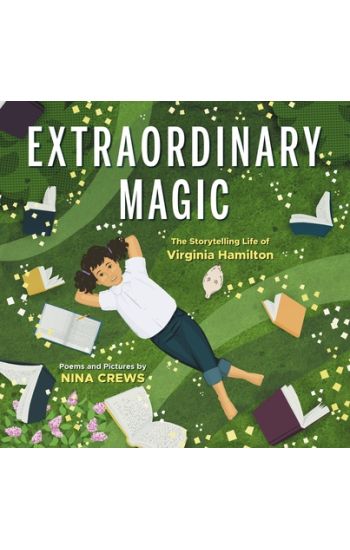
This lyrical picture book biography tells the story of one of America's most celebrated children's book authors, Virginia Hamilton, the first African American to win the Newbery Medal, and is perfect for fans of Planting Stories: The Life of Librarian and Storyteller Pura Belpré.Virginia was free.To be a dreamer.To be a wanderer.To be her own unique self.Free to be.Virginia Hamilton was only nine years old when she decided she would become a writer. Growing up in the countryside of Ohio, she listened to her family's stories and knew that words held extraordinary magic. From her childhood years discovering her love for storytelling, to her early adult life honing her craft in the city, Virginia found her voice in her writing as she began a career defined by her roots. Through interconnected poems, this moving biography celebrates the remarkable life of the highly decorated and much beloved Virginia Hamilton. It's a stunning tribute to a girl who dared to dream-and inspired those after her to do the same.
From the beloved author of Love, Nina, a frank, tender, and poignantly funny story about the ebb and flow of female friendship over half a lifetime. Susan and Norma have been best friends for years, at first thrust together by force of circumstance (a job at The Pin Cushion, a haberdashery shop in 1990s Leicestershire) and then by force of character (neither being particularly inclined to make friends with anyone else). But now, thirty years later, faced with a husband seeking immortality and Norma out of reach on a wave of professional glory, Susan begins to wonder whether she has made the right choices about life, love, work, and, most importantly, friendship. Nina Stibbe's new novel is the story of the wonderful and sometimes surprising path of friendship: from its conspiratorial beginnings, along its irritating wrong turns, to its final gratifying destination.
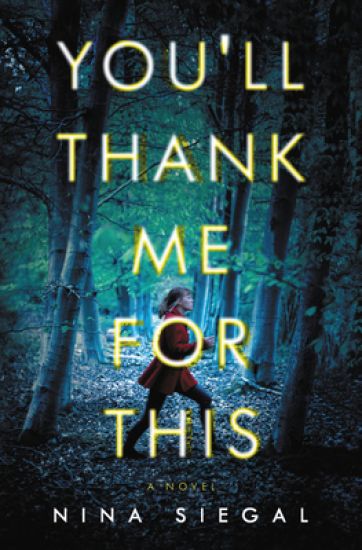
Eleven-year old Karin is blindfolded and dropped into the Hoge Veluwe National Forest with three other children. With nothing but a few basic supplies and food to last a couple days, the children are tasked with working together to navigate one of the Netherlands' most beautiful and wild locations and return home to where their families are anxiously waiting.The youngest of the group and distracted by her own thoughts, Karin lags behind, suddenly looking up to see that the other children have vanished.As Karin struggles against the elements to find her way back, she soon realizes that something far more sinister lurks in the woods.Meanwhile, the parents are reeling from the knowledge that none of the children have returned. The authorities are alerted and the news media descends, turning the disappearances into a public frenzy. Amidst the chaos and hysteria, Karin's mother is facing threats of her own, making her doubt who she can trust. Will she be able to untangle this web of false leads and fake news to find her daughter-before it's too late?
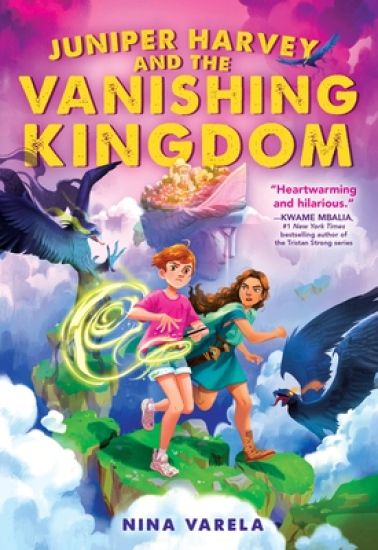
A thrilling fantasy adventure that explores friendship and queer identity, perfect for fans of Amari and the Night Brothers and Rick Riordan's Trials of Apollo series When Juniper Harvey's family moves to the middle of nowhere in Florida, her entire life is uprooted. As if that's not bad enough, she keeps having dreams about an ancient-looking temple, a terrifying attack, and a mysterious girl who turns into an ivory statue. One night after a disastrous school dance, Juniper draws a portrait of the girl from her dreams and thinks, I wish you were here. The next morning, she wakes up to find the girl in her room...pointing a sword at her throat The unexpected visitor reveals herself as Galatea, a princess from a magical other world. One problem--her crown is missing, and she needs it in order to return home. Now, it's up to Juniper to help find the crown, all while navigating a helpless crush on her new companion. And things go from bad to worse when a sinister force starts chasing after the crown too. Packed with adventure and driven by a pitch-perfect voice, this middle grade debut from Nina Varela is about one tween forging new friendships, fighting nightmarish monsters, and importantly, figuring out who she is and who she ultimately wishes to be. "Juniper Harvey is a heartwarming and hilarious journey across worlds that will prime readers for their own adventures." --Kwame Mbalia, New York Times bestselling author of the Tristan Strong series
A thrilling fantasy adventure that explores friendship and queer identity, perfect for fans of Amari and the Night Brothers and Rick Riordan's Trials of Apollo series When Juniper Harvey's family moves to the middle of nowhere in Florida, her entire life is uprooted. As if that's not bad enough, she keeps having dreams about an ancient-looking temple, a terrifying attack, and a mysterious girl who turns into an ivory statue. One night after a disastrous school dance, Juniper draws a portrait of the girl from her dreams and thinks, I wish you were here. The next morning, she wakes up to find the girl in her room...pointing a sword at her throat The unexpected visitor reveals herself as Galatea, a princess from a magical other world. One problem--her crown is missing, and she needs it in order to return home. Now, it's up to Juniper to help find the crown, all while navigating a helpless crush on her new companion. And things go from bad to worse when a sinister force starts chasing after the crown too. Packed with adventure and driven by a pitch-perfect voice, this middle grade debut from Nina Varela is about one tween forging new friendships, fighting nightmarish monsters, and importantly, figuring out who she is and who she ultimately wishes to be. "Juniper Harvey is a heartwarming and hilarious journey across worlds that will prime readers for their own adventures." --Kwame Mbalia, New York Times bestselling author of the Tristan Strong series
Using an essentials approach, Radiographic Pathology for Technologists, 7th Edition concisely covers the injuries and abnormalities most frequently encountered in practice. This new edition has been updated to reflect the latest ACR appropriateness criteria and ASRT curriculum guidelines. It also features background discussions of key anatomy and physiology principles, along with imaging considerations for each disease categorized by type followed by a description of its radiographic appearance, signs and symptoms, and treatment. Essential level of coverage presents approximately 150 injuries and abnormalities most frequently diagnosed using medical imaging. Summary tables at the end of each chapter list pathologies covered and the preferred imaging modalities for diagnosis. Correlative and differential diagnosis discussions explain the diagnostic process and demonstrate the importance of high quality images. Chapter outlines and objectives, key terms, and multiple choice and discussion questions for each chapter with answers provided in the back of the text highlight the most important concepts within each chapter. NEW! Updated content reflects the latest ACR Appropriateness criteria and ASRT curriculum guidelines. NEW! Current digital radiography practices and images covered throughout text. NEW! Radiographic images illustrate gastrointestinal, hepatobiliary, and urinary pathologies NEW! Replacement images and illustrations reflect current practice for general radiography and alternative modalities, such as CT, MR, and fusion imaging to help you understand how pathologies are demonstrated.
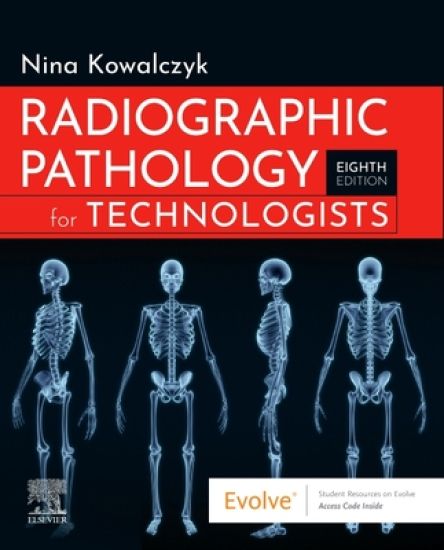
Get the essential information you need to master radiographic pathology! Radiographic Pathology for Technologists, 8th Edition introduces the pathologic appearance of common diseases as seen in diagnostic imaging. Organized by body system, the book uses a clear, easy-to-understand approach to discuss anatomy and physiology, the pathologic process, signs and symptoms, diagnosis, and treatment of diseases. This edition is updated to reflect today's radiography practice including diagnostic modalities such as CT, MR, sonography, nuclear medicine, and fusion/hybrid imaging. From well-known radiologic and imaging sciences author Nina Kowalczyk, this essential text also provides excellent preparation for the radiographic pathology portion of the ARRT® credentialing exam. Essential level of coverage presents approximately 150 injuries and abnormalities most frequently diagnosed using medical imaging, focusing students on the pathologies they are most likely to encounter in practice and providing just the right amount of information for a shorter pathology course. Discussions of correlative and differential diagnosis explain the diagnostic process and demonstrate the importance of high-quality images. Summary tables review the pathologies covered and the preferred imaging modalities for diagnosis. Learning features include chapter outlines and objectives, key terms, and multiple-choice and discussion questions for each chapter, with answers provided in the back of the text. NEW! Updated content reflects the latest ARRT and ASRT curriculum guidelines. NEW! Current digital radiography is covered throughout the text. NEW! Updated images and illustrations reflect current practice for general radiography and alternative modalities such as CT, MR, sonography, nuclear medicine, and fusion/hybrid imaging, demonstrating how pathologies appear in various imaging modalities.
Fact #1: Forty years after the feminist revolution, fewer than 2 percent of Fortune 1000 CEOs are women.Fact #2: The playing field is not level.Fact #3: You need to get over this. Chairman of the flagship office of the largest advertising agency network in the world, Nina DiSesa is a master communicator, a ceiling crasher, and a big-time realist. In Seducing the Boys Club, DiSesa shows you how S&M-seduction and manipulation-is the secret to winning over (and surpassing) the big guys. She asserts that women need to meld their "female" characteristics (nurturing, compassion, intuition) with "male" traits (decisiveness, focus, confidence, humor) to expand their professional horizons. DiSesa also shares her practical, outrageous, and even controversial maxims for making it, including - Learn to appreciate men. Men like women who like them.- Remember that women are biologically wired to succeed.- If you want to make a name for yourself, find a mess and fix it. A secure and comfortable job only holds you back.- Act brave and you will look brave.- Screw the rules. Make up your own. Whether dead-on funny or deadly serious, DiSesa is always on her game, always on message, and absolutely on target as she arms women (men, too ) with the can-do confidence and no-compromises attitude they need to climb as high as their ambition can carry them-while keeping their standards impeccable and their integrity intact.
One of the most loved and enduring wartime novels, Carrie's War is a modern classic. Published for the first time as a Virago Modern Classic, with a foreword by Michael Morpurgo.