Pamela Thomas-Graham's beguiling and atmospheric Ivy League novels simmer with hot button issues -- and unveil layers of malice and murder inside the life academic. Harvard economics professor Nikki Chase is intent on becoming the first tenured African-American woman in her department. But with her affinity for solving crimes, she may make her name in a place where the highest levels of human intellect can court the lowest impulses of the human heart. PUBLISH OR PERISH A working weekend at a Princeton conference is just what Nikki needs to deflect the pre-holiday pressures -- both professional and personal -- that are closing in on her back in Cambridge. And there will be down time, too, at a party honoring professor Earl Stokes, her old friend and mentor. Rumors abound that Stokes, a Princeton superstar, may depart for Harvard, a change that would stir up as much controversy as his new bestselling book on race issues. When Stokes's body is discovered among the smoldering ruins of the not-yet-completed black-studies building, a shattered Nikki refuses to accept the police findings that the death was accidental. And among the ashes she will uncover a murderous agenda with ominous implications for not only the Princeton campus but Harvard as well.
Redefining the way we view business success, Pamela Laird demolishes the popular American self-made story as she exposes the social dynamics that navigate some people toward opportunity and steer others away. Who gets invited into the networks of business opportunity? What does an unacceptable candidate lack? The answer is social capital—all those social assets that attract respect, generate confidence, evoke affection, and invite loyalty.In retelling success stories from Benjamin Franklin to Andrew Carnegie to Bill Gates, Laird goes beyond personality, upbringing, and social skills to reveal the critical common key—access to circles that control and distribute opportunity and information. She explains how civil rights activism and feminism in the 1960s and 1970s helped demonstrate that personnel practices violated principles of equal opportunity. She evaluates what social privilege actually contributes to business success, and analyzes the balance between individual characteristics—effort, innovation, talent—and social factors such as race, gender, class, and connections.In contrasting how Americans have prospered—or not—with how we have talked about prospering, Laird offers rich insights into how business really operates and where its workings fit within American culture. From new perspectives on entrepreneurial achievement to the role of affirmative action and the operation of modern corporate personnel systems, Pull shows that business is a profoundly social process, and that no one can succeed alone.
No matter how determined we are to take time off to rediscover who we really are and what we really want, annual holidays never really fit the bill. CLARITY QUEST is the first book to outline a 'training programme' that leads you to a life-changing one week holiday. Pam Ammondson helps readers break free of fear and confusion, concentrate on what's really important, and take control of their lives with a sense of purpose and vision. Her simple weekly exercises and activities can be fitted into even the busiest schedules, including such basic goals as learning to eat for energy and good health to combat the negative effects of stress and fatigue and learning to let go and lighten up. Whether they are stressed out, burned out, or simply out of energy and fresh ideas, CLARITY QUEST shows readers how to recharge their batteries, identify their true priorities, and begin making decisions based on their core values.
In the mid-1600s, Manchu bannermen spearheaded the military force that conquered China and founded the Qing Empire, which endured until 1912. By the end of the Taiping War in 1864, however, the descendants of these conquering people were coming to terms with a loss of legal definition, an ever-steeper decline in living standards, and a sense of abandonment by the Qing court. Focusing on three generations of a Manchu family (from 1750 to the 1930s), Orphan Warriors is the first attempt to understand the social and cultural life of the bannermen within the context of the decay of the Qing regime. The book reveals that the Manchus were not "sinicized," but that they were growing in consciousness of their separate ethnicity in response to changes in their own position and in Chinese attitudes toward them. Pamela Kyle Crossley's treatment of the Suwan Guwalgiya family of Hangzhou is hinged upon Jinliang (1878-1962), who was viewed at various times as a progressive reformer, a promising scholar, a bureaucratic hack, a traitor, and a relic.The author sees reflected in the ambiguities of his persona much of the plight of other Manchus as they were transformed from a conquering caste to an ethnic minority. Throughout Crossley explores the relationships between cultural decline and cultural survival, polity and identity, ethnicity and the disintegration of empires, all of which frame much of our understanding of the origins of the modern world.
In the decade after World War II, up to 350,000 ethnic Italians were displaced from the border zone between Italy and Yugoslavia known as the Julian March. History in Exile reveals the subtle yet fascinating contemporary repercussions of this often overlooked yet contentious episode of European history. Pamela Ballinger asks: What happens to historical memory and cultural identity when state borders undergo radical transformation? She explores displacement from both the viewpoints of the exiles and those who stayed behind. Yugoslavia's breakup and Italy's political transformation in the early 1990s, she writes, allowed these people to bring their histories to the public eye after nearly half a century. Examining the political and cultural contexts in which this understanding of historical consciousness has been formed, Ballinger undertakes the most extensive fieldwork ever done on this subject--not only around Trieste, where most of the exiles settled, but on the Istrian Peninsula (Croatia and Slovenia), where those who stayed behind still live. Complementing this with meticulous archival research, she examines two sharply contrasting models of historical identity yielded by the "Istrian exodus": those who left typically envision Istria as a "pure" Italian land stolen by the Slavs, whereas those who remained view it as ethnically and linguistically "hybrid." We learn, for example, how members of the same family, living a short distance apart and speaking the same language, came to develop a radically different understanding of their group identities. Setting her analysis in engaging, jargon-free prose, Ballinger concludes that these ostensibly very different identities in fact share a startling degree of conceptual logic.
Blessed Events explores how women who give birth at home use religion to make sense of their births and in turn draw on their birthing experiences to bring meaning to their lives and families. Pamela Klassen introduces a surprisingly diverse group of women, in their own words, while also setting their birth stories within wider social, political, and economic contexts. In doing so, she emerges with a study that disrupts conventional views of both childbirth and religion by blurring assumed divisions between conservative and feminist women and by taking childbirth seriously as a religious act. Most American women who have a choice give birth in a hospital and request pain medication. Yet enough women choose and advocate unmedicated home birth--and do so for carefully articulated reasons, social resistance among them--to constitute a movement. Klassen investigates why women whose religious affiliations range from Old Order Amish to Reform Judaism to goddess-centered spirituality defy majority opinion, the medical establishment, and sometimes the law to have their babies at home. In considering their interpretations--including their critiques of the dominant medical model of childbirth and their views on labor pain--she examines the kinds of agency afforded to or denied women as they derive religious meanings from childbirth. Throughout, she identifies tensions and affinities between feminist and traditionalist appraisals of the symbolic meaning of birth and the power of women. What does home birth--a woman-centered movement working to return birth to women's control--mean in practice for women's gender and religious identities? Is this supreme valuing of procreation and motherhood constraining, or does it open up new realms of cultural and social power for women? By asking these questions while remaining cognizant of religion's significance, Blessed Events challenges both feminist and traditionalist accounts of childbearing while broadening our understanding of how religion is "lived" in contemporary America.
"This innovative work allows the objects it covers to breathe as living things. McClusky has evolved what appears to be a new way of writing a catalogue on African art. The writing is interesting, the stories surrounding the objects often fascinating. Thompson's essay is wonderfully composed. This is a work that can be enjoyed by the non-specialist reader for the tales it tells alone. Further, the objects are impressive, often spectacular."--Simon Ottenberg, University of Washington
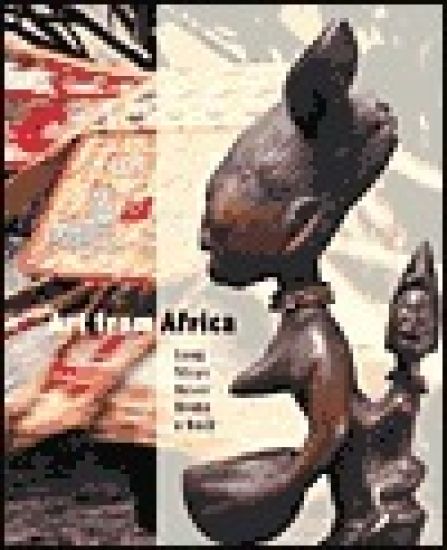
This strikingly unusual and beautifully illustrated book represents a turning point in African art history. The authors draw on personal memories, interviews, and oral narratives to present twelve "case histories" of objectsor clusters of objectsin the Seattle Art Museum's renowned collection of African art. Each case history is enriched by comments from artists, art historians, writers, community members, and patrons who guide readers back into the markets, palaces, ceremonies, shrines, and streets where African art originated. Often sitting still and silent in a museum display case, African art is frozen in an alien frame. Vibrant music, movement, debate, and cryptic voices are among the missing elements that once surrounded the mask, sculpture, ring, or stool. Reframing the objects, Art from Africa proposes looking at what was once done with them while also listening carefully to what was once said in their presence. As the case histories reveal, the gross mislabeling of objects as "fetishes," "idols," and "devil masks" dissolves as art becomes better known as medicine, philosophy, personality correctives, and blessings for the future. Known for his scintillating analyses of African art, Robert Farris Thompson devotes his opening essay to introducing the missing dimension of motion, exploring the meaning of postures and gestures in various African cultures. A curator dedicated to telling the stories behind such art, Pamela McClusky explores subjects ranging from royal art of the Kom and Asante kingdoms, masquerades from the Yoruba, Dan, and Mende cultures, hunters' shirts from the Mande empire, sculpture from the Kongo kingdom, Mercedes-Benz coffins from the streets of Ghana, photographs from Mali, and Maasai body ornaments. This book accompanies a special exhibition of the museum's collection, but, as all art lovers who look beyond museum walls will appreciate, it is much more than an exhibition catalogue. EXHIBITION SCHEDULE Seattle Art MuseumFebruary 7, 2002-May 19, 2002 Author Biography: Pamela McClusky founded the Seattle Art Museum's Department of the Arts of Africa, Oceania, and the Americas in 1980, and she is currently Curator of African and Oceanic Art there. She has published African Masks and Muses: Selections of African Art in the Seattle Art Museum. Robert Farris Thompson is Professor of African and African American Art History at Yale University. His publications include The Four Moments of the Sun: Kongo Art in Two Worlds and Flash of the Spirit: African and Afro-American Art and Philosophy (Random House).
Sustainability is a global imperative and a scientific challenge like no other. This concise guide provides students and practitioners with a strategic framework for linking knowledge with action in the pursuit of sustainable development, and serves as an invaluable companion to more narrowly focused courses dealing with sustainability in particular sectors such as energy, food, water, and housing, or in particular regions of the world. Written by leading experts, Pursuing Sustainability shows how more inclusive and interdisciplinary approaches and systems perspectives can help you achieve your sustainability objectives. It stresses the need for understanding how capital assets are linked to sustainability goals through the complex adaptive dynamics of social-environmental systems, how committed people can use governance processes to alter those dynamics, and how successful interventions can be shaped through collaborations among researchers and practitioners on the ground. The ideal textbook for undergraduate and graduate students and an invaluable resource for anyone working in this fast-growing field, Pursuing Sustainability also features case studies, a glossary, and suggestions for further reading. * Provides a strategic framework for linking knowledge with action* Draws on the latest cutting-edge science and practices* Serves as the ideal companion text to more narrowly focused courses* Utilizes interdisciplinary approaches and systems perspectives* Illustrates concepts with a core set of case studies used throughout the book* Written by world authorities on sustainability* An online illustration package is available to professors
In The Business of Alchemy, Pamela Smith explores the relationships among alchemy, the court, and commerce in order to illuminate the cultural history of the Holy Roman Empire in the sixteenth and seventeenth centuries. In showing how an overriding concern with religious salvation was transformed into a concentration on material increase and economic policies, Smith depicts the rise of modern science and early capitalism. In pursuing this narrative, she focuses on that ideal prey of the cultural historian, an intellectual of the second rank whose career and ideas typify those of a generation. Smith follows the career of Johann Joachim Becher (1635-1682) from university to court, his projects from New World colonies to an old-world Pansophic Panopticon, and his ideas from alchemy to economics. Teasing out the many meanings of alchemy for Becher and his contemporaries, she argues that it provided Becher with not only a direct key to power over nature but also a language by which he could convince his princely patrons that their power too must rest on liquid wealth. Agrarian society regarded merchants with suspicion as the nonproductive exploiters of others' labor; however, territorial princes turned to commerce for revenue as the cost of maintaining the state increased. Placing Becher's career in its social and intellectual context, Smith shows how he attempted to help his patrons assimilate commercial values into noble court culture and to understand the production of surplus capital as natural and legitimate. With emphasis on the practices of natural philosophy and extensive use of archival materials, Smith brings alive the moment of cultural transformation in which science and the modern state emerged.
An innovative reassessment of philosopher P. F. Strawson’s influential “Freedom and Resentment”P. F. Strawson was one of the most important philosophers of the twentieth century, and his 1962 paper “Freedom and Resentment” is one of the most influential in modern moral philosophy, prompting responses across multiple disciplines, from psychology to sociology. In Freedom, Resentment, and the Metaphysics of Morals, Pamela Hieronymi closely reexamines Strawson’s paper and concludes that his argument has been underestimated and misunderstood.Line by line, Hieronymi carefully untangles the complex strands of Strawson’s ideas. After elucidating his conception of moral responsibility and his division between “reactive” and “objective” responses to the actions and attitudes of others, Hieronymi turns to his central argument. Strawson argues that, because determinism is an entirely general thesis, true of everyone at all times, its truth does not undermine moral responsibility. Hieronymi finds the two common interpretations of this argument, “the simple Humean interpretation” and “the broadly Wittgensteinian interpretation,” both deficient. Drawing on Strawson’s wider work in logic, philosophy of language, and metaphysics, Hieronymi concludes that his argument rests on an implicit, and previously overlooked, metaphysics of morals, one grounded in Strawson’s “social naturalism.” In the final chapter, she defends this naturalistic picture against objections.Rigorous, concise, and insightful, Freedom, Resentment, and the Metaphysics of Morals sheds new light on Strawson’s thinking and has profound implications for future work on free will, moral responsibility, and metaethics.The book also features the complete text of Strawson’s “Freedom and Resentment.”
An innovative reassessment of philosopher P. F. Strawson’s influential “Freedom and Resentment”P. F. Strawson was one of the most important philosophers of the twentieth century, and his 1962 paper “Freedom and Resentment” is one of the most influential in modern moral philosophy, prompting responses across multiple disciplines, from psychology to sociology. In Freedom, Resentment, and the Metaphysics of Morals, Pamela Hieronymi closely reexamines Strawson’s paper and concludes that his argument has been underestimated and misunderstood.Line by line, Hieronymi carefully untangles the complex strands of Strawson’s ideas. After elucidating his conception of moral responsibility and his division between “reactive” and “objective” responses to the actions and attitudes of others, Hieronymi turns to his central argument. Strawson argues that, because determinism is an entirely general thesis, true of everyone at all times, its truth does not undermine moral responsibility. Hieronymi finds the two common interpretations of this argument, “the simple Humean interpretation” and “the broadly Wittgensteinian interpretation,” both deficient. Drawing on Strawson’s wider work in logic, philosophy of language, and metaphysics, Hieronymi concludes that his argument rests on an implicit, and previously overlooked, metaphysics of morals, one grounded in Strawson’s “social naturalism.” In the final chapter, she defends this naturalistic picture against objections.Rigorous, concise, and insightful, Freedom, Resentment, and the Metaphysics of Morals sheds new light on Strawson’s thinking and has profound implications for future work on free will, moral responsibility, and metaethics.The book also features the complete text of Strawson’s “Freedom and Resentment.”
A new way to understand the architecture of today’s Internet, based on an innovative general model of network architecture that is rigorous, realistic, and modularThis book meets the long-standing need for an explanation of how the Internet's architecture has evolved since its creation to support an ever-broader range of the world's communication needs. The authors introduce a new model of network architecture that exploits a powerful form of modularity to provide lucid, insightful descriptions of complex structures, functions, and behaviors in today’s Internet. Countering the idea that the Internet’s architecture is “ossified” or rigid, this model—which is presented through hundreds of examples rather than mathematical notation—encompasses the Internet’s original or “classic” architecture, its current architecture, and its possible future architectures.For practitioners, the book offers a precise and realistic approach to comparing design alternatives and guiding the ongoing evolution of their applications, technologies, and security practices. For educators and students, the book presents patterns that recur in many variations and in many places in the Internet ecosystem. Each pattern tells a compelling story, with a common problem to be solved and a range of solutions for solving it. For researchers, the book suggests many directions for future research that exploit modularity to simplify, optimize, and verify network implementations without loss of functionality or flexibility.
A new way to understand the architecture of today’s Internet, based on an innovative general model of network architecture that is rigorous, realistic, and modularThis book meets the long-standing need for an explanation of how the Internet's architecture has evolved since its creation to support an ever-broader range of the world's communication needs. The authors introduce a new model of network architecture that exploits a powerful form of modularity to provide lucid, insightful descriptions of complex structures, functions, and behaviors in today’s Internet. Countering the idea that the Internet’s architecture is “ossified” or rigid, this model—which is presented through hundreds of examples rather than mathematical notation—encompasses the Internet’s original or “classic” architecture, its current architecture, and its possible future architectures.For practitioners, the book offers a precise and realistic approach to comparing design alternatives and guiding the ongoing evolution of their applications, technologies, and security practices. For educators and students, the book presents patterns that recur in many variations and in many places in the Internet ecosystem. Each pattern tells a compelling story, with a common problem to be solved and a range of solutions for solving it. For researchers, the book suggests many directions for future research that exploit modularity to simplify, optimize, and verify network implementations without loss of functionality or flexibility.
Who knew getting ready for bed could be so much fun? Follow Elsie and her mother as she learns to count to 10 while preparing for bed. Books, toys, bubbles, stars, fingers and toes - - everything can be counted to make bedtime more fun. Even cleaning up your room is fun when you count to ten
Becky is a rock n' roll groupie with dreams of becoming a Rockstar wife.Armed with her good looks, she manipulates her way into the world of one of the top rock bands in the world 'Death of Love'. She does everything in her power to captivate the enigmatic lead singer, Luzar. But, she also catches the eye of the lead guitar player, Craig.With the help of her friend and rival groupie, Lexi, follow Becky's journey as she reaches for the stars.Will she make it, or plummet back to groupie obscurity.
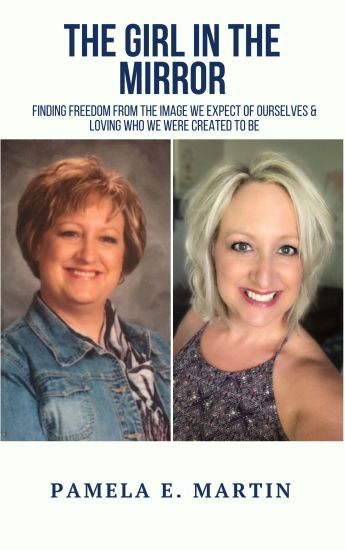
A woman's journey to loving who she was created to be and finding freedom through nutrition, fitness & mindset, even through the greatest storm of her life.This book tells the author's unique journey through weight loss, weight gain, body image struggles and unbearable grief over the loss of a child. Pam shares how her struggles began as a young girl and how she finally overcame that burden and found freedom and a new mindset, even through insurmountable pain and grief.Her story gives hope to women across the globe who wonder if they can succeed with their goals of a healthy life or withstand the pain child loss brings. Each copy of "The Girl in the Mirror" includes a 28 day mindset journal to help you discover your own strength. You will have what you need to start your own freedom journey.Pamela motivates and encourages women across the country to pursue their dreams with confidence.
Storm McKenzie is a probation officer in a small city in Oregon. She's also happily married and the mother of two great kids. Everything is just about perfect, except for the scars. Set on fire by her father in a drunken accident when she was thirteen, abandoned by her mother, Storm is a damaged soul searching for a cause. An article in a local paper and a chance meeting with the right person is just the catalyst she needs to take action and become what she was meant to be, a brutal and unforgiving vigilante who will risk it all to avenge those betrayed by the ones they trusted the most.
Fate can be a cold mistress.Gabe Nicholetti, reclusive PSI agent, would rather stay on his sailboat, surrounded by water - moored off a remote island in the British Virgin Islands - than deal with the ramifications of the dead woman in his visions. That woman, Rily Carrigan - a very much alive, for the moment, police detective in Eagle Crest, Oregon - makes it clear she has less than the time of day for the likes of him. Not that it matters. He only has one purpose. Bring her murderer to justice. Rily has neither time nor patience for the woo-woo. But she's about to tumble neck deep into that waiting chasm as a murky past she thought long buried rises up to invade her present life.Together, can they find a way to deny fate and keep Rily alive?