Kirjojen hintavertailu. Mukana 11 417 157 kirjaa ja 12 kauppaa.

Kirjahaku

Etsi kirjoja tekijän nimen, kirjan nimen tai ISBN:n perusteella.

1000 tulosta hakusanalla Penelope Shuttle

A Politics of Impossible Difference

A Politics of Impossible Difference

Penelope Deutscher

Cornell University Press
2002
pokkari
The influential philosopher and theorist Luce Irigaray has been faulted for giving more importance to sexual difference than to race and multiculturalism. Penelope Deutscher's eagerly awaited book, the first to focus on the scholar's controversial later works, addresses this charge. Through a learned critique of these lesser-known writings, the book examines Irigaray's claim that the politics of feminism and multiculturalism are intrinsically linked. The volume also serves as a clear and comprehensive introduction to her entire corpus. In her recent works, Irigaray promotes sexual difference as the philosophical basis for legal, political, and linguistic reform. Deutscher explores this approach and in particular Irigaray's view that the very notion of difference is culturally "impossible." Taking this concept of impossibility into consideration, Deutscher evaluates Irigaray's contributions to contemporary debates about the politics of identity, recognition, diversity, and multiculturalism. In a balanced discussion, she considers the philosopher's work from the perspective of fellow critics including Michéle Le Doeuff, Drucilla Cornell, Jacques Derrida, Judith Butler, and Charles Taylor.
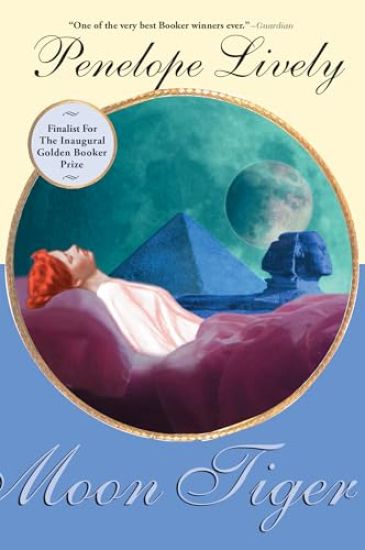
Moon Tiger

Moon Tiger

Penelope Lively

Avalon Travel Publishing
1997
nidottu
Winner of the Man Booker Prize and Shortlisted for the Golden Man Booker PrizeThe elderly Claudia Hampton, a best-selling author of popular history; lies alone in a London hospital bed. Memories of her life still glow in her fading consciousness, but she imagines writing a history of the world. Instead, Moon Tiger is her own history, the life of a strong, independent woman, with its often contentious relations with family and friends. At its center -- forever frozen in time, the still point of her turning world -- is the cruelly truncated affair with Tom, a British tank commander whom Claudia knew as a reporter in Egypt during World War II.
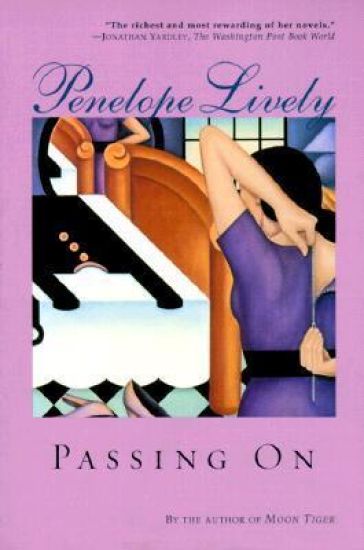
Passing on

Passing on

Penelope Lively

Avalon Travel Publishing
1999
nidottu
Still dominated by the memories of her late mother, Helen looks back on their lives together, and wonders why only her younger sister, Louise, found the courage to leave and live an independent life
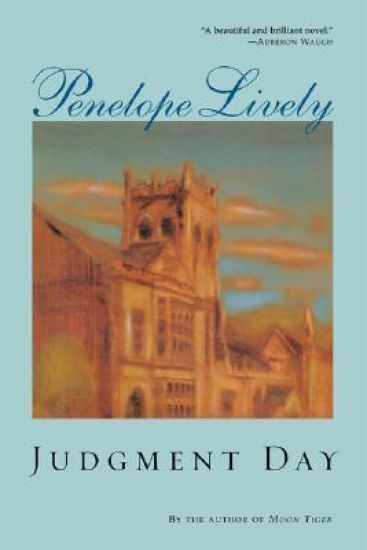
Judgment Day

Judgment Day

Penelope Lively

Grove Press / Atlantic Monthly Press
2003
nidottu
A sparkling, brilliantly written novel by the Booker Prize-winning novel Moon Tiger brings a small village to life as they struggle with the sudden and tragic death of one of their own. Reprint.
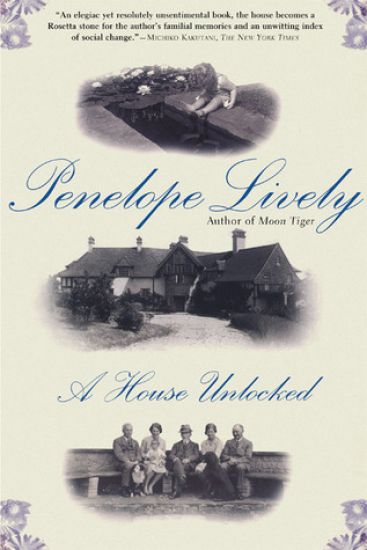
A House Unlocked

A House Unlocked

Penelope Lively

Grove Press / Atlantic Monthly Press
2003
nidottu
Lively takes readers on a journey of her familial country house in England, purchased by her grandparents in 1923. As her narrative shifts from room, object to object, she paints a moving portrait of an era of rapid change and of the family that changed with the times.
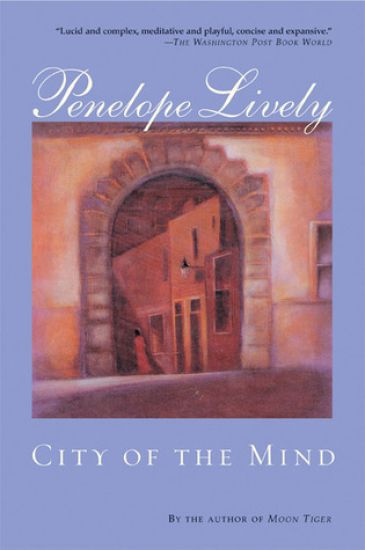
City of the Mind

City of the Mind

Penelope Lively

Black Cat
2003
nidottu
Matthew Halland is an architect, intimately involved with the new face of the city, while haunted by earlier times of destruction and loss in its history. Although he is divorced and lonely, Matthew has a rich and moving relationship with his daughter Jane. She offers a fresh perspective on love, loss, and even the city of London. Matthew becomes entangled with an array of fascinating characters, from Rutter, a corrupt real estate developer whose mafia-like ways disgust him, to Sarah Bridges, a romantic ray of hope who enters his life. Mathew's relationships with Jane, Sarah, and Rutter allow his mind to rove freely as the past, present, and future interweave and he strives to look ahead and forge new beginnings of his own.. In Lively's most ambitious novel, she has created a wonderfully rich and audacious confrontation with the mystery of London.
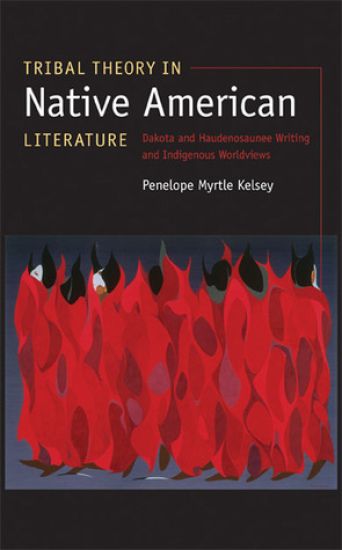
Tribal Theory in Native American Literature

Tribal Theory in Native American Literature

Penelope Myrtle Kelsey

University of Nebraska Press
2008
sidottu
Scholars and readers continue to wrestle with how best to understand and appreciate the wealth of oral and written literatures created by the Native communities of North America. Are critical frameworks developed by non-Natives applicable across cultures, or do they reinforce colonialist power and perspectives? Is it appropriate and useful to downplay tribal differences and instead generalize about Native writing and storytelling as a whole? Focusing on Dakota writers and storytellers, Seneca critic Penelope Myrtle Kelsey offers a penetrating assessment of theory and interpretation in indigenous literary criticism in the twenty-first century. Tribal Theory in Native American Literature delineates a method for formulating a Native-centered theory or, more specifically, a use of tribal languages and their concomitant knowledges to derive a worldview or an equivalent to Western theory that is emic to indigenous worldviews. These theoretical frameworks can then be deployed to create insightful readings of Native American texts. Kelsey demonstrates this approach with a fresh look at early Dakota writers, including Marie McLaughlin, Charles Eastman, and Zitkala-Ša and later storytellers such as Elizabeth Cook-Lynn, Ella Deloria, and Philip Red Eagle. This book raises the provocative issue of how Native languages and knowledges were historically excluded from the study of Native American literature and how their encoding in early Native American texts destabilized colonial processes. Cogently argued and well researched, Tribal Theory in Native American Literature sets an agenda for indigenous literary criticism and invites scholars to confront the worlds behind the literatures that they analyze.
Tribal Theory in Native American Literature

Tribal Theory in Native American Literature

Penelope Myrtle Kelsey

University of Nebraska Press
2010
pokkari
Scholars and readers continue to wrestle with how best to understand and appreciate the wealth of oral and written literatures created by the Native communities of North America. Are critical frameworks developed by non-Natives applicable across cultures, or do they reinforce colonialist power and perspectives? Is it appropriate and useful to downplay tribal differences and instead generalize about Native writing and storytelling as a whole? Focusing on Dakota writers and storytellers, Seneca critic Penelope Myrtle Kelsey offers a penetrating assessment of theory and interpretation in indigenous literary criticism in the twenty-first century. Tribal Theory in Native American Literature delineates a method for formulating a Native-centered theory or, more specifically, a use of tribal languages and their concomitant knowledges to derive a worldview or an equivalent to Western theory that is emic to indigenous worldviews. These theoretical frameworks can then be deployed to create insightful readings of Native American texts. Kelsey demonstrates this approach with a fresh look at early Dakota writers, including Marie McLaughlin, Charles Eastman, and Zitkala-Ša and later storytellers such as Elizabeth Cook-Lynn, Ella Deloria, and Philip Red Eagle. This book raises the provocative issue of how Native languages and knowledges were historically excluded from the study of Native American literature and how their encoding in early Native American texts destabilized colonial processes. Cogently argued and well researched, Tribal Theory in Native American Literature sets an agenda for indigenous literary criticism and invites scholars to confront the worlds behind the literatures that they analyze.
Pathology for the Physical Therapist Assistant

Pathology for the Physical Therapist Assistant

Penelope J. Lescher

F.A. Davis Company
2011
nidottu
With other texts written at either too high or too low a level, this book meets the needs of PTA students for usable, understandable pathology related to clinical application. Extensively illustrated, this book allows students to more easily comprehend and maintain interest in otherwise complicated pathological processes. The fourteen chapter format effectively fits within a chapter per week course structure, or each chapter may be used as a stand alone module within any course. And as your students prepare to graduate, encourage them to keep this book to use as a clinically relevant reference as practicing PTAs!
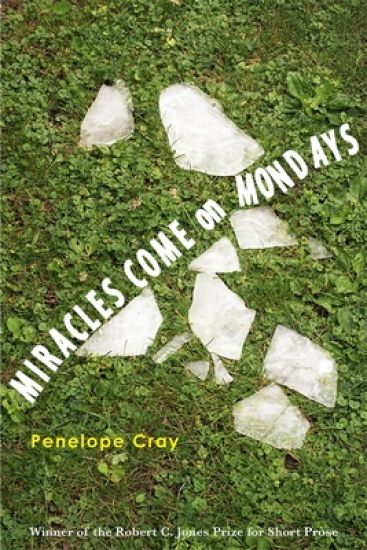
Miracles Come on Mondays

Miracles Come on Mondays

Penelope Cray

Louisiana State University Press
2020
nidottu
What is the shape of progress inside a subpar environment, when escape is not possible, and life must be measured as the relative extremity of multiple misfortunes? Is it the shape of a bird?"" Miracles Come on Mondays begins with a voice- stark, chilling, totally captivating- that searches a barren landscape for a single receptive ear. With echoes of Italo Calvino, Jorge Luis Borges, and Lydia Davis, Penelope Cray creates dark and sometimes darkly funny scenes that most resemble the works of Kafka. Cray's characters strain against the indifference of everyday life until, too tired to yearn anymore, they begin the systematic work of making their worlds mentally and spiritually tolerable. And yet, somehow, there's joy. This book asks us to let go of our ideas of sense and replace them with something better, something that somehow makes more sense than sense. Cray has written a debut work of fiction that feels entirely new and deeply true.
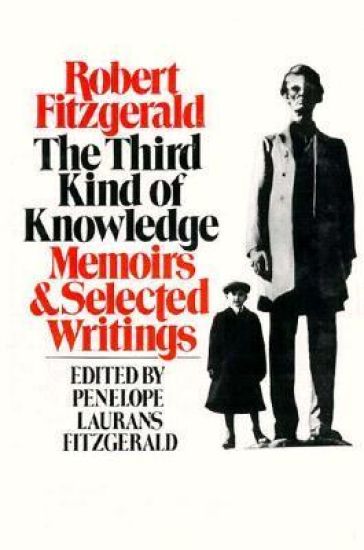
The Third Kind of Knowledge: Selected Writings

The Third Kind of Knowledge: Selected Writings

Penelope Laurans Fitzgerald; Robert Fitzgerald

New Directions Publishing Corporation
1995
sidottu
The memoirs and essays collected in The Third Kind of Knowledge encompass the many lives of a remarkable man. Poet, translator, critic, journalist, memoirist, scholar–the late Robert Fitzgerald (1910-1985) had an unusual range of gifts and lived a strikingly varied life in the literary and academic world. While growing up, his scholarly promise earned the attention of his mentor in classical studies, Dudley Fitts, and his poetic gifts the admiration first of Vachel Lindsay and later of T. S. Eliot (who took some of his college poems for publication in the Criterion). A reporter for the New York Herald Tribune in the thirties, Fitzgerald also spent time before and after the Second World War as a part of Henry Luce’s literary stable at Time, where he forged his close friendship with James Agee and edited the Books Department for the magazine. His friendship with Agee, and also with Flannery O’Connor (whose literary executor he became) as well as with other literary figures such as John Berryman, Allen Tate, and Caroline Gordon flourished during this period. In the early fifties he moved with his family to Italy, where he worked for six years on his celebrated translation of the Odyssey. His other classical translations–the Illiad, the Aeneid, and his translations of Euripides and Sophocles, several done in collaboration with Dudley Fitts–have become the the signal translations of our time. A renowned teacher as well as poet and scholar, Fitzgerald taught, over the years, at such institutions as Sarah Lawrence, Princeton, The New School, Mount Holyoke, and the University of Washington. His career culminated at Harvard where, in 1965, he was named Boylston Professor of Rhetoric and Oratory. For fifteen years his course in Versification influenced a generation of younger poets, and his seminar in “Homer, Virgil, and Dante” a generation of young scholars. The Third Kind of Knowledge displays the unusual breadth of Fitzgerald’s achievement and includes personal memoirs, reminiscences of literary friends, literary criticism of classical literature, and an interview on the art of translation. This volume has been prepared by his widow, Penelope Laurans Fitzgerald, following a plan begun by the author before his death.
The Pinter Ethic

The Pinter Ethic

Penelope Prentice

CRC Press Inc
2000
nidottu
The only comprehensive guide to the plays of one of the world's greatest yet most puzzling contemporary dramatists, The Pinter Ethic penetrates the mystery of Harold Pinter's work with compelling and authoritative insights that locate and disclose the primal power of his drama in his characters' powerplay for dominance. With remarkable clarity, Penelope Prentice's close reading of Pinter's work untangles the multiple ambiguities, complex conflicts and contradictory actions which continue to baffle, bewilder, and confound critics and audiences. She reveals that Pinter's plays reflect not a vision of postmodern hopelessness in a world threatening to self-destruct, but provoke unguessed choice and action that enlarge the concept of love and link it to justice. Offering a definitive analysis of Pinter's work--from his early poetry, fiction, interviews, essays and novel The Dwarfs to his most recent play Celebration --Prentice demonstrates why Pinter's work can only be communicated through drama where attitude and intention may count for little, but where action is all.
The Pinter Ethic

The Pinter Ethic

Penelope Prentice

CRC Press Inc
2000
sidottu
The only comprehensive guide to the plays of one of the world's greatest yet most puzzling contemporary dramatists, The Pinter Ethic penetrates the mystery of Harold Pinter's work with compelling and authoritative insights that locate and disclose the primal power of his drama in his characters' powerplay for dominance. With remarkable clarity, Penelope Prentice's close reading of Pinter's work untangles the multiple ambiguities, complex conflicts and contradictory actions which continue to baffle, bewilder, and confound critics and audiences. She reveals that Pinter's plays reflect not a vision of postmodern hopelessness in a world threatening to self-destruct, but provoke unguessed choice and action that enlarge the concept of love and link it to justice. Offering a definitive analysis of Pinter's work--from his early poetry, fiction, interviews, essays and novel The Dwarfs to his most recent play Celebration --Prentice demonstrates why Pinter's work can only be communicated through drama where attitude and intention may count for little, but where action is all.
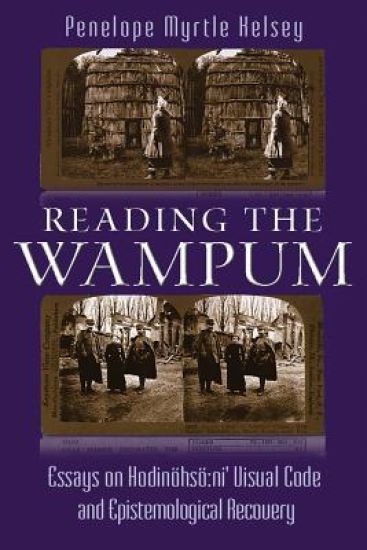
Reading the Wampum

Reading the Wampum

Penelope Myrtle Kelsey

Syracuse University Press
2014
sidottu
Since the fourteenth century, Eastern Woodlands tribes have used delicate purple and white shells called “wampum” to form intricately woven belts. These wampum belts depict significant moments in the lives of the people who make up the tribes, portraying everything from weddings to treaties. Wampum belts can be used as a form of currency, but they are primarily used as a means to record significant oral narratives for future generations. In Reading the Wampum, Kelsey provides the first academic consideration of the ways in which these sacred belts are reinterpreted into current Haudenosaunee tradition. While Kelsey explores the aesthetic appeal of the belts, she also provides insightful analysis of how readings of wampum belts can change our understanding of specific treaty rights and land exchanges. Kelsey shows how contemporary Iroquois intellectuals and artists adapt and reconsider these traditional belts in new and innovative ways. Reading the Wampum conveys the vitality and continuance of wampum traditions in Iroquois art, literature, and community, suggesting that wampum narratives pervade and reappear in new guises with each new generation.
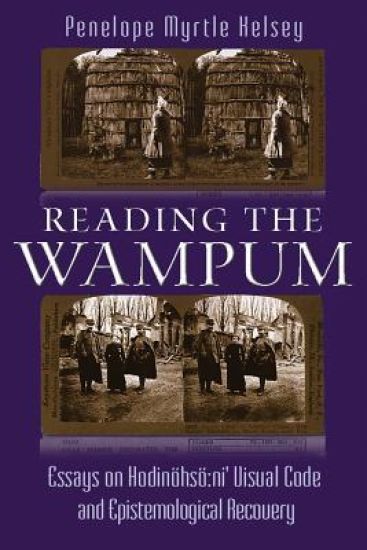
Reading the Wampum

Reading the Wampum

Penelope Myrtle Kelsey

Syracuse University Press
2019
nidottu
Since the fourteenth century, Eastern Woodlands tribes have used delicate purple and white shells called "wampum" to form intricately woven belts. These wampum belts depict significant moments in the lives of the people who make up the tribes, portraying everything from weddings to treaties. Wampum belts can be used as a form of currency, but they are primarily used as a means to record significant oral narratives for future generations. In Reading the Wampum, Kelsey provides the first academic consideration of the ways in which these sacred belts are reinterpreted into current Haudenosaunee tradition. While Kelsey explores the aesthetic appeal of the belts, she also provides insightful analysis of how readings of wampum belts can change our understanding of specific treaty rights and land exchanges. Kelsey shows how contemporary Iroquois intellectuals and artists adapt and reconsider these traditional belts in new and innovative ways. Reading the Wampum conveys the vitality and continuance of wampum traditions in Iroquois art, literature, and community, suggesting that wampum narratives pervade and reappear in new guises with each new generation.
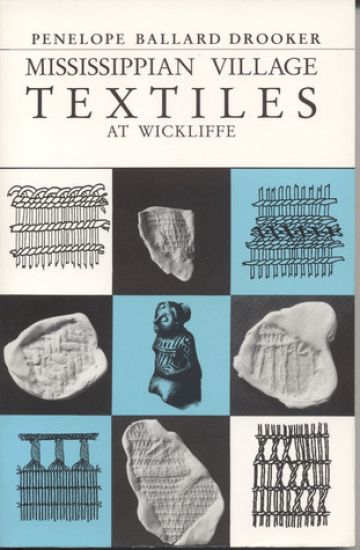
Mississippian Village Textiles at Wickliffe

Mississippian Village Textiles at Wickliffe

Penelope B. Drooker

The University of Alabama Press
1992
nidottu
Because textiles rarely are preserved in the archaeological record outside of deserts and permafrost areas, in many regions of the world very little is known about their characteristics, functions, production technology, or socioeconomic importance. While this fact is also true of organic fabrics produced during the Mississippian period in southeastern North America, a wide variety of Mississippian textiles has been preserved in the form of impressions on large pottery vessels. From attribute analysis of 1574 fabrics impressed on Wickliffe pottery sherds and comparison of the impressions with extant Mississippian textile artifacts, Drooker presents an analysis of these materials.
The Memory Book

The Memory Book

Penelope J. Stokes

Thomas Nelson Publishers
2004
nidottu
Phoebe Lange has it all--a Master's Degree, an adoring fiancé, and a future with unlimited possibilities--but something is missing. Orphaned at age five and raised by her grandmother, Phoebe longs for a past and a sense of connectedness, but it is not until she stumbles upon a scrapbook dating back to the 1920's that she discovers a terrible secret about her family's history which triggers an identity crisis. Phoebe becomes obsessed with the mysterious ancestor, also named Phoebe Lange, whom she is convinced is the key to answering the questions that have plagued her. But the answers may not be what she has in mind.