

Kirjahaku
Etsi kirjoja tekijän nimen, kirjan nimen tai ISBN:n perusteella.
1000 tulosta hakusanalla Phillip Good
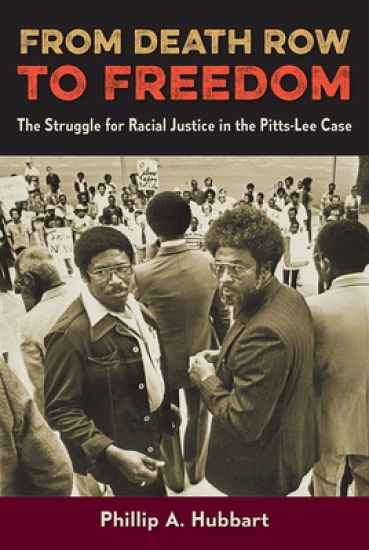
An insider’s account of a wrongful conviction and the fight to overturn it during the civil rights eraThis book is an insider’s account of the case of Freddie Lee Pitts and Wilbert Lee, two Black men who were wrongfully charged and convicted of the murder of two white gas station attendants in Port St. Joe, Florida, in 1963, and sentenced to death. Phillip Hubbart, a defense lawyer for Pitts and Lee for more than 10 years, examines the crime, the trial, and the appeals with both a keen legal perspective and an awareness of the endemic racism that pervaded the case and obstructed justice.Hubbart discusses how the case against Pitts and Lee was based entirely on confessions obtained from the defendants and an alleged “eye witness” through prolonged, violent interrogations and how local authorities repeatedly rejected later evidence pointing to the real killer, a white man well-known to the Port St. Joe police. The book follows the case’s tortuous route through the Florida courts to the defendants’ eventual exoneration in 1975 by the Florida governor and cabinet.From Death Row to Freedom is a thorough chronicle of deep prejudice in the courts and brutality at the hands of police during the civil rights era of the 1960s. Hubbart argues that the Pitts-Lee case is a piece of American history that must be remembered, along with other similar incidents, in order for the country to make any progress toward racial reconciliation today.Publication of this work made possible by a Sustaining the Humanities through the American Rescue Plan grant from the National Endowment for the Humanities.

An insider’s account of a wrongful conviction and the fight to overturn it during the civil rights eraThis book is an insider’s account of the case of Freddie Lee Pitts and Wilbert Lee, two Black men who were wrongfully charged and convicted of the murder of two white gas station attendants in Port St. Joe, Florida, in 1963, and sentenced to death. Phillip Hubbart, a defense lawyer for Pitts and Lee for more than 10 years, examines the crime, the trial, and the appeals with both a keen legal perspective and an awareness of the endemic racism that pervaded the case and obstructed justice.Hubbart discusses how the case against Pitts and Lee was based entirely on confessions obtained from the defendants and an alleged “eye witness” through prolonged, violent interrogations and how local authorities repeatedly rejected later evidence pointing to the real killer, a white man well-known to the Port St. Joe police. The book follows the case’s tortuous route through the Florida courts to the defendants’ eventual exoneration in 1975 by the Florida governor and cabinet.From Death Row to Freedom is a thorough chronicle of deep prejudice in the courts and brutality at the hands of police during the civil rights era of the 1960s. Hubbart argues that the Pitts-Lee case is a piece of American history that must be remembered, along with other similar incidents, in order for the country to make any progress toward racial reconciliation today.Publication of this work made possible by a Sustaining the Humanities through the American Rescue Plan grant from the National Endowment for the Humanities.
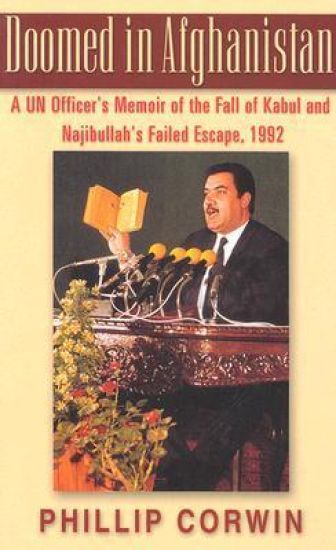
To understand more deeply the tragic events of September 11, 2001, it is critical to know Afghanistan’s recent and turbulent past. Doomed inAfghanistan provides a first-hand account of how failed diplomacy led to an Islamic fundamentalist victory in a war-torn country, and subsequently, to a Taliban takeover and a home for Osama bin Laden’s Al Qaeda terrorist network.In April of 1992, Phillip Corwin was part of a United Nations team in Afghanistan whose mission was to help ensure the transfer of power from the Soviet-installed communist regime of President Najibullah to an interim government (that would prepare for elections). Without the support of the Soviet Union, Najibullah’s regime crumbled, and he was convinced to resign in favor of a national unity government, with the understanding that he would be evacuated to a neutral country (India). Due to a series of miscalculations and machinations, the U.N.’s diplomatic mission failed. Kabul fell to groups of mujahiddin before Najibullah could be evacuated. The inability of the various mujahiddin factions to unite led to their eventual defeat by the Taliban, who four years later routed Najibullah from his safe haven at the U.N. compound, and executed him.Corwin gives a vivid account of the seminal event of Najibullah’s failed evacuation and the frenzied negotiations that were unable to forestall the anarchy and chaos that followed.

The Making and Unmaking of a Revolutionary Family
Phillip Hamilton
University of Virginia Press
2008
nidottu
In 1814, John Randolph of Roanoke brooded over his family's decline since the American Revolution. The once-sumptuous world of the Virginia gentry was vanishing, its kinship ties crumbling along with its mansions. Looking back in an effort to grasp the changes around him, Randolph fixated on his stepfather and one-time guardian, the jurist St. George Tucker. Although Tucker had fought during the Revolution, he grasped the significant changes the war had brought to the Old Dominion. Thus he sold his plantations and urged his children to pursue careers in learned professions. Tucker's stepson John Randolph bitterly disagreed, precipitating a painful break between the two men.Drawing upon an extraordinary archive of manuscript materials, Phillip Hamilton illustrates how two generations of a colorful and influential family adapted to social upheaval. He finds that the Tuckers eventually rejected wider family connections and turned instead to nuclear kin. They also abandoned the liberal principles and enlightened rationalism of the Revolution for a romanticism girded by deep social conservatism. ""The Making and Unmaking of a Revolutionary Family"" reveals the complex process by which the world of Washington and Jefferson evolved into the antebellum society of Edmund Ruffin and Thomas Dew.

In 1984, Phillip Lopate sat down with his mother, Frances, to listen to her life story. A strong, resilient, indomitable woman who lived through the major events of the twentieth century, she was orphaned in childhood, ran away and married young, and then reinvented herself as a mother, war factory worker, candy store owner, community organizer, clerk, actress, and singer. But paired with exciting anecdotes are the criticisms of the husband who couldn't satisfy her, the details of numerous affairs and sexual encounters, and, though she succeeded at many of her roles, accounts of how she always felt mistreated, taken advantage of. After the interviews, at a loss for what to do with the tapes, Lopate put them away. But thirty years later, after his mother had passed away, Lopate found himself drawn back to the recordings of this conversation. Thus begins a three-way conversation between a mother, his younger self, and the person he is today. Trying to break open the family myths, rationalizations, and self-deceptions, A Mother's Tale is about family members who love each other but who can't seem to overcome their mutual mistrust. Though Phillip is sympathizing to a point, he cannot join her in her operatic displays of self-pity and how she blames his father for everything that went wrong. His detached, ironic character has been formed partly in response to her melodramatic one. The climax is an argument in which he tries to persuade her-using logic, of all things-that he really does love her, but is only partially successful, of course. A Mother's Tale is about something primal and universal: the relationship between a mother and her child, the parent disappointed with the payback, the child, now fully grown, judgmental. The humor is in the details.

White Liberal Identity, Literary Pedagogy, and Classic American Realism
Phillip Barrish
OHIO STATE UNIVERSITY PRESS
2005
pokkari
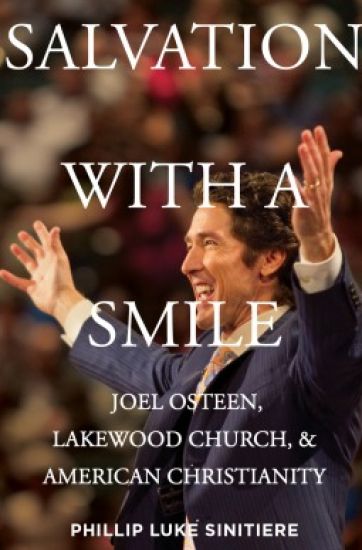
Joel Osteen, the smiling preacher, has quickly emerged as one of the most recognizable Protestant leaders in the country. His megachurch, the Houston based Lakewood Church, hosts an average of over 40,000 worshipers each week. Osteen is the best-selling author of numerous books, and his sermons and inspirational talks appear regularly on mainstream cable and satellite radio. How did Joel Osteen become Joel Osteen? How did Lakewood become the largest megachurch in the U. S.? Salvation with a Smile, the first book devoted to Lakewood Church and Joel Osteen, offers a critical history of the congregation by linking its origins to post-World War II neopentecostalism, and connecting it to the exceptionally popular prosperity gospel movement and the enduring attraction of televangelism. In this richly documented book, historian Phillip Luke Sinitiere carefully excavates the life and times of Lakewood's founder, John Osteen, to explain how his son Joel expanded his legacy and fashioned the congregation into America's largest megachurch. As a popular preacher, Joel Osteen's ministry has been a source of existential strength for many, but also the routine target of religious critics who vociferously contend that his teachings are theologically suspect and spiritually shallow. Sinitiere's keen analysis shows how Osteen's rebuttals have expressed a piety of resistance that demonstrates evangelicalism's fractured, but persistent presence. Salvation with a Smile situates Lakewood Church in the context of American religious history and illuminates how Osteen has parlayed an understanding of American religious and political culture into vast popularity and success.
In Private Affairs, Phillip Brian Harper explores the social and cultural significance of the private, proposing that, far from a universal right, privacy is limited by one's racial-and sexual-minority status. Ranging across cinema, literature, sculpture, and lived encounters-from Rodin's The Kiss to Jenny Livingston's Paris is Burning-Private Affairs demonstrates how the very concept of privacy creates personal and sociopolitical hierarchies in contemporary America.

In Private Affairs, Phillip Brian Harper explores the social and cultural significance of the private, proposing that, far from a universal right, privacy is limited by one's racial-and sexual-minority status. Ranging across cinema, literature, sculpture, and lived encounters-from Rodin's The Kiss to Jenny Livingston's Paris is Burning-Private Affairs demonstrates how the very concept of privacy creates personal and sociopolitical hierarchies in contemporary America.
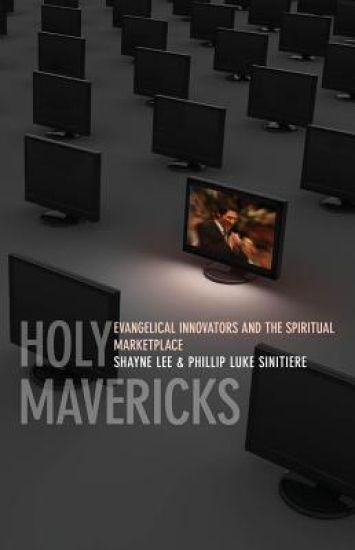
Joel Osteen, Paula White, T. D. Jakes, Rick Warren, and Brian McLaren pastor some the largest churches in the nation, lead vast spiritual networks, write best-selling books, and are among the most influential preachers in American Protestantism today. Spurred by the phenomenal appeal of these religious innovators, sociologist Shayne Lee and historian Phillip Luke Sinitiere investigate how they operate and how their style of religious expression fits into America's cultural landscape. Drawing from the theory of religious economy, the authors offer new perspectives on evangelical leadership and key insights into why some religious movements thrive while others decline. Holy Mavericks provides a useful overview of contemporary evangelicalism while emphasizing the importance of "supply-side thinking" in understanding shifts in American religion. It reveals how the Christian world hosts a culture of celebrity very similar to the secular realm, particularly in terms of marketing, branding, and publicity. Holy Mavericks reaffirms that religion is always in conversation with the larger society in which it is embedded, and that it is imperative to understand how those religious suppliers who are able to change with the times will outlast those who are not.
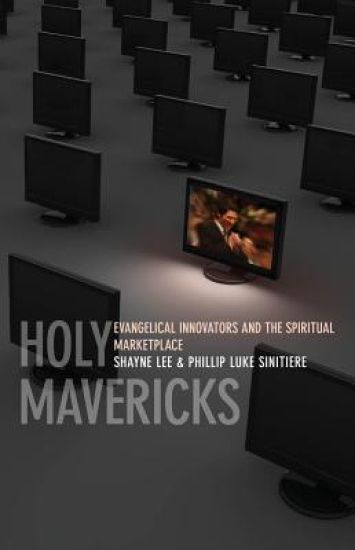
Joel Osteen, Paula White, T. D. Jakes, Rick Warren, and Brian McLaren pastor some the largest churches in the nation, lead vast spiritual networks, write best-selling books, and are among the most influential preachers in American Protestantism today. Spurred by the phenomenal appeal of these religious innovators, sociologist Shayne Lee and historian Phillip Luke Sinitiere investigate how they operate and how their style of religious expression fits into America's cultural landscape. Drawing from the theory of religious economy, the authors offer new perspectives on evangelical leadership and key insights into why some religious movements thrive while others decline. Holy Mavericks provides a useful overview of contemporary evangelicalism while emphasizing the importance of "supply-side thinking" in understanding shifts in American religion. It reveals how the Christian world hosts a culture of celebrity very similar to the secular realm, particularly in terms of marketing, branding, and publicity. Holy Mavericks reaffirms that religion is always in conversation with the larger society in which it is embedded, and that it is imperative to understand how those religious suppliers who are able to change with the times will outlast those who are not.

The first book length study on the aesthetic and artistic power of William Butler Yeats, this book demonstrates the centrality in his work of the concept that art might shape life, from his earliest assay to the great poems and plays of his last years.
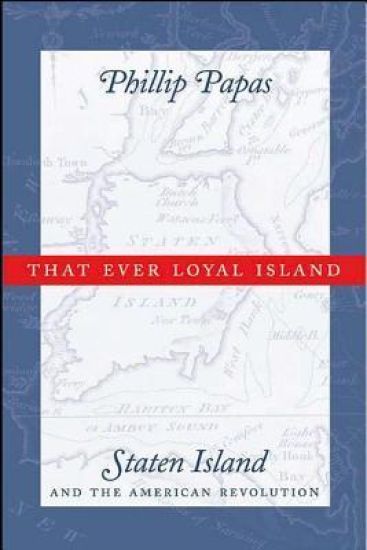
Of crucial strategic importance to both the British and the Continental Army, Staten Island was, for a good part of the American Revolution, a bastion of Loyalist support. With its military and political significance, Staten Island provides rich terrain for Phillip Papas's illuminating case study of the local dimensions of the Revolutionary War. Papas traces Staten Island's political sympathies not to strong ties with Britain, but instead to local conditions that favored the status quo instead of revolutionary change. With a thriving agricultural economy, stable political structure, and strong allegiance to the Anglican Church, on the eve of war it was in Staten Island's self-interest to throw its support behind the British, in order to maintain its favorable economic, social, and political climate. Over the course of the conflict, continual occupation and attack by invading armies deeply eroded Staten Island's natural and other resources, and these pressures, combined with general war weariness, created fissures among the residents of “that ever loyal island,” with Loyalist neighbors fighting against Patriot neighbors in a civil war. Papas’s thoughtful study reminds us that the Revolution was both a civil war and a war for independence—a duality that is best viewed from a local perspective.
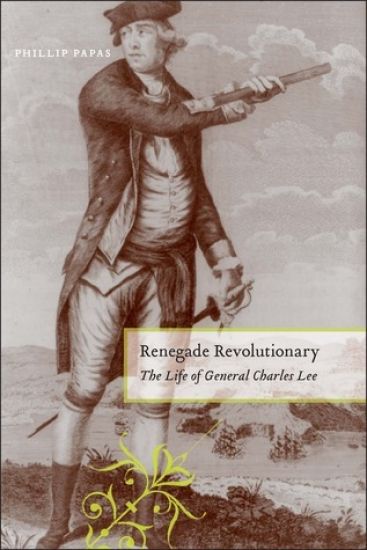
Honorable Mention for the 2015 Book Award from the American Revolution Round Table of Richmond Honorable Mention for the 2015 Fraunces Tavern Museum Book Award In November 1774, a pamphlet to the "People of America" was published in Philadelphia and London. It forcefully articulated American rights and liberties and argued that the Americans needed to declare their independence from Britain. The author of this pamphlet was Charles Lee, a former British army officer turned revolutionary, who was one of the earliest advocates for American independence. Lee fought on and off the battlefield for expanded democracy, freedom of conscience, individual liberties, human rights, and for the formal education of women. Renegade Revolutionary: The Life of General Charles Lee is a vivid new portrait of one of the most complex and controversial of the American revolutionaries. Lee's erratic behavior and comportment, his capture and more than one year imprisonment by the British, and his court martial after the battle of Monmouth in 1778 have dominated his place in the historiography of the American Revolution. This book retells the story of a man who had been dismissed by contemporaries and by history. Few American revolutionaries shared his radical political outlook, his cross-cultural experiences, his cosmopolitanism, and his confidence that the American Revolution could be won primarily by the militia (or irregulars) rather than a centralized regular army. By studying Lee's life, his political and military ideas, and his style of leadership, we gain new insights into the way the American revolutionaries fought and won their independence from Britain.

Of crucial strategic importance to both the British and the Continental Army, Staten Island was, for a good part of the American Revolution, a bastion of Loyalist support. With its military and political significance, Staten Island provides rich terrain for Phillip Papas's illuminating case study of the local dimensions of the Revolutionary War. Papas traces Staten Island's political sympathies not to strong ties with Britain, but instead to local conditions that favored the status quo instead of revolutionary change. With a thriving agricultural economy, stable political structure, and strong allegiance to the Anglican Church, on the eve of war it was in Staten Island's self-interest to throw its support behind the British, in order to maintain its favorable economic, social, and political climate. Over the course of the conflict, continual occupation and attack by invading armies deeply eroded Staten Island's natural and other resources, and these pressures, combined with general war weariness, created fissures among the residents of "that ever loyal island," with Loyalist neighbors fighting against Patriot neighbors in a civil war. Papas's thoughtful study reminds us that the Revolution was both a civil war and a war for independence—a duality that is best viewed from a local perspective.

Superman and Comic Book Brand Continuity traces the development of comic book continuity through the case study of Superman, examining the character’s own evolution across several media, including comics, radio, television, and film. Superman’s relationship with continuity illustrates a key feature of the way in which people in western societies construct stories about themselves. In this respect, the book is a study of narrative and how comic book continuity reflects the way that, in wider western post-enlightenment culture, storytelling shapes the common sense and received wisdoms that influence how we perceive "reality." The scope of the analysis extends from Superman’s creation in the late 1930s to the recent films Man of Steel (2013) and Batman v. Superman: Dawn of Justice (2016), as well as the current comic book reboot Rebirth (2016).

Originally published in 2004. Inculturation - the creative and dynamic relationship between the Christian message and culture or cultures - is of interest to many churches throughout the world, particularly since the Second Vatican Council made it part of the Roman Catholic agenda. This book looks at the question of the inculturation of Christian worship, particularly in the Eucharist. Looking at the relationship of worship and culture requires insights from both theology and anthropology; Tovey develops the tools to interconnect perspectives into an interdisciplinary exploration of different models of inculturation. Inculturation of Christian Worship is both interdisciplinary and ecumenical in approach. Case studies are drawn from the Ethiopian Orthodox Church, African Independent Churches, The Roman Catholic Church and the Anglican Communion. While there is a focus on Africa for particular examples, the issues are discussed in a world wide context.

Elemental Architecture presents a new and refreshing approach to sustainable architectural practice. Going beyond the standard performance-based and quantitative sustainable measures, it incorporates a broader framework of considerations, including the more poetic and noetic possibilities of environmental design. The book is structured around the ancient Greek and medieval alchemists’ system of the Five Temperaments: fire, earth, air, water, and ether. Phillip James Tabb examines how these elements produce both positive and negative environmental forces which have an impact on architectural design – from drinking water and fresh air to torrential floods and tornados. He shows how responding to or enhancing these forces can help us to create a more sustainable, healthy, and purposeful architecture. To illustrate this, each chapter draws on seminal contemporary works of architecture, from Peter Zumthor’s Bruder-Klaus Field Chapel to Frank Lloyd Wright’s masterpiece at Fallingwater. These examples are accompanied by over a hundred high-quality illustrations. Expanding the discussion of sustainability to include phenomenological as well as qualitative considerations, Elemental Architecture is ideal for students and researchers with an interest in sustainable architecture and architectural theory.

Elemental Architecture presents a new and refreshing approach to sustainable architectural practice. Going beyond the standard performance-based and quantitative sustainable measures, it incorporates a broader framework of considerations, including the more poetic and noetic possibilities of environmental design. The book is structured around the ancient Greek and medieval alchemists’ system of the Five Temperaments: fire, earth, air, water, and ether. Phillip James Tabb examines how these elements produce both positive and negative environmental forces which have an impact on architectural design – from drinking water and fresh air to torrential floods and tornados. He shows how responding to or enhancing these forces can help us to create a more sustainable, healthy, and purposeful architecture. To illustrate this, each chapter draws on seminal contemporary works of architecture, from Peter Zumthor’s Bruder-Klaus Field Chapel to Frank Lloyd Wright’s masterpiece at Fallingwater. These examples are accompanied by over a hundred high-quality illustrations. Expanding the discussion of sustainability to include phenomenological as well as qualitative considerations, Elemental Architecture is ideal for students and researchers with an interest in sustainable architecture and architectural theory.