

Kirjahaku
Etsi kirjoja tekijän nimen, kirjan nimen tai ISBN:n perusteella.
1000 tulosta hakusanalla Pj Masks


The life of a major league baseball scout is far from glamorous. Away from his family for weeks on end, he travels to obscure parts of the world in all types of conditions in search of the next break-out star. Essential to a club's talent procurement, and thus to its ultimate success, scouts nevertheless remain relatively anonymous compared to players and owners. This work gives overdue attention to these vital participants in the American national pastime. Substantial biographical profiles of more than 300 veteran scouts--from the earliest who traveled in covered wagons to long-time experts still on the job--chronicle their playing histories, scouting accomplishments, the organizations for which they scouted, and the players they signed who made it to the major leagues. A very extensive bibliography and an index complete the work.
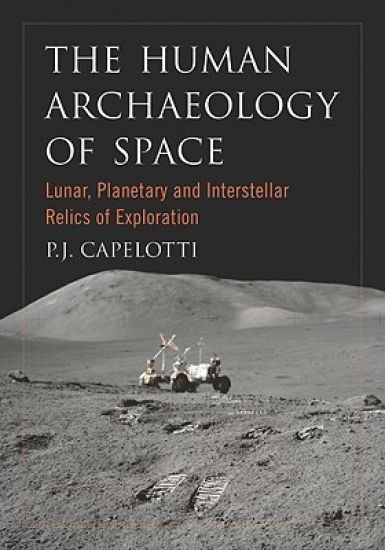
A catalog of archaeological artifacts that have been left behind in space as a result of human exploration, this work describes the remnants of lost satellites, discarded lunar rovers, depleted rockets, and various abandoned spacecraft. The book is divided into three parts covering distinct but interconnected issues of lunar, planetary, and interstellar archaeology. In Parts I and II, individual chapters cover each space mission and provide technical notes, and, in some cases, images of the artifacts. Part III explores the archaeology of mobile artifacts in the solar system and the wider galaxy, looking particularly at the problems encountered in attempting a traditional archaeological field survey of artifacts that may remain in motion indefinitely.

The 1957 PCL season faced uncertainty about the impending "invasion of major league baseball" in 1958. While the meetings, wheeling and dealing and politics took place off the diamond, the historic San Francisco Seals, a charter member of the Golden Era of the league, 1903-1957, played baseball and clinched the pennant two days before the season ended. We follow this team one game at a time as players faced historic rivals from spring training through the final game of the era. Readers experience minor league baseball as it was more than fifty years ago when there were no agents, next year's contract was based on this year's performance, and PCL teams consisted of a blend of major league veterans and minor leaguers on the cusp. The Pacific Coast League was no ordinary league, the Seals were no ordinary team, and 1957 was no ordinary season.
The general view of Russell's work amongst philosophers has been that repeat edly, during his long and distinguished career, crucial changes of mind on fun damental points were significant enough to cause him to successively adopt a diversity of radically new philosophical positions. Thus Russell is seen to have embraced and then abandoned, amongst others, neo-Hegelianism, Platonic re alism, phenomenalism and logical atomism, before settling finally on a form of neutral monism that philosophers have generally found to be incredible. This view of Russell is captured in C. D. Broad's famous remark that "Mr. Russell pro duces a different system of philosophy every few years . . . " (Muirhead, 1924: 79). Reflecting this picture of Russell continually changing his position, books and papers on Russell's philosophy have typically belonged to one of two kinds. Either they have concentrated on particular periods of his thought that are taken to be especially significant, or, accepting the view of his successive conversion to dis tinctly different philosophical positions, they have provided some account of each of these supposedly disconnected periods of his thought. While much good work has been done on Russell's philosophy, this framework has had its limitations, the main one being that it conceals the basic continuity behind his thought.

During the last century international trade has become indispensable for many economies. This is not only the case for trade in primary raw materials and consumer products but also for secondary (recyclable) materials. With the rapid growth of the recycling sector worldwide, trade in recyclables increased tremendously. It is striking that most of this trade flows from developed to developing countries. This book addresses the main causes of this typical trade pattern and investigates its economic and environmental effects by carrying out case studies on waste paper imports in India, waste plastics imports in China, and used-tyre trade in Europe. The book concludes by recommending policies that are aimed at preventing negative economic and environmental effects potentially resulting from trade in recyclables. The book offers new ideas to researchers who are involved in international trade, material flows, and waste management, and provides new insights for decision-makers who are interested in WTO and the Basel Convention.
Parliament of Whores
P J O'Rourke; Andrew Ferguson
Grove Press / Atlantic Monthly Press
2003
nidottu
Called "an everyman's guide to Washington" ("The New York Times"), O'Rourke's savagely funny and national bestseller "Parliament of Whores" has become a classic in understanding the workings of the American political system. Written at the end of the Reagan era, this new edition includes an extensive Foreword by political writer Andrew Ferguson.
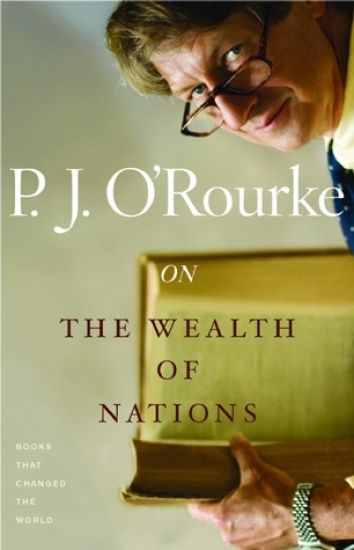
In On The Wealth of Nations, America's most provocative satirist, P. J. O'Rourke, reads Adam Smith's revolutionary The Wealth of Nations so you don't have to. Recognized almost instantly on its publication in 1776 as the fundamental work of economics, The Wealth of Nations was also recognized as really long: the original edition totaled over nine hundred pages in two volumes--including the blockbuster sixty-seven-page "digression concerning the variations in the value of silver during the course of the last four centuries," which, "to those uninterested in the historiography of currency supply, is like reading Modern Maturity in Urdu." Although daunting, Smith's tome is still essential to understanding such current hot-topics as outsourcing, trade imbalances, and Angelina Jolie. In this hilarious, approachable, and insightful examination of Smith and his groundbreaking work, P. J. puts his trademark wit to good use, and shows us why Smith is still relevant, why what seems obvious now was once revolutionary, and why the pursuit of self-interest is so important.
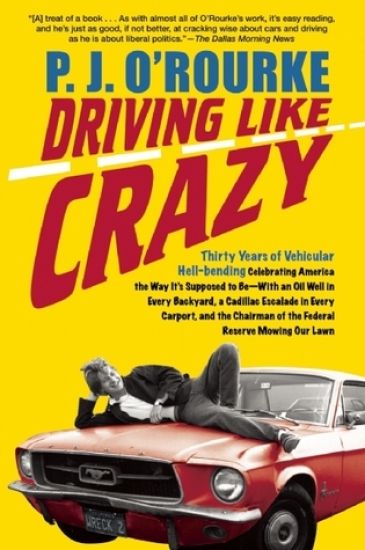
Driving Like Crazy celebrates cars and author P. J. O'Rourke's love for them, while chronicling the golden age of the automobile in America. O'Rourke takes us on a whirlwind tour of the world's most scenic and bumpiest roads in trouble-laden cross-country treks, from a 1978 Florida-to-California escapade in a 1956 special four-door Buick sedan to a 1983 thousand-mile effort across Mexico in the Baja 1000 to a trek through Kyrgyzstan in 2006 on the back of a Soviet army surplus six-wheel-drive truck. For longtime fans of the celebrated humorist, the collection features a host of O'Rourke's classic pieces on driving, including "How to Drive Fast on Drugs While Getting Your Wing-Wang Squeezed and Not Spill Your Drink," about the potential misdeeds one might perform in the front (and back) seat of an automobile; "The Rolling Organ Donors Motorcycle Club," which chronicles a seven-hundred-mile weekend trip through Michigan and Indiana that O'Rourke took on a Harley Davidson alongside Car & Driver publisher David E. Davis, Jr.; his brilliant and funny piece from Rolling Stone on NASCAR and its peculiar culture, recorded during an alcohol-fueled weekend in Charlotte, North Carolina, in 1977; and an hilarious account of a trek from Islamabad to Calcutta in Land Rover's new Discovery Trek.
Don't Vote It Just Encourages the Bastards
P J O'Rourke
Grove Press / Atlantic Monthly Press
2011
nidottu
Put the country's big, fat political ass on a diet. Lose that drooping deficit. Slim those spreading entitlement programs. Firm up that flabby pair of butt cheeks which are the Senate and the House. Having had a lot of fun with what politicians do, P.J. O'Rourke now has a lot of fun with what we should think about those politicians. Nothing good, to be sure. Best-selling humorist P.J. O'Rourke is back with his latest political masterpiece, Don't Vote--It Just Encourages The Bastards. Using his signature wit and keen observational skills, O'Rourke reflects on his forty year career as a political commentator, spanning his addlepated hippie youth to his current state of right-wing grouch maturity. Don't Vote--It Just Encourages The Bastards is a brilliant, disturbing, hilarious and sobering look at why politics and politicians are a necessary evil--but only just barely necessary. Read P.J. O'Rourke on the pathetic nature of politics and laugh through your tears or--what the hell--just laugh.
P. J. O'Rourke says we've worked ourselves into a state of anger and perplexity, and it's no surprise because perplexed and angry are what Americans have been since the Roanoke Colony got lost. This astute and entertaining look at the state of these United States includes essays on everything from our fraught history ("Oh Beautiful for . . . Pilgrim Feet?") to the political effects of social media, ("Whose Bright Idea Was It to Make Sure that Every Idiot in the World Is in Touch with Every Other Idiot?"). A plan is advanced to reform federal poverty programs, "Just Give Them the Money." And a rant is made against the "Internet of Things" because your juicer is sending fake news to your Fitbit about what's in your refrigerator. Included is a quiz to determine whether you're a "Coastal" or a "Heartlander" (you know organic, fair-traded, locavore, and gluten-free, but do you know hay from straw?), an impassioned plea to license politicians (we license beauticians ), and much more. This is P. J. at his finest.
A compendium of quotes and riffs by P.J. O'Rourke onsubjects ranging from government ("Giving money and power to politicians islike giving car keys and whiskey to teenage boys") to fishing ("a sportinvented by insects and you are the bait") to apps ("we need a no-app app--let'scall it a nap") to be published on what would have been his 75th birthday. "P. J. O'Rourke was the funniest writer of hisgeneration, one of the smartest and one of the most prolific. Now that hebelongs to the ages, P.J. takes his rightful place along with Oscar Wilde, MarkTwain and Dorothy Parker in the Pantheon of Quote Gods."--ChristopherBuckley from his introduction When The Penguin Dictionary of Modern Humorous Quotations waspublished in 1994, P. J. O'Rourke had more entries than any living writer. Andhe kept writing funny stuff for another 28 years. Now, for the first time, thebest material is collected in one volume. Edited by his longtime friendand member of the American Society of Magazine Editors Hall of Fame TerryMcDonell, THE FUNNY STUFF is arranged in six sections, organized by subject inalphabetical order from Agriculture to Xenophobia. From his earliest days atthe National Lampoon in the 1970s, through his classicreporting for Rolling Stone in the 80s and 90s to hispost-Trump, pandemic, new media observations of recent years, P.J. producedincisive, amusing copy. Not only did P.J. write memorable one-liners, he alsometiculously constructed riffs that built to a crescendo of hilarity andoutrage--and are still being quoted years later. His prose has the electricverbal energy of Tom Wolfe or Hunter Thompson, but P.J. is more flat out funny.And through it all comes his clear-eyed take on politics, economics, humannature--and fun. THE FUNNY STUFF is a book for P.J. fans to devour but also abook that will bring new readers and stand as testament to one of the trulyoriginal American writers of the last 50 years.
A compendium of quotes and riffs by P.J. O'Rourke on subjects ranging from government ("Giving money and power to politicians is like giving car keys and whiskey to teenage boys") to fishing ("a sport invented by insects and you are the bait") to apps ("we need a no-app app--let's call it a nap") to be published on what would have been his 75th birthday. "P. J. O'Rourke was the funniest writer of his generation, one of the smartest and one of the most prolific. Now that he belongs to the ages, P.J. takes his rightful place along with Oscar Wilde, Mark Twain and Dorothy Parker in the Pantheon of Quote Gods."--Christopher Buckley from his introductionWhen The Penguin Dictionary of Modern Humorous Quotations was published in 1994, P. J. O'Rourke had more entries than any living writer. And he kept writing funny stuff for another 28 years. Now, for the first time, the best material is collected in one volume. Edited by his longtime friend and member of the American Society of Magazine Editors Hall of Fame Terry McDonell, THE FUNNY STUFF is arranged in six sections, organized by subject in alphabetical order from Agriculture to Xenophobia. From his earliest days at the National Lampoon in the 1970s, through his classic reporting for Rolling Stone in the 80s and 90s to his post-Trump, pandemic, new media observations of recent years, P.J. produced incisive, amusing copy. Not only did P.J. write memorable one-liners, he also meticulously constructed riffs that built to a crescendo of hilarity and outrage--and are still being quoted years later. His prose has the electric verbal energy of Tom Wolfe or Hunter Thompson, but P.J. is more flat out funny. And through it all comes his clear-eyed take on politics, economics, human nature--and fun. THE FUNNY STUFF is a book for P.J. fans to devour but also a book that will bring new readers and stand as testament to one of the truly original American writers of the last 50 years.
Robert Drew and the Development of Cinema Verite in America
P.J. O'Connell
Southern Illinois University Press
2010
nidottu
Author P. J. O’Connell traces Robert Drew’s influence on cinema verite through extensive interviews with Drew and with some of the founding fathers of American cinema verite filmmaking—Donn Alan Pennebaker, Gregory Shuker, and Richard Leacock. Robert Drew’s contributions to documentary film have been both technical and conceptual. Realizing that his equipment was too heavy and intrusive, Drew persuaded Time-Life Broadcasting to sponsor the development of new, lightweight, portable synchronous sound equipment that freed documentary filmmakers from the bulky, tripod-mounted, AC-powered equipment of the past. His new technology allowed him to capture intense moments as they happened, and to make viewers feel personally involved in the events he presented. While making more than twenty documentaries in the early 1960s, Drew continued to initiate innovations that were not thought possible a generation before him. P. J. O’Connell is the executive producer of public affairs at Penn State Television and an affiliate assistant professor in the School of Communication at Penn State University.
Discover a little-known world of archaeology Wrecked aircraft and abandoned airfields, old highway billboards and derelict boats, movie props, deserted mining operations. In this book, archaeologist P.J. Capelotti explores places and things that people don’t typically think of as archaeological sites and artifacts, introducing readers to the most extreme fieldwork taking place today.Capelotti shows that even seemingly ordinary objects from the recent past hold secrets about the cultural history of humans. He investigates the site where a stunt copy of the Orca, the fishing boat used in the movie Jaws, was stripped to pieces by fans—a revelation of the ways humans relate to popular culture. He takes readers to abandoned base camps near the North Pole that are now used as destinations for Arctic tourism. Retelling the story of Thor Heyerdahl’s research expedition across the Pacific Ocean on a balsa log raft, Capelotti shows how this episode of experimental archaeology revealed cultural connections between continents. And he doesn’t stop at the limits of the planet. He discusses debris floating through outer space and equipment left behind on the surface of the moon, highlighting current efforts to preserve artifacts that exist beyond the Earth’s atmosphere. These discarded materials, says Capelotti, help archaeologists piece together the sweeping story of human cultural expansion and exploitation. He explains how the unusual sites of shorelines, sea, air, and space represent the farthest reaches of human civilization. His enthusiasm will inspire readers to set out on their own to investigate the secret meanings of treasures hiding in plain sight.
An Introduction to Industrial Economics
P.J. Devine; N. Lee; R.M. Jones; W.J. Tyson
CRC Press Inc
2018
sidottu
This updated and expanded 1985 edition of the classic 1974 work covers deindustrialisation, industrial and competition policy, the public enterprise sector, regional and urban policy, and privatisation, as well as focussing on the firm and the industrial sector in all its facets. It remains the key work on industrial economics.
An Introduction to Industrial Economics
P.J. Devine; N. Lee; R.M. Jones; W.J. Tyson
CRC Press Inc
2019
nidottu
This updated and expanded 1985 edition of the classic 1974 work covers deindustrialisation, industrial and competition policy, the public enterprise sector, regional and urban policy, and privatisation, as well as focussing on the firm and the industrial sector in all its facets. It remains the key work on industrial economics.
The Migrant Farmer in the History of the Cape Colony, 1657–1842
P.J. Van Der Merwe
Ohio University Press
1994
sidottu
Petrus Johannes Van der Merwe wrote three of the most significant books on the history of South Africa before he was 35 years old. His trilogy, of which The Migrant Farmer is the first volume, has become a classic that no student of Cape colonial history of the seventeenth, eighteenth or nineteenth century can ignore. Van der Merwe was unique among Afrikaner historians in that he focused not on the single event known as the Great Trek, but on the greater migration, nearly three hundred years long, of peoples of Dutch, French and German descent out from the victualling station at Cape Town after their arrival there in 1652. In the process he pioneered new directions in historical writing decades before they became fashionable among other South African historians. Van der Merwe was less interested in politics than in the social, cultural, economic and religious lives of his subjects. He asked questions about such daily concerns as work, food, property owning, private and public worship, leisure activities, fashions, the environment and about the farmers’ relations with their neighbors, both white and black. The Migrant Farmer (Die Trekboer in die Geskiedenis van die Kaapkolonie, 1657-1842) was published in Cape Town in Afrikaans in 1938. Beck’s English translation will allow scholars worldwide the opportunity to use, or challenge, this pioneering study of South Africa.