Kirjojen hintavertailu. Mukana 11 244 527 kirjaa ja 12 kauppaa.

Kirjahaku

Etsi kirjoja tekijän nimen, kirjan nimen tai ISBN:n perusteella.

1000 tulosta hakusanalla RICHARD EDW DENNETT

Richard Bancroft and Elizabethan Anti-Puritanism

Richard Bancroft and Elizabethan Anti-Puritanism

Patrick Collinson

Cambridge University Press
2016
pokkari
This major new study is an exploration of the Elizabethan Puritan movement through the eyes of its most determined and relentless opponent, Richard Bancroft, later Archbishop of Canterbury. It analyses his obsession with the perceived threat to the stability of the church and state presented by the advocates of radical presbyterian reform. The book forensically examines Bancroft's polemical tracts and archive of documents and letters, casting important new light on religious politics and culture. Focussing on the ways in which anti-Puritanism interacted with Puritanism, it also illuminates the process by which religious identities were forged in the early modern era. The final book of Patrick Collinson, the pre-eminent historian of sixteenth-century England, this is the culmination of a lifetime of seminal work on the English Reformation and its ramifications.
Richard II

Richard II

Anthony Steel; George Macaulay Trevelyan

Cambridge University Press
2013
pokkari
Originally published in 1941, this monograph by historian Anthony Steel assesses the character and policies of Richard II, who reigned in a time of tremendous literary and artistic change which was also underpinned by great political and religious uncertainty. Steel puts the monarch in his context as a medieval ruler during an era when the structures of the medieval period were beginning to fracture, particularly the strict hierarchy which separated peasant from lord. With an introduction by distinguished historian G. M. Trevelyan, this book will be of value to anyone with an interest in medieval history.
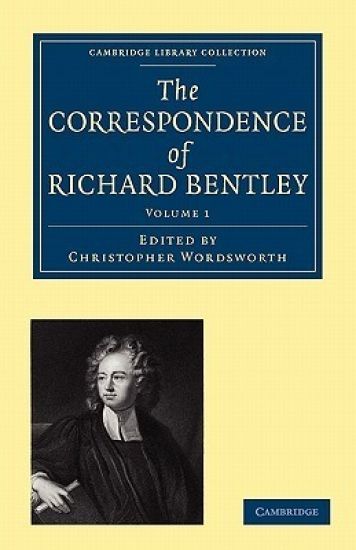
The Correspondence of Richard Bentley

The Correspondence of Richard Bentley

Richard Bentley

Cambridge University Press
2009
pokkari
The celebrated classicist Richard Bentley (1662–1742) was elected Master of Trinity College, Cambridge in 1700. He corresponded with many respected thinkers and scholars, based in Paris, Naples, Berlin, Amsterdam, Rotterdam, Copenhagen, Hamburg and elsewhere around the world. These two volumes of his correspondence, first published in 1842 and now reissued, provide fascinating insights into Bentley's thought and the intellectual world he inhabited. Volume 1 contains letters, mostly in Latin, written and received between 1689 and 1712. They appear in chronological order, and shed light on relationships between scholars of different generations and nationalities, and often opposing religious, moral, political, and literary opinions. Exceptionally noteworthy in this volume is Bentley's correspondence with Archbishop Wake and the Earl of Oxford, as well as four letters from Sir Isaac Newton.
The Correspondence of Richard Bentley

The Correspondence of Richard Bentley

Richard Bentley

Cambridge University Press
2009
pokkari
The celebrated classicist Richard Bentley (1662–1742) was elected Master of Trinity College, Cambridge in 1700. He corresponded with many respected thinkers and scholars, based in Paris, Naples, Berlin, Amsterdam, Rotterdam, Copenhagen, Hamburg and elsewhere around the world. These two volumes of his correspondence, first published in 1842 and now reissued, provide fascinating insights into Bentley's thought and the intellectual world he inhabited. Volume 2 contains letters, mostly in Latin, written and received by Bentley between 1712 and 1740, two years before his death at the age of 81. They appear in chronological order, and shed light on relationships between scholars of different generations and nationalities, and often opposing religious, moral, political, and literary opinions. Exceptionally noteworthy in this volume is Bentley's correspondence relating to his controversial tenure as Master of Trinity College.
Richard Wagner and the Music of the Future

Richard Wagner and the Music of the Future

Hueffer Francis

Cambridge University Press
2009
pokkari
Francis Hueffer (1843–1889) was music critic for The Times from 1878 to 1889 and was also secretary of the Wagner Society founded in 1873. This 1874 book, much of it originally published in the Fortnightly Review, considers Wagner's role in the musical developments of the nineteenth century that followed the watershed of Beethoven's ninth symphony. It is one of the first works in English to explore the nature of Wagner's genius, and builds on an essay published by the author in The Academy about Wagner's own pamphlet on Beethoven. Hueffer's analysis of the formation of Wagner's artistic values and musical philosophy as embodied in his writings and music dramas is complemented by discussion of the songs of Schubert, Schumann and Liszt. The appendix provides an account of the performance of Beethoven's ninth which Wagner conducted at Bayreuth in 1872, and the laying of the foundation stone of the Festspielhaus.
Richard Wagner

Richard Wagner

Francis Hueffer

Cambridge University Press
2009
nidottu
Francis Hueffer (1845-89) was born and studied music in Germany, but moved to London in 1869 to pursue a career as a critic and writer on music. He edited the series 'The Great Musicians' for Novello and Co., was music critic of The Times, wrote libretti for some now-forgotten operas, and was an early advocate and interpreter to the British of Wagner. Between his Richard Wagner and the Music of the Future (1874) and his translation of the correspondence of Wagner and Liszt (1888), he wrote Wagner in his own 'Great Musicians' series in 1881 (two years before the composer's death). The book surveys Wagner's life and his musical writings, and a separate chapter is devoted to each of the operas (except Parsifal, which was not performed until 1882). This is a fascinating contemporary assessment of the standard-bearer of the 'music of the future'.
Richard II

Richard II

William Shakespeare

Cambridge University Press
2009
pokkari
John Dover Wilson's New Shakespeare, published between 1921 and 1966, became the classic Cambridge edition of Shakespeare's plays and poems until the 1980s. The series, long since out-of-print, is now reissued. Each work is available both individually and as a set, and each contains a lengthy and lively introduction, main text, and substantial notes and glossary printed at the back. The edition, which began with The Tempest and ended with The Sonnets, put into practice the techniques and theories that had evolved under the 'New Bibliography'. Remarkably by today's standards, although it took the best part of half a century to produce, the New Shakespeare involved only a small band of editors besides Dover Wilson himself. As the volumes took shape, many of Dover Wilson's textual methods acquired general acceptance and became an established part of later editorial practice, for example in the Arden and New Cambridge Shakespeares.
Richard III

Richard III

William Shakespeare

Cambridge University Press
2009
pokkari
John Dover Wilson's New Shakespeare, published between 1921 and 1966, became the classic Cambridge edition of Shakespeare's plays and poems until the 1980s. The series, long since out-of-print, is now reissued. Each work is available both individually and as a set, and each contains a lengthy and lively introduction, main text, and substantial notes and glossary printed at the back. The edition, which began with The Tempest and ended with The Sonnets, put into practice the techniques and theories that had evolved under the 'New Bibliography'. Remarkably by today's standards, although it took the best part of half a century to produce, the New Shakespeare involved only a small band of editors besides Dover Wilson himself. As the volumes took shape, many of Dover Wilson's textual methods acquired general acceptance and became an established part of later editorial practice, for example in the Arden and New Cambridge Shakespeares.
Observations of Sir Richard Hawkins, Knt in His Voyage into the South Sea in the Year 1593
The publications of the Hakluyt Society (founded in 1846) made available edited (and sometimes translated) early accounts of exploration. The first series, which ran from 1847 to 1899, consists of 100 books containing published or previously unpublished works by authors from Christopher Columbus to Sir Francis Drake, and covering voyages to the New World, to China and Japan, to Russia and to Africa and India. Volume 1, published in 1847, contains Sir Richard Hawkins's account of the voyage by which in 1593 he planned to sail to 'the Ilands of Japan, of the Phillippinas, and Molucas, the kingdomes of China, and the East Indies, by the way of the Straites of Magelan, and the South Sea'. The version of the book printed in 1622 was edited for the Hakluyt Society by Captain C .R. Drinkwater Bethune of the Royal Navy, and includes an editorial preface, explanatory footnotes and an index.
Diary of Richard Cocks, Cape-Merchant in the English Factory in Japan, 1615–1622
The publications of the Hakluyt Society (founded in 1846) made available edited (and sometimes translated) early accounts of exploration. The first series, which ran from 1847 to 1899, consists of 100 books containing published or previously unpublished works by authors from Christopher Columbus to Sir Francis Drake, and covering voyages to the New World, to China and Japan, to Russia and to Africa and India. Volumes 66 and 67 of the series, edited by E. M Thompson and first published in 1883, contain the bulk of the diary of Richard Cocks (c.1565–1624), supplemented by a selection of letters. Cocks was the head of a trading post established in Japan by the British East India Company from its foundation in 1613 until 1622, when it went out of business. His diary describes Japanese society and culture in the early seventeenth century, as well as the activities of British merchants there.
Diary of Richard Cocks, Cape-Merchant in the English Factory in Japan, 1615–1622
The publications of the Hakluyt Society (founded in 1846) made available edited (and sometimes translated) early accounts of exploration. The first series, which ran from 1847 to 1899, consists of 100 books containing published or previously unpublished works by authors from Christopher Columbus to Sir Francis Drake, and covering voyages to the New World, to China and Japan, to Russia and to Africa and India. Volumes 66 and 67 of the series, edited by E. M Thompson and first published in 1883, contain the bulk of the diary of Richard Cocks (c.1565–1624), supplemented by a selection of letters. Cocks was the head of a trading post established in Japan by the British East India Company from its foundation in 1613 until 1622, when it went out of business. His diary describes Japanese society and culture in the early seventeenth century, as well as the activities of British merchants there.
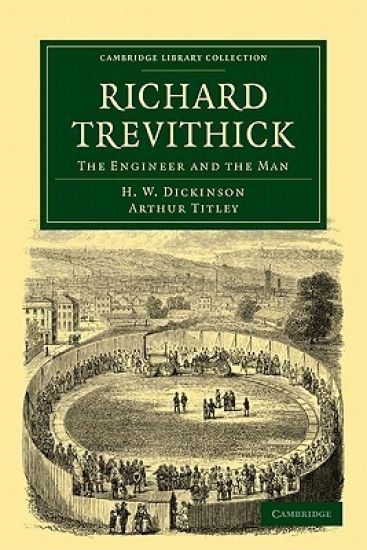
Richard Trevithick

Richard Trevithick

H. W. Dickinson; Arthur Titley

Cambridge University Press
2010
pokkari
To mark the centenary of Richard Trevithick (1771–1833) H. W Dickinson and Arthur Titley published a fascinating book on the engineer and his work. They succeed in producing a work which appeals to the scientist, the historian and the general reader, without feeling obliged to over-simplify the technical details. Today best remembered for his early railway locomotive, Trevithick worked on a wide range of projects, including mines, mills, dredging machinery, a tunnel under the Thames, military engineering, and prospecting in South America. The book and other centenary activities helped to restore Trevithick's rather neglected reputation as a pioneering engineer of the Industrial Revolution, although his difficult personality and financial failures caused him to be overshadowed by his contemporaries such as Robert Stephenson and James Watt. The book places his achievements in their historical context, and contains many illustrations of his inventions.
Memoirs of Richard Lovell Edgeworth, Esq

Memoirs of Richard Lovell Edgeworth, Esq

Richard Lovell Edgeworth; Maria Edgeworth

Cambridge University Press
2011
pokkari
Richard Lovell Edgeworth (1744–1817) was a noted Irish educationalist, engineer and inventor. This two-volume autobiography, begun in 1808, was completed by his novelist daughter Maria, and published in 1820. Edgeworth's interest in education is evidenced by his reflections about how his childhood shaped his character and later life. Volume 1, written by Edgeworth himself and covering the period to 1781, reveals that his interest in science began early; he was shown an orrery (a moving model of the solar system) at the age of seven. As a young man, Edgeworth attended university in Dublin and Oxford, studied law, and eloped while still in his teens. He experimented with vehicle design, winning several awards, and was introduced by Erasmus Darwin to the circle of scientists, innovators and industrialists later known as the Lunar Society of Birmingham. In 1781 Sir Joseph Banks sponsored his election to the Royal Society.
Memoirs of Richard Lovell Edgeworth, Esq

Memoirs of Richard Lovell Edgeworth, Esq

Richard Lovell Edgeworth; Maria Edgeworth

Cambridge University Press
2011
pokkari
Richard Lovell Edgeworth (1744–1817) was a noted Irish educationalist, engineer and inventor. This two-volume autobiography, begun in 1808, was published in 1820. Edgeworth had abandoned the project in 1809, having covered the period to 1781, and it was completed after his death by his eldest daughter, a successful novelist. Maria Edgeworth and her father had co-authored educational works, and the experience of helping her father run their estate during her teens had provided material for her novels. Volume 2 of these memoirs was wholly written by her, though it contains excerpts from Richard's correspondence. It recounts how, after his third marriage, the growing family returned to Ireland, and focused first on domestic and educational concerns. Richard became involved in Irish politics and the newly founded Royal Irish Academy but continued to publish essays on scientific and mechanical topics, as well as influential (though controversial) works on education.
The Political Writings of Richard Cobden

The Political Writings of Richard Cobden

Richard Cobden

Cambridge University Press
2011
pokkari
Richard Cobden (1804–65) was the leading liberal thinker of his generation, and it was primarily through his efforts that the Corn Laws were repealed and that classical liberalism became the dominant political theory of the United Kingdom for over half a century. His first pamphlet was published in 1835 and his last in 1862. This collection was published two years after his death, and was regularly reprinted on both sides of the Atlantic well into the twentieth century. Volume 1 includes Cobden's first two pamphlets, England, Ireland and America and Russia, which argue that British foreign policy benefited only the 'establishment' while the ordinary people were forced, through excessive taxation, to finance military adventures. Advocating free trade, low taxation, reduced military spending and improvements to popular education, he suggests Britain should concentrate on improving conditions in Ireland rather than engage in sabre-rattling in the face of Russian expansionism.
The Political Writings of Richard Cobden

The Political Writings of Richard Cobden

Richard Cobden

Cambridge University Press
2011
pokkari
Richard Cobden (1804–65) was the leading liberal thinker of his generation, and it was primarily through his efforts that the Corn Laws were repealed and that classical liberalism became the dominant political theory of the United Kingdom for over half a century. His first pamphlet was published in 1835 and his last in 1862. This collection was published two years after his death, and was regularly reprinted on both sides of the Atlantic well into the twentieth century. Volume 2 contains Cobden's later writings. With a background of war in the Crimea and the United States, his emphasis shifts from advocating free trade to the need to promote international treaties and co-operation. In his final work, The Three Panics, he is able to use the experience gained while negotiating a commercial treaty with France to highlight the folly of the anti-French hysteria that still frequently erupted in Britain.
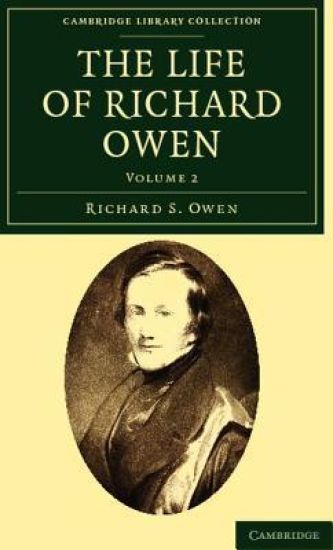
The Life of Richard Owen

The Life of Richard Owen

Richard S. Owen

Cambridge University Press
2011
pokkari
Richard Owen, F.R.S. (1804–92) was a controversial and influential palaeontologist and anatomist. Originally from Lancaster, he studied medicine at the University of Edinburgh and at London's St Bartholomew's Hospital. He grew interested in anatomical research and, after qualifying as a surgeon, became assistant conservator in the museum of the Royal College of Surgeons, and then superintendent of natural history in the British Museum. He became an authority on comparative anatomy and palaeontology, coining the term 'dinosaur' and founding the Natural History Museum. He was also a fierce critic of Darwin's theory of evolution by natural selection, and engaged in a long and bitter argument with Thomas Huxley, known as 'Darwin's bulldog' for his belligerent support of the theory. Published in 1894, this two-volume biography draws on Owen's diaries and a wealth of correspondence. Volume 1 covers Owen's life up to 1854, just before his appointment to the British Museum.
The Life of Richard Owen

The Life of Richard Owen

Richard S. Owen

Cambridge University Press
2011
pokkari
Richard Owen, F.R.S. (1804–92) was a controversial and influential palaeontologist and anatomist. Originally from Lancaster, he studied medicine at the University of Edinburgh and at London's St Bartholomew's Hospital. He grew interested in anatomical research and, after qualifying as a surgeon, became assistant conservator in the museum of the Royal College of Surgeons, and then superintendent of natural history in the British Museum. He became an authority on comparative anatomy and palaeontology, coining the term 'dinosaur' and founding the Natural History Museum. He was also a fierce critic of Darwin's theory of evolution by natural selection, and engaged in a long and bitter argument with Thomas Huxley, known as 'Darwin's bulldog' for his belligerent support of the theory. Published in 1894, this two-volume biography draws on Owen's diaries and a wealth of correspondence. Volume 2 includes an essay on Owen's contributions to anatomical science written, surprisingly, by Huxley.
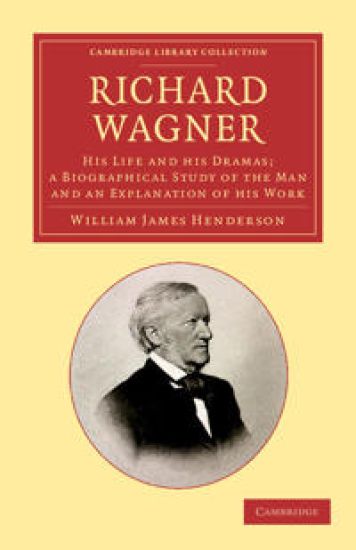
Richard Wagner

Richard Wagner

William James Henderson

Cambridge University Press
2013
pokkari
The American music critic and lecturer William James Henderson (1855–1937) wrote for The New York Times and The New York Sun, provided the libretto for Walter Damrosch's opera Cyrano (1913) and authored fiction, poetry, sea stories and a textbook on navigation. He also taught at the New York College of Music and the Institute of Musical Art. Taking up the cause of Wagner with considerable understanding, he published this substantial work in 1902, barely twenty years after the composer's death. It is an illuminating account of Wagner's life and artistic aims, complemented by an insightful analysis of each of his music dramas from Rienzi to Parsifal. Its purpose, states Henderson, 'is to supply Wagner lovers with a single work which shall meet all their needs'. With Ernest Newman's Study of Wagner (1899), also reissued in this series, it reflects the composer's contemporary popularity.
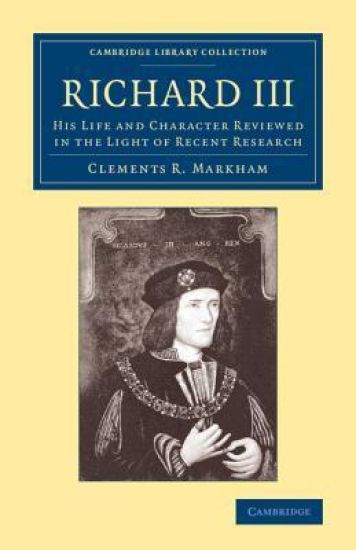
Richard III

Richard III

Clements R. Markham

Cambridge University Press
2014
pokkari
First published in 1906, this work was one of the first and most important Ricardian apologias for a general readership. A distinguished geographer, whose long career had involved voyaging to the Arctic in search of Sir John Franklin, as well as travels in Peru and India, Sir Clements Markham (1830–1916) had played a crucial role in launching Scott's first expedition to Antarctica in 1901. Markham also had a long-standing interest in the reputation of England's last Plantagenet king. The first part of this book presents the life of Richard, while the second half is devoted to a thorough examination of the charges laid against the monarch by the Tudors and later historians. Markham seeks to expose these charges as unfair and unfounded. The work also includes genealogical tables and a map of the Battle of Bosworth Field.