Kirjojen hintavertailu. Mukana 12 083 983 kirjaa ja 12 kauppaa.

Kirjahaku

Etsi kirjoja tekijän nimen, kirjan nimen tai ISBN:n perusteella.

1000 tulosta hakusanalla RUSSELL B

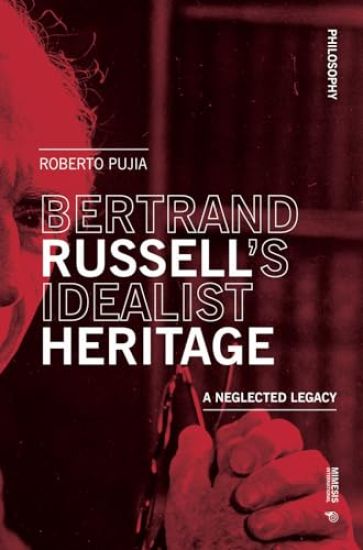
Bertrand Russell's Idealist Heritage
Bertrand Russell's research on logic is believed, alongside Wittgenstein's andMoore's works, to have fuelled the linguistic turn that characterized much of twentieth-century philosophy. This process originated in the refutation of British idealismand monism, providing a new interpretation of empiricism. But while his debtto traditional British empiricism has been the subject of study (including by Russellhimself) and extensively investigated, the assumption that the British neo-idealistlegacy was merely a polemical target of Russell and Moore's realist pluralism hashindered a proper assessment of its influence - which, on the contrary, proves tobe of theoretical significance. This essay attempts a documentary reconstruction- in part relying on the Bertrand Russell Archives - to better understand Russell'srelationship with the thought of F. H. Bradley and, indirectly but consequently, withthe English idealist tradition.
Bertrand Russell's Philosophy of Language

Bertrand Russell's Philosophy of Language

R. Clack

Kluwer Academic Publishers
1972
nidottu
RUSSELL AND THE LINGUISTIC PHILOSOPHY It is generally acknowledged that Bertrand Russell played a vital role in the so-called "revolution" that has taken place in twentieth century Anglo-American philosophy, the revolution that has led many philo­ sophers virtually to equate philosophy with some variety - or varieties - of linguistic analysis. His contributions to this revolution were two­ fold: (I) together with G. E. Moore he led the successful revolt against the neo-Hegelianism of Idealists such as Bradley and McTaggert; (2) again with Moore he provided much of the impetus for a somewhat revolutionary way of doing philosophy. (I) and (2) are, of course, close­ ly related, since the new way of philosophizing could be said to consti­ tute, in large part, the revolt against Idealism. Be this as it may, how­ ever, the important fact for present consideration is that Russell was a major influence in turning Anglo-American philosophy in the direction it has subsequently taken - toward what may be termed, quite general­ ly, the "linguistic philosophy. " Unfortunately, though his importance as a precursor of the linguistic philosophy is well-known, the precise sense in which Russell himself can be considered a "philosopher of language" has not, to the present time, been sufficiently clarified. Useful beginnings have been made toward an investigation of this question, but they have been, withal, only begin­ nings, and nothing like an adequate picture of Russell's overall philoso­ phy of language is presently available.
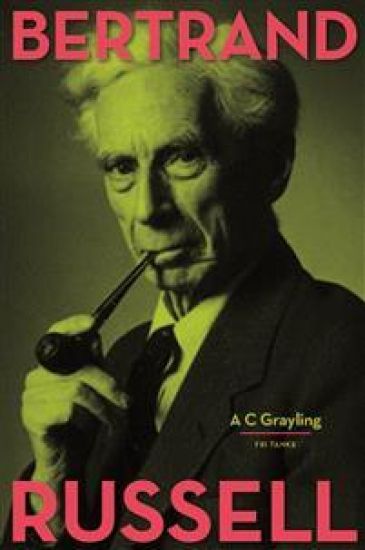
Bertrand Russell

Bertrand Russell

A. C. Grayling

Fri Tanke Förlag
2015
sidottu
Bertrand Russell (1872-1970) är en av 1900-talets viktigaste och mest berömda filosofer. I detta porträtt av Russells liv och verk, presenterar A C Grayling både Russells tekniska bidrag till förnuft och filosofi och hans vidspännande åsikter om utbildning, politik, krig och sexualmoral. Russell anses vara en tongivande tänkare inom logik, kunskapsteori och religionskritik. Han spelade en viktig roll i den revolutionerande förändring i sociala värderingar som svepte över världen under 1900-talet. Denna bok ger en bred översiktsbild av Russells största insatser inom modernt sekulärt tänkande.
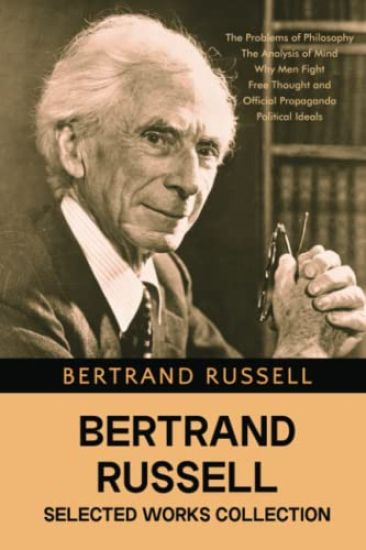
Bertrand Russell Selected Works Collection

Bertrand Russell Selected Works Collection

Bertrand Russell

Classy Publishing
2023
nidottu
Five Books in One This collection combines five of Bertrand Russell's most recognized works into one convenient volume. Included in this book: - The Problems of Philosophy - The Analysis of Mind - Why Men Fight - Free Thought and Official Propaganda - Political Ideals In The Problems of Philosophy, Bertrand Russell attempts to create a brief and accessible guide to the problems of philosophy. He introduces philosophy as a repeating series of (failed) attempts to answer the same questions: Can we prove that there is an external world? Can we prove cause and effect? Can we validate any of our generalizations? Can we objectively justify morality? He asserts that philosophy cannot answer any of these questions and that any value of philosophy must lie elsewhere than in offering proofs to these questions. Focusing on problems he believes will provoke positive and constructive discussion, Russell concentrates on knowledge rather than metaphysics: If it is uncertain that external objects exist, how can we then have knowledge of them but by probability. There is no reason to doubt the existence of external objects simply because of sense data. In The Analysis of Mind, one of his most influential and exciting books, Russell presents an intriguing reconciliation of the materialism of psychology with the antimaterialism of physics. Bertrand Russell unfolds his ideas on consciousness, instinct and habit, desire and feeling, introspection, perception, sensations and images, memory, words and meaning, belief, and characteristics of mental phenomenon. Throughout, he explores the mystery of the mind, and proposes that there exists a fundamental material of which both mind and matter exist. "The stuff of which the world of our experience is composed is, in my belief, neither mind nor matter, but something more primitive than either." Why Men Fight, written in response to the devastation of World War I, Why Men Fight lays out Bertrand Russell's ideas on war, pacifism, reason, impulse, and personal liberty. Russell argues that when individuals live passionately, they will have no desire for war or killing. Conversely, excessive restraint or reason causes us to live unnaturally and with hostility toward those who are unlike ourselves. In this book Russell talks about the reasons for wars. He talks about institutions that shape the life of an individual such as schools, state, marriage, churches, etc. and how they contribute to wars. And he concludes how to change the state of affairs so that wars can be prevented. Free Thought and Official Propaganda is a speech delivered in 1922 by Bertrand Russell on the importance of unrestricted freedom of expression in society, and the problem of the state and political class interfering in this through control of education, fines, economic leverage, and distortion of evidence. Political Ideals was written during the upheaval of World War I. It is, in many ways, a statement of Russell's beliefs, a declaration of the ideas that influenced his thinking on the major events of the 20th century. In this sense, it is essential reading for every student of this great philosopher. Bertrand Arthur William Russell was a British mathematician, philosopher, logician, and public intellectual. He had a considerable influence on mathematics, logic, set theory, linguistics, artificial intelligence, cognitive science, computer science and various areas of analytic philosophy, especially philosophy of mathematics, philosophy of language, epistemology, and metaphysics. He was awarded the Nobel Prize in Literature in 1950 "in recognition of his varied and significant writings in which he champions humanitarian ideals and freedom of thought."
Ein Schütze an Bord der "Yankee" aus dem Tagebuch von Nummer fünf der After Port Gun (Russell Doubleday)
Ein Sch tze an Bord der "Yankee" aus dem Tagebuch von Nummer f nf der After Port Gun (Russell Doubleday): Das Garn der Kreuzfahrt und der K mpfe der Marinereserven im Spanisch-Amerikanischen Krieg, wurde urspr nglich vor Jahrzehnten ver ffentlicht und war f r die Leser nicht in gedruckter Form? Wir haben dies ins Deutsche bersetzt, damit es die gegenw rtigen und zuk nftigen Generationen lesen und bewahren k nnen. Bei Writat liegt uns die Bewahrung des literarischen Erbes der Vergangenheit am Herzen. Tauchen Sie ein in unsere kuratierte Sammlung und tauchen Sie ein in die fesselnde Welt der klassischen englischen Literatur, jetzt elegant pr sentiert in modernen deutschen bersetzungen., wurde urspr nglich vor Jahrzehnten ver ffentlicht und war f r die Leser nicht in gedruckter Form? Wir haben dies ins Deutsche bersetzt, damit es die gegenw rtigen und zuk nftigen Generationen lesen und bewahren k nnen. Bei Writat liegt uns die Bewahrung des literarischen Erbes der Vergangenheit am Herzen. Tauchen Sie ein in unsere kuratierte Sammlung und tauchen Sie ein in die fesselnde Welt der klassischen englischen Literatur, jetzt elegant pr sentiert in modernen deutschen bersetzungen.
Collected Works of Bertrand Russell.
Discover the intellectual wealth of Bertrand Russell in the 'Collected Works of Bertrand Russell, ' an expansive compilation that encapsulates the prolific and influential contributions of this eminent philosopher, mathematician, and social critic. This monumental collection spans the full spectrum of Russell's diverse output, including his groundbreaking philosophical treatises, thought-provoking social and political commentaries, illuminating essays, and insightful works on mathematics. Within these pages, you'll find enduring classics such as 'The Problems of Philosophy, ' which explores fundamental questions of knowledge and existence. Betrand offers a sweeping overview of philosophical thought through the ages, and also delves into the dynamics of authority and influence in society. 'Collected Works of Bertrand Russell' is an indispensable resource for anyone eager to engage with the enduring wisdom of this remarkable thinker.
Bertrand Russell’s Philosophy of Language
RUSSELL AND THE LINGUISTIC PHILOSOPHY I t is generally acknowledged that Bertrand Russell played a vital role in the so-called "revolution" that has taken place in twentieth century Anglo-American philosophy, the revolution that has led many philo­ sophers virtually to equate philosophy with some variety - or varieties - of linguistic analysis. His contributions to this revolution were two­ fold: (I) together with G. E. Moore he led the successful revolt against the neo-Hegelianism of Idealists such as Bradley and McTaggert; (2) again with Moore he provided much of the impetus for a somewhat revolutionary way of doing philosophy. (I) and (2) are, of course, close­ ly related, since the new way of philosophizing could be said to consti­ tute, in large part, the revolt against Idealism. Be this as it may, how­ ever, the important fact for present consideration is that Russell was a major influence in turning Anglo-American philosophy in the direction it has subsequently taken - toward what may be termed, quite general­ ly, the "linguistic philosophy. " Unfortunately, though his importance as a precursor of the linguistic philosophy is well-known, the precise sense in which Russell himself can be considered a "philosopher of language" has not, to the present time, been sufficiently clarified. Useful beginnings have been made toward an investigation of this question, but they have been, withal, only begin­ nings, and nothing like an adequate picture of Russell's overall philoso­ phy of language is presently available.
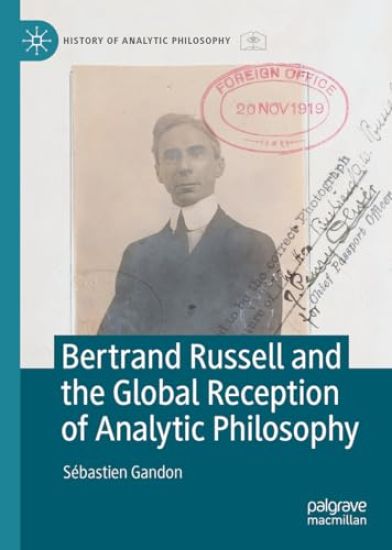
Bertrand Russell and the Global Reception of Analytic Philosophy

Bertrand Russell and the Global Reception of Analytic Philosophy

Sébastien Gandon

Springer Nature Switzerland AG
2026
sidottu
This book provides the first exploration of a new field of study, that of the global reception of analytic philosophy. Its aim is to understand how Russell's program of logical analysis of philosophy was received, interpreted and transformed during the interwar period in different geographical and cultural areas. Russell's idea was that the new mathematical logic could provide definitive solutions to traditional philosophical problems. But which problems and from which traditions? Based on three case studies (the works of Norbert Wiener, Jean Nicod and Feng Youlan), this book shows how Russellian logical analysis becomes transformed through contact with three philosophical configurations (pragmatism in the US, Bergsonism in France and new Confucianism in China). The book describes in detail the changes introduced into Russellian logical analysis by authors who applied it to philosophical problems and traditions that Russell was unfamiliar with. The logical method is seen to adjust to the culturally determined material it encounters. That there is this adjustment raises the delicate and intriguing question of whether logical analysis (and/or logic) depends on variable cultural traits. This issue is addressed in the book's general conclusion. Bertrand Russell and the Global Reception of Analytic Philosophy is essential reading for all scholars, researchers and advanced students of the history of analytic philosophy and especially the reception of analytic philosophy in different countries and cultures.
Bertrand Russell and Albert Einstein - Builders of Peace
Bertrand Russell and Albert Einstein had very different cultural backgrounds and personalities. At the same time, they were united in their tenacious battle for peace; it began with the Great War and culminated in their famous 1955 Manifesto. Through various kinds of pacifism they sought to encapsulate the dilemmas and problems that derived from the changed political conditions of his time: the beginning of the Great War, the creation and failure of the League of Nations, the affirmation of totalitarian regimes, the outbreak of the Second World War, the origin of the atomic age and the escalation of the Cold War, the establishment of the UN with its political and institutional weakness, and the need for a world government in the form of a world federation. Their reflections on the subject of peace led them into dialogue with some of the greatest figures of their time: R. Rolland, Th. Woodrow Wilson, V. I. Lenin, F. D. Roosevelt, J. F. Kennedy, N. Khrushchev, F. Castro, S. Freud, L. Szil rd and E. Reves. Claudio Giulio Anta earned a doctorate in History of Political Thought and Political Institutions from the University of Turin.
Bertrand Russell: La Connaissance Humaine: Sa Portee Et Ses Limites
L'empirisme est-il tenable? Russell, dans History of Western Philosophy, salue en Hume celui qui a pousse l'empirisme si loin qu'il en a decouvert la fragilite, mais il s'inquiete de ce qu'il ait par la ruine la croyance rationnelle, ouvrant la voie a l'irrationalisme. L'analyse logique confirme que d'un nombre fini d'observations on ne peut inferer ni la verite, ni meme la probabilite d'aucune proposition generale. La science ne serait-elle que balivernes? La tentation est grande de recourir, contre un scepticisme sans doute insincere mais irrefutable, a l'un ou l'autre des remedes qui pourraient s'averer pire que le mal: un coherentisme ou un decisionnisme, qui menacent la theorie de la verite correspondance. S'appuyant sur l'atomisme logique, ainsi que sur les acquis de Signification et verite, Bertrand Russell entreprend, dans Human Knowledge, de sauver la croyance en la connaissance en la debarassant de ce qu'elle peut avoir d'illusoire. Une etude precise des theories de la probabilite mathematique lui permet d'etablie que toute recherche visant a fonder le principe d'induction par ce biais est une impasse; on peut pourtant relever le defi humien en explicitant, grace a l'analyse, les postulats de l'inference non demonstrative. On renonce donc a un empirisme total, au profit d'un empirisme partiel.
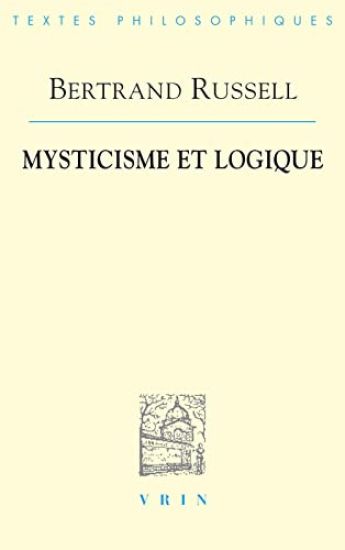
Bertrand Russell: Mysticisme Et Logique

Bertrand Russell: Mysticisme Et Logique

Vrin

Librarie Philosophique J. Vrin
2007
nidottu
Mysticisme et logique - dont on presente ici la premiere traduction francaise integrale - constitue un ouvrage crucial dans l'oeuvre de Bertrand Russell. Il comporte des textes techniques devenus classiques sur la methode scientifique en philosophie - a l'origine de ce qu'on a appele la philosophie analytique -, les constituants de la matiere, la relation des sense-data a la physique, la critique de la notion de cause, la distinction entre accointance et connaissance par description. Mais on y trouve egalement des articles plus populaires sur le mysticisme, les choix de vie de l'homme libre, les vertus de l'education scientifique et le role des mathematiques. Il ne faut point y voir futile eclectisme, mais bien plutot l'expression de l'unite profonde et de l'ampleur rarement egalee d'une pensee - comme d'un engagement - d'un des plus grands scientifiques et philosophes du vingtieme siecle.
Brenda Russell

Brenda Russell

VDM Publishing House
2010
nidottu
Observera att förlaget som ger ut denna produkt baserar innehållet i sina produkter på fria källor som Wikipedia. Boken är med stor sannolikhet endast ett utdrag ur dessa informationskällor, alltså inte en vanlig bok i den bemärkelsen.