Kirjojen hintavertailu. Mukana 11 342 296 kirjaa ja 12 kauppaa.

Kirjahaku

Etsi kirjoja tekijän nimen, kirjan nimen tai ISBN:n perusteella.

1000 tulosta hakusanalla Richard Testrake

Richard Sibbes God's Spreading Goodness
English Puritans of the Stuart era were divided by a number of questions. The greatest of these asked what constitutes salvation and restoration from sin. All agreed that it was by grace through faith. But few could agree on how to define sin, grace, and faith. Richard Sibbes consciously followed Augustine, Martin Luther, and John Calvin in defining sin as self-love and grace as God's redemptive love in Christ. His theology centered on the love of God expressed through Christ and offered by the Spirit; and faith as a response to that love. This produced a winsome and transforming theology of union with Christ and communion with God. In this he was a counterweight to the spread of moralistic Puritan theologies in his day.
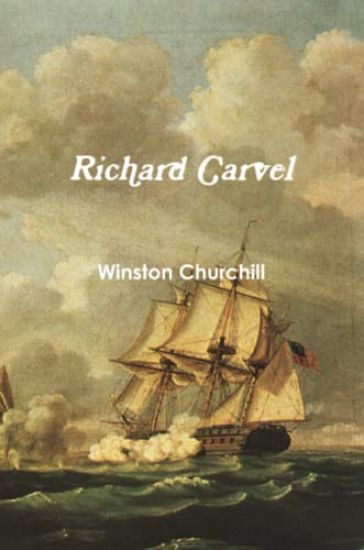
Richard Carvel

Richard Carvel

Winston Churchill

Lulu.com
2012
pokkari
The first volume concerns Richard Carvel's boyhood and schooldays. Orphaned at an early age, Richard is raised by his grandfather, Lionel Carvel of Carvel Hall, a wealthy loyalist respected by all sections of the community. Richard describes their way of life, his growing love for his neighbor, Dorothy Manners, and the hostility of his uncle, Grafton Carvel. Richard witnesses a demonstration against a tax collector in Annapolis as a result of the Stamp Act 1765 and grieves his grandfather by his adoption of revolutionary political views.
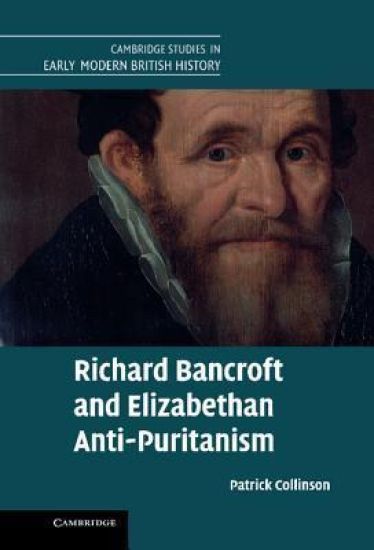
Richard Bancroft and Elizabethan Anti-Puritanism

Richard Bancroft and Elizabethan Anti-Puritanism

Patrick Collinson

Cambridge University Press
2013
sidottu
This major new study is an exploration of the Elizabethan Puritan movement through the eyes of its most determined and relentless opponent, Richard Bancroft, later Archbishop of Canterbury. It analyses his obsession with the perceived threat to the stability of the church and state presented by the advocates of radical presbyterian reform. The book forensically examines Bancroft's polemical tracts and archive of documents and letters, casting important new light on religious politics and culture. Focussing on the ways in which anti-Puritanism interacted with Puritanism, it also illuminates the process by which religious identities were forged in the early modern era. The final book of Patrick Collinson, the pre-eminent historian of sixteenth-century England, this is the culmination of a lifetime of seminal work on the English Reformation and its ramifications.
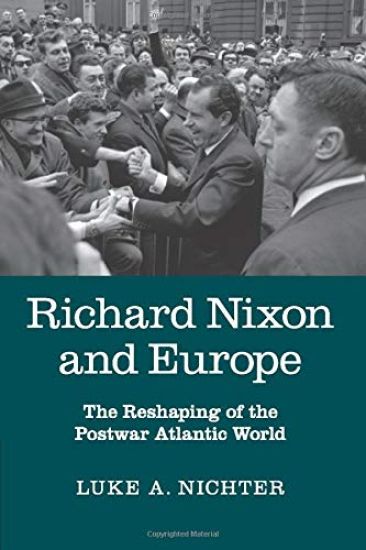
Richard Nixon and Europe

Richard Nixon and Europe

Luke A. Nichter

Cambridge University Press
2015
sidottu
The US-European relationship remains the closest and most important alliance in the world. Since 1945, successive American presidents each put their own touches on transatlantic relations, but the literature has reached only into the presidency of Lyndon Johnson (1963–9). This first study of transatlantic relations during the era of Richard Nixon shows a complex, turbulent period during which the postwar period came to an end, and the modern era came to be on both sides of the Atlantic in terms of political, economic, and military relations.
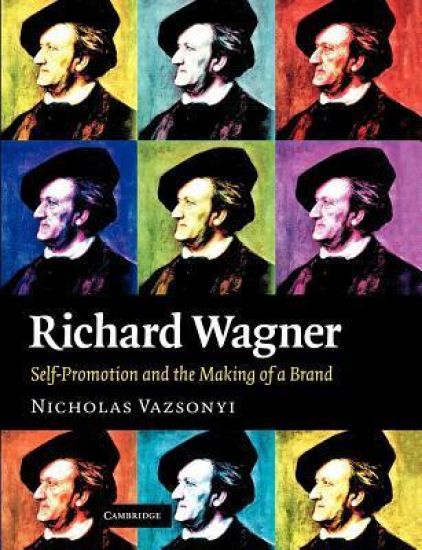
Richard Wagner

Richard Wagner

Vazsonyi Nicholas

Cambridge University Press
2012
pokkari
All modern artists have had to market themselves in some way. Richard Wagner may just have done it better than anyone else. In a self-promotional effort that began around 1840 in Paris, and lasted for the remainder of his career, Wagner claimed convincingly that he was the most German composer ever and the true successor of Beethoven. More significantly, he was an opera composer who declared that he was not composing operas. Instead, during the 1850s, he mapped out a new direction, conceiving of works that would break with tradition and be literally 'brand new'. This is the first study to examine the innovative ways in which Wagner made himself a celebrity, promoting himself using every means available: autobiography, journal articles, short stories, newspaper announcements, letters, even his operas themselves. Vazsonyi reveals how Wagner created a niche for his works in the crowded opera market that continues to be unique.
Richard Porson

Richard Porson

M. L. Clarke

Cambridge University Press
2014
pokkari
Originally published in 1937, this book contains a biography of Richard Porson, the classical scholar who developed Porson's Law and whose handwriting formed the basis of the Porson typeface. Clarke details Porson's life and includes samples of Porson's handwriting and personal letters. This book will be of value to anyone with an interest in Porson's life and work.
Richard Nixon and Europe

Richard Nixon and Europe

Luke A. Nichter

Cambridge University Press
2017
pokkari
The US-European relationship remains the closest and most important alliance in the world. Since 1945, successive American presidents each put their own touches on transatlantic relations, but the literature has reached only into the presidency of Lyndon Johnson (1963–9). This first study of transatlantic relations during the era of Richard Nixon shows a complex, turbulent period during which the postwar period came to an end, and the modern era came to be on both sides of the Atlantic in terms of political, economic, and military relations.
Richard Bancroft and Elizabethan Anti-Puritanism

Richard Bancroft and Elizabethan Anti-Puritanism

Patrick Collinson

Cambridge University Press
2016
pokkari
This major new study is an exploration of the Elizabethan Puritan movement through the eyes of its most determined and relentless opponent, Richard Bancroft, later Archbishop of Canterbury. It analyses his obsession with the perceived threat to the stability of the church and state presented by the advocates of radical presbyterian reform. The book forensically examines Bancroft's polemical tracts and archive of documents and letters, casting important new light on religious politics and culture. Focussing on the ways in which anti-Puritanism interacted with Puritanism, it also illuminates the process by which religious identities were forged in the early modern era. The final book of Patrick Collinson, the pre-eminent historian of sixteenth-century England, this is the culmination of a lifetime of seminal work on the English Reformation and its ramifications.
Richard II

Richard II

Anthony Steel; George Macaulay Trevelyan

Cambridge University Press
2013
pokkari
Originally published in 1941, this monograph by historian Anthony Steel assesses the character and policies of Richard II, who reigned in a time of tremendous literary and artistic change which was also underpinned by great political and religious uncertainty. Steel puts the monarch in his context as a medieval ruler during an era when the structures of the medieval period were beginning to fracture, particularly the strict hierarchy which separated peasant from lord. With an introduction by distinguished historian G. M. Trevelyan, this book will be of value to anyone with an interest in medieval history.
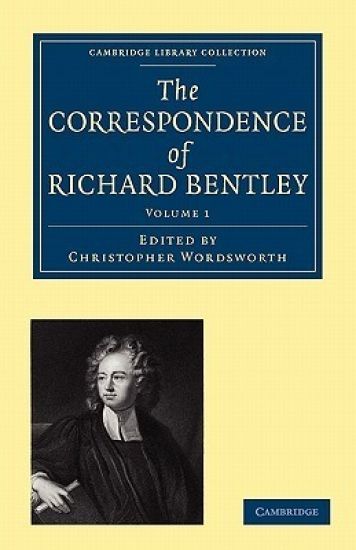
The Correspondence of Richard Bentley

The Correspondence of Richard Bentley

Richard Bentley

Cambridge University Press
2009
pokkari
The celebrated classicist Richard Bentley (1662–1742) was elected Master of Trinity College, Cambridge in 1700. He corresponded with many respected thinkers and scholars, based in Paris, Naples, Berlin, Amsterdam, Rotterdam, Copenhagen, Hamburg and elsewhere around the world. These two volumes of his correspondence, first published in 1842 and now reissued, provide fascinating insights into Bentley's thought and the intellectual world he inhabited. Volume 1 contains letters, mostly in Latin, written and received between 1689 and 1712. They appear in chronological order, and shed light on relationships between scholars of different generations and nationalities, and often opposing religious, moral, political, and literary opinions. Exceptionally noteworthy in this volume is Bentley's correspondence with Archbishop Wake and the Earl of Oxford, as well as four letters from Sir Isaac Newton.
The Correspondence of Richard Bentley

The Correspondence of Richard Bentley

Richard Bentley

Cambridge University Press
2009
pokkari
The celebrated classicist Richard Bentley (1662–1742) was elected Master of Trinity College, Cambridge in 1700. He corresponded with many respected thinkers and scholars, based in Paris, Naples, Berlin, Amsterdam, Rotterdam, Copenhagen, Hamburg and elsewhere around the world. These two volumes of his correspondence, first published in 1842 and now reissued, provide fascinating insights into Bentley's thought and the intellectual world he inhabited. Volume 2 contains letters, mostly in Latin, written and received by Bentley between 1712 and 1740, two years before his death at the age of 81. They appear in chronological order, and shed light on relationships between scholars of different generations and nationalities, and often opposing religious, moral, political, and literary opinions. Exceptionally noteworthy in this volume is Bentley's correspondence relating to his controversial tenure as Master of Trinity College.