Kirjojen hintavertailu. Mukana 11 717 486 kirjaa ja 12 kauppaa.

Kirjahaku

Etsi kirjoja tekijän nimen, kirjan nimen tai ISBN:n perusteella.

1000 tulosta hakusanalla Robert Simpson

Robert Shaw

Robert Shaw

Christopher Shaw Myers

CITADEL PRESS INC.,U.S.
2025
sidottu
Just in time for the 50th anniversary of Steven Spielberg's Jaws, an intimate and richly-told portrait of the iconic actor and writer Robert Shaw, from his portrayal of the legendary shark hunter Captain Quint and beyond, written lovingly but honestly by his nephew. "Go for the Jaws, stay for the Shaws." --Nat Segaloff, author of The Exorcist Legacy Robert Shaw unforgettably commanded attention as the weathered seaman Captain Quint in the blockbuster sensation, Jaws. But what came before and after that landmark film is as dramatic as the hunt for the great white shark itself. Capturing the many facets of the vibrant, generous, and sometimes polarizing man is his nephew, Christopher, who explores the forces that shaped a dynamic personality--including Robert's indomitable mother, his deeply troubled father, and his activist sister, Joanna, with whom Robert shared an unbreakable bond. Out of the traumatic events of their childhood in the Orkney Islands and Cornwall, Mrs. Shaw pushed her children to pursue their dreams. For Robert, that dream was acting and writing. Despite a storied career on the British and American stage--as both performer and playwright--and a string of hit films including From Russia with Love, A Man for All Seasons, The Sting, and The Taking of Pelham One Two Three, international celebrity eluded Robert . . . until he was summoned to star in "a little horror film" called Jaws. What happened on-screen was unforgettable. What happened off-screen was chaos. Now Christopher Shaw Myers reveals the true story of the making of the classic. Jaws would become both an artistic success and a worldwide triumph for Robert Shaw. Tragically, for a man shadowed by his father's demons, it would also signal the beginning of the end. Drawing on family recollections, personal letters, scrapbooks, recordings, extensive interviews, and a lifetime of his own memories, Christopher paints a unique, intimate, and honest portrait of a man he was proud to call his uncle.
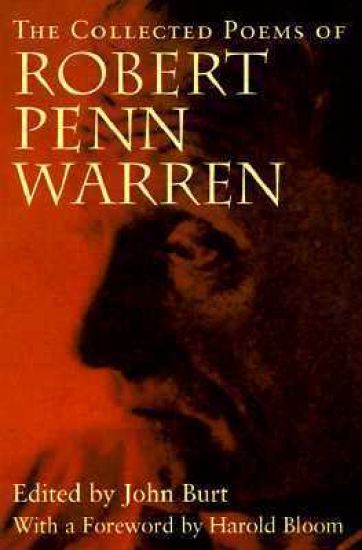
The Collected Poems of Robert Penn Warren

The Collected Poems of Robert Penn Warren

Robert Penn Warren

Louisiana State University Press
1998
sidottu
Winner of the C. Hugh Holman AwardA central figure in twentieth-century American literature, Robert Penn Warren (1905- 1989) was appointed by the Library of Congress as the first Poet Laureate of the United States in 1985. Although better known for his fiction, especially his novel All the King's Men, it is mainly his poetry- spanning sixty years, fifteen volumes of verse, and a wide range of styles- that reveals Warren to be one of America's foremost men of letters.In this indispensable volume, John Burt, Warren's literary executor, has assembled every poem Warren ever published (with the exception of Brother to Dragons), including the many poems he published in The Fugitive and other magazines, as well as those that appeared in his small press works and broadsides. Burt has also exhaustively collated all of the published versions of Warren's poems- which, in some cases, appeared as many as six different times with substantive revisions in every line- as well as his typescripts and proofs. And since Warren never seemed to reread any of his books without a pencil in his hand, Burt has referred to Warren's personal library copies. This comprehensive edition also contains textual notes, lists of emendations, and explanatory notes.Warren was born and raised in Guthrie, Kentucky, where southern agrarian values and a predilection for storytelling were ingrained in him as a young boy. By 1925, when he graduated from Vanderbilt University, he was already the most promising of that exceptional set of poets and intellectuals known as the Fugitives. Warren devoted most of the 1940s and 1950s to writing prose and literary criticism, but from the late 1950s he composed primarily poetry, with each successive volume of verse that he penned demonstrating his rigorous and growing commitment to that genre. The mature visionary power and technical virtuosity of his work in the 1970s and early 1980s emanated from his strongly held belief that ""only insofar as the work [of art] establishes and expresses a self can it engage us."" Many of Warren's later poems, which he deemed ""some of my best,"" rejoice in the possibilities of old age and the poet's ability for ""continually expanding in a vital process of definition, affirmation, revision, and growth, a process that is the image, we may say, of the life process.
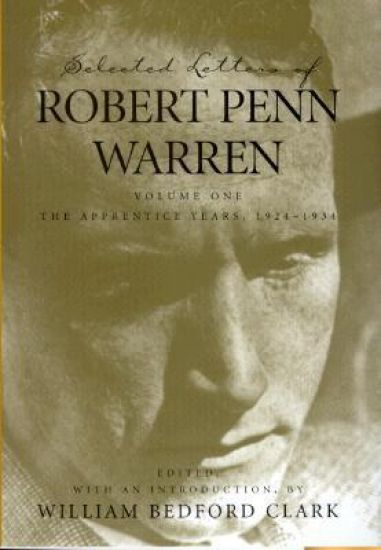
Selected Letters of Robert Penn Warren

Selected Letters of Robert Penn Warren

Robert Penn Warren

Louisiana State University Press
2000
sidottu
In America's twentieth century, there is no man of letters more versatile, distinguished, and influential than the poet, novelist, editor, critic, social commentator, and teacher Robert Penn Warren (1905-1989). The most intimate of Warren's ""letters,"" his personal correspondence, now join his published canon under William Bedford Clark's expert supervision. Volume One, The Apprentice Years, forms a kind of epistolary coming-of-age novel, taking Warren from the awkwardness of emerging genius during his Fugitive student years at Vanderbilt to the brink of producing great work in a newly appointed post at Louisiana State University.Warren's earliest correspondence limns a friendship in earnest with Allen Tate, a crushing heartbreak, and an attempted suicide. Eventually the author regroups, graduates with honors, and entertains a bad-boy phase at Berkeley and Yale. As he studies at Oxford, writes his first book, and decides not to complete his doctorate, Warren exhibits a deepening maturity and devotion to his literary craft, expressing ever more complex ideas about poetry and fiction. His nagging financial difficulties, growing commitment to the -Agrarian movement, controversial essay for I'll Take My Stand, marriage to Cinina Brescia, and professional uncertainty as one of the first to combine writing with college teaching lead him into the 1930s, when the bright prospect of tenure and an opportunity to remake the Southwest Review arises.Warren's letters, all but one previously unpublished, fascinate in their revelations, such as the author's surprisingly tangled relationship with his parents, his delicate health, and the gossip about major literary figures, including Tate, John Crowe Ransom, Donald Davidson, and Laura Riding. But beyond rich biographical detail, they offer a veritable self-portrait of the fledgling artist: ""When a person writes a letter it is nearly as much one to himself as to the person who takes it from the postbox."" The self-conscious, precocious, yet sensitive young Warren modulates to the sardonic, irreverent aesthete/wit ""Red"" and finally acquires a voice distinctively ""Warrenesque,"" confident and sophisticated. Thus the imaginative as well as literal aspects of these years in Warren's life are conveyed, his writing persona and historical person always an intriguing comparison.Highly accessible, unfailingly interesting, and scrupulously annotated, The Apprentice Years will satisfy scholar and lay reader alike, providing a unique window on what it means to ""profess"" the writer's calling in an era of rapid change. When complete, the Selected Letters of Robert Penn Warren will prove an indispensable addition to the author's literary oeuvre.
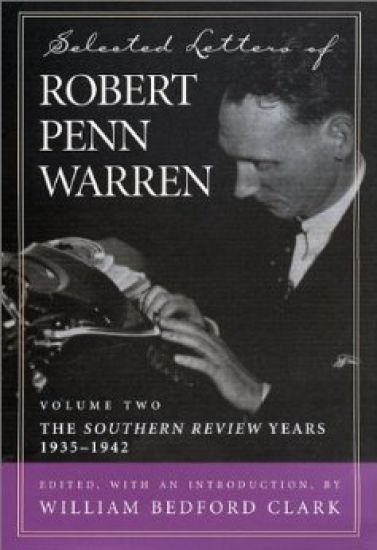
Selected Letters of Robert Penn Warren

Selected Letters of Robert Penn Warren

Robert Penn Warren

Louisiana State University Press
2001
sidottu
At the beginning of 1935, Robert Penn Warren was destined for arguably the most crucial period in his distinguished career. Having escaped the brink of unemployment the previous fall to join fellow Vanderbilt alumnus and Rhodes scholar Cleanth Brooks on the English faculty at Louisiana State University (which was enjoying a boom thanks to the favouritism shown by the Long regime), the young author was poised to establish himself, against the backdrop of the Great Depression and America's belated entry into World War II, as a compelling new voice, perhaps the most versatile writer of his generation.Continuing where Volume One of the Selected Letters left off, the missives from his Baton Rouge years show Warren exploring and testing the boundaries of his genius on a number of simultaneous fronts. Editing the Southern Review with Brooks was the center of his working life, and it offered him an almost immediate springboard to prominence on both sides of the Atlantic. Warren was determined to establish and maintain the stature of the quarterly even as he systematically nurtured the talent of a younger generation of writers that included Eudora Welty, Randall Jarrell, Peter Taylor, and John Berryman. He attended to his own writing as well and not only emerged as a celebrated poet but also published his first major fiction. During the same period, he and Brooks drew directly upon their classroom challenges to design and launch a series of textbooks that gradually transformed the teaching of poetry and fiction in American colleges and universities.What any number of commentators have called Warren's ""protean"" energy is in full evidence in these letters. The range and sheer diversity of his correspondence, whether with old friends, established literary figures, hopeful young writers, his beloved wife Cinina, recalcitrant academic administrators, or sometimes troublesome publishers, reveal an extraordinarily keen mind and heightened imagination operating in concert with optimum efficiency. Scrupulously edited and thoroughly annotated by William Bedford Clark with an eye toward the needs of the lay reader as well as the specialist, Warren's letters have the immediacy of skillful autobiography.
Selected Poems of Robert Penn Warren

Selected Poems of Robert Penn Warren

Robert Penn Warren

Louisiana State University Press
2001
nidottu
John Burt's Selected Poems of Robert Penn Warren is more broadly representative of Warren's poetry than any previous selected gathering. More than two hundred poems from every phase grace the volume, a vehicle ideal for sampling- or soaking in- the finest of Warren's rich output. With each poem, Burt has carefully located the version that constitutes Warren's final revision. His introduction gives an eloquent overview of the poet's career, touching on every published book of verse and highlighting significant lines. A ""selected"" collection in the truest sense, featuring several previously unpublished pieces, this treasure is at once new and familiar. At the heart of Warren's poetry is a celebration of man's intellect and imagination, his integral place within nature, and his relationship to time and the past; ultimately, joy coexists with the knowledge of life's many mysteries, including its tragedies. Selected Poems, a generous survey and a convenient compendium, is the shining portal to this greatly gifted poet.
Selected Letters of Robert Penn Warren

Selected Letters of Robert Penn Warren

Robert Penn Warren

Louisiana State University Press
2006
sidottu
Selected Letters of Robert Penn Warren, Volume three, provides an indispensable glimpse of Warren the writer and the man, covering a crucial decade in his life. Edited by Randy Hendricks and James A. Perkins, and introduced by William Bedford Clark, this collection of largely previously unpublished letters and newly discovered material documents Warren's time at the University of Minnesota, his writing and publication of the Pulitzer Prize-winning novel All the King's Men, his appointment as Consultant in Poetry at the Library of Congress, and his divorce from Emma ""Cinina"" Brescia and subsequent marriage to the writer Eleanor Clark.The period 1943-1952 also saw the publication of ""A Poem of Pure Imagination""; World Enough and Time; The Ballad of Billie Potts; At Heaven's Gate; and Selected Poems, 1923-1943. Warren's letters shed new light on those works and on his close relationship with his editors Lambert Davis and Albert Erskine. Included too is correspondence concerning Warren's collaboration with Robert Rossen on the movie production of All the King's Men, which received the Academy Award for best picture in 1949.The list of friends and colleagues with whom Warren communicated reads like a roll call of major twentieth-century literary figures and clearly shows his ever-widening influence on the world of letters. Spanning a remarkable range in both style and tone, the letters disclose Warren's attitudes toward his work as a teacher and his thoughts on the events of World War II, the Korean War, and the political conflicts in postwar Europe.Thoroughly annotated and scrupulously researched, Volume Three captures Warren in an extraordinary phase in his life and career, reaching his maturity and making many commitments at once yet pursuing them all with a seemingly boundless energy.
Selected Letters of Robert Penn Warren

Selected Letters of Robert Penn Warren

Robert Penn Warren

Louisiana State University Press
2008
sidottu
Volume four of the Selected Letters of Robert Penn Warren covers a crucial time of personal and professional rejuvenation in Warren's life. During the fifteen-year period spanned by this correspondence, he completed Brother to Dragons; Segregation: The Inner Conflict in the South; and Who Speaks for the Negro? As these titles suggest, these years were marked by Warren's immersion in American history and his maturing interest in race relations. They also saw his return to lyric poetry, after a ten-year hiatus, with the publication of the Pulitzer Prize-winning collection Promises. Along with seeing the completion of some of his most successful work, this period was a time of momentous change in Warren's life, including his move to Yale University; his marriage to his second wife, Eleanor; and the birth of his two children. As a chronicle of Warren's thoughts on his family, his work, his friends, the state of literary studies, and the culture at large, these letters are invaluable. Unlike many writers, Warren rarely drafted his correspondence with future readers and scholars in mind; he typically saved his prepared statements about the human condition and the state of the world for his poetry, fiction, and social commentary. His letters offer a candid and personal glimpse of Warren's relationships as well as his personal views on literature, politics, and social trends. Their recipients include Ralph Ellison, Allen Tate, Saul Bellow, Robert Lowell, Eudora Welty, and Louis Rubin, as well as Warren's editors, reviewers, collaborators, and other friends. Providing an unusually vivid and personal account of Warren's rich and fully realised life, these missives are equally revealing of his thoughts on the state of contemporary American culture during this dynamic time in American history.
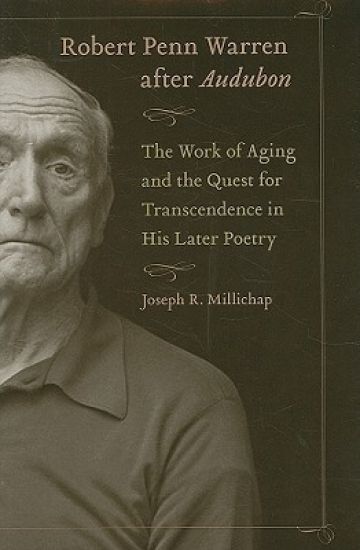
Robert Penn Warren after Audubon

Robert Penn Warren after Audubon

Joseph R. Millichap

Louisiana State University Press
2009
sidottu
Despite nearly universal critical acclaim for Robert Penn Warren's later poetry, much about this large body of work remains unexplored, especially the psychological sources of these poems' remarkable energy. In this groundbreaking work, Warren scholar Joseph R. Millichap takes advantage of current research on developmental psychology, gerontology, and end-of-life studies to offer provocative new readings of Warren's later poems, which he defines as those published after Audubon: A Vision (1969). In these often intricate poems, Millichap sees something like an autobiographical epic focused on the process of aging, the inevitability of death, and the possibility of transcendence. Thus Warren's later poetry reviews an individual life seen whole, contemplates mortality and dissolution, and aspires to the literary sublime.Millichap locates the beginning of Warren's late period in the extraordinary collection Or Else: Poem/Poems 1968-1974, basing his contention on the book's complex, indeed obsessive sequencing of new, previously published, and previously collected poems unified by themes of time, memory, age, and death. Millichap offers innovative readings of Or Else and Warren's five other late gatherings of poems - Can I See Arcturus from Where I Stand?: Poems 1975; Now and Then: Poems 1976-1978, winner of the Pulitzer Prize; Being Here: Poetry 1977-1980; Rumor Verified: Poems 1979-1980; and Altitudes and Extensions 1980-1984.Among the autobiographical elements Millichap brings into his careful readings are Warren's loneliness in these later years, especially after the deaths of family members and friends; his alternating feelings of personal satisfaction and emptiness toward his literary achievements; and his sense of the power, and at times the impotence, of memory. Millichap's analysis explores how Warren often returned to images and themes of his earlier poems, especially those involving youth and midlife, with the new perspective given by advancing age and time's passage. Millichap also relates Warren's work to that of other poets who have dealt profoundly with memory and age, including Robert Frost, T. S. Eliot, Thomas Hardy, and, at times, John Milton, William Wordsworth, and the whole English and American nineteenth-century Romantic tradition.An epilogue traces Warren's changing reputation as a poet from the publication of his last volume in 1985 through his death in 1989 and the centennial of his birth in 2005, concluding persuasively that the finest of all of Warren's literary efforts can be found in his later poetry, concerned as it is with the work of aging and the quest for transcendence.
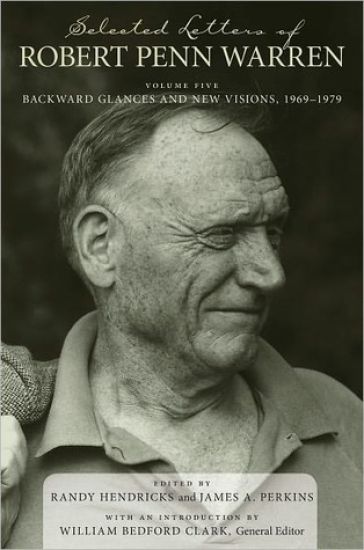
Selected Letters of Robert Penn Warren

Selected Letters of Robert Penn Warren

Robert Penn Warren

Louisiana State University Press
2011
sidottu
The years 1969 and 1979 bookend a volatile decade in American history. As an articulate witness to the era of the Vietnam War, Watergate, Jimmy Carter, and the national ""malaise,"" Robert Penn Warren produced a phenomenal body of work, securing his place in the canon of American poetry.Volume five of Selected Letters of Robert Penn Warren: Backward Glances and New Visions, 1969-1979 includes Warren's letters to friends, family, peers, editors, inquiring scholars, and critics - recording the details of his personal and professional life and illustrating his pivotal role in twentieth-century American literature.In these turbulent but fruitful years, Warren produced both Audubon: A Vision (1969) and the revised version of Brother to Dragons (1979). In between lay some of Warren's most searching work as poet, novelist, literary critic, and social commentator.During this era Warren's achievements included his highly experimental and complex Or Else - Poem/Poems (1974) and the Pulitzer Prize-winning Now and Then (1978). Before the end of the 1970s three more novels appeared concluding with his final book of fiction, A Place to Come To.This volume provides insight into Warren's inspiration during a remarkably productive era and will prove an essential resource on his life and work.
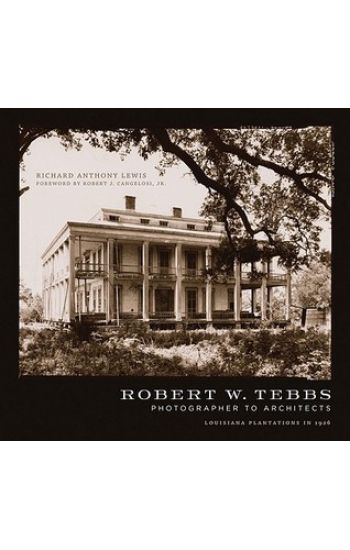
Robert W. Tebbs, Photographer to Architects

Robert W. Tebbs, Photographer to Architects

Richard Anthony Lewis; Robert J. Cangelosi Jr

Louisiana State University Press
2011
sidottu
One of the finest architectural photographers in America, Robert W. Tebbs produced the first photographic survey of Louisiana's plantations in 1926. From those images, now housed in the Louisiana State Museum, and not widely available until now, 119 plates showcasing fifty-two homes are featured here. Richard Anthony Lewis explores Tebbs's life and career, situating his work along the line of plantation imagery from nineteenth-century woodcuts and paintings to later twentieth-century photographs by John Clarence Laughlin, among others. Providing the family lineage and construction history of each home, Lewis discusses photographic techniques Tebbs used in his alternating panoramic and detail views. A precise documentarian, Tebbs also reveals a poetic sensibility in the plantation photos. His frequent emphasis on aspects of decay, neglect, incompleteness, and loss lends a wistful aura to many of the images -- an effect compounded by the fact that many of the homes no longer exist. This noticeable vacillation between objectivity and sentiment, Lewis shows, suggests unfamiliarity and even discomfort with the legacy of slavery. Poised on the brink of social and political reforms, Louisiana in the mid-1920s had made significant strides away from the slave-based agricultural economy that the plantation house often symbolized. Tebbs's Louisiana plantation photographs capture a literal and cultural past, reflecting a burgeoning national awareness of historic preservation and presenting plantations to us anew. Select plantations included: Ashland/Belle Helene, Avery Island, Belle Chasse, Belmont, Butler-Greenwood, L'Hermitage, Oak Alley, Parlange, René Beauregard House, Rosedown, Seven Oaks, Shadows-on-the-Teche, The Shades, and Waverly.
Selected Letters of Robert Penn Warren

Selected Letters of Robert Penn Warren

Robert Penn Warren

Louisiana State University Press
2013
sidottu
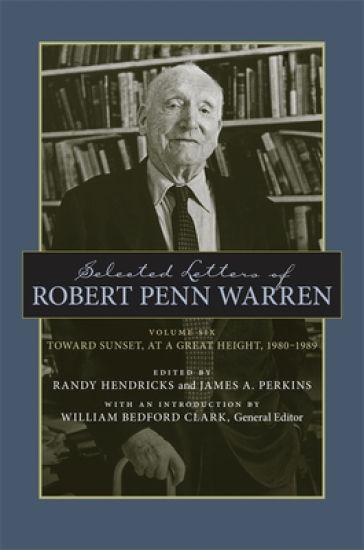
In the last decade of his life, Robert Penn Warren remained a vibrant force in American literature, producing new works of poetry and nonfiction while also dealing courageously with the gradual decline of his health and the diminishment of his poetic powers. Toward Sunset, at a Great Height, 1980-1989, the sixth and final volume of the author's selected letters, provides crucial documentation of this period, containing Warren's correspondence with friends, family, fellow writers, editors, critics, and the scholars studying his works.Warren published several volumes of poetry, including Being Here (1980), Rumor Verified (1981), and Chief Joseph of the Nez Perce (1983), and returned to nonfiction prose with Jefferson Davis Gets His Citizenship Back (1980) and the memoir Portrait of a Father (1988).His letters reveal that he tried to begin writing a novel but was unable to make substantial progress on it, and that from 1985 on he became increasingly dissatisfied with his new poems. Until his death at age eighty-four, however, Warren maintained an active correspondence filled with news about his writings and travels, accounts of the lives of his wife and children, and a stoic attitude about his own physical decline as well as a solicitousness regarding the health of others, such as his brother, Thomas, and sister, Mary. He communicated with rising young scholars and encouraged younger poets he admired.Toward Sunset, at a Great Height offers rich insights into the closing chapter of Robert Penn Warren's professional and personal life, making it an essential resource for understanding the full scope of the author's contribution to American letters.
Robert Livingston and the Politics of Colonial New York, 1654-1728

Robert Livingston and the Politics of Colonial New York, 1654-1728

Leder Lawrence H.

The University of North Carolina Press
2012
nidottu
This is the biography of a wily Scots settler who arrived in New York in 1675 and became one of the colony's wealthiest and most powerful citizens. His career illustrates the growing breach between English and American approaches to political and administrative problems.Originally published in 1961.A UNC Press Enduring Edition -- UNC Press Enduring Editions use the latest in digital technology to make available again books from our distinguished backlist that were previously out of print. These editions are published unaltered from the original, and are presented in affordable paperback formats, bringing readers both historical and cultural value.
Robert Cole's World

Robert Cole's World

Walsh Lorena S.

The University of North Carolina Press
1991
nidottu
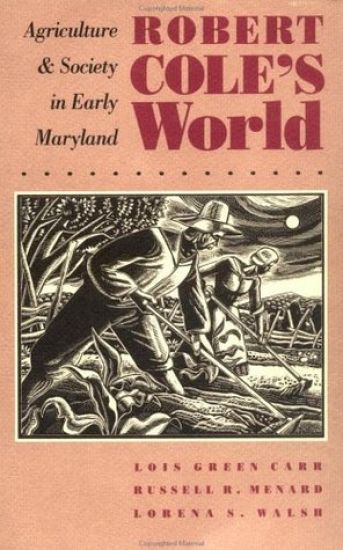
In 1652 Robert Cole, an English Catholic, moved with his family and servants to St. Mary's County, Maryland. Using this family's story as a case study, the authors of Robert Cole's World provide an intimate portrait of the social and economic life of a middling planter in the seveneenth-century Chesapeake, including work routines and agricultural techniques, the upbringing of children, neighborhood relationships and community formation, and the role of religion. The Cole Plantation account, a record that details what the plantation produced, consumed, purchased, and sold over a twelve-year period, is the only known surviving document of its kind for seventeenth-century British America. Along with Cole's will, it serves as the framework around which the authors build their analysis. Drawing on these and other records, they present Cole as an exemplar of the ordinary planter whose success created the capital base for the slave-based plantation society of the eighteenth century.
Robert Lowell's Language of the Self

Robert Lowell's Language of the Self

Wallingford Katherine

The University of North Carolina Press
2012
nidottu
Katharine Wallingford's incisive study treats Robert Lowell's work as a poetry of self-examination and explores the ways in which he used methods common to psychoanalysis and other forms of psychotherapy in his poetry. Although he was never psychoanalyzed in a strictly Freudian sense, Lowell spent many years in psychotherapy. Wallingford stresses not the pathological aspects of Lowell's work, however, but rather his lifelong process of self-examination, a process with ethical as well as psychological dimensions. She links this process to the tradition of self-scrutiny that Lowell inherited from his New England Puritan ancestors.Through close readings of the poetry and of unpublished drafts of several poems as well as letters from Lowell to George Santayana, Allen Tate, and his cousin Harriet Winslow, Wallingford treats Lowell's use of specific psychoanalytic techniques: free association, repetition, concentration on the relation between the poet and the ""other"" to whom he addresses himself, and the use of memory to probe the past. The book considers as well the role the narrative plays in these psychoanalytic and poetic techniques.Lowell believed firmly in the identity of self and language -- ""one life, one writing"" -- and this study brings us closer to an understanding both of the poet and of his dense and moving poetry. It enriches our reading of Lowell's poetry by calling attention to the ways in which his poetic techniques are analogous to and to some extent derived from psychoanalytic techniques -- techniques that have in our time become integrated into our culture as a whole.A UNC Press Enduring Edition -- UNC Press Enduring Editions use the latest in digital technology to make available again books from our distinguished backlist that were previously out of print. These editions are published unaltered from the original, and are presented in affordable paperback formats, bringing readers both historical and cultural value.
Robert Russa Moton of Hampton and Tuskegee

Robert Russa Moton of Hampton and Tuskegee

Patterson Frederick D.

The University of North Carolina Press
2012
nidottu
This is the inspiring biography of the one-time commandant of cadets at Hampton Institute and the successor to Booker T. Washington at Tuskegee Institute as related by his lifelong friends, colleagues, and students. The years he spent at Tuskegee in the shadow of the great and the vision and courage necessary to change that institution from a vocational school to a liberal arts college are vividly recounted.A UNC Press Enduring Edition -- UNC Press Enduring Editions use the latest in digital technology to make available again books from our distinguished backlist that were previously out of print. These editions are published unaltered from the original, and are presented in affordable paperback formats, bringing readers both historical and cultural value.
Robert Coover

Robert Coover

Gordon Lois

SOUTHERN ILLINOIS UNIVERSITY PRESS
1991
sidottu
With works ranging thematically and stylistically from "The Universal Baseball Association "to "The Public Burning, "from "Pricksongs and Descants "to "Spanking the Maid, "Robert Coover emerges as one of the most vibrant writers from a remarkable avant-garde that in the mid-1960s mounted serious assault on traditional ideas of form and content in world literature.Lois Gordon here defines Coover s novels, short stories, and plays in terms of his contemporaries: among Americans, Donald Barthelme, William Gass, John Hawkes, and others; among Europeans, Julio Cortazar, Robert Pinget, and Italo Calvino, to name a few. These writers dismiss the conventions of traditional formlinear plot, character development, definable theme, Aristotle s unities of time and spaceas no longer appropriate in the modern world.Coover writes in a dazzling variety of forms and styles; in each he demonstrates a diversity of the style and manipulates the trappings of every conventional formfrom Old Comedy to theater of the absurd. He also translates or transposes techniques associated with other art forms, such as film montage or operatic interlude. In Coover s hands, any of these forms are fair game for parody. Gordon notes: Coover s method, more specifically is this: at the same time that he maintains a strong narrative line he counterpoints it (his musical term is descants ) with numerous mythic, legendary, or symbolic levels which serve to explode any final meaning or resting point. Nothing is staticpersonality, event, human values. Coover writes about a continual flux in which everything is constantly qualified and dramatically altered. He portrays the public and private rituals that man construes to barter inner and outer disorder. "
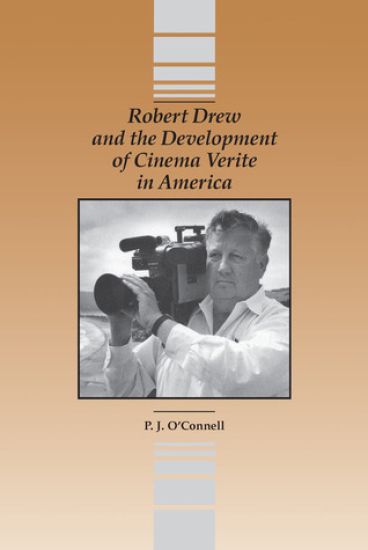
Robert Drew and the Development of Cinema Verite in America

Robert Drew and the Development of Cinema Verite in America

P.J. O'Connell

Southern Illinois University Press
2010
nidottu
Author P. J. O’Connell traces Robert Drew’s influence on cinema verite through extensive interviews with Drew and with some of the founding fathers of American cinema verite filmmaking—Donn Alan Pennebaker, Gregory Shuker, and Richard Leacock. Robert Drew’s contributions to documentary film have been both technical and conceptual. Realizing that his equipment was too heavy and intrusive, Drew persuaded Time-Life Broadcasting to sponsor the development of new, lightweight, portable synchronous sound equipment that freed documentary filmmakers from the bulky, tripod-mounted, AC-powered equipment of the past. His new technology allowed him to capture intense moments as they happened, and to make viewers feel personally involved in the events he presented. While making more than twenty documentaries in the early 1960s, Drew continued to initiate innovations that were not thought possible a generation before him. P. J. O’Connell is the executive producer of public affairs at Penn State Television and an affiliate assistant professor in the School of Communication at Penn State University.
Robert E. Howard's Weird Works Volume 1: Shadow Kingdoms
Shadow Kingdoms is the first volume of the Weird Works of Robert E. Howard, presenting all of Howard's work for the pulp magazine Weird Tales meticulously restored to its original magazine texts.This volume begins with "Spear and Fang," Howard's first professional fiction sale, and concludes with "Red Thunder," a gripping sword & sorcery tale. Series characters present in this volume include King Kull and Solomon Kane.Edited by Paul Herman. Introduction by Mark Finn. Cover by Stephen Fabian.
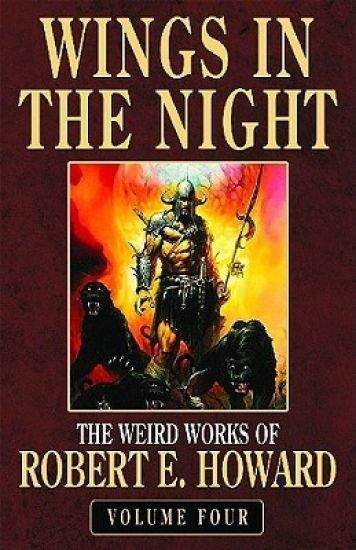
Robert E. Howard's Weird Works Volume 4: Wings In The Night
Wings in the Night collects Robert E. Howard's fiction and prose published in Weird Tales Magazine from July 1932 to May 1933. These works represent literary stepping-stones to Howard's infamous Cthulhu mythos stories and his most famous character of all — Conan the Cimmerian — and ably demonstrate that each of Howard's stories improved and added to his formidable skills as a master of fantasy and adventure.