Kirjojen hintavertailu. Mukana 12 053 742 kirjaa ja 12 kauppaa.

Kirjahaku

Etsi kirjoja tekijän nimen, kirjan nimen tai ISBN:n perusteella.

1000 tulosta hakusanalla Rocio Ramirez Castillo

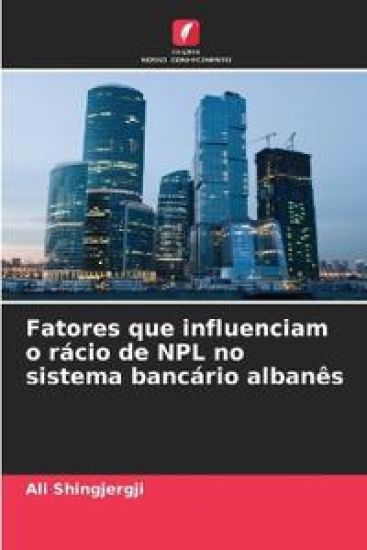
Fatores que influenciam o rácio de NPL no sistema bancário albanês
A crise financeira global de 2007, que afetou quase todos os pa ses do mundo, n o poupou o sistema financeiro alban s. Tendo em conta que o sistema financeiro do nosso pa s representado principalmente pelo seu sistema banc rio (cerca de 85%), a an lise e a identifica o dos problemas deste sistema, causados pela crise financeira global, s o obviamente de import ncia crucial. Neste contexto, um indicador muito importante dos riscos financeiros para os bancos o risco de cr dito, que muitos investigadores da rea consideram estar relacionado com o n vel de empr stimos n o produtivos. No sistema banc rio, os empr stimos n o produtivos apresentam n veis preocupantes e, de acordo com estimativas de dezembro de 2013, representam 23,86% do total dos empr stimos. Este valor o resultado de um crescimento gradual que teve in cio no ltimo trimestre de 2007 e que se mant m ao mesmo n vel elevado. O elevado n vel de empr stimos n o produtivos obrigou os bancos a reduzir o n mero de novos empr stimos, causando um r cio mais elevado entre os empr stimos n o produtivos e o total de empr stimos. Devemos tamb m referir que este r cio aumentado n o se deve apenas redu o da carteira de empr stimos, mas tamb m ao r pido crescimento dos empr stimos n o produtivos.
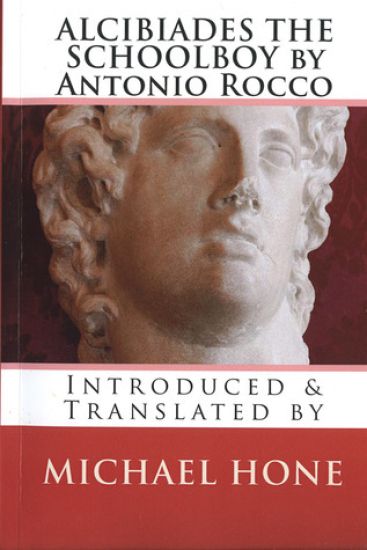
Alcibiades the Schoolboy by Antonio Rocco: Introduced & Translated by

Alcibiades the Schoolboy by Antonio Rocco: Introduced & Translated by

Michael Hone

Createspace Independent Publishing Platform
2015
nidottu
The book Alcibiades the Schoolboy was originally written in Italian, in 1630, and then translated into French by, perhaps, douard Cl der. Due to the expense of the English version--when found--I decided to translate it myself from French, my second language, into English, my first. I've priced the book, as I do everything I write, at the lowest cost allowed by the publisher. Incredibly, Rocco was a priest, as well as a writer and an Aristotelian philosophy teacher. He wrote Alcibiades the School Boy, as said, in 1630. It's first publication, in 1652, was mostly destroyed due to the filth of its content, and was republished in 1862. It was again found filthy and again largely destroyed. Philotime is modeled after Socrates, and is wonderfully portrayed as being as hypocritical as the great Athenian philosopher himself. The text is considered the world's first homoerotic novel, and I guarantee that it is highly erotic. Many a novice, many a monk, (many a translator), must have passed disquieting days copying it, restless nights mauling it over. The first half of this book recounts the historically accurate life of Alcibiades that I myself wrote following months of research. The second half is the translation of Rocco's oeuvre.
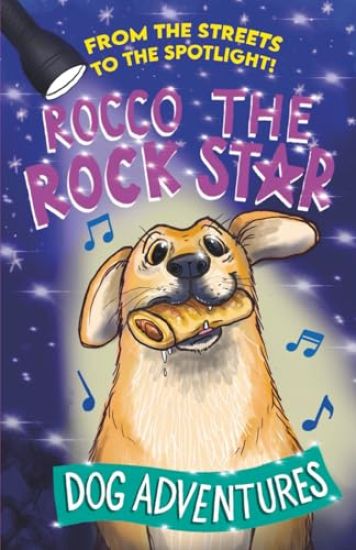
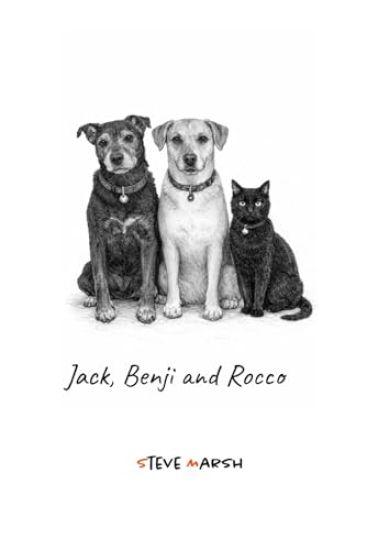
From the Streets to the Spotlight Rocco the Rock Star Dog Adventures
Join Rocco on his epic rise from stray pup to becoming Rocco the Rock Star. This laugh-out-loud, feel-good adventure is packed with courage, friendship, and waggy-tailed fun. When a sausage roll rescue whisks Rocco from the rubbish tip to a cozy new home, his world turns upside down — noisy shelters, new friends, and even a wild village rock festival! But when fame and chaos collide, Rocco discovers that being a true Rock Star isn’t about lights or applause — it’s about bravery, kindness, and finding your forever home. From the Streets to the Spotlight is a fast-paced illustrated chapter book for kids aged 7–9 who love funny animal adventures, heartwarming dog stories, and tales filled with courage, friendship, and belonging. Bursting with laughs, lovable characters, and feel-good moments, Rocco’s story will make young readers smile, cheer, and believe that every rescue dog deserves a standing ovation.
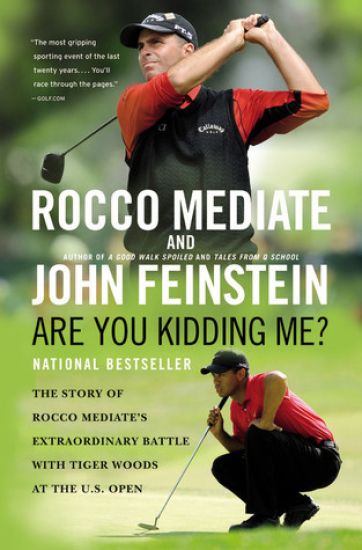
Are You Kidding Me?: The Story of Rocco Mediate's Extraordinary Battle with Tiger Woods at the Us Open
June 2008's US Open produced one of the most unexpected and dramatic showdowns in golf history. Day after day the invincible Tiger Woods was challenged by Rocco Mediate, a respected journeyman. On Sunday, both ended play tied at par, forcing a playoff. Defying expectations, Mediate played Woods to yet another tie, losing only after forcing a sudden-death showdown. Through it all, Rocco Mediate emerged as one of the most likable, open, and fascinating golfers. In Are You Kidding Me?, he tells the full story of these five life-changing days. With John Feinstein, whose insider knowledge of the golf world is unparalleled, Mediate relives one of sport's greatest feats, how one man overcame every obstacle to challenge the game's finest.
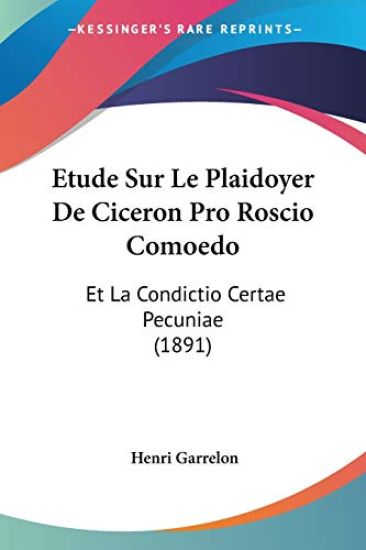
Pro Quinctio. Pro Roscio Amerino. Pro Roscio Comoedo. On the Agrarian Law
The early speeches.Cicero (Marcus Tullius, 106–43 BC), Roman lawyer, orator, politician, and philosopher, of whom we know more than of any other Roman, lived through the stirring era that saw the rise, dictatorship, and death of Julius Caesar in a tottering republic. In his political speeches especially and in his correspondence we see the excitement, tension and intrigue of politics and the part he played in the turmoil of the time. Of about 106 speeches, delivered before the Roman people or the Senate if they were political, before jurors if judicial, fifty-eight survive (a few of them incompletely). In the fourteenth century Petrarch and other Italian humanists discovered manuscripts containing more than 900 letters of which more than 800 were written by Cicero and nearly 100 by others to him. These afford a revelation of the man all the more striking because most were not written for publication. Six rhetorical works survive and another in fragments. Philosophical works include seven extant major compositions and a number of others; and some lost. There is also poetry, some original, some as translations from the Greek. The Loeb Classical Library edition of Cicero is in twenty-nine volumes.
Pro Quinctio. Pro Roscio Amerino. Pro Roscio Comoedo. Pro Tullio. De Lege Agraria
The early speeches.Cicero (Marcus Tullius, 106–43 BC), Roman lawyer, orator, politician, and philosopher, of whom we know more than of any other Roman, lived through the stirring era that saw the rise, dictatorship, and death of Julius Caesar in a tottering republic. In his political speeches especially and in his correspondence we see the excitement, tension, and intrigue of politics and the part he played in the turmoil of the time. Of about 106 known speeches, fifty-eight survive intact or in large part; together with his rhetorical treatises, they have long served as models for orators, advocates, and others.This volume contains four speeches from Cicero’s pre-consular, and one from his consular period. Pro Quinctio, his earliest surviving defense (81), handles a complex commercial dispute deftly and in loftier style than usual in such cases. Pro Roscio Amerino, his first criminal case (80), is a successful defense on a politically fraught charge of parricide. Pro Roscio Comoedo (72 or 71) defends a famous actor and old friend involved in a financial dispute, with suitably theatrical flair. Pro Tullio (71), a dispute between neighbors about a deadly slave attack, casts light on social conditions in the Italian countryside in the aftermath of Spartacus’ revolt. De Lege Agraria (63) successfully forces the withdrawal of a proposal for the distribution of agricultural land to the urban plebs.This edition replaces the original by John Henry Freese (1930). The texts have been freshly edited and translated, with full introductions and ample notation.
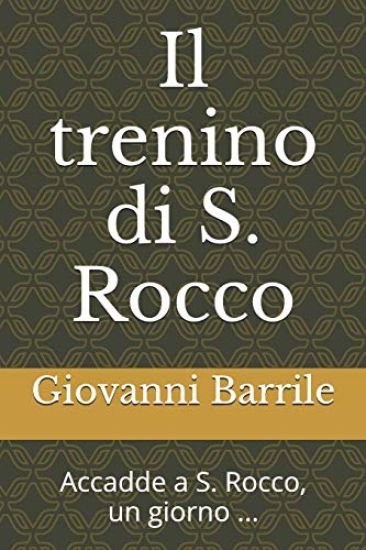
Il Trenino Di S. Rocco: Accadde a S. Rocco, Un Giorno ...

Il Trenino Di S. Rocco: Accadde a S. Rocco, Un Giorno ...

Giovanni Barrile

Independently Published
2017
nidottu
Il racconto fa parte di una collana, ambientata in un piccolo borgo siciliano dei Nebrodi, i cinque racconti che compongono l'opera narrano le vicende professionali, mai del tutto slegate da quelle private, che vedono come protagonista Tommaso Cotroneo, appuntato dei carabinieri dai principi un po' all'antica ma anche uomo di elevata sensibilit e bont d'animo, affiancato dal giovane assistente Salvatore Trifir . I due si muovono in una realt tipicamente paesana, dove sono quasi sempre il giudizio e l'approvazione della comunit a stabilire lo stile di vita degli abitanti e dove, dunque, trovano spesso asilo i vizi e i segreti pi inconfessabili. La scrittura, tuttavia, anche quando si tratta di descrivere i peggiori malcostumi, non mai cupa, ma sempre frizzante e divertente nei molti episodi comici e lucida e riflessiva quando lascia spazio all'interiorit e al sentimento. La presentazione dei personaggi appare vivida e convincente, visto anche l'utilizzo particolarmente efficace nei dialoghi di termini e costruzioni dialettali, che suggeriscono una mimesi della realt fortemente verosimile. Il tema principale che accomuna i cinque racconti l'amore, in tutte le sue forme: quello maturo e duraturo che sfida il tempo e le dicerie della gente (La strana storia della vedova Falsaperna), la passione adolescenziale che si scontra con la disapprovazione familiare arrivando quasi all'estrema conseguenza del suicidio (La fontana del tenente), la trasgressione sessuale (Il trenino di S. Rocco), l'amore che nasce dalla solitudine e dal dolore (La sera della festa) e, infine, l'amore filiale (L'uomo che parlava alle nuvole/ Nicolino che inseguiva il vento). L'autore ha scelto di strutturare questi racconti secondo l'impianto tipico del genere poliziesco, ponendo cio al centro dell'azione un caso da risolvere: la presenza di un'ombra sospetta che si aggira nel paese ne La strana storia della vedova Falsaperna, il presunto suicidio di una giovane coppia di innamorati ne La fontana del tenente, la misteriosa dilapidazione delle ricchezze di quattro illustri personalit ne Il trenino di S. Rocco, la scomparsa del solitario Saro ne La sera della festa e, infine, il comportamento sospetto dello stesso Cotroneo nell'ultimo racconto, quello in cui compare Nicolino.