Kirjojen hintavertailu. Mukana 11 241 044 kirjaa ja 12 kauppaa.

Kirjahaku

Etsi kirjoja tekijän nimen, kirjan nimen tai ISBN:n perusteella.

1000 tulosta hakusanalla Rodney Scharboneau

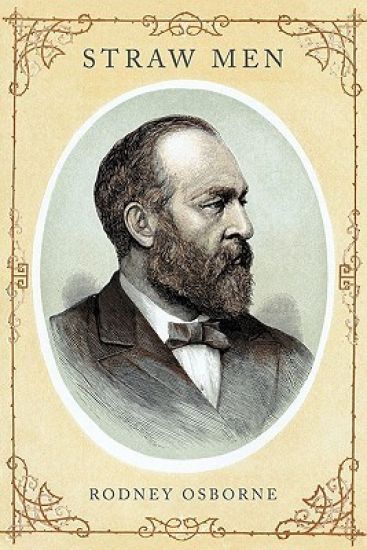
Straw Men

Straw Men

Rodney Osborne

AuthorHouse
2011
pokkari
STRAW MEN is an historical novel that's set in motion when, on July 2, 1881, Charles Julius Guiteau shoots President James Garfield in a Washington, DC train station. It quickly became apparent that Guiteau was a lunatic - he loudly proclaimed that he had acted entirely on his own, having been instructed by God to "remove" the President in order to save the country. But was Garfield's assassination truly the work of a deranged, lone gunman? The Byzantine political alliances that America's Gilded Age had inherited from the trauma of Civil War, together with the tangled, and very public, personal relationships of the country's most powerful leaders at the time, pointed toward the clear possibility of a larger, darker political plot. Had Guiteau, wittingly or not, merely been the sharp end of a well-disguised political conspiracy leading to a coup d'etat? The nation's doubts had to be put to rest, so the Secret Service - formed during the Civil War to combat an epidemic of counterfeiting - was called upon to mount a national investigation designed to sort out the whole truth behind Guiteau's attack. The shocking story that's gradually uncovered in the course of this investigation reveals that all the players, great and small, in this densely complicated historical drama were being set up and used for one hidden purpose or another.
In love and faith

In love and faith

Rodney Castleden

Lulu.com
2022
pokkari
The book reviews the history of Arlington Church and Churchyard in Sussex, and gives the full record of all the inscriptions on the site, together with plans, photos and indexes. An invaluable resource for local amd family history. Arlington is an enigma: an unusually large church and churchyard serving a tiny village. The Saxons, who founded the village, chose an unusual and difficult site - low, wet and densely wooded - next to the Cuckmere River. Was it for the sake of of trading up and down the river? Was the Norman chapel connected to the Canterbury pilgrimage cult? Arlington has a history of isolation, disunity and dissent, not helped by roads that in the past were often under water. This A5 paperback is 227 pages long with 12 plans, 54 black and white illustrations, an index of monuments and a general index.
Updated "Humans And Their Universes": Science Out Of The Straitjacket: Rethinking General Relativity, E=mc2 ... and String Theory
I saw a video ("Hidden Dimensions: Exploring Hyperspace" - http: //www.worldsciencefestival.com/hidden-dimensions) in which it was stated that mathematicians are free to imagine anything while physicists work in a very different environment constrained by experiment, and that the American physicist Richard Feynman (1918-1988) said scientists work in a straitjacket. Well, Albert Einstein (1879-1955) said "Imagination is more important than knowledge" so let's see what happens when we throw away everyday tradition and conformity, let our imaginations fly (while trying to stay grounded in science and technology), and thus release science from its straitjacket This little book has its beginnings in cellular automata (in mathematics and computer science, collections of cells on a grid that evolve through a number of discrete time steps according to a set of rules based on the states of neighbouring cells) and grew into a belief that the universe (electromagnetism, gravitation, space-time and, as we'll see, 5th dimensional hyperspace) has a digital (electronic) foundation. This belief can be supported by 11 steps that begin with an experiment in electrical engineering at Yale University in the USA. These steps logically lead to assertions of instant intergalactic travel, time travel into the past as well as the future (neither of which can be altered), of unification of the large-scale universe with small-scale quantum particles, that the universe is a computer-generated hologram, that everyone who ever lived can have eternal life and health, that motion is an illusion caused by the rapid display of digitally generated "frames", that the entire universe is contained in (or unified with) every one of its particles, that the terms "computer-generated" and "computer" do not necessarily refer to an actual machine sending out binary digits or qubits, that we only possess a small degree of free will, that humanity could have created our universe and ourselves though unification physics says a being called God must nevertheless exist and likewise be Creator, and that Einstein's E=mc squared equation could be modified for the 21st century, reflecting the digital nature of reality. Though these things may be unbelievable in 2011, we should not ignore the possibilities of their being true or of their showing that reality is basically digital because they are the logical product of already demonstrated electrical engineering and trips into space, science is investigating time travel and unification, the notion of motion has been suspect to some ever since the ancient Greek philosopher Zeno of Elea (490?-420? B.C.) argued that motion is absurd, and many religions worldwide speak of God and have some concept of survival of bodily death.
Tomorrow's Science Today

Tomorrow's Science Today

Rodney Bartlett

Createspace Independent Publishing Platform
2011
nidottu
Tomorrow's Science Today "If a complete unified theory was discovered, it would only be a matter of time before it was digested and simplified ... and taught in schools, at least in outline. We should then all be able to have some understanding of the laws that govern the universe and are responsible for our existence." ("A Brief History of Time" by Stephen Hawking, Introduction by Carl Sagan - Bantam Press 1988, page 168) So let's give credit where credit is due and encourage the scientists to pursue the mathematics and measurements which we may find boring and tedious, but let's remind them occasionally that maths and measures are nothing unless they give everyone understanding which can show the way when scientists get lost in their details and competing theories. I saw a video ("Hidden Dimensions: Exploring Hyperspace") in which it was stated that mathematicians are free to imagine anything while physicists work in a very different environment constrained by experiment, and that the American physicist Richard Feynman (1918-1988) said scientists work in a straitjacket. Well, Albert Einstein (1879-1955) said "Imagination is more important than knowledge" so let's see what happens when we throw away everyday tradition and conformity, let our imaginations fly (while trying to stay grounded in science and technology), and thus release science from its straitjacket This article has its beginnings in cellular automata (in mathematics and computer science, collections of cells on a grid that evolve through a number of discrete time steps according to a set of rules based on the states of neighbouring cells) and grew into a belief that the universe (electromagnetism, gravitation, space-time and, as we'll see, 5th dimensional hyperspace) has a digital (electronic) foundation. It logically leads to assertions of instant intergalactic travel, time travel into the past as well as the future (neither of which can be altered), of unification of the large-scale universe with small-scale quantum particles, that the universe is a computer-generated hologram, that everyone who ever lived can have eternal life and health, that motion is an illusion caused by the rapid display of digitally generated "frames", that the entire universe is contained in (or unified with) every one of its particles, that the terms "computer-generated" and "computer" do not necessarily refer to an actual machine sending out binary digits or qubits, that we only possess a small degree of free will, that humanity could have created our universe and ourselves though unification physics says a being called God must nevertheless exist and likewise be Creator, and that Einstein's E=mc2 equation could be modified for the 21st century, reflecting the digital nature of reality. Though these things may be unbelievable in 2011, we should not ignore the possibilities of their being true or of their showing that reality is indeed digital because they are the logical product of already demonstrated electrical engineering and trips into space, science is investigating time travel and unification, the notion of motion has been suspect to some ever since the ancient Greek philosopher Zeno of Elea (490?-420? B.C.) argued that motion is absurd, and many religions worldwide speak of God and have some concept of survival of bodily death.
Parameterized Complexity

Parameterized Complexity

Rodney G. Downey; M.R. Fellows

Springer-Verlag New York Inc.
2012
nidottu
The idea for this book was conceived over the second bottle of Villa Maria's Caber­ net Medot '89, at the dinner of the Australasian Combinatorics Conference held at Palmerston North, New Zealand in December 1990, where the authors first met and discovered they had a number of interests in common. Initially, we embarked on a small project to try to formulate reductions to address the apparent parame­ terized intractability of DOMINATING SET, and to introduce a structure in which to frame our answers. Having spent several months trying to get the definitions for the reductions right (they now seem so obvious), we turned to our tattered copies of Garey and Johnson's work [239]. We were stunned to find that virtually none of the classical reductions worked in the parameterized setting. We then wondered if we'd be able to find any interesting reductions. Several years, many more bottles, so many papers, and reductions later it [3] seemed that we had unwittingly stumbled upon what we believe is a truly central and new area of complexity theory. It seemed to us that the material would be of great interest to people working in areas where exact algorithms for a small range of parameters are natural and useful (e. g. , Molecular Biology, VLSI design). The tractability theory was rich with distinctive and powerful techniques. The intractability theory seemed to have a deep structure and techniques all of its own.
Calculus on Normed Vector Spaces

Calculus on Normed Vector Spaces

Rodney Coleman

Springer-Verlag New York Inc.
2012
nidottu
This book serves as an introduction to calculus on normed vector spaces at a higher undergraduate or beginning graduate level. The prerequisites include basic calculus and linear algebra, as well as a certain mathematical maturity. All the important topology and functional analysis topics are introduced where necessary.In its attempt to show how calculus on normed vector spaces extends the basic calculus of functions of several variables, this book is one of the few textbooks to bridge the gap between the available elementary texts and high level texts. The inclusion of many non-trivial applications of the theory and interesting exercises provides motivation for the reader.
James Madison: The Father of Religious Liberty

James Madison: The Father of Religious Liberty

Rodney K. Smith

Plain Sight Publishing
2019
sidottu
Without the foundational right of religious conscience, James Madison knew, this country could not survive. This inspiring book chronicles how this right became sacred to Madison and how, with a relentlessness borne of faith in God and country, he carefully wove this truth into the Constitution and the Bill of Rights. More than two hundred years later, his message still rings true: there is no liberty without faith.
Cease to Contend

Cease to Contend

Rodney Dieser

Cedar Fort
2025
nidottu
In a time of unprecedented division and hyper-partisanship, ¬+Cease to Contend offers a transformative approach to healing political hostility and fostering understanding. Drawing on timeless principles from George Washington's Farewell Address, the Restored Gospel, and modern social science, Rodney B. Dieser, Ph.D., presents a practical, three-step method to reduce contention and promote civility in today's polarized world. This book equips readers with tools to: Identify cognitive distortions that fuel division and foster political politeness Listen with empathy to understand opposing views without escalating conflict Navigate media with clarity and critical thinking to avoid misinformation and bias Apply scriptural and historical wisdom, including insights from Pahoran' s example in the Book of Mormon and Washington's warnings on partisanship Whether you're seeking peace in your relationships, improving your role as a citizen, or simply navigating the political landscape, this book provides actionable strategies for building unity and becoming a force for positive change.
How NOT To Write an App: A reality check for budding app developers...

How NOT To Write an App: A reality check for budding app developers...

Rodney D. Cambridge

Createspace Independent Publishing Platform
2011
nidottu
Rod Cambridge created an iPhone app called Top-Tens to see how easy it was to make some money as an app developer. In this book, Rod uses this experience to take the reader step by step through the things that should, and shouldn't, be done when creating an app for Apple's iPhone or its rivals including Google's Android and Microsoft's Windows Mobile devices. Learn: What things should you incorporate, and avoid, when designing your app's User Interface. How to employ innovative, and guerilla, marketing tactics to get sales moving. Develop a two-minute elevator pitch. You did realise that you need an an elevator pitch, didn't you? In addition, you'll learn much, much more. Read "How NOT To Write an App" to give your app an edge in a very crowded marketplace. NOTE: This 84 page book was originally sold as an eBook and has been converted into paperback form due to popular demand.