

Kirjahaku
Etsi kirjoja tekijän nimen, kirjan nimen tai ISBN:n perusteella.
1000 tulosta hakusanalla SIDNEY W. POWELL

African Art and the Colonial Encounter
Sidney Littlefield Kasfir
Indiana University Press
2007
pokkari
Focusing on the theme of warriorhood, Sidney Littlefield Kasfir weaves a complex history of how colonial influence forever changed artistic practice, objects, and their meaning. Looking at two widely diverse cultures, the Idoma in Nigeria and the Samburu in Kenya, Kasfir makes a bold statement about the links between colonialism, the Europeans' image of Africans, Africans' changing self representation, and the impact of global trade on cultural artifacts and the making of art. This intriguing history of the interaction between peoples, aesthetics, morals, artistic objects and practices, and the global trade in African art challenges current ideas about artistic production and representation.

By conservative estimate 55 per cent of the adult population watched or listened to all the Kennedy-Nixon television debates of 1960, 80 per cent saw or heard at least one. In this volume thirty experts in communications, political analysis, and opinion research address themselves to the questions raised by this unprecedented event. Following Harold D. Lasswell's introduction, which sets the stage by surveying the challenges which face the student of communications and political behavior as a result of the debates, the articles explore the background, circumstances, and effects of the debates in great detail.

A student-oriented introduction to understanding mechanisms at the atomistic level controlling macroscopic materials phenomena through molecular dynamics simulations. Machine-learning-based computation in materials innovation, performance optimization, and sustainability offers exciting opportunities at the mesoscale research frontier. Molecular Mechanisms in Materials presents research findings and insights about material behavior at the molecular level and its impact on macroscopic properties. The book's fifteen essays represent author Sidney Yip's work in atomistic modeling and materials simulation over more than five decades. The phenomena are grouped into five basic types: fluctuations in simple fluids, crystal melting, plasticity and fracture, glassy relaxations, and amorphous rheology, all focused on molecular mechanisms in base materials. The organizing principle of Molecular Mechanisms in Materials is multiscale modeling and simulation, where conceptual models and simulation techniques are linked across the micro-to-macro length and time scales to control the outcome of specific materials processes. Each essay addresses a specific standalone topic of materials phenomena while also recognizing the larger context of materials science and technology. Individual case studies serve both as standalone essays and companion pieces to each other. Indeed, the global transformation of science and technology is well underway: in his epilogue, Yip discusses the potential of artificial intelligence and machine learning to enhance future materials for societal benefits in the face of global challenges such as climate change, energy sustainability, infrastructure renewal, and nuclear arms control.

The Future of Electrical Energy
Sidney Saltzman; Richard Schuler
Praeger Publishers Inc
1986
sidottu

Residents look at their neighborhood differently than visitors and designers do. The features that they see as most important can differ significantly, so that spaces that are viewed as successful by designers may be disliked by residents. Designers who hope to create successful residential environments can benefit from a more complete understanding of the residents' perspective and their priorities. This residents-eye-view is especially critical in troubled neighborhoods.Brower compares the responses to the same environment by residents, tourists, and designers. Using observations, interviews, innovative survey methods, and an examination of the literature, he details accepted norms that govern who uses and controls neighborhood spaces, children's play networks, neighboring patterns, territorial behavior, and the personalization of space. Brower then describes the application of these ideas and findings in a series of design interventions in an inner city neighborhood in Baltimore. These interventions are thoroughly documented and evaluated, and the lessons learned from both successes and failures are used to inform design ouidelines for the study area. The interventions also help to define the role of outside professionals; in particular, the importance of involving residents in defining and resolving their own problems, and the need to accept space management and social organization as proper concerns of design. The book is written in clear, simple language, and uses drawings and photographs to illustrate the ideas presented.

... a new twist on the eternal question of inequitable income distribution, though they focus on wealth (accumulated income) rather than income. The authors document the dramatic disparities in the distributions of income and wealth and describe the problems these cause. Their solution, the `alternative distribution system, is quite simple: tax inheritance rather than estates. Individuals could inherit up to $1 million tax free. Each succeeding million would be taxed at progressively higher rates. This plan, they argue, would force an estate to be distributed among more people and would cuase beneficiaries to use inheritances more `vigorously and creatively.' The authors do an excellent job of making obscure economic data understandable. BooklistA physicist and an economist, writing for a broad audience and using real--not theoretical--data, answer the age-old question: How rich is too rich? In the process, they suggest some practical solutions to the problem of excessive wealth. They outline a way to deal with the too rich that will also create a healthier economy. Merging a hundred years of economic theory and research on wealth and income distributions with anecdotal evidence, Herbert Inhaber and Sidney Carroll create a framework with which to evaluate proposals to redistribute great wealth and income. The authors set forth an Alternative Distribution System, based on the fact that much of the income of the well-off, that upper 3 percent of the United States population with incomes exceeding $110,000 per year, is due to wealth. The ADS, an inheritance plan, would bring the distribution of the lower 97 percent and the upper 3 percent closer together. It would allow a partial correction of the disparity while adding to the total fairness of our society. This very readable text is complemented by a dozen tables that illustrate The Power of Compound Interest, United States Income Distribution, The Estimated Size of the Domestic Underground Economy, and more.Inhaber and Carroll first describe the existence of an extremely unequal distribution of income and wealth, with enormous resources held by a small percentage of Americans at the top. Other chapters detail the law of income distribution, explain the difference between wealth and income, and explain previous theories of income and wealth distributions. In addition to defining and describing the rich, the authors devote a chapter to how the rich avoid income tax. The volume concludes with an examination of the Alternative Distribution System and how income would be altered by it. How Rich Is Too Rich? will enable the informed general reader to assess policies on wealth and income distribution that have been the subject of Congressional budget debates and best-selling books.

With the signing of the North American Free Trade Agreement (NAFTA) and the U.S. proposal for the widening of NAFTA to include the whole of the Western Hemisphere, there is now a greater mutuality of interest between the U.S. and the rest of the hemisphere than at any time in the recent past. Mexico, Canada, and the United States continue to deepen and refine their understanding of the practical implications of NAFTA. Latin American and Caribbean countries--most now democracies--have altered their development philosophy, placing greater stress on the workings of the market and opening their own markets to import competition. North America and other hemispheric subregions are seeking greater economic integration behind lowered trade barriers. Under this new philosophy, what other countries of the hemisphere most want is assurance of access to the markets of each other and the United States. This common thinking is what makes the present a most propitious moment for hemispheric cooperation.
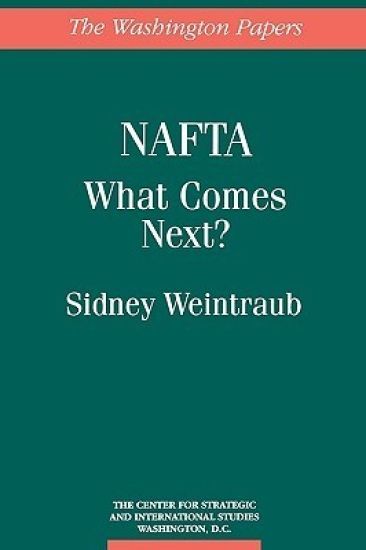
With the signing of the North American Free Trade Agreement (NAFTA) and the U.S. proposal for the widening of NAFTA to include the whole of the Western Hemisphere, there is now a greater mutuality of interest between the U.S. and the rest of the hemisphere than at any time in the recent past. Mexico, Canada, and the United States continue to deepen and refine their understanding of the practical implications of NAFTA. Latin American and Caribbean countries--most now democracies--have altered their development philosophy, placing greater stress on the workings of the market and opening their own markets to import competition. North America and other hemispheric subregions are seeking greater economic integration behind lowered trade barriers. Under this new philosophy, what other countries of the hemisphere most want is assurance of access to the markets of each other and the United States. This common thinking is what makes the present a most propitious moment for hemispheric cooperation.

What makes a good neighborhood? Can one neighborhood be good for all people? Brower's study examines the variable image of the ideal residential area in contemporary and earlier writings, from utopian visions and popular media to historical records and the findings of social science research. Brower identifies four common ideal neighborhood types, each providing a distinct and specific residential experience that suits a particular way of life. He details the characteristics of each of these good neighborhoods, and argues that their coexistence in a single urban environment is not only possible, but desirable; it creates a healthy variety of residential areas that, together, suit the needs and desires of different urban dwellers. This absorbing and timely study will be of interest to scholars and professionals in urban studies, urban design and planning, environmental studies, environment psychology, and sociology.

What makes a good neighborhood? Can one neighborhood be good for all people? Brower's study examines the variable image of the ideal residential area in contemporary and earlier writings, from utopian visions and popular media to historical records and the findings of social science research. Brower identifies four common ideal neighborhood types, each providing a distinct and specific residential experience that suits a particular way of life. He details the characteristics of each of these good neighborhoods, and argues that their coexistence in a single urban environment is not only possible, but desirable; it creates a healthy variety of residential areas that, together, suit the needs and desires of different urban dwellers. This absorbing and timely study will be of interest to scholars and professionals in urban studies, urban design and planning, environmental studies, environment psychology, and sociology.

The Political Ideas of Thorstein Veblen
Sidney Plotkin; Rick Tilman
Yale University Press
2011
pokkari
Thorstein Veblen is best known for his authorship of The Theory of the Leisure Class and The Theory of Business Enterprise, which made him a celebrated figure in the fields of economics and sociology at the turn of the twentieth century. In this book, Sidney Plotkin and Rick Tilman argue that in addition to his well-known work in these fields Veblen also made important—and until now overlooked—statements about politics. While Veblen's writings seldom mention politics, they are saturated with political ideas: about the relationship among war, executive power, and democracy; about the similarities between modern executive positions and monarchy; about the political influence of corporate power; about the symbolism of politics; and about many other issues. By demonstrating the deep relevance of Veblen’s writings to today's political troubles, The Political Ideas of Thorstein Veblen offers an important reconsideration of a major American thinker.

Dynamic psychotherapy research has become revitalized, especially in the last three decades. This major study by Sidney Blatt, Richard Ford, and their associates evaluates long-term intensive treatment (hospital ization and 4-times-a-week psychotherapy) of very disturbed patients at the Austen Riggs Center. The center provides a felicitous setting for recovery-beautiful buildings on lovely wooded grounds just off the quiet main street of the New England town of Stockbridge, Massa chusetts. The center, which has been headed in succession by such capable leaders as Robert Knight, Otto Will, Daniel Schwartz, and now Edward Shapiro, has been well known for decades for its type of inten sive hospitalization and psychotherapy. Included in its staff have been such illustrious contributors as Erik Erikson, David Rapaport, George Klein, and Margaret Brenman. The Rapaport-Klein study group has been meeting there yearly since Rapaport's death in 1960. Although the center is a long-term care treatment facility, it remains successful and solvent even in these days of increasingly short-term treatment. Sidney Blatt, Professor of Psychology and Psychiatry at Yale Univer sity, and Richard Ford of the Austen Riggs Center, and their associates assembled a sample of 90 patients who had been in long-term treatment and who had been given (initially and at 15 months) a set of psychologi cal tests, including the Rorschach, the Thematic Apperception Test, a form of the Wechsler Intelligence Test, and the Human Figure Drawings.

A Guide to Physics Problems
Sidney B. Cahn; C.N. Yang; Boris E. Nadgorny
Kluwer Academic/Plenum Publishers
1994
nidottu
In order to equip hopeful graduate students with the knowledge necessary to pass the qualifying examination, the authors have assembled and solved standard and original problems from major American universities – Boston University, University of Chicago, University of Colorado at Boulder, Columbia, University of Maryland, University of Michigan, Michigan State, Michigan Tech, MIT, Princeton, Rutgers, Stanford, Stony Brook, University of Wisconsin at Madison – and Moscow Institute of Physics and Technology. A wide range of material is covered and comparisons are made between similar problems of different schools to provide the student with enough information to feel comfortable and confident at the exam. Guide to Physics Problems is published in two volumes: this book, Part 1, covers Mechanics, Relativity and Electrodynamics; Part 2 covers Thermodynamics, Statistical Mechanics and Quantum Mechanics. Praise for A Guide to Physics Problems: Part 1: Mechanics, Relativity, and Electrodynamics: "Sidney Cahn and Boris Nadgorny have energetically collected and presented solutions to about 140 problems from the exams at many universities in the United States and one university in Russia, the Moscow Institute of Physics and Technology. Some of the problems are quite easy, others are quite tough; some are routine, others ingenious." (From the Foreword by C. N. Yang, Nobelist in Physics, 1957) "Generations of graduate students will be grateful for its existence as they prepare for this major hurdle in their careers." (R. Shankar, Yale University) "The publication of the volume should be of great help to future candidates who must pass this type of exam." (J. Robert Schrieffer, Nobelist in Physics, 1972) "I was positively impressed … The book will be useful to students who are studying for their examinations and to faculty who are searching forappropriate problems." (M. L. Cohen, University of California at Berkeley) "If a student understands how to solve these problems, they have gone a long way toward mastering the subject matter." (Martin Olsson, University of Wisconsin at Madison) "This book will become a necessary study guide for graduate students while they prepare for their Ph.D. examination. It will become equally useful for the faculty who write the questions." (G. D. Mahan, University of Tennessee at Knoxville)

A Guide to Physics Problems
Sidney B. Cahn; Max Dresden; Gerald D. Mahan; Boris E. Nadgorny
Kluwer Academic/Plenum Publishers
1997
nidottu
In order to equip hopeful graduate students with the knowledge necessary to pass the qualifying examination, the authors have assembled and solved standard and original problems from major American universities – Boston University, University of Chicago, University of Colorado at Boulder, Columbia, University of Maryland, University of Michigan, Michigan State, Michigan Tech, MIT, Princeton, Rutgers, Stanford, Stony Brook, University of Tennessee at Knoxville, and the University of Wisconsin at Madison – and Moscow Institute of Physics and Technology. A wide range of material is covered and comparisons are made between similar problems of different schools to provide the student with enough information to feel comfortable and confident at the exam. Guide to Physics Problems is published in two volumes: this book, Part 2, covers Thermodynamics, Statistical Mechanics and Quantum Mechanics; Part 1, covers Mechanics, Relativity and Electrodynamics. Praise for A Guide to Physics Problems: Part 2: Thermodynamics, Statistical Physics, and Quantum Mechanics: "… A Guide to Physics Problems, Part 2 not only serves an important function, but is a pleasure to read. By selecting problems from different universities and even different scientific cultures, the authors have effectively avoided a one-sided approach to physics. All the problems are good, some are very interesting, some positively intriguing, a few are crazy; but all of them stimulate the reader to think about physics, not merely to train you to pass an exam. I personally received considerable pleasure in working the problems, and I would guess that anyone who wants to be a professional physicist would experience similar enjoyment. … This book will be a great help to students and professors, as well as a source of pleasure and enjoyment." (From Foreword by Max Dresden) "An excellent resource for graduate studentsin physics and, one expects, also for their teachers." (Daniel Kleppner, Lester Wolfe Professor of Physics Emeritus, MIT) "A nice selection of problems … Thought-provoking, entertaining, and just plain fun to solve." (Giovanni Vignale, Department of Physics and Astronomy, University of Missouri at Columbia) "Interesting indeed and enjoyable. The problems are ingenious and their solutions very informative. I would certainly recommend it to all graduate students and physicists in general … Particularly useful for teachers who would like to think about problems to present in their course." (Joel Lebowitz, Rutgers University) "A very thoroughly assembled, interesting set of problems that covers the key areas of physics addressed by Ph.D. qualifying exams. … Will prove most useful to both faculty and students. Indeed, I plan to use this material as a source of examples and illustrations that will be worked into my lectures." (Douglas Mills, University of California at Irvine)

A legend on both the clarinet and the soprano saxophone, one of the most brilliant exponents of New Orleans jazz, Sidney Bechet (1897-1959) played with such fellow jazz legends as Louis Armstrong, Duke Ellington, Charlie Parker, and Jelly Roll Morton. Here is his vivid story written in his own words. Expressive, frank, and hilarious, this classic in jazz literature re-creates a man, a music, and an era.

The International System
Sidney Vebra; Klaus E. Knorr; Klaus Knorr; Sidney Verba
Praeger Publishers Inc
1982
sidottu


Giving equal space to the sanctity of script and the artistic freedom of directors, this book addresses the difficulties encountered by playwrights and directors as they bring a script to the stage. Inspired directors can help a writer of genius turn his play into exciting theatre, but playwrights find that giving directors leeway to interpret and modify text can result in directors' overriding authorial intentions. This book presents the best that has been written by literary theorists on the current definitions of text and attempts to depart from quick rule-of-thumb assessments of the problem.Drawing from definitive articles in literary and theatre journals, part one gives the reader basic concepts and terminology. Interviews with playwrights and directors, showing the complexity of the issue, appear in part two, and part three includes case studies of playwrights and directors who faced production crises. Legal aspects of collaboration are considered in part four. The book concludes with a positive approach and possible solution to the problem.

In the post-Civil War period, Southern women slowly shook loose from the longstanding image of the lady on the pedestal and, through club work and group association, developed independence and began to affect public life. One such notable new woman was Charleston's Susan Pringle Frost (1873-1960). This book recounts the life story of this active woman, describing her background, philosophy, and accomplishments in the area of advancing the image of the woman in society. A member of an illustrious old family, Frost constantly challenged convention, as a federal district court stenographer, as a real estate woman with an office in the professional district, as a women's rights advocate. She helped get women admitted to the College of Charleston and headed city and state National Woman's Party efforts to achieve women's suffrage and later, the Equal Rights Amendment. Bland asserts that Frost is chiefly important, however, as an historic preservationist. In a rapidly expanding sweep, beginning about 1909, Miss Frost bought and renovated numerous houses in the historic East Battery ristrict. Indebtedness mounted, and to aid her efforts she founded and for many years headed the Preservation Society of Charleston. On several Charleston civic commissions and, in her seventies, still a member of the Zoning Board, Susan Frost was a life-long worker for city betterment and tirelessly monitored Charleston preservation efforts. Preserving Charleston's Past, Shaping Its Future shows how a preservation pioneer, Susan Pringle Frost, helped shape the Southern new woman image and served as a role model for women of all generations.