

Kirjahaku
Etsi kirjoja tekijän nimen, kirjan nimen tai ISBN:n perusteella.
1000 tulosta hakusanalla Stephanie Howe

After having spent her whole life in the dusty, dull town of Cattles Creek, Cherry Daily is ready to pack her bags and head to Sydney to partake in the prestigious pageant, Miss Chevrolet Pin-Up.Together with her childhood best friend, Andy, she travels through unknown territory, blind and unaware of the dangers of trusting those who promise it all within the showbiz industry.Shortly after being accepted into the pageant, Cherry gets on the wrong side of Gina and her wolf pack - an accomplished gang of rival models with multiple titles between them. On top of this, Cherry finds herself falling for her dancing teacher, Johnny.With a troubled home life, a sister behind bars, and her parents' failing marriage, Cherry's got more than enough on her plate without romantic drama thrown into the mix.Can the underdog triumph against all odds and take the crown? Is Cherry truly ready to show the world what she has to offer, and can her and Johnny's taboo romance beat the pressures of a secret relationship in a world full of backstabbing, sabotage and gossip?

Three Black Hens Squabble to Bed is a beautifully illustrated picture book about three gorgeous chickens learning how to share and care.Plum, Boo and Bee teach an important life lesson as they Squabble to Bed and begin vying for top spot in the coop. There is plenty of flapping going on as Plum takes first place on the perch and Boo stages a takeover. But when life throws an unexpected twist, these adorable Three Black Hens learn life does not always play out as expected.Squabble to Bed is a great little bedtime story for which little ones and adults will reach for over again.A beautifully paced picture book, Three Black Hens Squabble to Bed makes sleep time a delight. "The Three Black Hens stories are perfectly simple but have a lovely energy. I do love the hens - I find myself thinking about them at odd moments " Catherine Bateson; Multi award-winning Australian author."A very good writer."Dr Cameron Cliff; Kindergo Content Coordinator, Like a Photon Creative.

A beautifully illustrated picture book, Plum, Boo and Bee are Three Black Hens with hustle. These three cheeky chickens are in search of something better and plan to fly the coop.Will they find The Perfect Bath?Laugh as the chickens splash and tumble their way through the neighbourhood getting into more and more strife. A delightful story of companionship, The Perfect Bath uses rhyme, poetry, and onomatopoeia to capture your imagination. Discover if the Three Black Hens adventure throws them more twists and turns or whether they find what was under their beaks the whole time.A great little book to form sounds, learn first words, and beginning to read."The Three Black Hens stories are perfectly simple but have a lovely energy. I do love the hens - I find myself thinking about them at odd moments " Catherine Bateson; Multi award winning Australian author


Eliza Kindall is a regular New Orleans witch with the ability to see the dead. With her powers growing, her newly realised abilities make her dangerous... hunted.When a letter from the King of Cadira arrives, her life is turned upside down with an ultimatum: Find the lost prince, and in return, Eliza and her family will be free from persecution.But dark forces are awakening in Cadira, and even with the aid of the mysterious Commander Brandon Thorne, Eliza finds herself in a game of life-or-death. Will she find the prince? Or will her past catch up to haunt her?The Blood Magic is calling, and so is destiny...


Gender, what is it exactly? It has often been said that Gender is who you go to bed 'as', whereas Sexuality is who you go to bed 'with'. But what happens if you are born 'intersex'.

So You Are... Pregnant is the first in the So You Are Series and not your average pregnancy story. Make your own way through the miracle of life with complicated lows and hilarious highs. Options abound on this wild journey of mishap and misdemeanour. A heartwarming tale of relatable parenting moments and a tummy full of funnies. Enjoy the ride


Having grown up in a loving Christian home and church Stephanie felt she knew and loved the Lord, yet she struggled greatly with fear, rejection and other issues that kept her from confidently walking in faith. She had a nagging feeling there must be more to the Christian life. But she had no idea what 'more' was, or how to find it. 'Journey into More' with Stephanie as she awakens to life in the Spirit, walks towards spiritual freedom and maturity, and jumps into all that Father has to offer - a life so much bigger and better than she ever imagined

The New Aera; Or, Adventures of Julien Delmour
Stephanie Felicite Genlis
Trieste Publishing
2018
nidottu
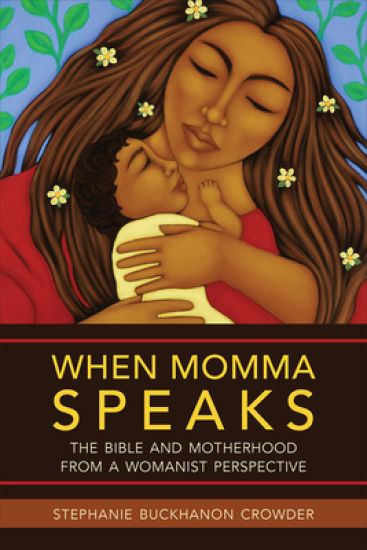
Stephanie Buckhanon Crowder provides an engaging womanist reading of mother characters in the Old and New Testaments. After providing a brief history of womanist biblical interpretation, she shows how the stories of several biblical mothersHagar, Rizpah, Bathsheba, Mary, the Canaanite woman, and Zebedee's wifecan be powerful sources for critical reflection, identification, and empowerment. Crowder also explores historical understandings of motherhood in the African American community and how these help to inform present-day perspectives. She includes questions for discussion with each chapter.

Every Woman's Guide to Diabetes
Stephanie A. Eisenstat M.D.; Ellen Barlow
Harvard University Press
2008
nidottu
Women have long needed a book devoted to their unique issues with diabetes. This up-to-date and practical guide advocates simple lifestyle changes that can help women reduce their risk of getting diabetes or, if already diagnosed, prevent the disease’s most serious complications. Every Woman’s Guide to Diabetes translates the latest findings from diabetes research into proven strategies busy women can use to stay healthy and gain control over an often overwhelming disease. The authors discuss the nature of diabetes, helping readers through the complex medical decisions involved in diabetes treatment. They highlight strategies to decrease the emotional stress and social isolation that often accompany diagnosis, and offer everyday techniques for managing blood sugar.Key features include:— Unique aspects of diabetes for women throughout the life cycle— Timetable of recommended tests and check-ups— Guide to medications with common dosages— Charts to help organize diabetes-care tasks and supplies— Time-management tips for better disease regulation— Guide to contraceptives available to women with diabetes— Review of issues critical to women before, during, and following pregnancy— Advice for overcoming barriers to weight loss and exercise— Plan for intelligent diet trade-offs while still enjoying meals— Practical tips for planning exercise— Strategies to avoid diabetes “burn-out”Written by two physicians (one of whom is a woman living with diabetes) and an experienced medical writer, Every Woman’s Guide to Diabetes recognizes the power that women have in their households to effect lifestyle changes that will benefit themselves and loved ones, including their mothers, daughters, sisters, and partners. This power can reduce the toll of the diabetes epidemic.

This bold, innovative book promises to radically alter our understanding of the Atlantic slave trade, and the depths of its horrors. Stephanie E. Smallwood offers a penetrating look at the process of enslavement from its African origins through the Middle Passage and into the American slave market.Smallwood's story is animated by deep research and gives us a startlingly graphic experience of the slave trade from the vantage point of the slaves themselves. Ultimately, Saltwater Slavery details how African people were transformed into Atlantic commodities in the process. She begins her narrative on the shores of seventeenth-century Africa, tracing how the trade in human bodies came to define the life of the Gold Coast. Smallwood takes us into the ports and stone fortresses where African captives were held and prepared, and then through the Middle Passage itself. In extraordinary detail, we witness these men and women cramped in the holds of ships, gasping for air, and trying to make sense of an unfamiliar sea and an unimaginable destination. Arriving in America, we see how these new migrants enter the market for laboring bodies, and struggle to reconstruct their social identities in the New World.Throughout, Smallwood examines how the people at the center of her story-merchant capitalists, sailors, and slaves-made sense of the bloody process in which they were joined. The result is both a remarkable transatlantic view of the culture of enslavement, and a painful, intimate vision of the bloody, daily business of the slave trade.

Few poetic forms have found more uses than the sonnet in English, and none is now more recognizable. It is one of the longest-lived of verse forms, and one of the briefest. A mere fourteen lines, fashioned by intricate rhymes, it is, as Dante Gabriel Rossetti called it, “a moment’s monument.” From the Renaissance to the present, the sonnet has given poets a superb vehicle for private contemplation, introspection, and the expression of passionate feelings and thoughts.The Art of the Sonnet collects one hundred exemplary sonnets of the English language (and a few sonnets in translation), representing highlights in the history of the sonnet, accompanied by short commentaries on each of the poems. The commentaries by Stephanie Burt and David Mikics offer new perspectives and insights, and, taken together, demonstrate the enduring as well as changing nature of the sonnet. The authors serve as guides to some of the most-celebrated sonnets in English as well as less-well-known gems by nineteenth- and twentieth-century poets. Also included is a general introductory essay, in which the authors examine the sonnet form and its long and fascinating history, from its origin in medieval Sicily to its English appropriation in the sixteenth century to sonnet writing today in the United States, the United Kingdom, and other English-speaking parts of the world.

Pulitzer Prize FinalistWinner of the Frederick Douglass Book PrizeWinner of the Merle Curti Award“McCurry strips the Confederacy of myth and romance to reveal its doomed essence. Dedicated to the proposition that men were not created equal, the Confederacy had to fight a two-front war. Not only against Union armies, but also slaves and poor white women who rose in revolt across the South. Richly detailed and lucidly told, Confederate Reckoning is a fresh, bold take on the Civil War that every student of the conflict should read.”—Tony Horwitz, author of Confederates in the Attic“McCurry challenges us to expand our definition of politics to encompass not simply government but the entire public sphere. The struggle for Southern independence, she shows, opened the door for the mobilization of two groups previously outside the political nation—white women of the nonslaveholding class and slaves…Confederate Reckoning offers a powerful new paradigm for understanding events on the Confederate home front.”—Eric Foner, The Nation“Perhaps the highest praise one can offer McCurry’s work is to say that once we look through her eyes, it will become almost impossible to believe that we ever saw or thought otherwise…At the outset of the book, McCurry insists that she is not going to ask or answer the timeworn question of why the South lost the Civil War. Yet in her vivid and richly textured portrait of what she calls the Confederacy’s ‘undoing,’ she has in fact accomplished exactly that.”—Drew Gilpin Faust, New Republic“A brilliant, eye-opening account of how Southern white women and black slaves fatally undermined the Confederacy from within.”—Edward Bonekemper, Civil War NewsThe story of the Confederate States of America, the proslavery, antidemocratic nation created by white Southern slaveholders to protect their property, has been told many times in heroic and martial narratives. Now, however, Stephanie McCurry tells a very different tale of the Confederate experience. When the grandiosity of Southerners’ national ambitions met the harsh realities of wartime crises, unintended consequences ensued. Although Southern statesmen and generals had built the most powerful slave regime in the Western world, they had excluded the majority of their own people—white women and slaves—and thereby sowed the seeds of their demise.Wartime scarcity of food, labor, and soldiers tested the Confederate vision at every point and created domestic crises to match those found on the battlefields. Women and slaves became critical political actors as they contested government enlistment and tax and welfare policies, and struggled for their freedom. The attempt to repress a majority of its own population backfired on the Confederate States of America as the disenfranchised demanded to be counted and considered in the great struggle over slavery, emancipation, democracy, and nationhood. That Confederate struggle played out in a highly charged international arena.The political project of the Confederacy was tried by its own people and failed. The government was forced to become accountable to women and slaves, provoking an astounding transformation of the slaveholders’ state. Confederate Reckoning is the startling story of this epic political battle in which women and slaves helped to decide the fate of the Confederacy and the outcome of the Civil War.
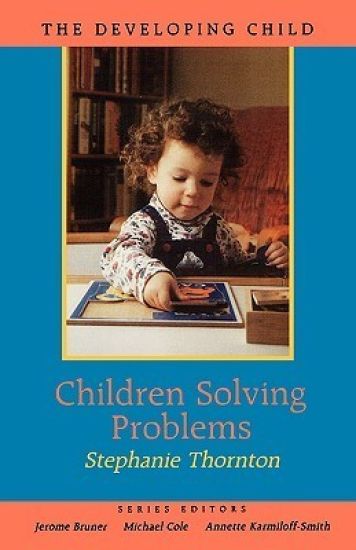
A one-year-old attempting to build a tower of blocks may bring the pile crashing down, yet her five-year-old sister accomplishes this task with ease. Why do young children have difficulty with problems that present no real challenge to older children? How do problem-solving skills develop? In Children Solving Problems, Stephanie Thornton surveys recent research from a broad range of perspectives in order to explore this important question.What Thornton finds may come as a surprise: successful problem-solving depends less on how smart we are—or, as the pioneering psychologist Jean Piaget claimed, how advanced our skill in logical reasoning is—and more on the factual knowledge we acquire as we learn and interpret cues from the world around us.Problem-solving skills evolve through experience and dynamic interaction with a problem. But equally important—as the Russian psychologist L. S. Vygotsky proposed—is social interaction. Successful problem-solving is a social process. Sharing problem-solving tasks—with skilled adults and with other children—is vital to a child’s growth in expertise and confidence. In problem-solving, confidence can be more important than skill.In a real sense, problem-solving lies at the heart of what we mean by intelligence. The ability to identify a goal, to work out how to achieve it, and to carry out that plan is the essence of every intelligent activity. Could it be, Thornton suggests, that problem-solving processes provide the fundamental machinery for cognitive development? In Children Solving Problems she synthesizes the dramatic insights and findings of post-Piagetian research and sets the agenda for the next stage in understanding the varied phenomena of children’s problem-solving.