Kirjojen hintavertailu. Mukana 11 342 296 kirjaa ja 12 kauppaa.

Kirjahaku

Etsi kirjoja tekijän nimen, kirjan nimen tai ISBN:n perusteella.

1000 tulosta hakusanalla Steven Gamble

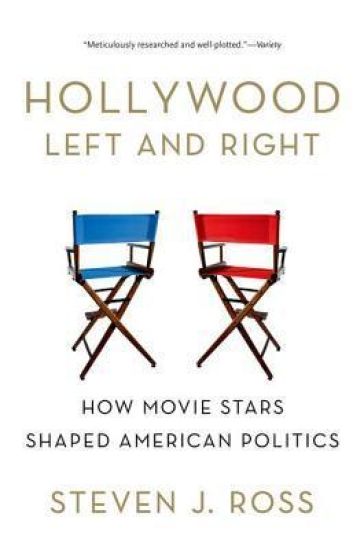
Hollywood Left and Right

Hollywood Left and Right

Steven Ross

Oxford University Press Inc
2013
nidottu
In Hollywood Left and Right, Steven J. Ross tells an important story that has escaped public attention: the emergence of Hollywood as a vital center of political life and the important role that movie stars have played in shaping the course of American politics. Ever since the film industry relocated to Hollywood early in the twentieth century, it has had an outsized influence on American politics. Through compelling larger-than-life figures in American cinema - Charlie Chaplin, Louis B. Mayer, Edward G. Robinson, George Murphy, Ronald Reagan, Harry Belafonte, Jane Fonda, Charlton Heston, Warren Beatty, and Arnold Schwarzenegger - Hollywood Left and Right reveals how Hollywood's engagement in politics has been longer, deeper, and more varied than most people would imagine. As shown in alternating chapters, the Left and the Right each gained ascendancy in Tinseltown at different times. From Chaplin, whose movies almost always displayed his leftist convictions, to Schwarzenegger's nearly seamless transition from action blockbusters to the California governor's mansion, Ross traces the intersection of Hollywood and political activism from the early twentieth century to the present. Hollywood Left and Right challenges the commonly held belief that Hollywood has always been a bastion of liberalism. The real story, as Ross shows in this passionate and entertaining work, is far more complicated. First, Hollywood has a longer history of conservatism than liberalism. Second, and most surprising, while the Hollywood Left was usually more vocal and visible, the Right had a greater impact on American political life, capturing a senate seat (Murphy), a governorship (Schwarzenegger), and the ultimate achievement, the Presidency (Reagan).
How To Survive A Training Assignment

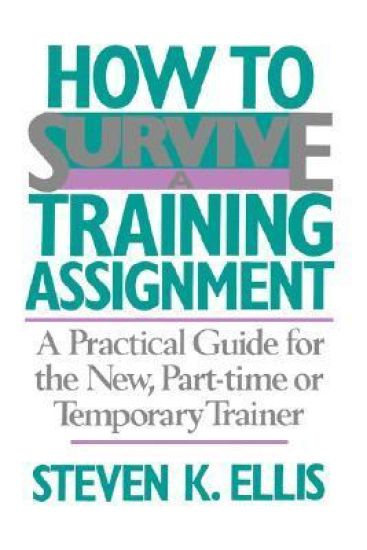
How To Survive A Training Assignment

Steven Ellis

Perseus Books
1988
pokkari
As a supervisor, manager, engineer, or technical expert, you may often be asked to pass on your important knowledge and skill to other people in your organization. This convenient handbook provides everything you need to know to succeed with these occasional or routine training assignments. Formatted for easy reference, and avoiding jargon or heavy doses of theory, this unique volume lays out the basics of training, including:the characteristics of the adult learnertraining objectives and why they are importanthow to design a training programwhen and how to use different instructional techniquesselecting the right visual aidcreating lesson planshow to give an effective presentationdrawing on subject matter expertsevaluating and giving feedbackAlong with practical tips and examples, author Steven Ellis, also provides extensive checklists, a summary of each chapter's main points, and a list of references and materials--everything to help you from start to finish.
The Economy As An Evolving Complex System II

The Economy As An Evolving Complex System II

Steven N Durlauf; David Lane; W. Brian Arthur

Westview Press Inc
1997
pokkari
A new view of the economy as an evolving, complex system has been pioneered at the Santa Fe Institute over the last ten years, This volume is a collection of articles that shape and define this view,a view of the economy as emerging from the interactions of individual agents whose behaviour constantly evolves, whose strategies and actions are always adapting.The traditional framework in economics portrays activity within an equilibrium steady state. The interacting agents in the economy are typically homogenous, solve well-defined problems using perfect rationality, and act within given legal and social structures. The complexity approach, by contrast, sees economic activity as continually changing,continually in process. The interacting agents are typically heterogeneous, they must cognitively interpret the problems they face, and together they create the structures,markets, legal and social institutions, price patters, expectations,to which they individually react. Such structures may never settle down. Agents may forever adapt and explore and evolve their behaviours within structures that continually emerge and change and disappear,structures these behaviours co-create. This complexity approach does not replace the equilibrium one,it complements it.The papers here collected originated at a recent conference at the Santa Fe Institute, which was called to follow up the well-known 1987 SFI conference organized by Philip Anderson, Kenneth Arrow, and David Pines. They survey the new study of complexity and the economy. They apply this approach to real economic problems and they show the extent to which the initial vision of the 1987 conference has come to fruition.
Computational Physics

Computational Physics

Steven E. Koonin

Westview Press Inc
1998
nidottu
Computational Physics is designed to provide direct experience in the computer modeling of physical systems. Its scope includes the essential numerical techniques needed to "do physics" on a computer. Each of these is developed heuristically in the text, with the aid of simple mathematical illustrations. However, the real value of the book is in the eight Examples and Projects, where the reader is guided in applying these techniques to substantial problems in classical, quantum, or statistical mechanics. These problems have been chosen to enrich the standard physics curriculum at the advanced undergraduate or beginning graduate level. The book will also be useful to physicists, engineers, and chemists interested in computer modeling and numerical techniques. Although the user-friendly and fully documented programs are written in FORTRAN, a casual familiarity with any other high-level language, such as BASIC, PASCAL, or C, is sufficient. The codes in BASIC and FORTRAN are available on the web at http://www.computationalphysics.info (Please follow the link at the bottom of the page). They are available in zip format, which can be expanded on UNIX, Window, and Mac systems with the proper software. The codes are suitable for use (with minor changes) on any machine with a FORTRAN-77 compatible compiler or BASIC compiler. The FORTRAN graphics codes are available as well. However, as they were originally written to run on the VAX, major modifications must be made to make them run on other machines.
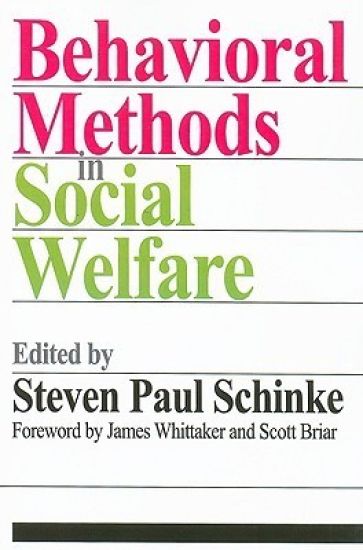
Behavioral Methods in Social Welfare

Behavioral Methods in Social Welfare

Steven Paul Schinke; James. K Whittaker; Scott Briar

AldineTransaction
2007
nidottu
"Behavioral Methods in Social Welfare" offers positive proof that behaviorism has come of age in social work. Steven Paul Schinke and the contributors to this volume are social work practitioners who document their attempts to extend the basic tenets of behavioral psychology from the laboratory, clinic, and classroom to the full range of client groups and social problems that make up the practice of social work. In social work education, traditionally to the extent it appeared in the curriculum at all, behavioral content appeared in electives or in courses not focused on practice. It is a true measure of progress that behavioral methods are now visible, integral component of social work education and practice.The authors of each piece in this collection indicate progress in developing an empirically based approach to social work practice. Despite the impressive documentation contained in the present volume, no conclusive evidence as to the effectiveness of behavioral methods exists. What behavioral methods do offer, however, is a systematic format for both problem intervention and evaluation that, over time, should produce a more empirically based practice. A promising sign, well documented in the present effort, is the facility with which this book has subjected practice procedures to the rigor of research and evaluation.This blending of clinical practice and research develops the sense of competence that student-practitioners acquire in understanding and controlling both the art and science of their clinical practice. Steven Schinke and his colleagues offer a series of "snapshots" of important work in process. Their collective portrait provides a fresh perspective and new stimulus for all social work practice, as well as an affirmation that disciplined, responsive, and sensitive social work intervention can make a difference in the lives of people.
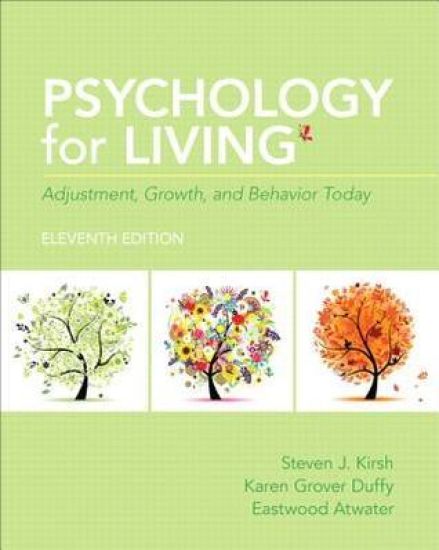
Psychology for Living

Psychology for Living

Steven Kirsh; Karen Duffy; Eastwood Atwater

Pearson
2013
nidottu
Helps readers apply psychological insights to their own lives. The eleventh edition of Psychology for Living: Adjustment, Growth, and Behavior Today is designed for students interested in applying psychological insights and principles to their own lives. The text helps readers achieve a better understanding of themselves and others. The scope of Psychology for Living draws material from the major perspectives of psychology, including the psychodynamic, ecological, cognitive-behavioral, and humanistic viewpoints. The goal of the text is based firmly on increasing readers’ understanding as well as their knowledge about adjustment, in order that they may continue learning and growing on their own. This text is available in a variety of formats – digital and print. Check your favorite digital provider for your etext, including Coursesmart, Kindle, Nook, and more. Learning Goals Upon completing this book, readers will be able to: Apply psychological insights and principles to their own lives.Increase their knowledge on adjustment, in order to continue learning and growing on their own.Understand themselves and others better.
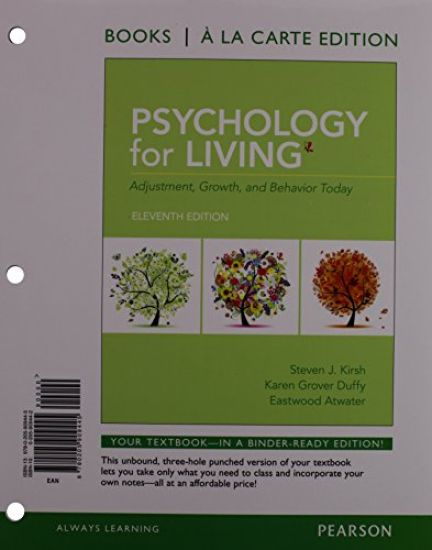
Psychology for Living: Adjustment, Growth, and Behavior Today

Psychology for Living: Adjustment, Growth, and Behavior Today

Steven Kirsh; Karen Duffy; Eastwood Atwater

PEARSON
2013
irtolehti
Helps readers apply psychological insights to their own lives. The eleventh edition of Psychology for Living: Adjustment, Growth, and Behavior Today is designed for students interested in applying psychological insights and principles to their own lives. The text helps readers achieve a better understanding of themselves and others. The scope of Psychology for Living draws material from the major perspectives of psychology, including the psychodynamic, ecological, cognitive-behavioral, and humanistic viewpoints. The goal of the text is based firmly on increasing readers' understanding as well as their knowledge about adjustment, in order that they may continue learning and growing on their own. This text is available in a variety of formats -- digital and print. Check your favorite digital provider for your etext, including Coursesmart, Kindle, Nook, and more. Learning Goals Upon completing this book, readers will be able to: Apply psychological insights and principles to their own lives. Increase their knowledge on adjustment, in order to continue learning and growing on their own. Understand themselves and others better. This Book a la Carte Edition is an unbound, three-hole punched, loose-leaf version of the textbook and provides students the opportunity to personalized their book by incorporating their own notes and taking the portion of the book they need to class - all at a fraction of the bound book price.
A History of Bisexuality

A History of Bisexuality

Steven Angelides

University of Chicago Press
2001
sidottu
Why is bisexuality the object of such scepticism? Why do sexologists steer clear of it in their research? Why has bisexuality, in stark contrast to homosexuality, only recently emerged as a nascent political and cultural identity? Bisexuality has been rendered as mostly irrelevant to the history, politics and theory of sexuality. With this text, Steven Angelides explores the reasons why and invites us to rethink our preconceptions about sexual identity. Retracing the evolution of sexology, and revisiting modern epistemological categories of sexuality in psychoanalysis, gay liberation, social constructionism, queer theory, biology, and human genetics, Angelides argues that bisexuality has historically functioned as the structural other to sexual identity itself, undermining assumptions about homosexuality and heterosexuality.
A History of Bisexuality

A History of Bisexuality

Steven Angelides

University of Chicago Press
2001
nidottu
Why is bisexuality the object of such scepticism? Why do sexologists steer clear of it in their research? Why has bisexuality, in stark contrast to homosexuality, only recently emerged as a nascent political and cultural identity? Bisexuality has been rendered as mostly irrelevant to the history, politics and theory of sexuality. With this text, Steven Angelides explores the reasons why and invites us to rethink our preconceptions about sexual identity. Retracing the evolution of sexology, and revisiting modern epistemological categories of sexuality in psychoanalysis, gay liberation, social constructionism, queer theory, biology, and human genetics, Angelides argues that bisexuality has historically functioned as the structural other to sexual identity itself, undermining assumptions about homosexuality and heterosexuality.
The Life of a Leaf

The Life of a Leaf

Steven Vogel

University of Chicago Press
2013
nidottu
In its essence, science is a way of looking at and thinking about the world. In The Life of a Leaf, Steven Vogel illuminates this approach, using the humble leaf as a model. Whether plant or person, every organism must contend with its immediate physical environment, a world that both limits what organisms can do and offers innumerable opportunities for evolving fascinating ways of challenging those limits. Here, Vogel explains these interactions, examining through the example of the leaf the extraordinary designs that enable life to adapt to its physical world. In Vogel's account, the leaf serves as a biological everyman, an ordinary and ubiquitous living thing that nonetheless speaks volumes about our environment as well as its own. Thus in exploring the leaf's world, Vogel simultaneously explores our own.
Museums and American Intellectual Life, 1876-1926

Museums and American Intellectual Life, 1876-1926

Steven Conn

University of Chicago Press
2000
nidottu
During the last half of the 19th century, Americans built many of the country's most celebrated museums, such as the American Museum of Natural History in New York, the Philadelphia Museum of Art, and Chicago's Field Museum. This text argues that Americans built these institutions with the confidence that they could collect, organize, and display the sum of the world's knowledge. Examining various kinds of museums, the author discovers how museums gave definition to different bodies of knowledge and how they presented that knowledge - the world in miniature - to the visiting public. The study includes familiar places like the Metropolitan Museum of Art and the Academy of Natural Sciences, but also draws attention to forgotten ones, like the Philadelphia Commercial Museum, once the repository for objects from many turn-of-the-century world's fairs. What emerges from the analysis is that museums of all kinds shared a belief that knowledge resided in the objects themselves. Using what Steven Conn has termed an "object-based epistemology," museums of the late 19th century were on the cutting edge of American intellectual life. By the first quarter of the 20th century, however, museums had largely been replaced by research-oriented universities as places where new knowledge was produced. According to Conn, not only did this mean a change in the way knowledge was conceived, but also, and perhaps more importantly, who would have access to it.
History's Shadow

History's Shadow

Steven Conn

University of Chicago Press
2006
nidottu
Who were the Native Americans? Where did they come from and how long ago? Did they have a history, and would they have a future? Questions such as these dominated intellectual life in the United States during the nineteenth century. And for many Americans, such questions about the original inhabitants of their homeland inspired a flurry of historical investigation, scientific inquiry, and heated political debate.History's Shadow traces the struggle of Americans trying to understand the people who originally occupied the continent claimed as their own. Steven Conn considers how the question of the Indian compelled Americans to abandon older explanatory frameworks for sovereignty like the Bible and classical literature and instead develop new ones. Through their engagement with Native American language and culture, American intellectuals helped shape and define the emerging fields of archaeology, ethnology, linguistics, and art. But more important, the questions posed by the presence of the Indian in the United States forced Americans to confront the meaning of history itself, both that of Native Americans and their own: how it should be studied, what drove its processes, and where it might ultimately lead. The encounter with Native Americans, Conn argues, helped give rise to a distinctly American historical consciousness.A work of enormous scope and intellect, History's Shadow will speak to anyone interested in Native Americans and their profound influence on our cultural imagination. “History’s Shadow is an intelligent and comprehensive look at the place of Native Americans in Euro-American’s intellectual history. . . . Examining literature, painting, photography, ethnology, and anthropology, Conn mines the written record to discover how non-Native Americans thought about Indians.” —Joy S. Kasson, Los Angeles Times
Fatal Words

Fatal Words

Steven Cushing

University of Chicago Press
1997
nidottu
On March 27, 1977, 583 people died when KLM and Pan Am 747s collided on a crowded, foggy runway in Tenerife, the Canary Islands. The cause was a miscommunication between the pilot and the air traffic controller. The pilot radioed, "We are now at takeoff," meaning that the plane was lifting off, but the tower controller misunderstood and thought the plane was waiting on the runway. In" Fatal Words", Steven Cushing explains how miscommunication has led to dozens of aircraft disasters, and he proposes innovative solutions for preventing them. He examines ambiguities in language when aviation jargon and colloquial English are mixed, when a word is used that has different meanings, and when different words are used that sound alike. To remedy these problems, Cushing proposes a visual communication system and a computerized voice mechanism to help clear up confusing language. This is an accessible explanation of some of the most notorious aircraft tragedies of our time, and it should appeal to scholars in communications, linguistics and cognitive science, to aviation experts and to general readers.
Extinct Madagascar

Extinct Madagascar

Steven M. Goodman; William L. Jungers

University of Chicago Press
2014
sidottu
The landscapes of Madagascar have long delighted zoologists, who have discovered, in and among the island's baobad trees and thickets, a dizzying array of animals, including something approaching one hundred species of lemur. Madagascar's mammal fauna, for example, is far more diverse, and more endemic, than early explorers and naturalists ever dreamed of. But in the 2,500 or so years since the arrival of the island's first human settlers, the vast majority of its forests have disappeared, and in the wake of this loss a number of species unique to Madagascar have vanished forever into extinction. In Extinct Madagascar, noted scientists Steven M. Goodman and William L. Jungers explore the recent past of these land animal extinctions. Beginning with an introduction to the geologic and ecological history of Madagascar that provides context for the evolution, diversification, and, in some cases, rapid decline of the Malagasy fauna, Goodman and Jungers then seek to recapture these extinct mammals in their environs. Aided in their quest by artist Velizar Simeonovski's beautiful and haunting paintings - images of both individual species and ecosystem assemblages reproduced here in full color - Goodman and Jungers reconstruct the lives of these lost animals and trace their relationships to those still living. Published in conjunction with an exhibition of Simeonovski's paintings set to open at the Field Museum, Chicago, in the fall of 2014, Goodman and Jungers' awe-inspiring book will serve not only as a sobering reminder of the very real threat of extinction, but also as a stunning tribute to Madagascar's biodiversity and a catalyst for further research and conservation.
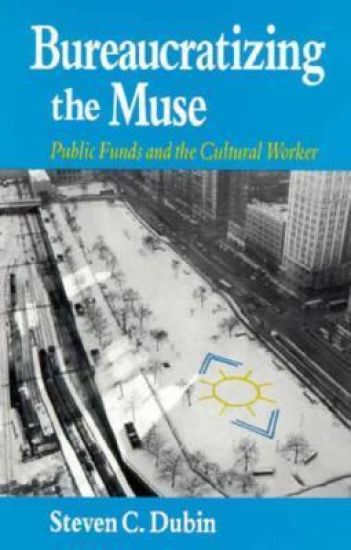
Bureaucratizing the Muse

Bureaucratizing the Muse

Steven C. Dubin

University of Chicago Press
1987
sidottu
The Comprehensive Employment and Training Act made a dramatic entrace on the American economic and social stage in December 1973. No comparable commitment of public funds to subsidize jobs had occurred since the Works Progress Administration programs of the 1930s. An important beneficiary of CETA was the Artists-in-Residence program, in operation from 1977 to 1981. As part of the largest direct monetary transfer to artists since the WPA, AIR employed 108 Chicago-area artists each year in nine fields—from dance and music to video and graphic arts. Bureaucratizing the Muse is a study of the Chicago AIR program. By its very nature art is a nonrational process, even at times antirational, and the idea of organizing artists in this kind of work environment was an unusual one. Steven C. Dubin's account is a fascinating story of the tensions between struggling artists who need a paycheck but fear the compromise of their art and bureaucrats who need to produce measurable results.
Rescued from the Nation

Rescued from the Nation

Steven Kemper

University of Chicago Press
2015
sidottu
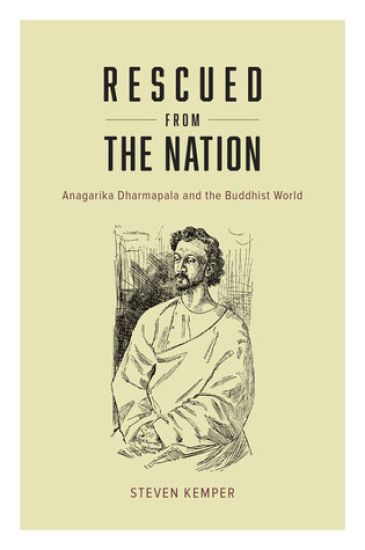
Anagarika Dharmapala is one of the most galvanizing figures in Sri Lanka's recent turbulent history. He is widely regarded as the nationalist hero who saved the Sinhala people from cultural collapse and whose "protestant" reformation of Buddhism drove monks toward increased political involvement and eventual militarization. Yet as tied to Sri Lankan nationalism as Dharmapala is in popular memory, he spent the vast majority of his life abroad, engaging other concerns. In Rescued from the Nation, Steven Kemper reevaluates this important figure in the light of an unprecedented number of his writings, ones that paint a picture not of a nationalist zealot but of a spiritual seeker earnest in his pursuit of salvation. Drawing on huge stores of source materials - nearly one hundred diaries and notebooks - Kemper reconfigures Dharmapala as a world-renouncer first and a political activist second. Following Dharmapala on his travels between East Asia, South Asia, Europe, and North America, he traces his lifelong project of creating a unified Buddhist world, recovering the place of the Buddha's Enlightenment, and imitating the Buddha's life course. The result is a needed corrective to Dharmapala's embattled legacy, one that resituates Sri Lanka's political awakening within the religious one that was Dharmapala's life project.
Inclusion

Inclusion

Steven Epstein

University of Chicago Press
2007
sidottu
With "Inclusion", Steven Epstein argues that strategies to achieve diversity in medical research mask deeper problems, ones that might require a different approach and different solutions. Formal concern with this issue, Epstein shows, is a fairly recent phenomenon. Until the mid-1980s, scientists often studied groups of white, middle-aged men - and assumed that conclusions drawn from studying them would apply to the rest of the population. But struggles involving advocacy groups, experts, and Congress led to reforms that forced researchers to diversify the population from which they drew for clinical research. While the prominence of these inclusive practices has offered hope to traditionally undeserved groups, Epstein argues that it has drawn attention away from the tremendous inequalities in health that are rooted not in biology but in society.
Inclusion – The Politics of Difference in Medical Research

Inclusion – The Politics of Difference in Medical Research

Steven Epstein

University of Chicago Press
2009
nidottu
With "Inclusion", Steven Epstein argues that strategies to achieve diversity in medical research mask deeper problems, ones that might require a different approach and different solutions. Formal concern with this issue, Epstein shows, is a fairly recent phenomenon. Until the mid-1980s, scientists often studied groups of white, middle-aged men - and assumed that conclusions drawn from studying them would apply to the rest of the population. But struggles involving advocacy groups, experts, and Congress led to reforms that forced researchers to diversify the population from which they drew for clinical research. While the prominence of these inclusive practices has offered hope to traditionally undeserved groups, Epstein argues that it has drawn attention away from the tremendous inequalities in health that are rooted not in biology but in society.
Dancing Prophets

Dancing Prophets

Steven M. Friedson

University of Chicago Press
1996
sidottu
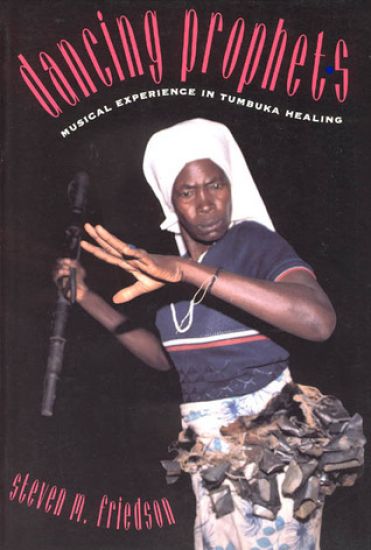
For the Tumbuka people of Malawi, traditional medical practices are filled with music. This ethnography explores a health care system populated by dancing prophets, singing patients and drummed spirits. Tumbuka healers diagnose diseases by enacting divination trances in which they "see" the causes of past events and their consequences for patients. Music is the structural nexus where healer, patient, and spirit meet - it is the energizing heat that fuels the trance, transforming both the bodily and social functioning of the individual. Friedson shows how the sound of the ng'oma drum, the clapping of the choir, call-and-response singing and the jangle of tin belts and iron anklets do not simply accompany other more important ritual activities - they are the very substance of a sacred clinical reality. This analysis of the relation between music and mental and biological health should interest medical anthropologists, Africanists, and religious scholars as well as ethnomusicologists.
Dancing Prophets

Dancing Prophets

Steven M. Friedson

University of Chicago Press
1996
nidottu
For the Tumbuka people of Malawi, traditional medical practices are filled with music. This ethnography explores a health care system populated by dancing prophets, singing patients and drummed spirits. Tumbuka healers diagnose diseases by enacting divination trances in which they "see" the causes of past events and their consequences for patients. Music is the structural nexus where healer, patient, and spirit meet - it is the energizing heat that fuels the trance, transforming both the bodily and social functioning of the individual. Friedson shows how the sound of the ng'oma drum, the clapping of the choir, call-and-response singing and the jangle of tin belts and iron anklets do not simply accompany other more important ritual activities - they are the very substance of a sacred clinical reality. This analysis of the relation between music and mental and biological health should interest medical anthropologists, Africanists, and religious scholars as well as ethnomusicologists.