Kirjojen hintavertailu. Mukana 11 244 527 kirjaa ja 12 kauppaa.

Kirjahaku

Etsi kirjoja tekijän nimen, kirjan nimen tai ISBN:n perusteella.

1000 tulosta hakusanalla Steven Silver

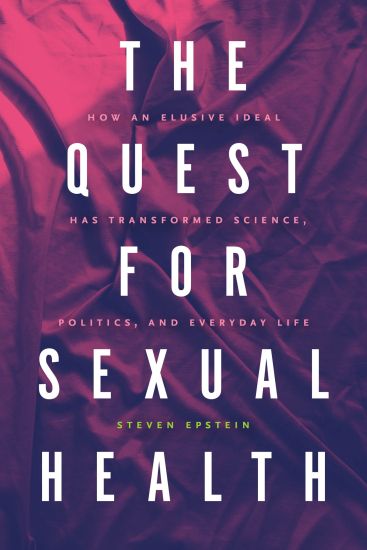
The Quest for Sexual Health

The Quest for Sexual Health

Steven G. Epstein

THE UNIVERSITY OF CHICAGO PRESS
2022
nidottu
Offering an entryway into the distinctive worlds of sexual health and a window onto their spillover effects, sociologist Steven Epstein traces the development of the concept and parses the debates that swirl around it. Since the 1970s, health professionals, researchers, governments, advocacy groups, and commercial interests have invested in the pursuit of something called "sexual health." Under this expansive banner, a wide array of programs have been launched, organizations founded, initiatives funded, products sold-and yet, no book before this one asks: What does it mean to be sexually healthy? When did people conceive of a form of health called sexual health? And how did it become the gateway to addressing a host of social harms and the reimagining of private desires and public dreams? Conjoining "sexual" with "health" changes both terms: it alters how we conceive of sexuality and transforms what it means to be healthy, prompting new expectations of what medicine can provide. Yet the ideal of achieving sexual health remains elusive and open-ended, and the benefits and costs of promoting it are unevenly distributed across genders, races, and sexual identities. Rather than a thing apart, sexual health is intertwined with nearly every conceivable topical debate-from sexual dysfunction to sexual violence, from reproductive freedom to the practicalities of sexual contact in a pandemic. In this book Steven Epstein analyzes the rise, proliferation, uptake, and sprawling consequences of sexual health activities, offering critical tools to assess those consequences, expand capacities for collective decision making, and identify pathways that promote social justice.
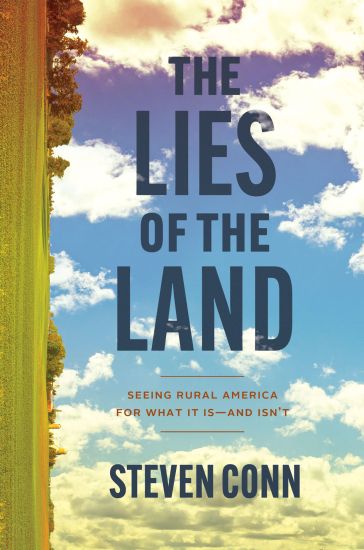
The Lies of the Land

The Lies of the Land

Steven Conn

THE UNIVERSITY OF CHICAGO PRESS
2023
sidottu
A "piercing, unsentimental" (New Yorker) history that boldly challenges the idea of a rural American crisis. It seems everyone has an opinion about rural America. Is it gripped in a tragic decline? Or is it on the cusp of a glorious revival? Is it the key to understanding America today? Steven Conn argues that we’re missing the real question: Is rural America even a thing? No, says Conn, who believes we see only what we want to see in the lands beyond the suburbs—fantasies about moral (or backward) communities, simpler (or repressive) living, and what it means to be authentically (or wrongheadedly) American. If we want to build a better future, Conn argues, we must accept that these visions don’t exist and never did. In The Lies of the Land, Conn shows that rural America—so often characterized as in crisis or in danger of being left behind—has actually been at the center of modern American history, shaped by the same forces as everywhere else in the country: militarization, industrialization, corporatization, and suburbanization. Examining each of these forces in turn, Conn invites us to dispense with the lies and half-truths we’ve believed about rural America and to pursue better solutions to the very real challenges shared all across our nation.
Accountability in State Legislatures

Accountability in State Legislatures

Steven Rogers

THE UNIVERSITY OF CHICAGO PRESS
2023
sidottu
A troubling portrait of democracy in US state legislatures. State legislatures hold tremendous authority over key facets of our lives, ranging from healthcare to marriage to immigration policy. In theory, elections create incentives for state legislators to produce good policies. But do they? Drawing on wide-ranging quantitative and qualitative evidence, Steven Rogers offers the most comprehensive assessment of this question to date, testing different potential mechanisms of accountability. His findings are sobering: almost ninety percent of American voters do not know who their state legislator is; over one-third of incumbent legislators run unchallenged in both primary and general elections; and election outcomes have little relationship with legislators’ own behavior. Rogers’s analysis of state legislatures highlights the costs of our highly nationalized politics, challenging theories of democratic accountability and providing a troubling picture of democracy in the states.
Accountability in State Legislatures

Accountability in State Legislatures

Steven Rogers

THE UNIVERSITY OF CHICAGO PRESS
2023
nidottu
A troubling portrait of democracy in US state legislatures. State legislatures hold tremendous authority over key facets of our lives, ranging from healthcare to marriage to immigration policy. In theory, elections create incentives for state legislators to produce good policies. But do they? Drawing on wide-ranging quantitative and qualitative evidence, Steven Rogers offers the most comprehensive assessment of this question to date, testing different potential mechanisms of accountability. His findings are sobering: almost ninety percent of American voters do not know who their state legislator is; over one-third of incumbent legislators run unchallenged in both primary and general elections; and election outcomes have little relationship with legislators’ own behavior. Rogers’s analysis of state legislatures highlights the costs of our highly nationalized politics, challenging theories of democratic accountability and providing a troubling picture of democracy in the states.
Eating and Being

Eating and Being

Steven Shapin

THE UNIVERSITY OF CHICAGO PRESS
2024
sidottu
What we eat, who we are, and the relationship between the two. Eating and Being is a history of Western thinking about food, eating, knowledge, and ourselves. In modern thought, eating is about what is good for you, not about what is good. Eating is about health, not about virtue. Yet this has not always been the case. For a great span of the past—from antiquity through about the middle of the eighteenth century—one of the most pervasive branches of medicine was known as dietetics, prescribing not only what people should eat but also how they should order many aspects of their lives, including sleep, exercise, and emotional management. Dietetics did not distinguish between the medical and the moral, nor did it acknowledge the difference between what was good for you and what was good. Dietetics counseled moderation in all things, where moderation was counted as a virtue as well as the way to health. But during the nineteenth century, nutrition science began to replace the language of traditional dietetics with the vocabulary of proteins, fats, carbohydrates, and calories, and the medical and the moral went their separate ways. Steven Shapin shows how much depended upon that shift, and he also explores the extent to which the sensibilities of dietetics have been lost. Throughout this rich history, he evokes what it felt like to eat during another historical period and invites us to reflect on what it means to feel about food as we now do. Shapin shows how the change from dietetics to nutrition science fundamentally altered how we think about our food and its powers, our bodies, and our minds.
Urban Lowlands

Urban Lowlands

Steven T. Moga

THE UNIVERSITY OF CHICAGO PRESS
2024
nidottu
Interrogates the connections between a city’s physical landscape and the poverty and social problems that are often concentrated at its literal lowest points. In Urban Lowlands, Steven T. Moga looks closely at the Harlem Flats in New York City, Black Bottom in Nashville, Swede Hollow in Saint Paul, and the Flats in Los Angeles, to interrogate the connections between a city’s actual landscape and the poverty and social problems that are often concentrated at its literal lowest points. Taking an interdisciplinary perspective on the history of US urban development from the nineteenth to the mid-twentieth century, Moga reveals patterns of inequitable land use, economic dispossession, and social discrimination against immigrants and minorities. In attending to the landscapes of neighborhoods typically considered slums, Moga shows how physical and policy-driven containment has shaped the lives of the urban poor, while wealth and access to resources have been historically concentrated in elevated areas—truly “the heights.” Moga’s innovative framework expands our understanding of how planning and economic segregation alike have molded the American city.
What Did You Hear?

What Did You Hear?

Steven Rings

THE UNIVERSITY OF CHICAGO PRESS
2025
sidottu
Discover a new side of the songs of Bob Dylan, as a music theorist considers the possibilities ingrained in rough sounds, peculiar intonation, and a raspy voice. Folk troubadour, rock star, country crooner, cultural shapeshifter—for a musician who adopted so many styles, Bob Dylan always seems to be unmistakably himself. Whether you’re a fan or a skeptic, you know his sound. A gritty voice that slides toward speech or out of key, a musical trademark that’s been imitated and parodied in equal measure. A piano that may be out of tune. A wailing, ramshackle harmonica solo. But Dylan always sounds like Dylan, despite a musical legacy built on variation, flux, and flaws. Music theorist Steven Rings argues that such imperfections are central to understanding Dylan’s songs and their appeal. These blemishes can invoke authenticity or persona, signal his social commitments, and betray his political shortcomings. Rings begins with (what else?) Dylan’s voice, exploring its changeability, its unmistakable features, and its ability to build characters, including the female speaker of “House of the Rising Sun.” Rings then turns to Dylan as an instrumentalist, including his infamous adoption of the electric guitar in 1965, as well as his stylistically varied acoustic playing, which borrows sounds and techniques from Black blues musicians, among other influences. Rings charts the histories audible in Dylan’s harmonica as well as the piano, central to his music-making for seventy years, beginning with his earliest imitations of Little Richard in Hibbing, Minnesota. Finally, Rings guides readers through one of Dylan’s most famous songs, “A Hard Rain’s A-Gonna Fall,” listening for its musical sources as well as the welter of sounds that Dylan has made when performing it live. A companion website of audio and video examples helps readers notice the nuances and idiosyncrasies inherent to Dylan’s work and, even more importantly, their effects. A close look at an under-discussed but glaringly dominant aspect of Dylan’s oeuvre, What Did You Hear? offers a fresh understanding of a singular performer, his musical choices, and the meanings that can be found in his imperfect sounds.
The Lies of the Land

The Lies of the Land

Steven Conn

THE UNIVERSITY OF CHICAGO PRESS
2025
nidottu
A "piercing, unsentimental" (New Yorker) history that boldly challenges the idea of a rural American crisis. It seems everyone has an opinion about rural America. Is it gripped in a tragic decline? Or is it on the cusp of a glorious revival? Is it the key to understanding America today? Steven Conn argues that we’re missing the real question: Is rural America even a thing? No, says Conn, who believes we see only what we want to see in the lands beyond the suburbs—fantasies about moral (or backward) communities, simpler (or repressive) living, and what it means to be authentically (or wrongheadedly) American. If we want to build a better future, Conn argues, we must accept that these visions don’t exist and never did. In The Lies of the Land, Conn shows that rural America—so often characterized as in crisis or in danger of being left behind—has actually been at the center of modern American history, shaped by the same forces as everywhere else in the country: militarization, industrialization, corporatization, and suburbanization. Examining each of these forces in turn, Conn invites us to dispense with the lies and half-truths we’ve believed about rural America and to pursue better solutions to the very real challenges shared all across our nation.
A Clearing in the Forest

A Clearing in the Forest

Steven Winter

University of Chicago Press
2003
nidottu
"There is a virtual revolution going on within the cognitive sciences", writes Steven L. Winter in the preface of this new book. The revolution has irrevocably transformed our basic understanding of the mind, establishing both that imagination is central to cognition and that imagination is an orderly, systematic, embodied process. The implications are profound, changing how we understand language and thought and, therefore, entire debates in philosophy, literary theory and - most significantly - law. Drawing from all these disciplines, as well as from psychology, anthropology and linguistics, Winter has constructed nothing less than a tour de force of interdisciplinary analysis. "A Clearing in the Forest" rests on the simple notion that the better we understand the intricate workings of the mind, the better we will understand all of its products - especially law. Categorization plays a key role in this understanding, for it is categories that define our expectations and, in so doing, shape what we find believable, what we judge accurate, what we experience as cogent, compelling and persuasive. But what does law do when our categories run out? Is pornographic speech protected by the First Amendment, or should it not be protected because it more closely resembles libel? Should abortion be protected because it falls into the category of rights reserved to the mother, or is it more like the category of harms done to others? Through law, the revolution in cognitive science finds almost limitless applications. In this compelling meditation not only on how the law works, but what it ultimately means, Winter charts a unique course to understanding the world we inhabit, showing us the w
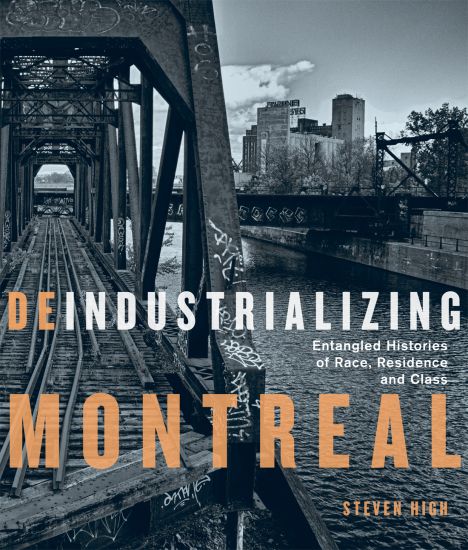
Deindustrializing Montreal

Deindustrializing Montreal

Steven High

MCGILL-QUEEN'S UNIVERSITY PRESS
2022
sidottu
Point Saint-Charles, a historically white working-class neighbourhood with a strong Irish and French presence, and Little Burgundy, a multiracial neighbourhood that is home to the city’s English-speaking Black community, face each other across Montreal’s Lachine Canal, once an artery around which work and industry in Montreal were clustered and by which these two communities were formed and divided.Deindustrializing Montreal challenges the deepening divergence of class and race analysis by recognizing the intimate relationship between capitalism, class struggles, and racial inequality. Fundamentally, deindustrialization is a process of physical and social ruination as well as part of a wider political project that leaves working-class communities impoverished and demoralized. The structural violence of capitalism occurs gradually and out of sight, but it doesn’t play out the same for everyone. Point Saint-Charles was left to rot until it was revalorized by gentrification, whereas Little Burgundy was torn apart by urban renewal and highway construction. This historical divergence had profound consequences in how urban change has been experienced, understood, and remembered. Drawing extensive interviews, a massive and varied archive of imagery, and original photography by David Lewis into a complex chorus, Steven High brings these communities to life, tracing their history from their earliest years to their decline and their current reality. He extends the analysis of deindustrialization, often focused on single-industry towns, to cities that have seemingly made the post-industrial transition.The urban neighbourhood has never been a settled concept, and its apparent innocence masks considerable contestation, divergence, and change over time. Deindustrializing Montreal thinks critically about locality, revealing how heritage becomes an agent of gentrification, investigating how places like Little Burgundy and the Point acquire race and class identities, and questioning what is preserved and for whom.
In Their Own Write

In Their Own Write

Steven King; Paul Carter; Natalie Carter; Peter Jones; Carol Beardmore

MCGILL-QUEEN'S UNIVERSITY PRESS
2022
sidottu
Few subjects in European welfare history attract as much attention as the nineteenth-century English and Welsh New Poor Law. Its founding statute was considered the single most important piece of social legislation ever enacted, and at the same time, the coming of its institutions – from penny-pinching Boards of Guardians to the dreaded workhouse – has generally been viewed as a catastrophe for ordinary working people. Until now it has been impossible to know how the poor themselves felt about the New Poor Law and its measures, how they negotiated its terms, and how their interactions with the local and national state shifted and changed across the nineteenth century. In Their Own Write exposes this hidden history. Based on an unparalleled collection of first-hand testimony – pauper letters and witness statements interwoven with letters to newspapers and correspondence from poor law officials and advocates – the book reveals lives marked by hardship, deprivation, bureaucratic intransigence, parsimonious officialdom, and sometimes institutional cruelty, while also challenging the dominant view that the poor were powerless and lacked agency in these interactions. The testimonies collected in these pages clearly demonstrate that both the poor and their advocates were adept at navigating the new bureaucracy, holding local and national officials to account, and influencing the outcomes of relief negotiations for themselves and their communities. Fascinating and compelling, the stories presented in In Their Own Write amount to nothing less than a new history of welfare from below.
In Their Own Write

In Their Own Write

Steven King; Paul Carter; Natalie Carter; Peter Jones; Carol Beardmore

MCGILL-QUEEN'S UNIVERSITY PRESS
2022
nidottu
Few subjects in European welfare history attract as much attention as the nineteenth-century English and Welsh New Poor Law. Its founding statute was considered the single most important piece of social legislation ever enacted, and at the same time, the coming of its institutions – from penny-pinching Boards of Guardians to the dreaded workhouse – has generally been viewed as a catastrophe for ordinary working people. Until now it has been impossible to know how the poor themselves felt about the New Poor Law and its measures, how they negotiated its terms, and how their interactions with the local and national state shifted and changed across the nineteenth century. In Their Own Write exposes this hidden history. Based on an unparalleled collection of first-hand testimony – pauper letters and witness statements interwoven with letters to newspapers and correspondence from poor law officials and advocates – the book reveals lives marked by hardship, deprivation, bureaucratic intransigence, parsimonious officialdom, and sometimes institutional cruelty, while also challenging the dominant view that the poor were powerless and lacked agency in these interactions. The testimonies collected in these pages clearly demonstrate that both the poor and their advocates were adept at navigating the new bureaucracy, holding local and national officials to account, and influencing the outcomes of relief negotiations for themselves and their communities. Fascinating and compelling, the stories presented in In Their Own Write amount to nothing less than a new history of welfare from below.
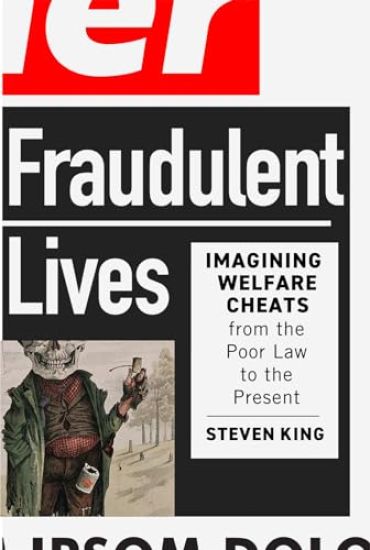
Fraudulent Lives

Fraudulent Lives

Steven King

MCGILL-QUEEN'S UNIVERSITY PRESS
2024
sidottu
The Western welfare state model is beset with structural, financial, and moral crises. So-called scroungers, cheats, and disability fakers persistently occupy the centre of public policy discussions, even as official statistics suggest that relatively small amounts of money are lost to such schemes.In Fraudulent Lives Steven King focuses on the British case in the first ever long-term analysis of the scale, meaning, and consequences of welfare fraud in Western nations. King argues that an expectation of dishonesty on the part of claimants was written into the basic fabric of the founding statutes of the British welfare state in 1601, and that nothing has subsequently changed. Efforts throughout history to detect and punish fraud have been superficial at best because, he argues, it has never been in the interests of the three main stakeholders – claimants, the general public, and officials and policymakers – to eliminate it.Tracing a substantial underbelly of fraud from the seventeenth century to today, King finds remarkable continuities and historical parallels in public attitudes towards the honesty of welfare recipients – patterns that hold true across Western welfare states.
Fraudulent Lives

Fraudulent Lives

Steven King

MCGILL-QUEEN'S UNIVERSITY PRESS
2024
nidottu
The Western welfare state model is beset with structural, financial, and moral crises. So-called scroungers, cheats, and disability fakers persistently occupy the centre of public policy discussions, even as official statistics suggest that relatively small amounts of money are lost to such schemes.In Fraudulent Lives Steven King focuses on the British case in the first ever long-term analysis of the scale, meaning, and consequences of welfare fraud in Western nations. King argues that an expectation of dishonesty on the part of claimants was written into the basic fabric of the founding statutes of the British welfare state in 1601, and that nothing has subsequently changed. Efforts throughout history to detect and punish fraud have been superficial at best because, he argues, it has never been in the interests of the three main stakeholders – claimants, the general public, and officials and policymakers – to eliminate it.Tracing a substantial underbelly of fraud from the seventeenth century to today, King finds remarkable continuities and historical parallels in public attitudes towards the honesty of welfare recipients – patterns that hold true across Western welfare states.
Rock Songs

Rock Songs

Steven Palmer

Tellwell Talent
2021
pokkari
"Long Live Rock ""Rock Songs" is a collection of dramatic visual interpretations of songs I've chosen to illustrate from a time when I feel music was at its finest. This book displays fantasy concepts depicting these individual pieces of music throughout the pages. Twenty-four compositions that represent a broad range of incredible music styles from the 70's and 80's genres: progressive, new wave, glam, alternative, soft rock, hard rock and onward. It was a very interesting and innovative era in the music industry during these times: impressive, powerful stage presentations and experimentation in the recording studios with new techniques. The songwriting and lyric content were absolutely astounding, creating rock songs that oozed with amazement and heartfelt significance. So pick up the book, choose an Illustration page, dig into your library of vinyl or CDs and crank it up: then relax and enjoy
Rock Songs

Rock Songs

Steven Palmer

Tellwell Talent
2021
sidottu
"Long Live Rock ""Rock Songs" is a collection of dramatic visual interpretations of songs I've chosen to illustrate from a time when I feel music was at its finest. This book displays fantasy concepts depicting these individual pieces of music throughout the pages. Twenty-four compositions that represent a broad range of incredible music styles from the 70's and 80's genres: progressive, new wave, glam, alternative, soft rock, hard rock and onward. It was a very interesting and innovative era in the music industry during these times: impressive, powerful stage presentations and experimentation in the recording studios with new techniques. The songwriting and lyric content were absolutely astounding, creating rock songs that oozed with amazement and heartfelt significance. So pick up the book, choose an Illustration page, dig into your library of vinyl or CDs and crank it up: then relax and enjoy
Tokyo Cyberpunk

Tokyo Cyberpunk

Steven T. Brown

Palgrave Macmillan
2010
sidottu
Engaging some of the most canonical and thought-provoking anime, manga, and science fiction films, Tokyo Cyberpunk offers insightful analysis of Japanese visual culture. Steven T. Brown draws new conclusions about the cultural flow of art, as well as important technological issues of the day.
Tokyo Cyberpunk

Tokyo Cyberpunk

Steven T. Brown

Palgrave Macmillan
2010
nidottu
Engaging some of the most canonical and thought-provoking anime, manga, and science fiction films, Tokyo Cyberpunk offers insightful analysis of Japanese visual culture. Steven T. Brown draws new conclusions about the cultural flow of art, as well as important technological issues of the day.
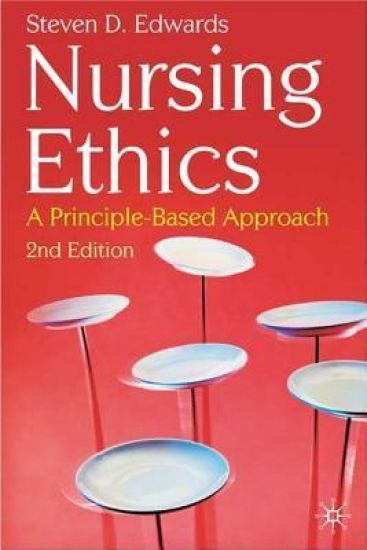
Nursing Ethics

Nursing Ethics

Steven Edwards

Red Globe Press
2009
nidottu
Struggling to understand ethics? Feeling lost when trying to handle moral dilemmas in professional practice? Worried about helping patients to make decisions in an ethical way? Nursing Ethics is an introductory text which enables you to consider, understand and tackle difficult moral problems. It takes a principle-based approach, which provides a practical and easy-to-apply framework for addressing ethical dilemmas. The book includes clear descriptions of moral theories and concepts and is packed with case examples – giving it immediate relevance to everyday nursing situations. As well as being significantly revised and updated, this new edition includes discussion of the Nursing and Midwifery Code (2008) and an entire chapter dedicated to genetics and the related complex ethicalissues. Simple, clear and accessible – Nursing Ethics is an essential purchase for all students and practitioners of nursing and health care.