Kirjojen hintavertailu. Mukana 11 342 296 kirjaa ja 12 kauppaa.

Kirjahaku

Etsi kirjoja tekijän nimen, kirjan nimen tai ISBN:n perusteella.

1000 tulosta hakusanalla Thomas Walter Perry

Thomas Middleton and Early Modern Textual Culture
Thomas Middleton and Early Modern Textual Culture is not only a companion to The Collected Works of Thomas Middleton, which every scholar of Renaissance literature will find indispensable. It is also essential reading for anyone interested in the history of the book in early modern Europe. The book is divided into two parts. The first part, on 'The Culture', situates Middleton within an historical and theoretical overview of early modern textual production, reproduction, circulation, and reception. An introductory essay by Gary Taylor ('The Order of Persons') surveys lists of persons written by or connected to Middleton, using the complex relationship between textual and social orders to trace the evolution of textual culture in England during the 'Middleton century' (1580-1679). Ten original essays then focus on Middleton's connections to different aspects of textual culture in that century: authorship (by MacD. P. Jackson), manuscripts (Harold Love), legal texts (Edward Geiskes), censorship (Richard Burt), printing (Adrian Weiss), visual texts (John Astington), music (Andrew Sabol), stationers and living authors (Cyndia Clegg), posthumous publishing (Maureen Bell), and early readers (John Jowett). The second part, 'The Texts', supplies the documentation for claims made in the first part. This includes detailed evidence for the canon and chronology of Middleton's works in all genres, greatly extending previous scholarship, and using the latest corpus-based attribution techniques. A full editorial apparatus is supplied for each item in The Collected Works: an Introduction, which summarizes and extends previous scholarship, is followed by textual notes, recording substantive departures from the control-text, variants between early texts, press-variants, discussions of emendations, and (for plays) an exact transcription of all original stage directions. Cross-references make it easy to move between the two volumes. This authoritative account of the early texts includes some extraordinarily complicated cases, which have never before been systematically collated: 'Hence, all you vain delights' (the most popular song lyric from the Renaissance stage), The Two Gates of Salvation, The Peacemaker, and A Game at Chess (the most complex editorial problem in early modern drama, with eight extant texts and numerous reports of the early performances).
Middle Plays: The Collected Works of Thomas Heywood, Volume 3
Thomas Heywood (c.1573-1641), who claimed to have had 'an entire hand, or at least a maine finger' in two hundred and twenty plays, was one of the most prolific and influential dramatists of the Elizabethan, Jacobean, and early Caroline theatre. Heywood was also recognized in his own time as a master essayist, producing numerous prose tracts, miscellanies, treatises, pamphlets, and broadsides, and in them, to use his own terms, he 'dissected' and 'anatomised' the religious and political dilemmas of contemporary monarchs and their courts. As city poet and principal writer of pageants for the Lord Mayor's Day from 1631 to 1639, Heywood was in a unique position to celebrate civic governance and local policy. He also produced and circulated translations of ancient Greek and Latin texts, as well as writing his own poetry, and, uniquely, edited the plays and poems of his collaborators and contemporaries, often describing in detail in prefaces and epistles how these texts were transmitted from author to audience. In sum, he participated in, epitomised and helped to establish the entire range of author in the early modern age. This modern edition of his works makes him accessible to students, scholars, general readers, actors and directors and rightfully establishes him as a major and seminal contributor to early modern English drama, poetry and prose. Heywood's motto was Aut prodesse solent aut delectare, adapted from the Ars Poetica of Horace and proclaiming the poet's purpose to produce profit and pleasure in his audience. Volume 3 of the edition, Middle Plays, features the five Age plays that he wrote to delight and teach. Heywood set himself the task to chronicle the entire range of classical myth, 'an entire history from Jupiter and Saturn to the utter subversion of Troy'. With ancient Homer acting as chorus (or master of ceremonies) in The Golden Age, The Silver Age, and The Brazen Age, Heywood takes his audiences from the Golden Age of Gods (who embody the worst of human faults) through the exploits of Hercules. The last two plays, The Iron Age, Parts I and II, focus on the carnage of the Trojan war and its aftermath. Redemption lies in the potential of a 'New Troy' in London and Rome. In these plays, Heywood reveals himself as a master of stagecraft, especially of pyrotechnics and flying entrances. His theatre is always exciting.
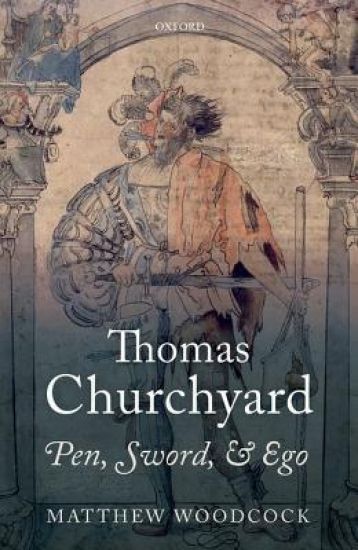
Thomas Churchyard

Thomas Churchyard

Matthew Woodcock

Oxford University Press
2016
sidottu
Soldier, courtier, author, entertainer, and amateur spy, Thomas Churchyard (c.1529-1604) saw action in most of the principal Tudor theatres of war, was a servant to five monarchs, and had a literary career spanning over half a century during which time he produced over fifty different works in a variety of forms and genres. Churchyard's struggles to subsist as an author and soldier provides an unrivalled opportunity to examine the self-promotional strategies employed by an individual who attempts to make a living from both writing and fighting, and who experiments throughout his life with ways in which the arts of the pen and sword may be reconciled and aligned. Drawing on extensive archival and literary sources, Matthew Woodcock reconstructs the extraordinary life of a figure well-known yet long neglected in early modern literary studies. In the first ever book-length biography of Churchyard, Woodcock reveals the author to be a resourceful and innovative writer whose long literary career plays an important part in the history of professional authorship in sixteenth-century England. This book also situates Churchyard alongside contemporary soldier-authors such as Henry Howard, Earl of Surrey, George Gascoigne, and Sir Philip Sidney, and it makes a significant contribution to our understanding of the relationship between literature and the military in the early modern period. Churchyard's writings drew heavily upon his own experiences at court and in the wars and the author never tired of drawing attention to the struggles he endured throughout his life. Consequently, this study addresses the wider methodological question of how we should construct the biography of an individual who was consistently preoccupied with telling his own story.
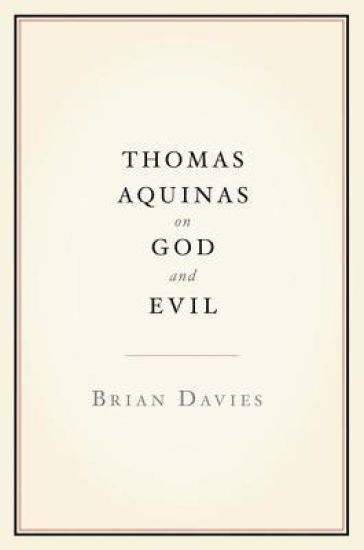
Thomas Aquinas on God and Evil

Thomas Aquinas on God and Evil

Brian Davies

Oxford University Press Inc
2011
sidottu
Brian Davies offers the first in-depth study of Saint Thomas Aquinas's thoughts on God and evil, revealing that Aquinas's thinking about God and evil can be traced through his metaphysical philosophy, his thoughts on God and creation, and his writings about Christian revelation and the doctrines of the Trinity and the Incarnation. Davies first gives an introduction to Aquinas's philosophical theology, as well as a nuanced analysis of the ways in which Aquinas's writings have been considered over time. For hundreds of years scholars have argued that Aquinas's views on God and evil were original and different from those of his contemporaries. Davies shows that Aquinas's views were by modern standards very original, but that in their historical context they were more traditional than many scholars since have realized. Davies also provides insight into what we can learn from Aquinas's philosophy. Thomas Aquinas on God and Evil is a clear and engaging guide for anyone who struggles with the relation of God and theology to the problem of evil.
Thomas Aquinas on God and Evil

Thomas Aquinas on God and Evil

Brian Davies

Oxford University Press Inc
2011
nidottu
Brian Davies offers the first in-depth study of Saint Thomas Aquinas's thoughts on God and evil, revealing that Aquinas's thinking about God and evil can be traced through his metaphysical philosophy, his thoughts on God and creation, and his writings about Christian revelation and the doctrines of the Trinity and the Incarnation. Davies first gives an introduction to Aquinas's philosophical theology, as well as a nuanced analysis of the ways in which Aquinas's writings have been considered over time. For hundreds of years scholars have argued that Aquinas's views on God and evil were original and different from those of his contemporaries. Davies shows that Aquinas's views were by modern standards very original, but that in their historical context they were more traditional than many scholars since have realized. Davies also provides insight into what we can learn from Aquinas's philosophy. Thomas Aquinas on God and Evil is a clear and engaging guide for anyone who struggles with the relation of God and theology to the problem of evil.
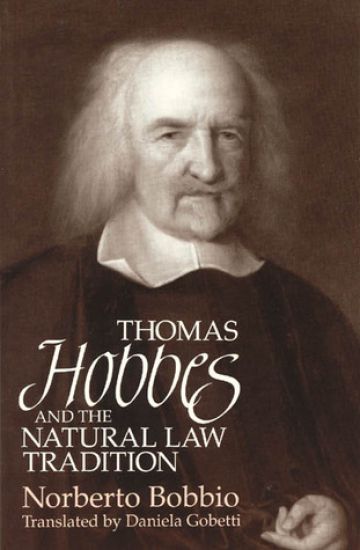
Thomas Hobbes and the Natural Law Tradition

Thomas Hobbes and the Natural Law Tradition

Norberto Bobbio

University of Chicago Press
1993
nidottu
Pre-eminent among European political philosophers, Norberto Bobbio has throughout his career turned to the political theory of Thomas Hobbes. Gathered here for the first time are the most important of his essays which together provide both a valuable introduction to Hobbes's thought and a fresh understanding of Hobbes's place in the theory of modern politics. Tracing Hobbes's work through De Cive and Leviathan, Bobbio identifies the philosopher's relation to the tradition of natural law. That Hobbes must now be understood in both this tradition as well as in the seemingly contradictory positivist tradition becomes clear for the first time in Bobbio's account. Bobbio also demonstrates that Hobbes cannot be easily labelled "liberal" or "totalitarian"; in Bobbio's provocative analysis of Hobbes's justification of the state, Hobbes emerges as a true conservative. Though his primary concern is to reconstruct the inner logic of Hobbes's thought, Bobbio is also attentive to the philosopher's biography and weaves into his analysis details of Hobbes's life and world--his exile in France, his relation with the Mersenne circle, his disputes with Anglican bishops, and accusations of heresy leveled against him. The result is a revealing, thoroughly new portrait of the first theorist of the modern state.
Thomas Kuhn

Thomas Kuhn

Steve Fuller

University of Chicago Press
2000
sidottu
Thomas Kuhn's "The Structure of Scientific Revolutions" is one of the best known and most influential books of the 20th century. Whether they adore or revile him, critics and fans alike have tended to agree on one thing: Kuhn's ideas were revolutionary. But were they? Steve Fuller argues that Kuhn actually held a profoundly conservative view of science and how one ought to study its history. Early on, Kuhn came under the influence of Harvard President James Bryant Conant (to whom "Structure" is dedicated), who had developed an educational programme intended to help deflect Cold War unease over science's uncertain future by focusing on its illustrious past. Fuller argues that this rhetoric made its way into "Structure", which Fuller sees as preserving and reinforcing the old view that science really is just a steady accumulation of truths about the world (once "paradigm shifts" are resolved). Fuller suggests that Kuhn, consciously or not, shared the tendency in Western culture to conceal possible negative effects of new knowledge from the general public. Because it insists on a difference between a history of science for scientists and one suited to historians, Fuller charges that "Structure" created the awkward divide that has led directly to the "Science Wars" and has stifled much innovative research. In conclusion, Fuller offers a way forward that rejects Kuhn's fixation on paradigms in favour of a conception of science as a social movement designed to empower society's traditionally disenfranchised elements. Certain to be controversial, "Thomas Kuhn" should be read by anyone who has adopted, challenged or otherwise engaged with "The Structure of Scientific Revolutions".
Thomas Kuhn

Thomas Kuhn

Steve Fuller

University of Chicago Press
2001
nidottu
Thomas Kuhn's "The Structure of Scientific Revolutions" is one of the best known and most influential books of the 20th century. Whether they adore or revile him, critics and fans alike have tended to agree on one thing: Kuhn's ideas were revolutionary. But were they? Steve Fuller argues that Kuhn actually held a profoundly conservative view of science and how one ought to study its history. Early on, Kuhn came under the influence of Harvard President James Bryant Conant (to whom "Structure" is dedicated), who had developed an educational programme intended to help deflect Cold War unease over science's uncertain future by focusing on its illustrious past. Fuller argues that this rhetoric made its way into "Structure", which Fuller sees as preserving and reinforcing the old view that science really is just a steady accumulation of truths about the world (once "paradigm shifts" are resolved). Fuller suggests that Kuhn, consciously or not, shared the tendency in Western culture to conceal possible negative effects of new knowledge from the general public. Because it insists on a difference between a history of science for scientists and one suited to historians, Fuller charges that "Structure" created the awkward divide that has led directly to the "Science Wars" and has stifled much innovative research. In conclusion, Fuller offers a way forward that rejects Kuhn's fixation on paradigms in favour of a conception of science as a social movement designed to empower society's traditionally disenfranchised elements. Certain to be controversial, "Thomas Kuhn" should be read by anyone who has adopted, challenged or otherwise engaged with "The Structure of Scientific Revolutions".
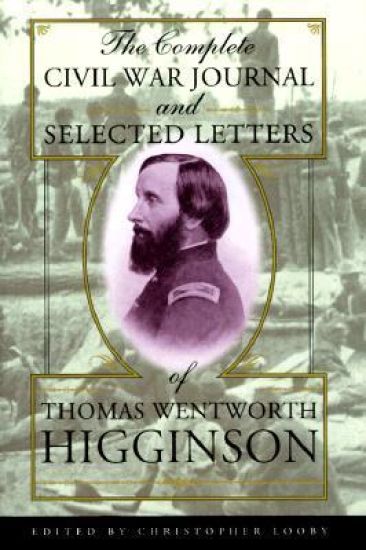
The Complete Civil War Journal and Selected Letters of Thomas Wentworth Higginson
Thomas Wentworth Higginson was a politically engaged intellectual at the forefront of antislavery, labour and feminist causes. Born in 1823 to a formerly wealthy but still prominent Brahmin family, he became one of America's foremost social activists and a leading writer, minister and reformer. With the publication in 1869 of his "Army Life in a Black Regiment", Higginson became an important chronicler of the American Civil War. This work is a comprehensive edition of his journal. Annotated by Christopher Looby and including a selection of Higginson's wartime letters, the volume offers a picture of the radical interracial solidarity brought about by the transformative experience of the army camp and of Civil War life.
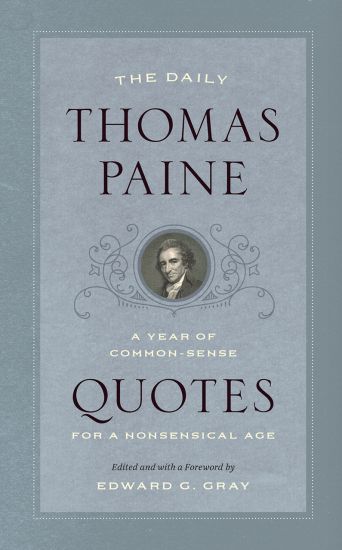
The Daily Thomas Paine

The Daily Thomas Paine

Thomas Paine; Edward G Gray

University of Chicago Press
2020
pokkari
Thomas Paine was the spark that ignited the American Revolution. More than just a Founding Father, he was a verbal bomb-thrower, a rationalist, and a rebel. In his influential pamphlets Common Sense and The American Crisis, Paine codified both colonial outrage and the intellectual justification for independence, arguing consistently and convincingly for Enlightenment values and the power of the people. Today, we are living in times that, as Paine famously said, "try men's souls." Whatever your politics, if you're seeking to understand the political world we live in, where better to look than Paine? The Daily Thomas Paine offers a year's worth of pithy and provocative quotes from this quintessentially American figure. Editor Edward G. Gray argues that we are living in a moment that Thomas Paine might recognize--or perhaps more precisely, a moment desperate for someone whose rhetoric can ignite a large-scale social and political transformation. Paine was a master of political rhetoric, from the sarcastic insult to the diplomatic apercu, and this book offers a sleek and approachable sampler of some of the sharpest bits from his oeuvre. As Paine himself says in the entry for January 20: "The present state of America is truly alarming to every man who is capable of reflexion." The Daily Thomas Paine--the newest addition to the University of Chicago Press's ongoing series of collected wisdom from notable writers--should prove equally incendiary and inspirational for contemporary readers with an eye for politics, even those who prefer the tweet to the pamphlet.
The Last Writings of Thomas S. Kuhn

The Last Writings of Thomas S. Kuhn

Thomas S. Kuhn

THE UNIVERSITY OF CHICAGO PRESS
2022
sidottu
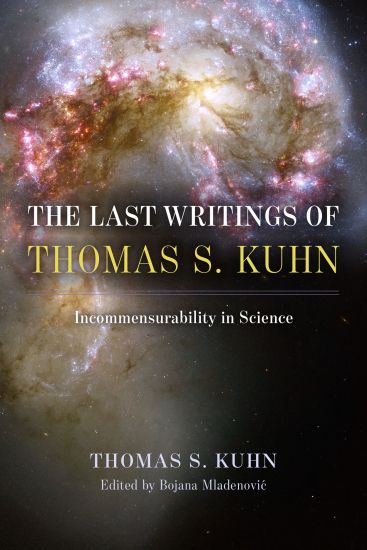
A must-read follow-up to The Structure of Scientific Revolutions, one of the most important books of the twentieth century. This book contains the text of Thomas S. Kuhn’s unfinished book, The Plurality of Worlds: An Evolutionary Theory of Scientific Development, which Kuhn himself described as a return to the central claims of The Structure of Scientific Revolutions and the problems that it raised but did not resolve. The Plurality of Worlds is preceded by two related texts that Kuhn publicly delivered but never published in English: his paper “Scientific Knowledge as Historical Product” and his Shearman Memorial Lectures, “The Presence of Past Science.” An introduction by the editor describes the origins and structure of The Plurality of Worlds and sheds light on its central philosophical problems. Kuhn’s aims in his last writings are bold. He sets out to develop an empirically grounded theory of meaning that would allow him to make sense of both the possibility of historical understanding and the inevitability of incommensurability between past and present science. In his view, incommensurability is fully compatible with a robust notion of the real world that science investigates, the rationality of scientific change, and the idea that scientific development is progressive.
The Last Writings of Thomas S. Kuhn

The Last Writings of Thomas S. Kuhn

Thomas S. Kuhn

THE UNIVERSITY OF CHICAGO PRESS
2024
nidottu
A must-read follow-up to The Structure of Scientific Revolutions, one of the most important books of the twentieth century. This book contains the text of Thomas S. Kuhn’s unfinished book, The Plurality of Worlds: An Evolutionary Theory of Scientific Development, which Kuhn himself described as a return to the central claims of The Structure of Scientific Revolutions and the problems that it raised but did not resolve. The Plurality of Worlds is preceded by two related texts that Kuhn publicly delivered but never published in English: his paper “Scientific Knowledge as Historical Product” and his Shearman Memorial Lectures, “The Presence of Past Science.” An introduction by the editor describes the origins and structure of The Plurality of Worlds and sheds light on its central philosophical problems. Kuhn’s aims in his last writings are bold. He sets out to develop an empirically grounded theory of meaning that would allow him to make sense of both the possibility of historical understanding and the inevitability of incommensurability between past and present science. In his view, incommensurability is fully compatible with a robust notion of the real world that science investigates, the rationality of scientific change, and the idea that scientific development is progressive.
Thomas Cranmer, Theologian

Thomas Cranmer, Theologian

G.W. Bromiley

JAMES CLARKE CO LTD
2023
nidottu
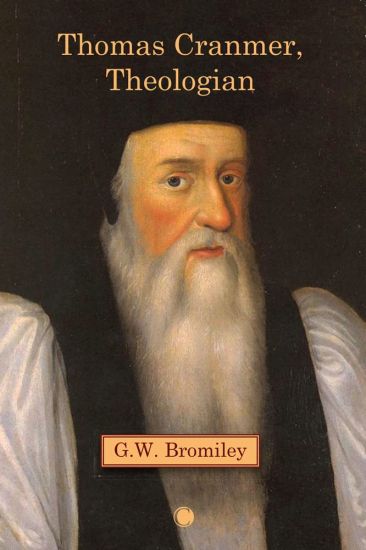
In his important evaluation of the theological leader of the English Reformation, G.W. Bromiley charts Cranmer's doctrinal views, scriptural interpretation and liturgical composition. His nuanced position on various controversial issues of the day, not least baptism, is articulated with clarity and care, and his ecumenical sensitivity is foregrounded. While arguably more adept as a scholar than as a creative theologian in his own right, Cranmer's writing nevertheless formed the cornerstone of future Anglican theology. Through his Articles of Religion (42, later reduced to 39) and the Book of Common Prayer, he set the parameters within which the Church of England was to operate. Perhaps most significantly, as Bromiley shows, his extensive citation of patristic sources established a precedent for his successors that continues today. Written by one of the great ecclesiastical historians of the twentieth century, Thomas Cranmer, Theologian is the essential starting point for understanding Cranmer's influence and legacy in the Anglican church.
Thomas Cranmer, Theologian

Thomas Cranmer, Theologian

G.W. Bromiley

JAMES CLARKE CO LTD
2023
sidottu
In his important evaluation of the theological leader of the English Reformation, G.W. Bromiley charts Cranmer's doctrinal views, scriptural interpretation and liturgical composition. His nuanced position on various controversial issues of the day, not least baptism, is articulated with clarity and care, and his ecumenical sensitivity is foregrounded. While arguably more adept as a scholar than as a creative theologian in his own right, Cranmer's writing nevertheless formed the cornerstone of future Anglican theology. Through his Articles of Religion (42, later reduced to 39) and the Book of Common Prayer, he set the parameters within which the Church of England was to operate. Perhaps most significantly, as Bromiley shows, his extensive citation of patristic sources established a precedent for his successors that continues today. Written by one of the great ecclesiastical historians of the twentieth century, Thomas Cranmer, Theologian is the essential starting point for understanding Cranmer's influence and legacy in the Anglican church.
Thomas and the Warrior Mouse

Thomas and the Warrior Mouse

Patrick M Dallabetta

Tellwell Talent
2023
pokkari
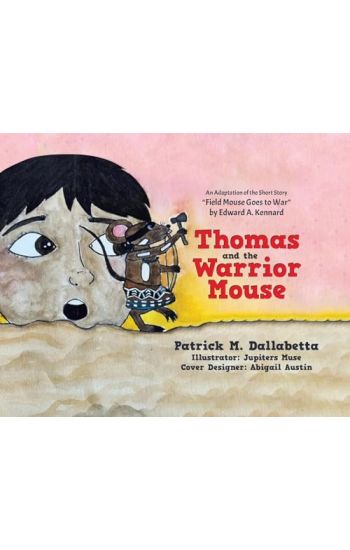
Patrick Dallabetta's children's book is an adaptation of Edward Kennard's Hopi fable about the battle to save a Hopi Indian village from plunder. The original story, written in 1939, was adapted to include the adventures of Thomas Polywetewa, a young Hopi boy, and his field mouse best friend Tusan Homichi. How can Thomas and his pal Tusan work together to help his tribe survive the wrath of an enemy that could eliminate a major food source for his people of Second Mesa in Northern Arizona? The story explores aspects of the fascinating culture of the Hopi Indians. This wonderful children's book is available from most major book outlets and is the first of several stories that explore the adventures of the young Hopi boy Thomas as he grows up and learns about his own cultural heritage.
Thomas and the Warrior Mouse

Thomas and the Warrior Mouse

Patrick M Dallabetta

Tellwell Talent
2023
sidottu
Patrick Dallabetta's children's book is an adaptation of Edward Kennard's Hopi fable about the battle to save a Hopi Indian village from plunder. The original story, written in 1939, was adapted to include the adventures of Thomas Polywetewa, a young Hopi boy, and his field mouse best friend Tusan Homichi. How can Thomas and his pal Tusan work together to help his tribe survive the wrath of an enemy that could eliminate a major food source for his people of Second Mesa in Northern Arizona? The story explores aspects of the fascinating culture of the Hopi Indians. This wonderful children's book is available from most major book outlets and is the first of several stories that explore the adventures of the young Hopi boy Thomas as he grows up and learns about his own cultural heritage.