Kirjojen hintavertailu. Mukana 11 699 587 kirjaa ja 12 kauppaa.

Kirjahaku

Etsi kirjoja tekijän nimen, kirjan nimen tai ISBN:n perusteella.

1000 tulosta hakusanalla Trista Laborn

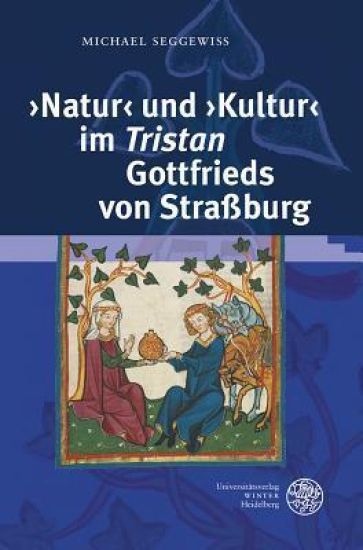
'natur' Und 'kultur' Im 'tristan' Gottfrieds Von Strassburg: VOR Dem Hintergrund Naturphilosophischer Und Ethischer Diskurse Des Ausgehenden 12. Und 1
Die kompromisslose 'minne' zwischen Tristan und Isolde, von der Gottfried von Strassburg erzahlt, steht quer zu Anstand und Moral, bringt die 'ere' aller Beteiligten in Gefahr, ist eine unbandige Naturmacht inmitten der hofischen Kultur. Und doch wurde und wird sie als utopisches Ideal und Beispiel reinster Liebe gefeiert. Diesem (scheinbaren) Widerspruch geht diese Arbeit nach, indem sie die Frage nach der Moglichkeit einer Versohnung von 'Natur' und 'Kultur' in den Mittelpunkt stellt. Wie sich zeigt, wird hier der im Mittelalter gangige Dualismus dieser beiden so gegensatzlichen Welten zugunsten einer hoheren Synthese durchbrochen - ein Prinzip, das sich als strukturgebend fur Gottfrieds Roman auf vielfaltigen Ebenen erweist. Im Diskurs hofischer Wertevermittlung nimmt Gottfried damit eine Sonderrolle ein, die sich dennoch auf prominente Vorbilder zuruckfuhren lasst und deren Sprengkraft noch bei seinen Nachfolgern spurbar ist.

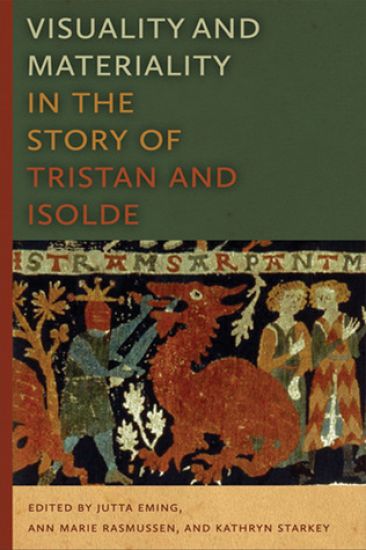
Visuality and Materiality in the Story of Tristan and Isolde
More than any other secular story of the Middle Ages, the tale of Tristan and Isolde fascinated its audience. Adaptations in poetry, prose, and drama were widespread in western European vernacular languages. Visual portrayals of the story appear not only in manuscripts and printed books but in individual pictures and pictorial narratives, and on an amazing array of objects including stained glass, wall paintings, tiles, tapestries, ivory boxes, combs, mirrors, shoes, and misericords. The pan-European and cross-media nature of the surviving medieval evidence is not adequately reflected in current Tristan scholarship, which largely follows disciplinary and linguistic lines. The contributors to Visuality and Materiality in the Story of Tristan and Isolde seek to address this problem by opening a cross-disciplinary dialogue and by proposing a new set of intellectual coordinates—the concepts of materiality and visuality—without losing sight of the historical specificity or the aesthetic character of individual works of art and literature. Their theoretical paradigm allows them to survey the richness of the surviving evidence from a variety of disciplinary approaches, while offering new perspectives on the nature of representation in medieval culture. Enriched by numerous illustrations, this volume is an important examination of the story of Tristan and Isolde in the European context of its visual and textual transmission.
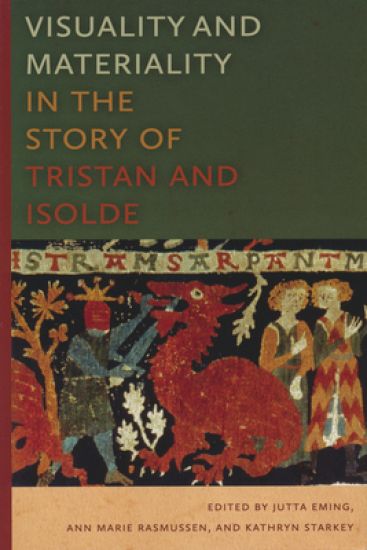
Visuality and Materiality in the Story of Tristan and Isolde
More than any other secular story of the Middle Ages, the tale of Tristan and Isolde fascinated its audience. Adaptations in poetry, prose, and drama were widespread in western European vernacular languages. Visual portrayals of the story appear not only in manuscripts and printed books but in individual pictures and pictorial narratives, and on an amazing array of objects including stained glass, wall paintings, tiles, tapestries, ivory boxes, combs, mirrors, shoes, and misericords. The pan-European and cross-media nature of the surviving medieval evidence is not adequately reflected in current Tristan scholarship, which largely follows disciplinary and linguistic lines. The contributors to Visuality and Materiality in the Story of Tristan and Isolde seek to address this problem by opening a cross-disciplinary dialogue and by proposing a new set of intellectual coordinates—the concepts of materiality and visuality—without losing sight of the historical specificity or the aesthetic character of individual works of art and literature. Their theoretical paradigm allows them to survey the richness of the surviving evidence from a variety of disciplinary approaches, while offering new perspectives on the nature of representation in medieval culture. Enriched by numerous illustrations, this volume is an important examination of the story of Tristan and Isolde in the European context of its visual and textual transmission.
Les Espaces de la Transgression Dans le Tristan de Beroul

Les Espaces de la Transgression Dans le Tristan de Beroul

Neda Chernack Zovic

Peter Lang Publishing Inc
1997
sidottu
Le poeme d'amour Tristan et Yseut de Beroul, ecrit au XIIe siecle se distingue par son originalite des oeuvres litteraires courtoises de l'epoque. Cette originalite tient en partie au caractere iconographique de l'oeuvre. Le jardin, la foret, la Blanche Lande constituent une toile de fond sur laquelle les personnages sont representes. Par son approche litteraire et historique cette etude cherche a etablir une relation entre l'evolution interieure des personnages principaux et leur deplacement dans les cadres spatio-temporels, et la maniere dont ces cadres mettent en representation les relations familiales et feodales.
Gottfried von Strassburg and the Medieval Tristan Legend
This volume comprises selected papers from a Tristan symposium held at the Institute of Germanic Studies in London. The symposium was conceived by the organizers as an experiment in transatlantic dialogue and the papers representthe views of scholars from a variety of North American and British universities. The main focus of attention is Gottfried's Tristan. Familiar assumptions about the text are questioned and fresh perspectives are offered on many contentious issues: those disagreements which persist are themselves a reflection posed by Gottfried's masterpiece. In addition, new light is thrown on the treatment of the Tristan theme in medieval and modern times.Contributors are:MICHAEL CURSCHMANN, W.J. MCCANN, MARGARET BROWN, C. STEPHEN JAEGER, M.H. JONES, ADRIAN STEVENS, ARTHUR GROOS, THOMAS KERTH, MICHAEL BATTS, MARIANNE WYNN, JANET WHARTON, GEORGE GILLESPIE, JOAN M. FERRANTE, LESLIE SEIFFERT, SIDNEY M. JOHNSON, PETRUS W. TAX, AUGUST CLOSS, H.B. WILLSON, ROY WISBEY.
Issues of Unity in Ovid’s Tristia"

Issues of Unity in Ovid’s Tristia"

Helena Dettmer

Peter Lang Publishing Inc
2021
sidottu
In his 1995 Teubner edition, J. B. Hall separates Tristia 1.5, 1.9, 3.4, 4.4, 5.2, and 5.7 into two poems. One reviewer of Hall’s edition is highly critical of the editor for not justifying the separation of these poems despite the fact the divisions have manuscript support. Because of the sorry state of the textual transmission of Ovid's Tristia, it is sometimes difficult to determine the beginning and end of an individual poem if that poem resumes thematically and verbally where the previous poem concludes. The aim of this study is to show that definitive evidence can be offered to justify division of these six elegies into two poems. Structure combined with theme serves as an analytical tool that defines the beginning and end of the twelve literary pieces under consideration and highlights their artistry. Resolution of the issue of unity enhances our interpretation of the independent poems and our understanding of the complex interplay among poems within each poetry-book. The careful and often brilliant craftsmanship of the poems and of the books in which they appear reaffirms that Ovid’s repeated deprecation of the quality of his literary work composed during his period of exile in the Black Sea region is simply a pose to attract sympathy and support from his Roman audience.