Kirjahaku
Etsi kirjoja tekijän nimen, kirjan nimen tai ISBN:n perusteella.
1000 tulosta hakusanalla VERONICA SMITH







She pushed some books forward on the shelf, and placed it behind them. Then she repositioned the books, glanced around once more, and started toward the stairway. We continued to stand silently inside the room, listening as she came up the stairs. Her door closed. It was safe to go back to my room. I tip-toed inside the bedroom, and slumped onto my bed, much disturbed by what I had seen. Why, I wondered, did Lottie Schneider sneak downstairs at two a.m. just to hide a gun?
"That Your Joy May Be Full" is a product of my own battle with depression. Through many trials I discovered that God's way was the only way the healing. This book will help you to have a heavenly view of life that will help change your heart. That Your Joy May Be Full" is unique in that it gives God's prescription for depression.
She loved to tell about life in the little village where she was born. As I listened to her stories, I longed to bring that village to life; to meet Mama, Papa, Alex, Katya, but most of all, to meet Maria...the woman who told me the stories.

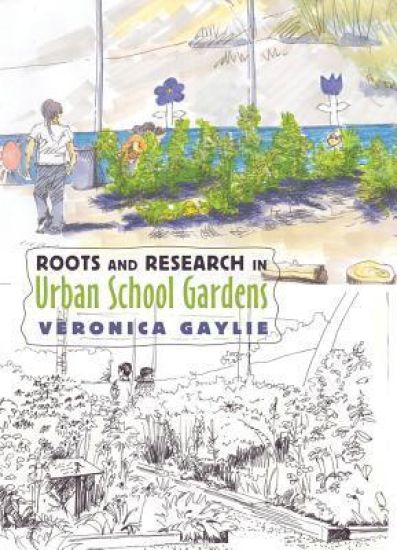
This book explores the urban school garden as a bridge between environmental action and thought. As a small-scale response to global issues around access to food and land, urban school gardens promote practical knowledge of farming as well as help renew cultural ideals of shared space and mutual support for the organic, built environment. Through a comprehensive history of school garden practice rooted in Eastern industrial cities, to case studies from four Pacific Rim regions, this book examines the practice and culture of the urban school garden as a central symbol for environmental learning. As poetically described by students, teachers, and community members in both historical and contemporary gardens, the story of the urban school garden inspires a new narrative in connecting learners to the land.
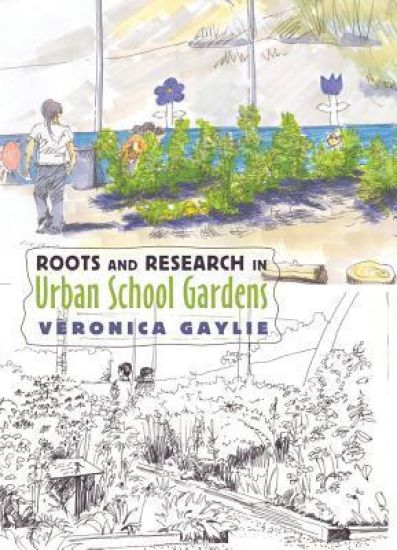
This book explores the urban school garden as a bridge between environmental action and thought. As a small-scale response to global issues around access to food and land, urban school gardens promote practical knowledge of farming as well as help renew cultural ideals of shared space and mutual support for the organic, built environment. Through a comprehensive history of school garden practice rooted in Eastern industrial cities, to case studies from four Pacific Rim regions, this book examines the practice and culture of the urban school garden as a central symbol for environmental learning. As poetically described by students, teachers, and community members in both historical and contemporary gardens, the story of the urban school garden inspires a new narrative in connecting learners to the land.
Women’s mythic revision is a tradition at the heart of twentieth-century literature. Medea’s Chorus explores post-WWII women’s poetry that takes Greek mythology as its central topos. The book investigates five of the most influential poets writing in the twentieth century (H.D., Sylvia Plath, Adrienne Rich, Margaret Atwood, Eavan Boland) who challenge both the ancient literary representations of women and the high modernist appropriations of the classics. In their poetry and prose, the women engage with cultural discourses about literary authority, gender, oppression, violence, and age. Yet even while the poets rework certain aspects of the Greek myths that they find troubling, they see the inherent power in the stories and use that power for personal and social revelation. Because myths exist in multiple versions, ancient writers did not create from scratch; their artistic contribution lay in how they changed the stories. Modern female poets are engaging in a several millennia-old tradition of mythic revision, a tradition that has ruthlessly posited that there is no place for women in the creation and transmission of mythological poetry. Medea’s Chorus tracks mythic revision from the 1950s through the second-wave feminist movement and into turn-of-the-century feminism to highlight individual achievements and to show the collective effect of the poets’ highly varied works on post-WWII literature and feminist thought and practice. This engaging and beautifully written book is a must-read for any student, teacher, or scholar of the Classical Tradition, revisionist mythmaking, and twentieth-century poetry.