This collection of essays emerged from a symposium held at Mercer University which examined the ways in which W. E. B. DuBois's theories of race have shaped racial discussion and public policy in the twentieth-century. The essays also examine the application of Du Bois's theories to the new millennium, as well as his contributions to the study of the humanities.
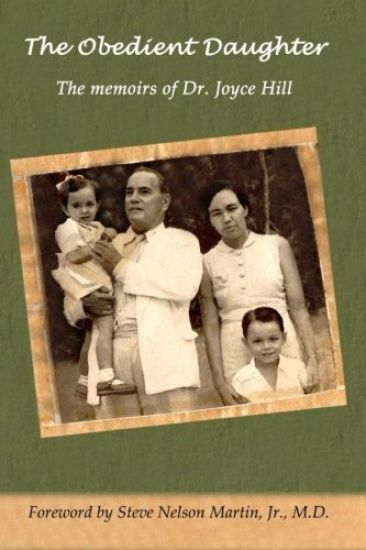
It is a story of an abused child who grew up to be an awesome Christian doctor who overcame a life of pain and rejection to help thousands of Chinese orphaned sick babies. Her passion to be an obedient child of God is told in this book.
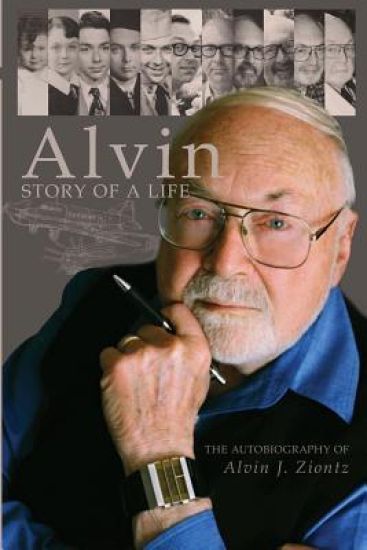
"ALVIN" is the story of a life - a career as a lawyer defending Indian tribes and a parallel career in photography. The writer, 87, tells stories; stories of a young man from a middle class Jewish family in Chicago, a voracious reader with a talent for art and music, yet seeking out the work of a manual laborer, a story of racial bigotry in the U.S. Army, the story of his rise from a mediocre law student to the founder of a law firm in Seattle that became a national leader in the defense of tribal sovereignty, the story of the love of "Lennie", the girl he married and her conquest of cancer, the story of his children and their lives, and the story of his immersion in the art of photography. The stories include devoting his lawyer's skills to exonerate a mailman wrongly accused of stealing from the mails, arguing a case in the Supreme Court, persuading a court that his client's possession of gold bullion was not a crime, debating an "Equal Protection" issue with the future Justice of the Supreme Court, Ruth Bader Ginsberg, meeting John F. Kennedy, litigating a Rabbi's will by crossing swords with the highest authority in Orthodox Judaism and his part in the struggle of American Indian tribes to reconstruct their tribal governments.
A well-documented factual and fictional romp into the hidden recesses of the Trumpian world and the twists and turns of fate that ultimately cause his downfall and subsequent demise. Discover how Michael Cohen learned about Melania and Donald's secret daughter; why Trump had him create a new identity for the child, so that the paparazi and the media were fooled, and unaware of her true heritage for over fifteen years. Be the first to learn who the 45th President chose to become his next young wife, and how the FBI failed to prevent a series of lethal assassin attempts against President Donald J. Trump.
1st Sergeant Arthur "Bud" Locke was based at Clark Field in the Philippines, as part of the USAAF's Far East Air Service Command, in 1941. He was taken prisoner with many others in the Japanese invasion of the Philippines, experienced the Bataan Death March, and was transported to a POW work-camp in Kobe, Japan, from which he was liberated at the end of the war. This is the story of his war.
Anhand des bewährten und praxisnahen Programms werden den Eltern sozial auffälliger Jugendlicher die notwendigen Fertigkeiten vermittelt, gemeinsam mit ihren Kindern die turbulente Zeit der Pubertät zu meistern. Die Pubertät: eine Zeit rascher und umfassender Veränderungen für die Eltern, den Jugendlichen und die Familie. Meistens stellt sich der Wandel nicht ohne Turbulenzen, große und kleine Krisen ein. Wenn aufmerksamkeitsgestörte oder sozial auffällige Kinder in die Pubertät kommen, sind diese Turbulenzen jedoch oft bedrohlich. Die ohnehin schon bestehenden Probleme verschärfen sich deutlich. Und die Eltern haben oft keine Basis, um mit den Jugendlichen ins Gespräch zu kommen. Zudem fehlt es den Eltern meistens an erzieherischen Fähigkeiten, um die schwierige Situation zu gestalten. Das vorliegende Buch stellt ein Training für Eltern von sozial auffälligen Jugendlichen dar. Die Eltern lernen einzeln oder in Gruppen, wie sie ihren Sohn/ihre Tochter angemessen anleiten können. Die Jugendlichen werden in das Elterntraining einbezogen. Das therapeutische Vorgehen und die vorausgehenden diagnostischen Maßnahmen werden anschaulich dargestellt. Eine beigefügte CD enthält alle notwendigen Materialien. Außerdem wird der Leser fundiert über die Reifungskrisen informiert, die in der Pubertät auftreten. Pubertät wird als Entwicklungsaufgabe für den Jugendlichen und seine Eltern sowie seine Familie behandelt. Das Manual hat sich umfangreich bewährt. Es ist sorgfältig erstellt und verfolgt entwicklungsorientierte Ziele. Es schließt eine eklatante Lücke in den bisherigen Behandlungsprogrammen und stellt die praktische Umsetzbarkeit in den Mittelpunkt.
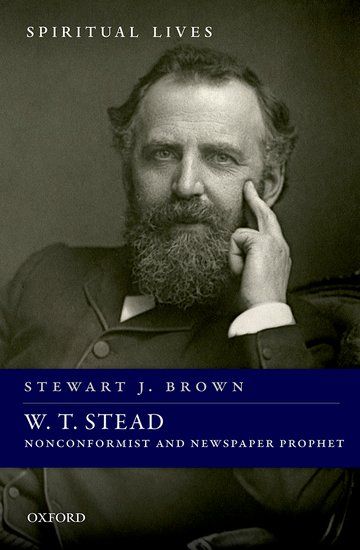
W. T. Stead (1849-1912) was a newspaper editor, author, social reformer, advocate for women rights, peace campaigner, spiritualist, and one of the best-known public figures in the late Victorian and Edwardian Britain. W. T. Stead: Nonconformist and Newspaper Prophet provides a compelling religious biography of Stead, offering particular attention to his conception of journalism--in an age of growing mass literacy--as a means to communicate religious truth and morality, and his view of the editor's desk as a modern pulpit. Leading scholar, Stewart J. Brown explores how his Nonconformist Conscience and sense of divine calling infused Stead's newspaper crusades-most famously his 'Maiden Tribute' campaign against child prostitution. The biography also examines Stead's growing interest in spiritualism and the occult, as he searched for the evidence of an afterlife that might draw people in a more secular age back to faith. It discusses his imperialism and his belief in the English-speaking peoples of the British Empire and American Republic as God's new chosen people for the spread of civilisation; and it highlights how his growing understanding of other faiths and cultures--but more especially his moral revulsion over the South African War of 1899-1902--brought him to question those beliefs. Finally, it assesses the influence of religious faith on his campaigns for world peace and the arbitration of international disputes.
The contemporary German author W. G. Sebald was a master of the fiction of recollection and observation, often exploring the reverberations of World War II on the personal and collective memories of Germans and Jews. His rich body of work earned him legions of fans across the globe, but in the wake of his death in 2001, Sebald also became the subject of extensive critical study. Literary scholars have identified a number of subjects that frequently appear in Sebald's novels: the Holocaust, trauma and memory, melancholy, photography, travel, intertextuality, and the nature and meaning of home, but they have yet to locate an overarching narrative that ties these topics to the broader historical trajectories with which Sebald's work is also fundamentally concerned. In W. G. Sebald: Image, Archive, Modernity, J. J. Long identifies a wider "meta-problem" in Sebald's work--the problem of modernity. The numerous archival institutions and processes that lie at the heart of modernity are repeatedly explored in Sebald's novels. Photography, museums, libraries, and other institutions for producing and preserving knowledge are among Sebald's main obsessions. Following Foucault, these systems are seen as central to the exercise of power and the constitution of subjectivity, themes embodied in Sebald's melancholy search for autonomous selfhood in an increasingly impersonal and bureaucratized age. Considering the evocation of wonder in the prose narratives of Vertigo, family albums in The Emigrants, the ambulatory narrative in The Rings of Saturn, and the archival subject in Austerlitz, Long advances a highly original interpretation of the author's oeuvre, arguing that Sebald's project needs to be understood as a response not merely to post-Holocaust trauma but to the longer history of modernity.
The contemporary German author W. G. Sebald was a master of the fiction of recollection and observation, often exploring the reverberations of World War II on the personal and collective memories of Germans and Jews. His rich body of work earned him legions of fans across the globe, but in the wake of his death in 2001, Sebald also became the subject of extensive critical study. Literary scholars have identified a number of subjects that frequently appear in Sebald's novels: the Holocaust, trauma and memory, melancholy, photography, travel, intertextuality, and the nature and meaning of home, but they have yet to locate an overarching narrative that ties these topics to the broader historical trajectories with which Sebald's work is also fundamentally concerned. In W. G. Sebald: Image, Archive, Modernity, J. J. Long identifies a wider "meta-problem" in Sebald's work--the problem of modernity. The numerous archival institutions and processes that lie at the heart of modernity are repeatedly explored in Sebald's novels. Photography, museums, libraries, and other institutions for producing and preserving knowledge are among Sebald's main obsessions. Following Foucault, these systems are seen as central to the exercise of power and the constitution of subjectivity, themes embodied in Sebald's melancholy search for autonomous selfhood in an increasingly impersonal and bureaucratized age. Considering the evocation of wonder in the prose narratives of Vertigo, family albums in The Emigrants, the ambulatory narrative in The Rings of Saturn, and the archival subject in Austerlitz, Long advances a highly original interpretation of the author's oeuvre, arguing that Sebald's project needs to be understood as a response not merely to post-Holocaust trauma but to the longer history of modernity.