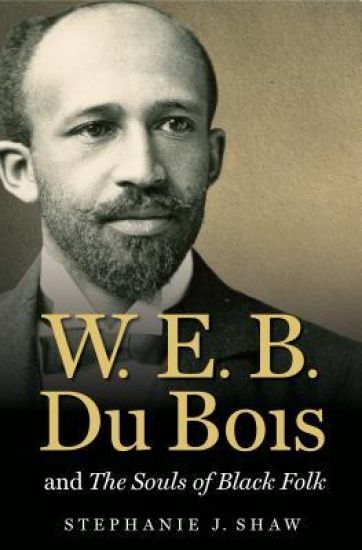
In this book, Stephanie J. Shaw brings a new understanding to one of the great documents of American and black history. While most scholarly discussions of The Souls of Black Folk focus on the veils, the color line, double consciousness, or Booker T. Washington, Shaw reads Du Bois' book as a profoundly nuanced interpretation of the souls of black Americans at the turn of the twentieth century. Demonstrating the importance of the work as a sociohistorical study of black life in America through the turn of the twentieth century and offering new ways of thinking about many of the topics introduced in Souls, Shaw charts Du Bois' successful appropriation of Hegelian idealism in order to add America, the nineteenth century, and black people to the historical narrative in Hegel's philosophy of history. Shaw adopts Du Bois' point of view to delve into the social, cultural, political, and intellectual milieus that helped to create The Souls of Black Folk.
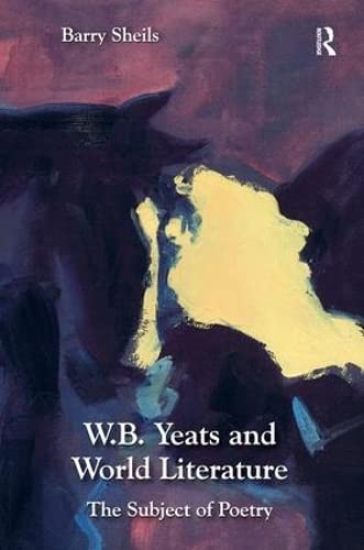
Arguing for a reconsideration of William Butler Yeats’s work in the light of contemporary studies of world literature, Barry Sheils shows how reading Yeats enables a fuller understanding of the relationship between the extensive map of world literary production and the intensities of poetic practice. Yeats’s appropriation of Japanese Noh theatre, his promotion of translations of Rabindranath Tagore and Shri Purohit Swãmi, and his repeated ventures into American culture signalled his commitment to moving beyond Europe for his literary reference points. Sheils suggests that a reexamination of the transnational character of Yeats's work provides an opportunity to reflect critically on the cosmopolitan assumptions of world literature, as well as on the politics of modernist translation. Through a series of close and contextual readings, the book demonstrates how continuing global debates around the crises of economic liberalism and democracy, fanaticism, asymmetric violence, and bioethics were reflected in the poet's formal and linguistic concerns. Challenging orthodox readings of Yeats as a late-romantic nationalist, W.B. Yeats and World Literature: The Subject of Poetry makes a compelling case for reading Yeats’s work in the context of its global modernity.
Over many years W. R. Matthews (who was successively Professor of the Philosophy of Religion at King’s College London, Dean of Exeter and Dean of St Paul’s) wrote copiously on both philosophy and theology in books, lectures and sermons. Although associated with the movements known as ‘modernism’ and ‘liberal Protestantism’ he was essentially a Christian Platonist who moreover was theologically orthodox on all vital points. Professor Owen quotes widely from Dr Matthews’ published writings on The Concept of God, Religion and Reason, and Christology and Ethics. He brings out their significance both for an understanding of the ways in which religious thought developed in the first half of this century and for the light they shed on questions discussed by theologians today.
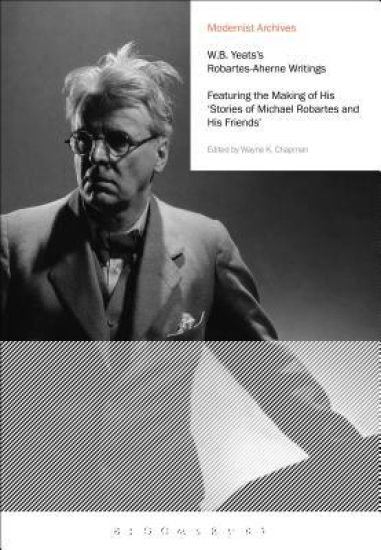
The figures of Michael Robartes and Owen Aherne appear throughout the writing of the great Irish poet W.B. Yeats, featuring in his poems, short fictions, dialogues and as authorities in notes to his work. Bringing together into one volume published and unpublished writings featuring these two enigmatic figures, W.B. Yeats’s Robartes-Aherne Writings traces their history and the development of Yeats’s mystical thought that culminated (twice) in the publication of his visionary work A Vision (1925, 1937). Including reproductions of manuscript and notebook pages as well as transcriptions and extracts from a wide range of Yeats’s mystical writings and substantial commentary and annotation throughout, this book is an essential resource for scholars of Yeats’s thought, his stylistic evolution and the esoteric influences on modernist writing in the early 20th century.