Kirjahaku
Etsi kirjoja tekijän nimen, kirjan nimen tai ISBN:n perusteella.
1000 tulosta hakusanalla W. Weldon Champneys

The world is full of magic things, patiently waiting for our senses to grow sharper. - W.B. Yeats This beautiful silkbound hardback contains the complete poetic works of W.B. Yeats. One of Ireland's greatest writers, Yeats helped to revive the fortunes of Irish literature through his poetry. Ranging from enchanted tales of dreamlike beings to impassioned polemics, the Irish bard leads you through the irresistible landscape of Ireland - past, present and future - while his magical works cast a lasting spell. Presented in a stylish slipcase, this deluxe gift edition features gold foil embossing and elegant full-color illustrations which perfectly compliment his enchanting poems. ABOUT THE SERIES: The Arcturus Silkbound Classics series brings together deluxe gift editions of literary classics, presented with luxurious silk binding, striking embossed cover designs and full-color illustrations.
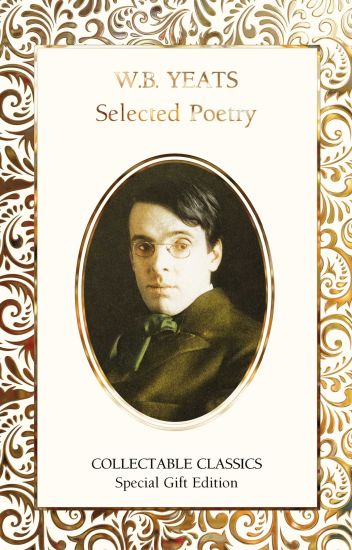
Little treasures, the FLAME TREE COLLECTABLE CLASSICS are chosen to create a delightful and timeless home library. Each stunning, gift edition features deluxe cover treatments, ribbon markers, luxury endpapers and gilded edges. The original text is accompanied by a Glossary of Victorian and Literary terms produced for the modern reader. The poetry of W.B. Yeats is among the most-loved literature of the twentieth century. At times dream-like, at others political, his verse has a rich sense of identity, infused with myth, mysticism and lyrical skill. This gift edition of selected poetry gathers some of the finest works by the Irish poet, including ‘The Lake Isle of Innisfree’, ‘The Stolen Child’, ‘When You Are Old’, ‘The Song of the Happy Shepherd’, 'Aedh Wishes for the Cloths of Heaven', ‘Easter, 1916’, 'The Second Coming' and 'A Prayer for my Daughter'. In place of the glossary are included selected notes by Yeats himself, and indexes of titles and first lines.
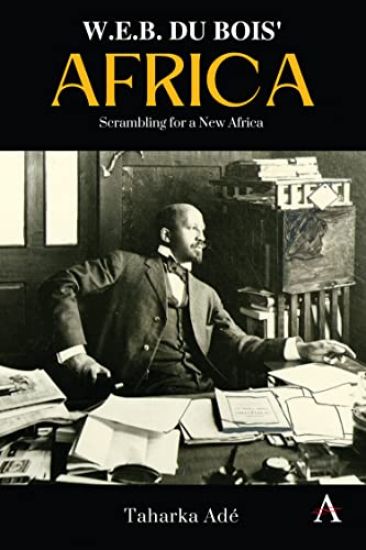
W. E. B. Du Bois was one of the leading figures of Pan-African thought and activism in the twentieth century. As a sociologist, Du Bois wrote much about the historical and social circumstances of African Americans while often acknowledging the African historical background of much of African American, or Negro, culture. In 1946 Du Bois published The World and Africa, which was a culmination of previous attempts at penning a narrative of African history beginning with his 1915 publication The Negro, in which he included the social-historical experience of African Americans within the continuity of African history. This book delivers for the first time a comprehensive Afrocentric investigation and critique of Du Bois’s writings on African history. It argues that while Du Bois presented at the time a strong critique of the Eurocentric construction of African history, many of Du Bois’s descriptions and arguments about African people and history were likewise flawed with interpretations that projected the cultural subjectivities of Europe. Further, while Du Bois rightfully presents the historical relationship between African Americans and Africa as a justification for Pan-African activism, this book contends that Du Bois’s failure to center African culture instead of race leads to superficial justifications for Pan-African unity.

British abstract painter Wilhelmina Barns-Graham (1912-2004) played a key role in the development of modern abstract art in Britain. This new paperback edition of Lynne Green's classic monograph completes the story of the artist's life and work with a new Coda covering Barns-Graham's final years, which draws for the first time on the artist's personal diaries and notebooks. Born in Fife, Scotland, for over sixty years Barns-Graham lived and worked in St Ives, at the heart of the avant-garde group of artists who made the town internationally famous. Arriving in Cornwall just months after the modernists Ben Nicholson, Barbara Hepworth and Naum Gabo, Barns-Graham was quickly absorbed into their inner circle. She was subsequently one of the Crypt Group of young moderns, and a founder member of the breakaway Penwith Society of Arts. Green examines the importance of Barns-Graham's national tradition and of her teachers at Edinburgh School of Art, particularly the Scottish Colourists William Gillies and John Maxwell. Barns-Graham's developing commitment to abstraction is discussed in detail: never afraid to experiment, her work is revealed as embodying many of the issues central to post-war abstract art. Barns-Graham continued to work right up to her death with the energy and enthusiasm usually associated with the young. Towards the end of her life her art finally started to attract the attention it deserved.
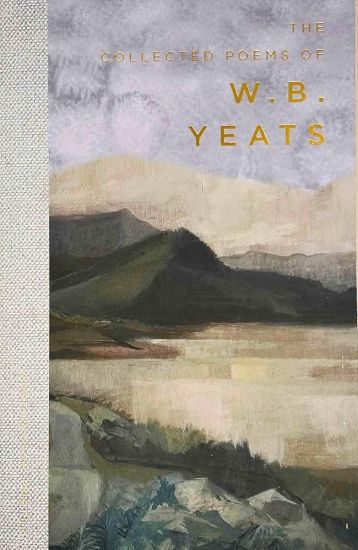
With a new Introduction by Cedric Watts, Research Professor of English, University of Sussex. W. B. Yeats was Romantic and Modernist, mystical dreamer and leader of the Irish Literary Revival, Nobel prizewinner, dramatist and, above all, poet. He began writing with the intention of putting his 'very self' into his poems. T. S. Eliot, one of many who proclaimed the Irishman's greatness, described him as 'one of those few whose history is the history of their own time, who are part of the consciousness of an age which cannot be understood without them'. For anyone interested in the literature of the late nineteenth century and the twentieth century, Yeats's work is essential. This volume gathers the full range of his published poetry, from the hauntingly beautiful early lyrics (by which he is still fondly remembered) to the magnificent later poems which put beyond question his status as major poet of modern times. Paradoxical, proud and passionate, Yeats speaks today as eloquently as ever.
W.R. Bion
Karnac Books
2000
nidottu
A collection of papers on and about the work of Wilfred Bion and its continuing development. Most were presented at the International Centennial Conference on the work of Bion in Turin in 1997. Contributors include Francesca Bion, Andre Green, James Grotstein, and many others. “How are we to become wise when so much emphasis is placed on cleverness, on building increasingly complex substitutes for thought? Where does wisdom come on a scale measuring success?” So writes Francesca Bion, when considering her husband’s work. A fitting tribute to Bion would be a collection of papers containing passionate attempts at thinking, not substitutes for thought. In this book, concern with psychic life, far from being dead, reaches new places, takes deeper, more nuanced turns. Authors penetrate subtly into our lying ways and soundly appreciate the complexities of our hunger for truth and experience.
The Complete Works of W. R. Bion is now available. Comprising sixteen volumes, this edition has been brought together and edited by Chris Mawson with the assistance of Francesca Bion. Incorporating many corrections to previously published works, it also features previously unpublished papers. Including a general index and editorial introductions to all the works, these volumes will be a useful and valuable aid to psychoanalytic scholars and clinicians, and all those interested in studying and making use of Bion's thinking. Bion's writings, including the previously unpublished papers and additions to his Cogitations, collected together in the Complete Works, show that the clinical thrust of Bion's work has clear lines of continuity with that of Melanie Klein, just as her work has an essential continuity with the later work of Freud. In Bion's clinical work and supervision the goal remains insightful understanding of psychic reality through a disciplined experiencing of the transference and countertransference; the setting and the method - however much Bion's terminology might suggest otherwise - remains rigorously psychoanalytic.
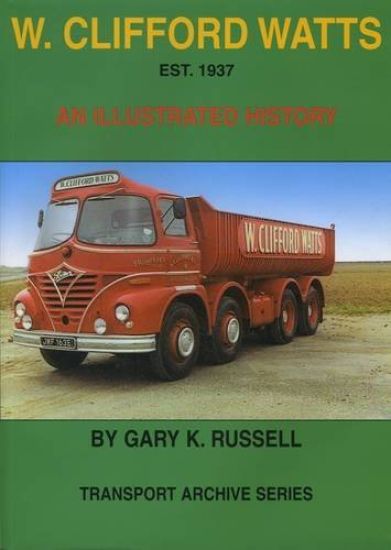
The story of Wyndham Clifford Watts is one of humble beginnings and exceptional ingenuity; originally from Gwent in Wales, W Clifford Watts moved to South Cave in Yorkshire and, in 1937, bought a Model T Ford and began delivering farm produce. With one successful hauling endeavour under his belt, he decided to become a supplier of building materials, a business for which there was great demand at the time. Again, he was successful and obtained his first contract with F Hall at Brough, who used his materials to build the Blackburn Aircraft runway. By 1939, W Clifford Watts had a number of employees under him and had joined the war effort by supplying much needed sand bags to the ARP posts around East Yorkshire. After further rapid expansion of the company, W Clifford Watts was incorporated to become a private limited company in 1944. The company would have been nothing without the mechanical support of the various vehicles and machines utilised for the work. This book includes 184 stunning pictures ranging from archival black and white photos of Fordson 7Vs, during the construction of RAF airfields in 1941, to extensive colour pages, depicting the large scale quarrying operations carried out by the company. Some of the vehicles that donned the W Clifford Watts livery were Foden S21 eight-wheelers, Dodge KT900s, MAN six-wheeler cement mixers, 1995 Scanias, 1974 Leyland Bisons and DAF CF six-wheelers, to name just a few.
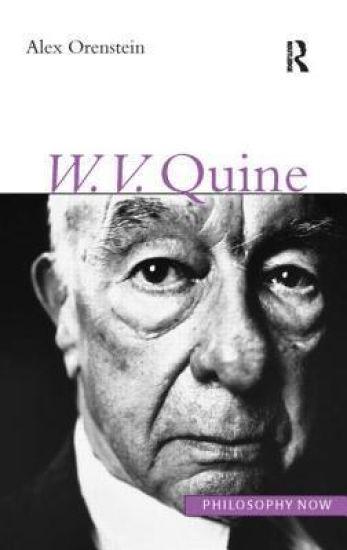
The most influential philosopher in the analytic tradition of his time, Willard Van Orman Quine (1908-2000) changed the way we think about language and its relation to the world. His rejection of the analytic/synthetic distinction, his scepticism about modal logic and essentialism, his celebrated theme of the indeterminacy of translation, and his advocacy of naturalism have challenged key assumptions of the prevailing orthodoxy and helped shape the development of much of recent philosophy. This introduction to Quine's philosophical ideas provides philosophers, students and generalists with an authoritative analysis of his lasting contributions to philosophy. Quine's ideas throughout are contrasted with more traditional views, as well as with contemporaries such as Frege, Russell, Carnap, Davidson, Field, Kripke and Chomsky, enabling the reader to grasp a clear sense of the place of Quine's views in twentieth-century philosophy and the important criticisms of them.
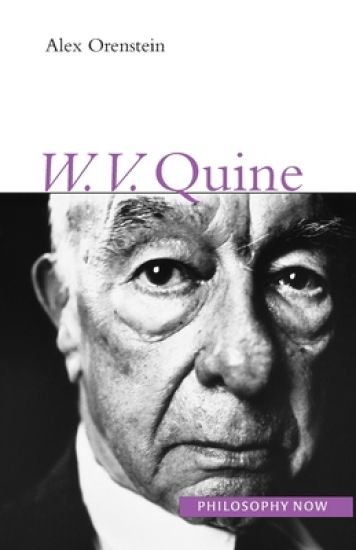
The most influential philosopher in the analytic tradition of his time, Willard Van Orman Quine (1908-2000) changed the way we think about language and its relation to the world. His rejection of the analytic/synthetic distinction, his scepticism about modal logic and essentialism, his celebrated theme of the indeterminacy of translation, and his advocacy of naturalism have challenged key assumptions of the prevailing orthodoxy and helped shape the development of much of recent philosophy. This introduction to Quine's philosophical ideas provides philosophers, students and generalists with an authoritative analysis of his lasting contributions to philosophy. Quine's ideas throughout are contrasted with more traditional views, as well as with contemporaries such as Frege, Russell, Carnap, Davidson, Field, Kripke and Chomsky, enabling the reader to grasp a clear sense of the place of Quine's views in twentieth-century philosophy and the important criticisms of them.
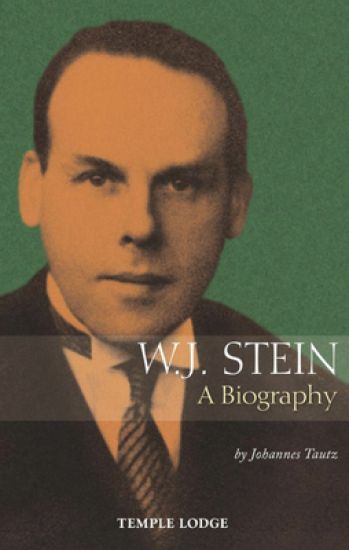
Based on personal knowledge and intimate interviews with his subject, as well as access to W.J. Stein's archive of letters and documents, Tautz's biography is a thoroughly-researched and lovingly-detailed study of an exceptional life. Walter Johannes Stein (1891-1957) was one of the original pioneers of anthroposophy. A student of the Austrian philosopher Rudolf Steiner, Stein met his spiritual teacher whilst studying at Vienna University. After serving in the First World War, Stein was invited by Rudolf Steiner to teach History and Literature at the fledgling Waldorf school in Stuttgart, despite the fact that Stein's doctorate was in Philosophy and his training in Mathematics and Physics. Through his efforts to master the new disciplines, and with the aid of unconventional methods of research, Stein developed groundbreaking new insights into the story of Parzival and the mystery of the Holy Grail, which led to his seminal book The Ninth Century and the Holy Grail. Tautz describes Stein's close friendship with Eugen Kolisko, his struggles to help establish the threefold social order, his work as a Goetheanum lecturer, and his eventual estrangement from the Anthroposophical Society following Rudolf Steiner's death. After journeys of discovery across Europe, Stein landed in London in 1933 - a refugee from the Nazi aggression in Central Europe - where he met his mentor D.N. Dunlop. Dunlop employed him to help establish the first World Power Conference. Based in England for the last 24 years of his life, Stein became a prolific and popular lecturer and the editor of the important anthroposophical journal The Present Age. Long out-of-print, the new edition of this important work is a welcome addition to the growing number of biographies on the founders of anthroposophy.
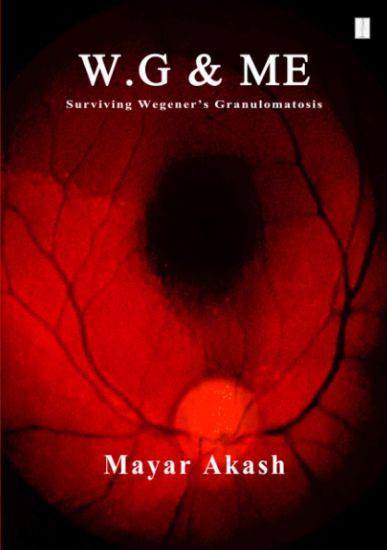
M.G & Me is the author's memoires of his life with Wegener's Granulomatosis. The author recounts his days with this disease and carrying the affliction that he is going to die within 4 to 5 years. What was he going to do with this infliction that pranced on him out of the blue. In 2009 there wasn't much information about this disease and all that were out there were very raw. Mayar lost all hopes and left behind everyhting to be ready for death from this painful vasculitis, autoimmune disease. It is this journey that turned around his fate, this emotional and mental roller coaster ride, has thrown many twists and turns that inadvertantly became a spiritual one. In those moments of decisions and choices that Mayar found his salvation, saviour the healing power which Mayar present in this book so that readers and people with the same affliction can find some hope, like he did.
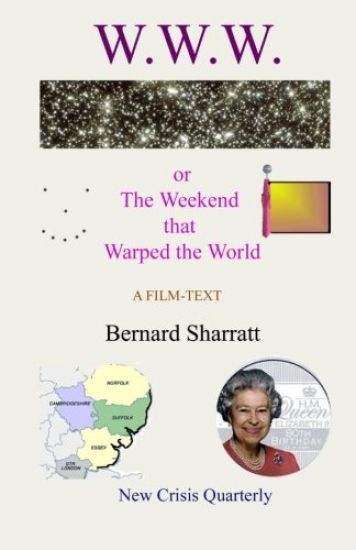
So what were those F16s doing low over Cambridge? Why did the Norfolk coast move in the night? Or strange stars suddenly start blinking on the screens of SETI? Could Frank, in his hi-tech wheelchair, crack the problem? Or was it all down to Chrissie, with her fabulous flexible laptop that folds into a pink umbrella? Would young Alex, or security expert Brian, or the mad Lord Anglia, or even the man in brown, ever understand why the whole world, even the weather maps, seemed to have become crazily warped? Perhaps it was just another day at the office for Sir G-G. Or perhaps British movies had finally gone insane.Film-texts are in the format of a film-script, but are not designed for actual film production. They are intended to be read and imagined, with a bit of help from on-line maps and images, and play with a variety of familiar film genres, including romantic comedy, political thriller, and tourist guide: some are a kind of fantasy travel souvenir.Other NCQ film-texts are set in Athens, Budapest, Prague, Rome, Venice, and fourth-century Egypt.
W.B. Yeats
Mount Orleans Press
2019
sidottu
Selected poems by WB Yeats in an attractive and collectible format, marketed at a competitive price. This is part of a series which will number about 12 titles.

London, England. The long hot World Cup summer of 2018. Endless sun, fractious politics, Boxpark beer showers, and a growing belief that football might just be coming home.From Lewisham's local pubs to the Colombian cafes of Elephant & Castle, and Belgian bars of Covent Garden - W C L D N is a look at how one of the world's most global cities consumes sport's most global event.But this is an observation glimpsed through a clouded lens; its author simultaneously lost in the fog of a depression he's desperate to navigate away from.How do you connect with the most unifying event of the sport you love, when you are at your loneliest? Is football merely a diversion from the everyday - a means of escape from the heavier pressures that continue to weigh down on you? Or, can it offer a crucial lifeline to reconnect with yourself and your surroundings?
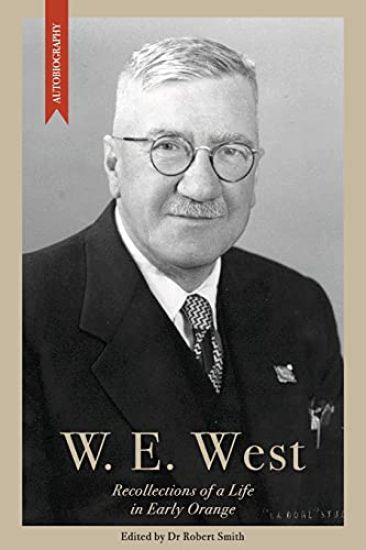
This book provides a social history of Orange NSW through the eyes of a well-known early resident. In the mid-1960s W.E. sat down of a week and recorded his memoirs which were presented as a series of yarns. He chose the topics and just talked. They are not an interview. These tapes have finally been transcribed and presented in this book. A lot of fact checking has been undertaken and the personality and dates usually match perfectly. It provides the story of a fun-loving boy who became one of Orange's best known citizens.
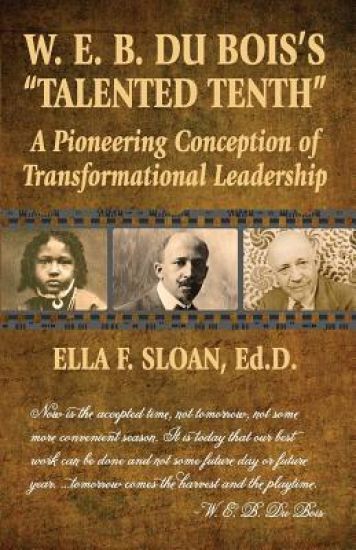
W. E. B. Du Bois's Talented Tenth: A Pioneering Conception of Transformational Leadership
Ella F. Sloan
Night Star Publisher dba JL Carpenter Design
2016
nidottu