
Kirjahaku
Etsi kirjoja tekijän nimen, kirjan nimen tai ISBN:n perusteella.
1000 tulosta hakusanalla Walter Benjamin

First Published in 1981. Pater is certainly the least widely read and understood of any of the Victorian critics and creative writers, though there are signs of a coming revival of interest in him. Each of the discussions included in this issue devoted to Pater touches, in some significant way, on his "imaginative sense of fact," on his struggle with the objective ‘givens’ of experience (ideas or individuals), and on his efforts to co-opt or turn that Other into a reordered reflection of his own image.
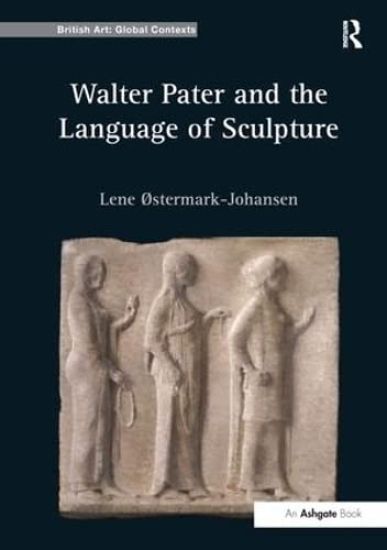
Walter Pater and the Language of Sculpture is the first monograph to discuss the Victorian critic Walter Pater's attitude to sculpture. It brings together Pater's aesthetic theories with his theories on language and writing, to demonstrate how his ideas of the visual and written language are closely interlinked. Going beyond Pater's views on sculpture as an art form, this study traces the notion of relief (rilievo) and hybrid form in Pater, and his view of the writer as sculptor, a carver in language. Alongside her treatment of rilievo as a pervasive trope, Lene Østermark-Johansen also employs the idea of rivalry (paragone) more broadly, examining Pater's concern with positioning himself as an art critic in the late Victorian art world. Situating Pater within centuries of European aesthetic theories as never before done, Walter Pater and the Language of Sculpture throws new light on the extraordinary complexity and coherence of Pater's writing: The critic is repositioned solidly within Victorian art and literature.

Walter the Chancellor’s The Antiochene Wars
Routledge
2019
sidottu
First published in 1999, this edition of Walter the Chancellor’s account of the wars of the Antiochenes against the Muslims in the early twelfth century is a vivid first-hand account of a dramatic yet less well-known period in the history of the northern Crusader states, and an important balance to the more usual focus on Jerusalem. As a highly-placed Antiochene official, Walter was able to write the most authoritative account of the principality's fortunes and internal workings, and his book also sheds light on the relationship between Latin settlement in the Levant and contemporary Western perceptions of Islam and Eastern Christianity. Here it has for the first time been translated into English (from the Latin edition of H. Hagenmeyer). It is prefaced by a substantial introduction, discussing the author and his work in the context of the history and historiography of the Latin settlement, and is followed by a selection of comparative sources.Walter the Chancellor’s history will be of interest both to students of the Crusades and to a wider readership for its perspective on life in a medieval frontier society.

Walter the Chancellor’s The Antiochene Wars
Routledge
2020
nidottu
First published in 1999, this edition of Walter the Chancellor’s account of the wars of the Antiochenes against the Muslims in the early twelfth century is a vivid first-hand account of a dramatic yet less well-known period in the history of the northern Crusader states, and an important balance to the more usual focus on Jerusalem. As a highly-placed Antiochene official, Walter was able to write the most authoritative account of the principality's fortunes and internal workings, and his book also sheds light on the relationship between Latin settlement in the Levant and contemporary Western perceptions of Islam and Eastern Christianity. Here it has for the first time been translated into English (from the Latin edition of H. Hagenmeyer). It is prefaced by a substantial introduction, discussing the author and his work in the context of the history and historiography of the Latin settlement, and is followed by a selection of comparative sources.Walter the Chancellor’s history will be of interest both to students of the Crusades and to a wider readership for its perspective on life in a medieval frontier society.
Walter Lippmann began his career as a brilliant young man at Harvardstudying under George Santayana, taking tea with William James, a radical outsider arguing socialism with anyone who would listen and he ended it in his eighties, writing passionately about the agony of rioting in the streets, war in Asia, and the collapse of a presidency. In between he lived through two world wars, and a depression that shook the foundations of American capitalism.Walter Lippmann (1889-1974) has been hailed as the greatest journalist of his age. For more than sixty years he exerted unprecedented influence on American public opinion through his writing, especially his famous newspaper column "Today and Tomorrow." Beginning with The New Republic in the halcyon days prior to Woodrow Wilson and the First World War, millions of Americans gradually came to rely on Lippmann to comprehend the vital issues of the day.In this absorbing biography, Ronald Steel meticulously documents the philosophers and politics, the friendships and quarrels, the trials and triumphs of this man who for six decades stood at the center of American political life. Lippmann's experience spanned a period when the American empire was born, matured, and began to wane, a time some have called "the American Century." No one better captured its possibilities and wrote about them so wisely and so well, no one was more the mind, the voice, and the conscience of that era than Walter Lippmann: journalist, moralist, public philosopher.

First published in 1979. This study explores the main critical issues that arise out of a modern reading of Scott’s work, and treats the major novels in detail. It tackles the questions of Scott’s place in literary history and his problems in pioneering the historical novel. As well as examining the greater novels of the Scottish series, the author also deals with the relation between historical fiction and reality, with reference to the Waverley Novels, and Scott’s own attitude to history. Also discussed are some of the possible reasons for Scott’s failure to depict conflicts in his contemporary society. This book would be of interest to students of literature.
First published in 1979. This study explores the main critical issues that arise out of a modern reading of Scott’s work, and treats the major novels in detail. It tackles the questions of Scott’s place in literary history and his problems in pioneering the historical novel. As well as examining the greater novels of the Scottish series, the author also deals with the relation between historical fiction and reality, with reference to the Waverley Novels, and Scott’s own attitude to history. Also discussed are some of the possible reasons for Scott’s failure to depict conflicts in his contemporary society. This book would be of interest to students of literature.

First published in 1968, this study is an exciting and challenging introduction to the writings of Sir Walter Scott. The author discusses the more striking features of Scott’s style — his use of language and characterisation — and also evaluates the contemporary moral and political attitudes portrayed in the novels. The use of literary conventions of the time is examined with reference to Scott’s work and extracts exemplify in particular the use of the Heroic. While admitting Scott’s faults as a writer, the author presents a general view of him as one whose works deserve deeper study than was the prevailing opinion at the time. This book will be of interest to students of literature.

First published in 1968, this study is an exciting and challenging introduction to the writings of Sir Walter Scott. The author discusses the more striking features of Scott’s style — his use of language and characterisation — and also evaluates the contemporary moral and political attitudes portrayed in the novels. The use of literary conventions of the time is examined with reference to Scott’s work and extracts exemplify in particular the use of the Heroic. While admitting Scott’s faults as a writer, the author presents a general view of him as one whose works deserve deeper study than was the prevailing opinion at the time. This book will be of interest to students of literature.
Poems on several occasions. By Mr. Walter Harte.
Walter Harte
Gale Ecco, Print Editions
2010
pokkari
The Gospel Mystery of Sanctification Open'd in Sundry Practical Directions. ... to Which Is Added, a Sermon on Justification. by Mr. Walter Marshal, ... the Second Edition Corrected.
Walter Marshall
Gale Ecco, Print Editions
2010
pokkari
The Gospel Mystery of Sanctification Open'd in Sundry Practical Directions. ... to Which Is Added, a Sermon on Justification. by Mr. Walter Marshal, ... the Third Edition Corrected.
Walter Marshall
Gale Ecco, Print Editions
2010
pokkari
The History of the Life of Gustavus Adolphus, King of Sweden, Sirnamed, the Great. ... by the Reverend Walter Harte, ... Volume 2 of 2
Walter Harte
Gale Ecco, Print Editions
2010
pokkari
The history of the life of Gustavus Adolphus, King of Sweden, sirnamed, the Great. ... By the Reverend Walter Harte, ... Volume 1 of 2
Walter Harte
Gale Ecco, Print Editions
2010
pokkari
The Gospel-Mystery of Sanctification, Opened in Sundry Practical Directions ... to Which Is Added a Sermon on Justification. by MR Walter Marshall, ... the Eleventh Edition.
Walter Marshall
Gale Ecco, Print Editions
2010
pokkari
The Works of Walter Moyle Esq; None of Which Were Ever Before Publish'd. in Two Volumes. Volume 2 of 2
Walter Moyle
Gale Ecco, Print Editions
2010
pokkari
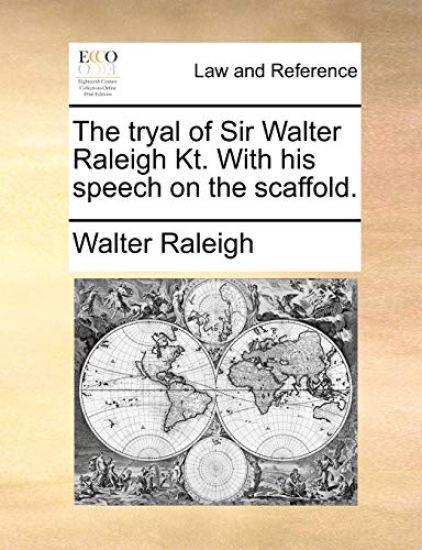
The Tryal of Sir Walter Raleigh Kt. with His Speech on the Scaffold.
Walter Raleigh
Gale Ecco, Print Editions
2010
pokkari
Histoires Du Temps de Croisades Et Oeuvres de Sir Walter Scott (1828)
Walter Scott
KESSINGER PUBLISHING, LLC
2010
pokkari