Kirjojen hintavertailu. Mukana 11 342 296 kirjaa ja 12 kauppaa.

Kirjahaku

Etsi kirjoja tekijän nimen, kirjan nimen tai ISBN:n perusteella.

1000 tulosta hakusanalla William Butler

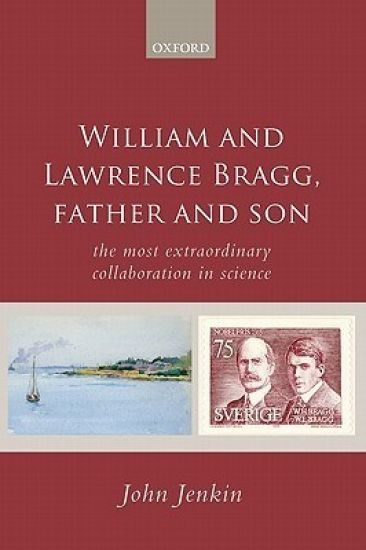
William and Lawrence Bragg, Father and Son

William and Lawrence Bragg, Father and Son

John Jenkin

Oxford University Press
2011
nidottu
In 1912 Lawrence Bragg explained the interaction of X-rays with crystals, and he and his father, William thereby pioneered X-ray spectroscopy and X-ray crystallography. They then led the latter field internationally for fifty years, when most areas of science were transformed by the knowledge they created: physics, chemistry, geology, materials science, electronics, and most recently biology and medical science. This book charts how this humble pair (William English, his son Australian) rose from obscurity to international prominence and then back to current, undeserved obscurity. Attention is also given to the crucial roles of both father and son during the dreadful years of the First World War, and to William's early and unshakeable belief in the dual wave and particle natures of radiation and his eventual vindication. Unlike earlier studies, the book highlights the intimate interactions between father and son that made their project possible, emphasizes personal, family, and wider human relationships, and offers new insights into teaching and research in a British colonial setting.
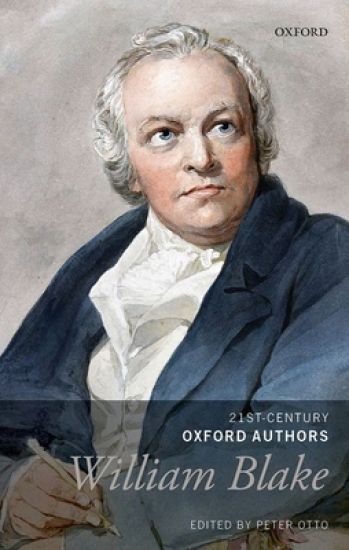
William Blake

William Blake

Oxford University Press
2018
sidottu
This volume in the 21st Century Oxford Authors series offers students and readers a comprehensive selection of the work of William Blake (1757-1827). Accompanied by full scholarly apparatus, this authoritative edition enables students to explore Blake's poetry, illuminated poetry, and prose alongside selections from his letters, manuscripts, notebook, advertising pamphlets, marginalia, and works he printed in conventional letterpress. The edition arranges Blake's works in chronological order, according to the date when they were first printed or, in the case of unpublished works, the years in which they were composed. With the help of editorial headnotes and annotations, this arrangement brings to the foreground Blake's material and intellectual labours as a poet, painter, prophet, and non-academic philosopher; the networks of acquaintances, friends, patrons, and enemies who helped support or provoke this work; and the tumultuous historical events he responded to, which included the beginning of modern feminism, the agricultural and industrial revolutions, the American and French Revolutions, William Pitt's so-called 'Reign of Terror' in Britain, an attempted revolution in Ireland (1798), a successful slave rebellion in Haiti (1791-1804), and the French revolutionary and Napoleonic wars. Some editions attempt to sanitize Blake, by hiding from view the most startling elements of his thought; but in this edition Blake's sexual, political, religious, and poetic heterodoxy comes into full view. At the same time, this edition foregrounds the dynamics of Blake's composite art, with equal weight given to its verbal and visual dimensions; makes visible the chief lines of force that structure his oeuvre; and highlights his developing thought on sapphism, sodomy, the body, relations between the sexes, the roots of violence, and the politics of imagination. This is a Blake whose dialogue with his own time anticipates much later developments, including modern depth psychologies; analyses of the social and psychological dynamics of war and peace; interest in the body, sexuality, and gender; and experiments in the relation between actual and virtual realities--a Blake who is provocative, unsettling, exhilarating, and somehow our contemporary. Explanatory notes and commentary are included, to enhance the study, understanding, and enjoyment of these works, and the edition includes an Introduction to the life and works of Blake, and a Chronology.
William Blackstone

William Blackstone

Wilfrid Prest

Oxford University Press
2012
nidottu
Lawyer, judge, politician, poet, teacher, and architect, William Blackstone was a major figure in eighteenth century public life. Over his varied and brilliant career he made profound contributions to English politics, law, education, and culture through involvements in legal practice, Parliament, and the University of Oxford. Throughout he also remained engaged in his society's literary and spiritual life. Despite the breadth and influence of his work, Blackstone the man remains little known and poorly understood, the lack of engagement with his public and private life standing in stark contrast to the scale of his influence, particularly on the development and teaching of the law. Blackstone's 'Commentaries on the Laws of England' remains the most celebrated and influential text in the Anglo-American common-law tradition. This great book has inevitably overshadowed its author, while the dispersal of his personal and professional papers further complicates the task of understanding the man behind the work. The lack of a thorough account of Blackstone's life has fuelled controversy surrounding his intellectual background and political views. Was he the deeply reactionary conservative painted by Bentham, or rather a committed reformer and early champion of human rights? The present biography makes full use of a considerable body of new evidence that has emerged in recent years to shed light on the life, work, and times of this neglected figure in English and American history. Exploring Blackstone's family upbringing and private life, his political activities and ideology, his religious outlook, and championing of the enlightenment, this book weaves together the threads of an extraordinary mind and career.
William Empson: Some Versions of Pastoral

William Empson: Some Versions of Pastoral

William Empson

Oxford University Press
2020
sidottu
William Empson is, alongside T. S. Eliot, the greatest genius among twentieth-century critics, and Some Versions of Pastoral is widely recognised as one of the most extraordinary works of the golden age of English literary criticism. Ranging with astonishing virtuosity between works of several centuries and moving purposefully between cultures, William Empson has dazzling things to say here about Shakespeare and the Elizabethan theatre, the political poetry of Marvell, Milton's Paradise Lost, the complex satire of John Gay's Beggar's Opera, and the convoluted psychology at work in the Alice books of Lewis Carroll. The book is alert to questions of politics, psycho-analysis, and anthropology, and speaks to a wide range of contemporary concerns. Written in Empson's charismatically informal and wonderfully approachable voice, the book appeared in 1935 without footnotes or references. This edition is the first to identify the quotations and allusions, to explain the pertinence of his references, and to place the work within its Empsonian context. It is published with an appendix of other texts by Empson which illuminate the issues at work in the book.
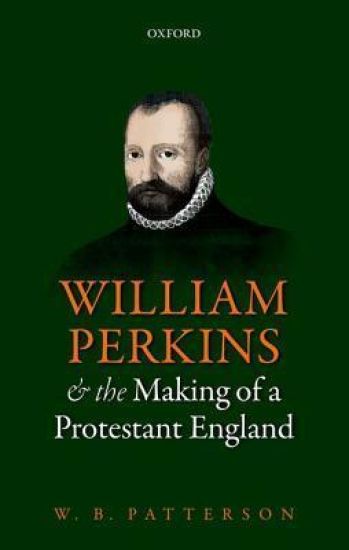
William Perkins and the Making of a Protestant England

William Perkins and the Making of a Protestant England

W. B. Patterson

Oxford University Press
2014
sidottu
William Perkins and the Making of Protestant England presents a new interpretation of the theology and historical significance of William Perkins (1558-1602), a prominent Cambridge scholar and teacher during the reign of Queen Elizabeth I. Though often described as a Puritan, Perkins was in fact a prominent and effective apologist for the established church whose contributions to English religious thought had an immense influence on an English Protestant culture that endured well into modern times. The English Reformation is shown to be a part of the European-wide Reformation, and Perkins himself a leading Reformed theologian. In A Reformed Catholike (1597), Perkins distinguished the theology upheld in the English Church from that of the Roman Catholic Church, while at the same time showing the considerable extent to which the two churches shared common concerns. His books dealt extensively with the nature of salvation and the need to follow a moral way of life. Perkins wrote pioneering works on conscience and 'practical divinity'. In The Arte of Prophecying (1607), he provided preachers with a guidebook to the study of the Bible and their oral presentation of its teachings. He dealt boldly and in down-to-earth terms with the need to achieve social justice in an era of severe economic distress. Perkins is shown to have been instrumental to the making of a Protestant England, and to have contributed significantly to the development of the religious culture not only of Britain but also of a broad range of countries on the Continent.
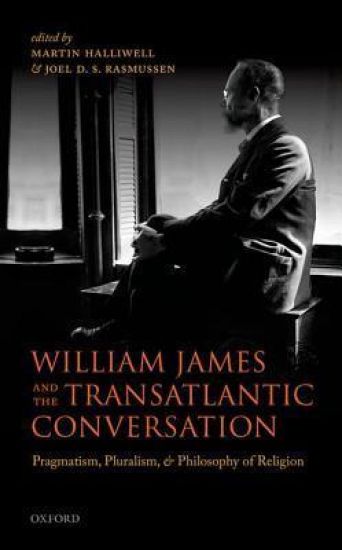
William James and the Transatlantic Conversation
William James and the Transatlantic Conversation focuses on the American philosopher and psychologist William James (1842-1910) and his engagements with European thought, together with the multidisciplinary reception of his work on both sides of the Atlantic since his death. James's encounters with European thinkers and ideas ran throughout his early life and across his distinguished international career, in which he participated in a number of transatlantic conversations in science, philosophy, psychology, religion, ethics, and literature. This volume explores and extends these conversations by drawing together twelve scholars from a range of disciplines on both sides of the Atlantic to assess James's work in all its variety, to trace his multidisciplinary reception across the twentieth century, and to evaluate his legacy in the twenty-first century. The first half of the book considers James's many intellectual influences and the second half focuses on A Pluralistic Universe (1909), the published text of his 1908 Hibbert Lectures at Oxford University, as a key text for assessing James's transatlantic conversations. The pluralistic transatlantic currents addressed in the first part of the volume enable a fuller understanding of James's philosophy of pluralism that forms the explicit focus for the second part. Taken as a collection, the volume is unique in scholarship on James in generating transatlantic, interdisciplinary, and cross-generational dialogues, and it repositions James as an important international thinker and arguably the most distinctive American intellectual figure of the nineteenth and twentieth centuries.
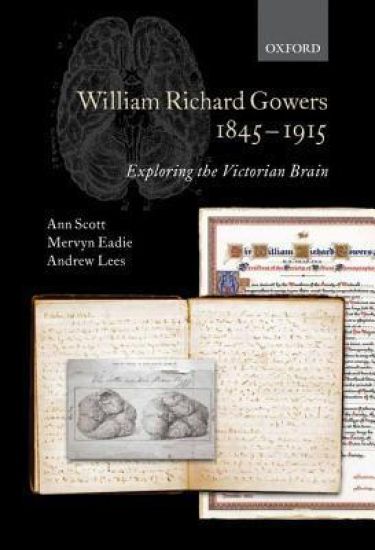
William Richard Gowers 1845-1915

William Richard Gowers 1845-1915

Ann Scott; Mervyn Eadie; Andrew Lees

Oxford University Press
2012
sidottu
Sir William Richard Gowers was one of the pre-eminent clinical neurologists of the nineteenth century. He is best remembered for his discovery of the eponymous 'Gowers' sign', for his invention of the patella hammer, and for authoring the classic two-volume neurology textbook Manual of Diseases of the Nervous System. To date Dr Gowers has been the subject of only one published biography, while some aspects of Gowers' work have been chronicled in historical works regarding the history of neurology. This book goes into greater detail than ever, presenting the life story behind a great Victorian brain. Generously illustrated throughout with family photographs and original sketches, the authors cover Gowers' early years, his clinical work at Queen Square, his accolades, and friendships with explorers and famous authors. Co-authored by an academic with special access to the Gowers family archives and two leading neurologists, this book is the first definitive reference work on the life of William Richard Gowers, and will be of great interest to neurologists, neuroscientists, medical historians, and laypersons with an interest in neurology and mental illness.
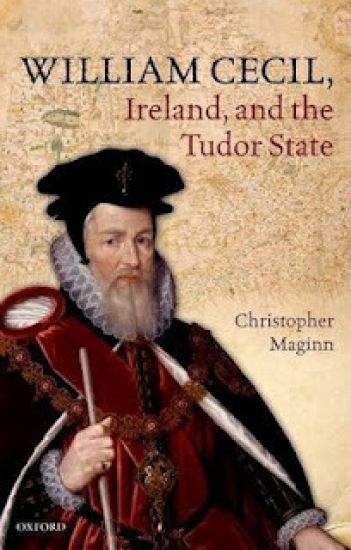
William Cecil, Ireland, and the Tudor State

William Cecil, Ireland, and the Tudor State

Christopher Maginn

Oxford University Press
2012
sidottu
William Cecil, Ireland, and the Tudor State explores the complex relationship which existed between England and Ireland in the Tudor period, using the long association of William Cecil (1520-1598) with Ireland as a vehicle for historical enquiry. That Cecil, Queen Elizabeth's most trusted advisor and the most important figure in England after the queen herself, consistently devoted his attention and considerable energies to the kingdom of Ireland is a seldom-explored aspect of his life and his place in the Tudor age. Yet amid his handling of a broad assortment of matters relating to England and Wales, the kingdom of Scotland, continental Europe, and beyond, William Cecil's thoughts regularly turned to the kingdom of Ireland. He personally compiled genealogies of Ireland's Irish and English families and poured over dozens of national and regional maps of Ireland. Cecil served as chancellor of Ireland's first university and, most importantly for the historian, penned, received, and studied thousands of papers on subjects relating to Ireland and the crown's political, economic, social, and religious policies there. Cecil would have understood all of this broadly as 'Ireland matters', a subject which he came to know in greater depth and detail than anyone at the court of Queen Elizabeth I. Maginn's extended analysis of Cecil's long relationship with Ireland helps to make sense of Anglo-Irish interaction in Tudor times, and shows that this relationship was characterized by more than the basic binary features of conquest and resistance. At another level, he demonstrates that the second half of the sixteenth century witnessed the political, social, and cultural integration of Ireland into the multinational Tudor state, and that it was William Cecil who, more than any other figure, consciously worked to achieve that integration.
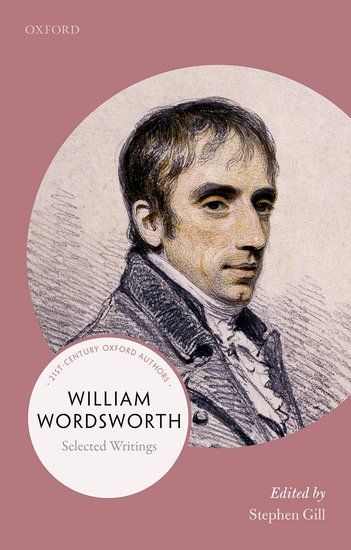
William Wordsworth

William Wordsworth

Oxford University Press
2012
nidottu
The Wordsworth volume in the 21st-Century Oxford Authors series is the most comprehensive selection currently available of the poetry and prose of one of the finest poets in the English language. The familiar poems from Wordsworth's 'Great Decade' are all included, but they are complemented by a more than usually generous selection of the best poems from his later years. The extracts from the Guide to the Lakes will be a revelation to many readers, as will the political prose of the Convention of Cintra. All of the material is presented in chronological sequence, so that the reader can see how Wordsworth's changing concerns were expressed in prose as well as poetry. Work which Wordsworth published is separated from that which he did not reveal, which will enable the reader to trace through successive published volumes the development of Wordsworth's public poetic self, while also being able to follow the growth of the body of poetry which, for whatever reason, Wordsworth did not choose to make public when it was written - The Prelude being the greatest and most obvious example.
William Harvey: A Life in Circulation

William Harvey: A Life in Circulation

Thomas Wright

Oxford University Press
2012
sidottu
In 1628, the English physician William Harvey published his revolutionary theory of blood circulation. Offering a radical conception of the workings of the human body and the function of the heart, Harvey's theory overthrew centuries of anatomical and physiological orthodoxy and had profound consequences for the history of science. It also had an enormous impact on culture more generally, influencing economists, poets and political thinkers, for whom the theory triumphed not as empirical fact but as a remarkable philosophical idea. In the first major biographical study of Harvey in 50 years, Thomas Wright charts the meteoric rise of a yeoman's son to the elevated position of King Charles I's physician, taking the reader from farmlands of Kent to England's royal palaces, and paints a vivid portrait of an extraordinary mind formed at a fertile time in England's intellectual history. Set in late Renaissance London, the book features an illustrious cast of historical characters, from Francis Bacon and John Donne to Robert Fludd, whose corroboration of Harvey's ideas helped launch his circulation theory. After he published his discoveries, Harvey became famous throughout Europe, where he demonstrated his theory through public vivisections. Although his ideas met with vociferous opposition, they eventually triumphed and Harvey became renowned as the only man in the history of natural philosophy to live to see a revolutionary theory gain wide currency. But just as intellectual ideas could be toppled, so too could kings. When Charles I was overthrown during the Civil War of the 1640s, his loyal court physician fell also, and Harvey, an unrepentant Royalist, was banished from London under the English Republic. He died in the late 1650s, a gout-ridden, melancholy man, uncertain of his achievement. A victim of the political turmoil of the times, William Harvey was nevertheless the mainspring of vast historical changes in anatomy and physiology. Wright's biography skillfully repositions Harvey as a man who embodied the intellectual and cultural spirit of his age, and launched a revolution that would continue to run its course long after his death.
William James at the Boundaries

William James at the Boundaries

Francesca Bordogna

University of Chicago Press
2008
sidottu
At Columbia University in 1906, William James gave a highly confrontational speech to the American Philosophical Association (APA). He ignored the technical philosophical questions the audience had gathered to discuss and instead addressed the topic of human energy. Trampling on the rules of academic decorum, James invoked the work of amateurs, read testimonials on the benefits of yoga and alcohol, and concluded by urging his listeners to take up this psychological and physiological problem.What was the goal of this unusual speech? Rather than an oddity, Francesca Bordogna asserts that the APA address was emblematic - it was just one of many gestures that James employed as he plowed through the barriers between academic, popular, and pseudoscience, as well as the newly emergent borders between the study of philosophy, psychology, and the "science of man." Bordogna reveals that James' trespassing of boundaries was an essential element of a broader intellectual and social project. By crisscrossing divides, she argues, James imagined a new social configuration of knowledge, a better society, and a new vision of the human self. As the academy moves toward an increasingly interdisciplinary future, "William James at the Boundaries" reintroduces readers to a seminal influence on the way knowledge is pursued.
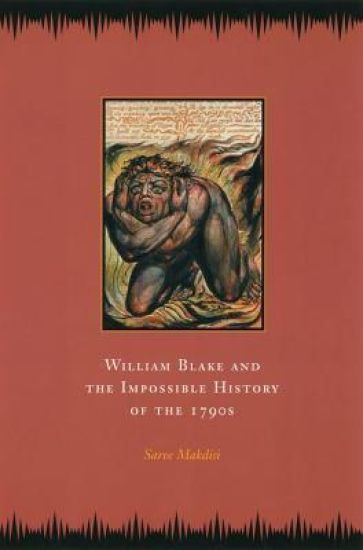
William Blake and the Impossible History of the 1790s

William Blake and the Impossible History of the 1790s

Saree Makdisi

University of Chicago Press
2002
sidottu
Modern scholars often find it difficult to account for the profound eccentricities in the work of William Blake, dismissing them as either ahistorical or simply meaningless. But with this pioneering study, Saree Makdisi develops a reliable and comprehensive framework for understanding these peculiarities. According to Makdisi, Blake's poetry and drawings should compel us to seriously reconsider ths history of the 1790s - the turbulent and revolutionary decade in which they first emerged. Taking into account the poet's unique brand of literary and artistic production, Makdisi challenges the idea that to understand Blake historically one must assimilate him within the radical struggle against the order of the Old Regime. Tracing for the first time the many links among economics, politics and religion in his work, Makdisi shows how Blake questioned and even subverted the commercial, consumerist and political liberties that his contemporaries championed, all while developing his own radical aesthetic. "William Blake and the Impossible History of the 1790s" should immediately take its place as a valuable study of one of English Romanticism's most popular figures.
William Blake and the Impossible History of the 1790s

William Blake and the Impossible History of the 1790s

Saree Makdisi

University of Chicago Press
2002
nidottu
Modern scholars often find it difficult to account for the profound eccentricities in the work of William Blake, dismissing them as either ahistorical or simply meaningless. But with this pioneering study, Saree Makdisi develops a reliable and comprehensive framework for understanding these peculiarities. According to Makdisi, Blake's poetry and drawings should compel us to seriously reconsider ths history of the 1790s - the turbulent and revolutionary decade in which they first emerged. Taking into account the poet's unique brand of literary and artistic production, Makdisi challenges the idea that to understand Blake historically one must assimilate him within the radical struggle against the order of the Old Regime. Tracing for the first time the many links among economics, politics and religion in his work, Makdisi shows how Blake questioned and even subverted the commercial, consumerist and political liberties that his contemporaries championed, all while developing his own radical aesthetic. "William Blake and the Impossible History of the 1790s" should immediately take its place as a valuable study of one of English Romanticism's most popular figures.
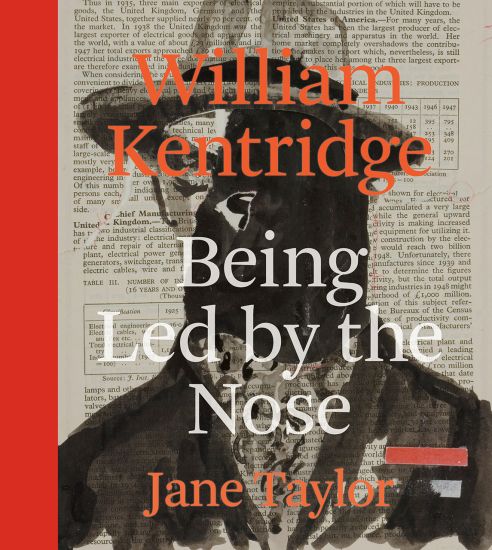
William Kentridge

William Kentridge

Jane Taylor

University of Chicago Press
2017
sidottu
South African artist William Kentridge's drawings, films, books, installations, and collaborations with opera and theater companies have established him as a world-class star in contemporary art, media, and theater. In 2010, and again in 2013, he staged Dmitri Shostakovich's The Nose at the Metropolitan Opera; after the premiere, the New York Times noted that "Kentridge, who directed this production, helped design the sets and created the videos that animate the staging, received the heartiest bravos." In this book, Jane Taylor, Kentridge's friend and frequent collaborator, invites us to take an extraordinary behind-the-scenes look at his work for the show. Kentridge has long been admired for his unconventional use of conventional media to produce art that is stunning, evocative, and narratively powerful and how he works is as important as what he creates. This book is more than just a simple record of The Nose. The opera serves as a springboard into a bracing conversation about how Kentridge's methods serve his unique mode of expression as a narrative and political artist. Taylor draws on his etchings, sculptures, and drawings to render visible the communication that occurs between his mind and hand as he thinks through the activity of making. Beautifully illustrated in color, William Kentridge offers striking insights about one of the most innovative artists of our present moment.
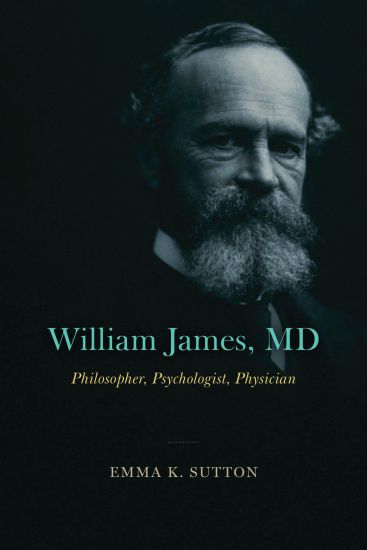
William James, MD

William James, MD

Emma K. Sutton

THE UNIVERSITY OF CHICAGO PRESS
2023
sidottu
The first book to map William James’s preoccupation with medical ideas, concerns, and values across the breadth of his work. William James is known as a nineteenth-century philosopher, psychologist, and psychical researcher. Less well-known is how his interest in medicine influenced his life and work, driving his ambition to change the way American society conceived of itself in body, mind, and soul. William James, MD offers an account of the development and cultural significance of James’s ideas and works, and establishes, for the first time, the relevance of medical themes to his major lines of thought. James lived at a time when old assumptions about faith and the moral and religious possibilities for human worth and redemption were increasingly displaced by a concern with the medically “normal” and the perfectibility of the body. Woven into treatises that warned against humanity’s decline, these ideas were part of the eugenics movement and reflected a growing social stigma attached to illness and invalidism, a disturbing intellectual current in which James felt personally implicated. Most chronicles of James’s life have portrayed a distressed young man, who then endured a psychological or spiritual crisis to emerge as a mature thinker who threw off his pallor of mental sickness for good. In contrast, Emma K. Sutton draws on his personal correspondence, unpublished notebooks, and diaries to show that James considered himself a genuine invalid to the end of his days. Sutton makes the compelling case that his philosophizing was not an abstract occupation but an impassioned response to his own life experiences and challenges. To ignore the medical James is to misread James altogether.
William James, MD

William James, MD

Emma K. Sutton

THE UNIVERSITY OF CHICAGO PRESS
2023
nidottu
The first book to map William James’s preoccupation with medical ideas, concerns, and values across the breadth of his work. William James is known as a nineteenth-century philosopher, psychologist, and psychical researcher. Less well-known is how his interest in medicine influenced his life and work, driving his ambition to change the way American society conceived of itself in body, mind, and soul. William James, MD offers an account of the development and cultural significance of James’s ideas and works, and establishes, for the first time, the relevance of medical themes to his major lines of thought. James lived at a time when old assumptions about faith and the moral and religious possibilities for human worth and redemption were increasingly displaced by a concern with the medically “normal” and the perfectibility of the body. Woven into treatises that warned against humanity’s decline, these ideas were part of the eugenics movement and reflected a growing social stigma attached to illness and invalidism, a disturbing intellectual current in which James felt personally implicated. Most chronicles of James’s life have portrayed a distressed young man, who then endured a psychological or spiritual crisis to emerge as a mature thinker who threw off his pallor of mental sickness for good. In contrast, Emma K. Sutton draws on his personal correspondence, unpublished notebooks, and diaries to show that James considered himself a genuine invalid to the end of his days. Sutton makes the compelling case that his philosophizing was not an abstract occupation but an impassioned response to his own life experiences and challenges. To ignore the medical James is to misread James altogether.
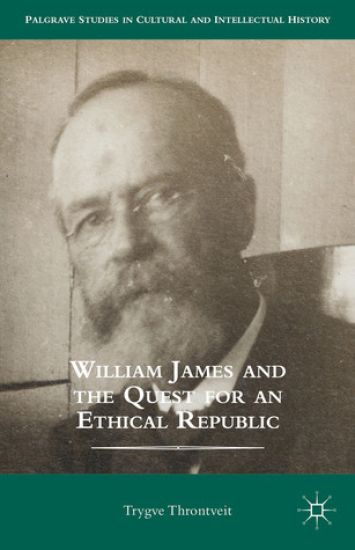
William James and the Quest for an Ethical Republic

William James and the Quest for an Ethical Republic

Trygve Throntveit

Palgrave Macmillan
2014
sidottu
Pragmatist philosopher William James has long been deemed a dubious guide to ethical reasoning. This book overturns such thinking, demonstrating the coherence of James's efforts to develop a flexible but rigorous framework for individuals and societies seeking freedom, meaning, and justice in a world of interdependence, uncertainty, and change.