Kirjojen hintavertailu. Mukana 11 627 373 kirjaa ja 12 kauppaa.

Kirjahaku

Etsi kirjoja tekijän nimen, kirjan nimen tai ISBN:n perusteella.

1000 tulosta hakusanalla William Fitzstephen

The Memoirs of General William Tecumseh Sherman

The Memoirs of General William Tecumseh Sherman

William T. Sherman

HARVARD UNIVERSITY PRESS
2025
sidottu
A titan among Civil War military geniuses gives an unvarnished account of his career, presented for the first time in a definitive annotated edition.William Tecumseh Sherman’s memoirs were a sensation when first published in 1875, as Americans grappled with the aftermath of the Civil War and its emerging place in collective memory. Today, Sherman’s account remains arguably the most significant work of Civil War military history after that of his friend and commanding general Ulysses S. Grant.In blunt terms, Sherman chronicles his military life and leadership from the First Battle of Bull Run to the Battle of Shiloh and the Atlanta and Vicksburg Campaigns. Most notably, he gives a detailed account of his notorious March to the Sea, which instituted a new and uniquely destructive type of warfare that would include civilians in the conflict between armies ever after. Along the way, he provides candid and often unsparing commentary on his fellow officers, subordinates, and adversaries. These assessments created immediate and lasting controversy, so much so that Sherman published a second edition with extensive appendixes responding to the outcry.This newly annotated volume, featuring an introduction by leading Civil War historian John F. Marszalek, presents Sherman’s life and legacy for today’s audience. Detailed notes shed light on his editorial process, while contextualizing individuals, places, and events that loomed large for nineteenth-century readers but have since become obscure. Reintroducing a classic work of American military history, this edition brings to life a remarkable figure whose leadership continues to be debated today.
Collected Stories of William Faulkner
"I'm a failed poet. Maybe every novelist wants to write poetry first, finds he can't and then tries the short story which is the most demanding form after poetry. And failing that, only then does he take up novel writing." --William Faulkner Winner of the National Book Award Forty-two stories make up this magisterial collection by the writer who stands at the pinnacle of modern American fiction. Compressing an epic expanse of vision into hard and wounding narratives, Faulkner's stories evoke the intimate textures of place, the deep strata of history and legend, and all the fear, brutality, and tenderness of the human condition. These tales are set not only in Yoknapatawpha County, but in Beverly Hills and in France during World War I. They are populated by such characters as the Faulknerian archetypes Flem Snopes and Quentin Compson, as well as by ordinary men and women who emerge so sharply and indelibly in these pages that they dwarf the protagonists of most novels.
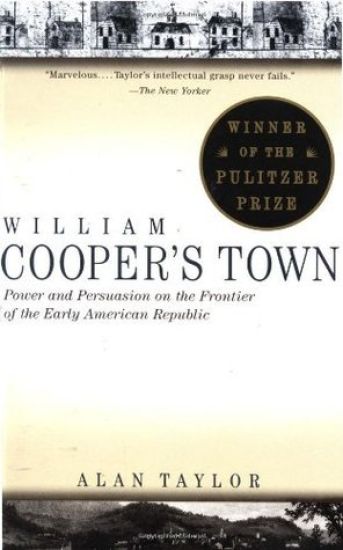
William Cooper's Town

William Cooper's Town

Alan Taylor

Vintage Books
1996
pokkari
An innovative work of biography, social history, and literary analysis, this Pulitzer Prize-winning book presents the story of two men, William Cooper and his son, the novelist James Fennimore Cooper, who embodied the contradictions that divided America in the early years of the Republic. Taylor shows how Americans resolved their revolution through the creation of new social forms and new stories that evolved with the expansion of our frontier. of photos.
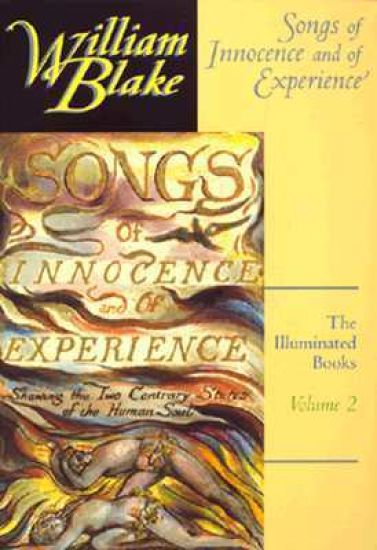
The Illuminated Books of William Blake, Volume 2

The Illuminated Books of William Blake, Volume 2

William Blake

Princeton University Press
1994
pokkari
The core of William Blake's vision, his greatness as one of the British Romantics, is most fully expressed in his Illuminated Books, masterworks of art and text intertwined and mutually enriching. In 1949 the William Blake Trust was founded to bring these rare, in some cases unique, works to a wider general audience through the publication of superbly produced facsimiles of each book. By the late 1980's these facsimiles had themselves become rare books. The Trust accordingly resolved to initiate a collected edition that would publish accurate reproductions of all the Illuminated Books to be accompanied by notes and commentaries by leading Blake scholars. Songs of Innocence and of Experience, one of the best known of the books, is now reproduced in paperback for the first time from the King's College, Cambridge copy--sometimes known as "Blake's own copy." The poems have been edited with introduction, notes, commentaries, and bibliography.
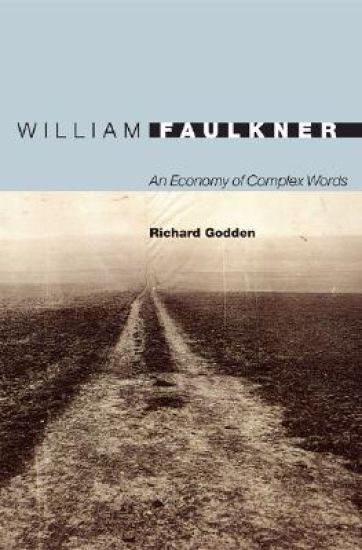
William Faulkner

William Faulkner

Richard Godden

Princeton University Press
2007
sidottu
In William Faulkner, Richard Godden traces how the novelist's late fiction echoes the economic and racial traumas of the South's delayed modernization in the mid-twentieth century. As the New Deal rapidly accelerated the long-term shift from tenant farming to modern agriculture, many African Americans were driven from the land and forced to migrate north. At the same time, white landowners exchanged dependency on black labor for dependency on northern capital. Combining powerful close readings of The Hamlet, Go Down, Moses, and A Fable with an examination of southern economic history from the 1930s to the 1950s, Godden shows how the novels' literary complexities--from their narrative structures down to their smallest verbal emphases--reflect and refract the period's economic complexities. By demonstrating the interrelation of literary forms and economic systems, the book describes, in effect, the poetics of an economy. Original in the way it brings together close reading and historical context, William Faulkner offers innovative interpretations of late Faulkner and makes a unique contribution to the understanding of the relation between literature and history.
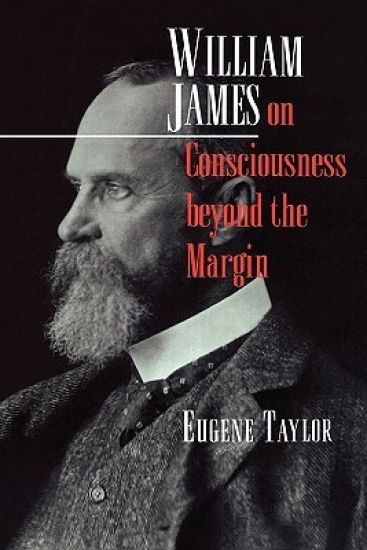
William James on Consciousness beyond the Margin

William James on Consciousness beyond the Margin

Eugene Taylor

Princeton University Press
2011
pokkari
At the turn of the twentieth century, William James was America's most widely read philosopher. In addition to being one of the founders of pragmatism, however, he was also a leading psychologist and author of the seminal work, The Principles of Psychology (1890). While scholars argue that James withdrew from the study of psychology after 1890, Eugene Taylor demonstrates convincingly that James remained preeminently a psychologist until his death in 1910. Taylor details James's contributions to experimental psychopathology, psychical research, and the psychology of religion. Moreover, Taylor's work shows that out of his scientific study of consciousness, James formulated a sophisticated metaphysics of radical empiricism. In light of historical developments in psychology, as well as the current philosophic implications of the neuroscience revolution related to the biology of consciousness, Taylor argues that both the subject matter of James's investigations and his metaphysics of radical empiricism are just as important for psychology today as James believed they were in his own time. This book represents a major new contribution both to James scholarship and to the history of American psychology. Although philosophers have analyzed radical empiricism, this book is the first to trace the development of radical empiricism as a metaphysics addressed to psychologists. It is also the first to show James's involvement in depth-psychology and psychotherapeutics and to trace historical continuity between James's work on consciousness and subsequent developments in psychoanalysis, personality theory, and humanistic psychology.
William Blake and the Age of Aquarius

William Blake and the Age of Aquarius

Stephen F. Eisenman

Princeton University Press
2017
sidottu
A stunningly illustrated look at how Blake's radical vision influenced artists of the Beat generation and 1960s counterculture In his own lifetime, William Blake (1757-1827) was a relatively unknown nonconventional artist with a strong political bent. William Blake and the Age of Aquarius is a beautifully illustrated look at how, some two hundred years after his birth, the antiestablishment values embodied in Blake's art and poetry became a model for artists of the American counterculture. This book provides new insights into the politics and protests of Blake's own lifetime, and the generation of artists who revived and reimagined his work in the mid-1940s through 1970, or what might be called the "long sixties." Contributors explore Blake's outsider status in Georgian England and how his individualistic vision spoke to members of the Beat Generation, hippies, radical poets and writers, and other voices of the counterculture. Among the artists, musicians, and writers who looked to Blake were such diverse figures as Diane Arbus, Jay DeFeo, the Doors, Sam Francis, Allen Ginsberg, Jess, Agnes Martin, Ad Reinhardt, Charles Seliger, Maurice Sendak, Robert Smithson, Clyfford Still, and many others. This book also explores visual cultures around such galvanizing moments of the 1960s as Woodstock and the Summer of Love. William Blake and the Age of Aquarius shows how Blake's myths, visions, and radicalism found new life among American artists who valued individualism and creativity, explored expanded consciousness, and celebrated youth, peace, and the power of love in a turbulent age. Exhibition schedule: Mary and Leigh Block Museum of Art, Northwestern University September 23, 2017-March 11, 2018
The Collected Letters of William Morris, Volume III

The Collected Letters of William Morris, Volume III

William Morris

Princeton University Press
2014
pokkari
These volumes bring to a close the only comprehensive edition of the surviving correspondence of William Morris (1834-1896), a protean figure who exerted a major influence as poet, craftsman, master printer, and designer. Volumes III and IV, taken together, give in detail the comments and observations that articulate his problematic political and artistic stands and equally problematic position within the aesthetic movement as it developed in the 1890s. Most eloquently voiced also are the complexities of his troubled marriage and his devotion to his epileptic daughter, Jenny, and his other daughter, May. But dominating all these themes, organizing and structuring them, are the Kelmscott Press and the building of Morris's important library of medieval manuscripts and early printed books. The letters record the way in which the Press becomes not only the center of Morris's aesthetic ambitions and achievements but also the site for his closest human relations and for much of his connecting with the makers of early modernism. The letters in Volumes III and IV are thoroughly annotated, and through texts and notes provide a new assessment of Morris's career. Included also, as appendices to Volume IV, are two important documents: the first, never before published, is F. S. Ellis's Valuation List of Morris's library, made after Morris's death, and the second, never before reprinted, is the text of what was to be Morris's final essay on socialism, published in April 1896. Originally published in 1995. The Princeton Legacy Library uses the latest print-on-demand technology to again make available previously out-of-print books from the distinguished backlist of Princeton University Press. These editions preserve the original texts of these important books while presenting them in durable paperback and hardcover editions. The goal of the Princeton Legacy Library is to vastly increase access to the rich scholarly heritage found in the thousands of books published by Princeton University Press since its founding in 1905.
The Collected Letters of William Morris, Volume II, Part A

The Collected Letters of William Morris, Volume II, Part A

William Morris

Princeton University Press
2014
pokkari
These volumes continue the only complete edition of the surviving correspondence of William Morris (1834- 1896), a protean figure who exerted a major influence as poet, craftsman, master printer, and designer. Covering the years 1881 through 1888, they treat the most dramatic period in another facet of Morris's career: his work as a political activist. Originally published in 1988. The Princeton Legacy Library uses the latest print-on-demand technology to again make available previously out-of-print books from the distinguished backlist of Princeton University Press. These editions preserve the original texts of these important books while presenting them in durable paperback and hardcover editions. The goal of the Princeton Legacy Library is to vastly increase access to the rich scholarly heritage found in the thousands of books published by Princeton University Press since its founding in 1905.
William Carlos Williams and the Ethics of Painting

William Carlos Williams and the Ethics of Painting

Terence Diggory

Princeton University Press
2014
pokkari
In Peter Brueghel's painting The Adoration of the Kings, the depiction of Joseph and Mary suggested to William Carlos Williams a paradigm for the relationship between poem and painting, reader and text, man and woman, that he had sought throughout his life to establish: a marriage that can acknowledge and withstand infidelity. Here Terence Diggory explores the meaning of this paradigm within the context of Williams's career and also of recent critical and cultural debate, which frequently assumes violence and oppression to be inherent in all forms of relationship. Williams's special attention to the art of painting, Diggory shows, put him in a position to challenge such assumptions. In contrast to the "ethics of reading" deduced by J. Hillis Miller from the premises of deconstruction, Diggory illuminates Williams's "ethics of painting" by applying Julia Kristeva's concepts of psychoanalytic transference and nonoppressive desire. The abstract or "objectless" space in which such desire operates is typified by modernist painting, for both Kristeva and Williams, but foreshadowed in the work of earlier artists such as Bellini and Brueghel. Originally published in 1991. The Princeton Legacy Library uses the latest print-on-demand technology to again make available previously out-of-print books from the distinguished backlist of Princeton University Press. These editions preserve the original texts of these important books while presenting them in durable paperback and hardcover editions. The goal of the Princeton Legacy Library is to vastly increase access to the rich scholarly heritage found in the thousands of books published by Princeton University Press since its founding in 1905.
The Collected Letters of William Morris, Volume II, Part B

The Collected Letters of William Morris, Volume II, Part B

William Morris

Princeton University Press
2014
pokkari
These volumes continue the only complete edition of the surviving correspondence of William Morris (1834- 1896), a protean figure who exerted a major influence as poet, craftsman, master printer, and designer. Covering the years 1881 through 1888, they treat the most dramatic period in another facet of Morris's career: his work as a political activist. Originally published in 1988. The Princeton Legacy Library uses the latest print-on-demand technology to again make available previously out-of-print books from the distinguished backlist of Princeton University Press. These editions preserve the original texts of these important books while presenting them in durable paperback and hardcover editions. The goal of the Princeton Legacy Library is to vastly increase access to the rich scholarly heritage found in the thousands of books published by Princeton University Press since its founding in 1905.
The Collected Letters of William Morris, Volume IV

The Collected Letters of William Morris, Volume IV

William Morris

Princeton University Press
2014
pokkari
These volumes bring to a close the only comprehensive edition of the surviving correspondence of William Morris (1834-1896), a protean figure who exerted a major influence as poet, craftsman, master printer, and designer. Volumes III and IV, taken together, give in detail the comments and observations that articulate his problematic political and artistic stands and equally problematic position within the aesthetic movement as it developed in the 1890s. Most eloquently voiced also are the complexities of his troubled marriage and his devotion to his epileptic daughter, Jenny, and his other daughter, May. But dominating all these themes, organizing and structuring them, are the Kelmscott Press and the building of Morris's important library of medieval manuscripts and early printed books. The letters record the way in which the Press becomes not only the center of Morris's aesthetic ambitions and achievements but also the site for his closest human relations and for much of his connecting with the makers of early modernism. The letters in Volumes III and IV are thoroughly annotated, and through texts and notes provide a new assessment of Morris's career. Included also, as appendices to Volume IV, are two important documents: the first, never before published, is F. S. Ellis's Valuation List of Morris's library, made after Morris's death, and the second, never before reprinted, is the text of what was to be Morris's final essay on socialism, published in April 1896. Originally published in 1996. The Princeton Legacy Library uses the latest print-on-demand technology to again make available previously out-of-print books from the distinguished backlist of Princeton University Press. These editions preserve the original texts of these important books while presenting them in durable paperback and hardcover editions. The goal of the Princeton Legacy Library is to vastly increase access to the rich scholarly heritage found in the thousands of books published by Princeton University Press since its founding in 1905.
The Collected Letters of William Morris, Volume I

The Collected Letters of William Morris, Volume I

William Morris

Princeton University Press
2014
pokkari
The life of William Morris (1834-1896) is revealed in significant new detail by his complete surviving correspondence, brought together here for the first time and including many previously unpublished letters. This collection not only bears witness to Morris's day-to-day activities and friendships, but also reflects his keen response to landscape and architecture, his sense of social responsibility, and his interest in the techniques of the applied arts. Volume I covers Morris's student days at Oxford and marriage to Jane Burden; the first twenty years of Morris and Co.; his success as a poet with the publication of The Earthly Paradise; his two trips to Iceland; the moves to Kelmscott Manor and Kelmscott House; and the start of his socialist career. Originally published in 1984. The Princeton Legacy Library uses the latest print-on-demand technology to again make available previously out-of-print books from the distinguished backlist of Princeton University Press. These editions preserve the original texts of these important books while presenting them in durable paperback and hardcover editions. The goal of the Princeton Legacy Library is to vastly increase access to the rich scholarly heritage found in the thousands of books published by Princeton University Press since its founding in 1905.
William of Auvergne and Robert Grosseteste

William of Auvergne and Robert Grosseteste

Steven P. Marrone

Princeton University Press
2014
pokkari
Focusing on the seminal works of two early thirteenth-century philosophers, Steven P. Marrone shows how the idea of science" and the desire to be "scientific" first penetrated the scholarly discourse of the medieval West. Originally published in 1983. The Princeton Legacy Library uses the latest print-on-demand technology to again make available previously out-of-print books from the distinguished backlist of Princeton University Press. These editions preserve the original texts of these important books while presenting them in durable paperback and hardcover editions. The goal of the Princeton Legacy Library is to vastly increase access to the rich scholarly heritage found in the thousands of books published by Princeton University Press since its founding in 1905.
William Penn and Early Quakerism

William Penn and Early Quakerism

Melvin B. Endy

Princeton University Press
2015
pokkari
William Penn is justly famous for his part in the political development of colonial America. Yet he was also one of the leading Quaker theologians of the seventeenth century and the most important translator of Quaker religious thought into social and political reality, and his life and works cannot be fully understood without a knowledge of his religious hopes and ideals. Melvin Endy goes beyond the political histories, biographies, and histories of Quakerism to provide a comprehensive account of Penn's religious thought, its influence on his political thought and activity, and the significance of his life and thought to the Quaker movement. His assessment of Penn's place in the Quaker movement and his discussion of Penn's thought in relation to Puritan, Spiritualist. Anglican, and pre-Enlightenment developments has led to an understanding of Quakerism that differs from the recent tendency to stress strongly its Puritan origins and affinities. Because of the revisionist nature of this interpretation and the author's conviction that early Quaker thought has never been adequately related to its intellectual milieu, this study of Penn has been developed into a vehicle for a new analysis of aspects of early Quaker thought. Finally, the Pennsylvania venture is examined and assessed as a laboratory in which the vision of a society run according to the principles of a spiritual religion was put to the test. Originally published in 1973. The Princeton Legacy Library uses the latest print-on-demand technology to again make available previously out-of-print books from the distinguished backlist of Princeton University Press. These editions preserve the original texts of these important books while presenting them in durable paperback and hardcover editions. The goal of the Princeton Legacy Library is to vastly increase access to the rich scholarly heritage found in the thousands of books published by Princeton University Press since its founding in 1905.
William Penn

William Penn

Mary Maples Dunn

Princeton University Press
2015
pokkari
This is a concise, fluently presented examination of the relation between William Penn's religious convictions and his political behavior, from his years as an active young convert to the Quaker cause to his later years as governor of Pennsylvania. Although not a full biographical treatment of William Penn, the study presents new insights into Penn's life because it is based on many ignored but important pamphlets that Penn wrote. The young William Penn took a leading role in the Quaker fight for the right of free assembly, the right of free speech, and freedom of conscience. However, when faced with governing a booming colony, these very principles and convictions had to be modified in order to maintain his and the Friends' control of Pennsylvania. Originally published in 1967. The Princeton Legacy Library uses the latest print-on-demand technology to again make available previously out-of-print books from the distinguished backlist of Princeton University Press. These editions preserve the original texts of these important books while presenting them in durable paperback and hardcover editions. The goal of the Princeton Legacy Library is to vastly increase access to the rich scholarly heritage found in the thousands of books published by Princeton University Press since its founding in 1905.
The Collected Letters of William Morris, Volume III

The Collected Letters of William Morris, Volume III

William Morris

Princeton University Press
2016
sidottu
These volumes bring to a close the only comprehensive edition of the surviving correspondence of William Morris (1834-1896), a protean figure who exerted a major influence as poet, craftsman, master printer, and designer. Volumes III and IV, taken together, give in detail the comments and observations that articulate his problematic political and artistic stands and equally problematic position within the aesthetic movement as it developed in the 1890s. Most eloquently voiced also are the complexities of his troubled marriage and his devotion to his epileptic daughter, Jenny, and his other daughter, May. But dominating all these themes, organizing and structuring them, are the Kelmscott Press and the building of Morris's important library of medieval manuscripts and early printed books. The letters record the way in which the Press becomes not only the center of Morris's aesthetic ambitions and achievements but also the site for his closest human relations and for much of his connecting with the makers of early modernism. The letters in Volumes III and IV are thoroughly annotated, and through texts and notes provide a new assessment of Morris's career. Included also, as appendices to Volume IV, are two important documents: the first, never before published, is F. S. Ellis's Valuation List of Morris's library, made after Morris's death, and the second, never before reprinted, is the text of what was to be Morris's final essay on socialism, published in April 1896. Originally published in 1995. The Princeton Legacy Library uses the latest print-on-demand technology to again make available previously out-of-print books from the distinguished backlist of Princeton University Press. These editions preserve the original texts of these important books while presenting them in durable paperback and hardcover editions. The goal of the Princeton Legacy Library is to vastly increase access to the rich scholarly heritage found in the thousands of books published by Princeton University Press since its founding in 1905.
The Collected Letters of William Morris, Volume II, Part A

The Collected Letters of William Morris, Volume II, Part A

William Morris

Princeton University Press
2016
sidottu
These volumes continue the only complete edition of the surviving correspondence of William Morris (1834- 1896), a protean figure who exerted a major influence as poet, craftsman, master printer, and designer. Covering the years 1881 through 1888, they treat the most dramatic period in another facet of Morris's career: his work as a political activist. Originally published in 1988. The Princeton Legacy Library uses the latest print-on-demand technology to again make available previously out-of-print books from the distinguished backlist of Princeton University Press. These editions preserve the original texts of these important books while presenting them in durable paperback and hardcover editions. The goal of the Princeton Legacy Library is to vastly increase access to the rich scholarly heritage found in the thousands of books published by Princeton University Press since its founding in 1905.
William Carlos Williams and the Ethics of Painting

William Carlos Williams and the Ethics of Painting

Terence Diggory

Princeton University Press
2016
sidottu
In Peter Brueghel's painting The Adoration of the Kings, the depiction of Joseph and Mary suggested to William Carlos Williams a paradigm for the relationship between poem and painting, reader and text, man and woman, that he had sought throughout his life to establish: a marriage that can acknowledge and withstand infidelity. Here Terence Diggory explores the meaning of this paradigm within the context of Williams's career and also of recent critical and cultural debate, which frequently assumes violence and oppression to be inherent in all forms of relationship. Williams's special attention to the art of painting, Diggory shows, put him in a position to challenge such assumptions. In contrast to the "ethics of reading" deduced by J. Hillis Miller from the premises of deconstruction, Diggory illuminates Williams's "ethics of painting" by applying Julia Kristeva's concepts of psychoanalytic transference and nonoppressive desire. The abstract or "objectless" space in which such desire operates is typified by modernist painting, for both Kristeva and Williams, but foreshadowed in the work of earlier artists such as Bellini and Brueghel. Originally published in 1991. The Princeton Legacy Library uses the latest print-on-demand technology to again make available previously out-of-print books from the distinguished backlist of Princeton University Press. These editions preserve the original texts of these important books while presenting them in durable paperback and hardcover editions. The goal of the Princeton Legacy Library is to vastly increase access to the rich scholarly heritage found in the thousands of books published by Princeton University Press since its founding in 1905.
The Collected Letters of William Morris, Volume II, Part B

The Collected Letters of William Morris, Volume II, Part B

William Morris

Princeton University Press
2016
sidottu
These volumes continue the only complete edition of the surviving correspondence of William Morris (1834- 1896), a protean figure who exerted a major influence as poet, craftsman, master printer, and designer. Covering the years 1881 through 1888, they treat the most dramatic period in another facet of Morris's career: his work as a political activist. Originally published in 1988. The Princeton Legacy Library uses the latest print-on-demand technology to again make available previously out-of-print books from the distinguished backlist of Princeton University Press. These editions preserve the original texts of these important books while presenting them in durable paperback and hardcover editions. The goal of the Princeton Legacy Library is to vastly increase access to the rich scholarly heritage found in the thousands of books published by Princeton University Press since its founding in 1905.