
Kirjahaku
Etsi kirjoja tekijän nimen, kirjan nimen tai ISBN:n perusteella.
1000 tulosta hakusanalla "Calvin"

Are Christians truly invited to share in God or just in his gifts? The language of -participation- has been hotly debated for centuries, many Protestants protesting that aspiring to share in God is akin to attempting to ascend to his level. John Calvin's theology is often brought in to support this contention. Here Julie Canlis argues that to do so reflects a complete misunderstanding of Calvin. In fact, she says, it is precisely Calvin's inclusion of participation that makes his theology so robust and spiritually enduring. / Calvin's Ladder traces the theme of participation in early Christian spirituality, then reveals how Calvin reworks it into the heart of his Protestant manifesto on theology. This groundbreaking book suggests an entirely distinctive way of conceiving the relation between God and humanity, challenging not only old caricatures of Calvin but also our own self-portraits.
Calvin's Ecclesiology
Tadataka Maruyama; Richard A Muller
WILLIAM B EERDMANS PUBLISHING CO
2022
sidottu
In this fresh and original monograph on the ecclesiology of John Calvin, Tadataka Maruyama sifts exhaustively through the corpus of Calvin's writings--in both Latin and French--to crystalize the French reformer's conception of the Christian church. After elucidating Calvin's influence from other reformers such as Jacques Lef vre, Guillaume Farel, and Martin Bucer, Maruyama shows how Calvin's ecclesiology evolved throughout his life while remaining firmly rooted in key principles and interests. Maruyama discerns three phases in Calvin's ecclesiology: Catholic ecclesiology--in which Calvin saw the church as a unified and ideal institution situated both above and within historyReformed ecclesiology--in which Calvin described the concrete, historical form of the Christian church over against the Catholic ChurchReformation ecclesiology--in which Calvin came to understand the Christian church as an eschatological reality situated in a broader European context, which Calvin portrayed as the "theater of God's providence"This trajectory mirrors the way the Protestant Reformation was focused on reforming particular churches while also reimagining the Christian world as a whole. Indeed, as Maruyama thoroughly illustrates, Calvin never lost sight of his original vision of reforming the church of his French homeland even as his work grew into a much larger movement.
Calvin Coolidge: The American Presidents Series: The 30th President, 1923-1929
David Greenberg
TIMES BOOKS
2006
sidottu
The austere president who presided over the Roaring Twenties and whose conservatism masked an innovative approach to national leadership He was known as "Silent Cal." Buttoned up and tight-lipped, Calvin Coolidge seemed out of place as the leader of a nation plunging headlong into the modern era. His six years in office were a time of flappers, speakeasies, and a stock market boom, but his focus was on cutting taxes, balancing the federal budget, and promoting corporate productivity. "The chief business of the American people is business," he famously said. But there is more to Coolidge than the stern capitalist scold. He was the progenitor of a conservatism that would flourish later in the century and a true innovator in the use of public relations and media. Coolidge worked with the top PR men of his day and seized on the rising technologies of newsreels and radio to bring the presidency into the lives of ordinary Americans--a path that led directly to FDR's "fireside chats" and the expert use of television by Kennedy and Reagan. At a time of great upheaval, Coolidge embodied the ambivalence that many of his countrymen felt. America kept "cool with Coolidge," and he returned the favor.
Calvin O. Schrag and the Task of Philosophy After Postmodernity
Northwestern University Press
2002
nidottu
Devoted to the most important American Continental philosopher of his generation and one of the discipline's founding fathers, and featuring some of the field's most distinguished luminaries, this anthology constitutes a critical document in Continental philosophy, reflecting its recent history, its present state, and its debt to Calvin O. Schrag. Taking up themes central to Schrag's own philosophical concerns, these essays refer throughout to his salient ""interventions"" in the dialogue of late twentieth-century thought characterized as ""postmodernity."" In doing so, all contributors address, implicitly or directly, the question of philosophy's role and responsibility, or ""task."" The volume begins with an overview of this task and of Schrag's contributions to it, written from the perspective of a resolute defender of the phenomenological tradition that Schrag's work has extended and reconfigured. The following essays are organized around the four conceptual figures that are widely considered Schrag's most significant and original philosophical achievements: transversal rationality, the self after modernity, the fourth cultural value sphere, and communicative praxis. Following and expanding on the implications of these themes, the authors focus on topics ranging from Cartesian rationality to Foucauldian rational relativism; from transcendence in relation to the self to the Schragean self's connections with discourse, action, and community; from religion's disruptive presence in contemporary philosophy to recent developments in the philosophy of language. Taken together, these essays go beyond an appreciation of Calvin Schrag's contribution to Continental philosophy to substantially elaborate upon and extend that contribution.
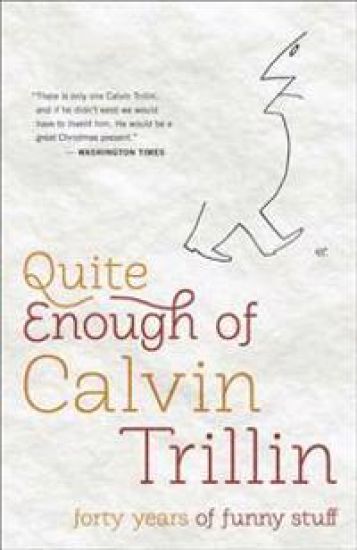
Quite Enough of Calvin Trillin: Forty Years of Funny Stuff
Calvin Trillin
Random House Trade
2012
nidottu
"Brilliant . . . The dean of American comic writers showcases his varied talents mocking the public and private lives of politicians, average citizens and himself."--The Star-Ledger Calvin Trillin has committed blatant acts of funniness all over the place--in The New Yorker, in one-man off-Broadway shows, in his "deadline poetry" for The Nation, in comic novels, and in what USA Today called "simply the funniest regular column in journalism." Now Trillin selects the best of his funny stuff and organizes it into topics like high finance ("My long-term investment strategy has been criticized as being entirely too dependent on Publishers Clearing House sweepstakes") and the literary life ("The average shelf life of a book is somewhere between milk and yogurt"). He addresses the horrors of witnessing a voodoo economics ceremony and the mystery of how his mother managed for thirty years to feed her family nothing but leftovers ("We have a team of anthropologists in there now looking for the original meal"). He even skewers deserving political figures in poetry. In this, the definitive collection of his humor, Calvin Trillin is prescient, insightful, and invariably hilarious. "A literary treasure . . . There is only one Calvin Trillin, and if he didn't exist we would have to invent him."--The Washington Times "Funny is to Trillin what drinking is to Uncle Jed in Annie Get Your Gun--it's what he does 'natur'lly.' He's also a lot more than funny. Quite Enough of Calvin Trillin is the twenty-eighth book he's published over not far short of a half-century, and their range of subjects is remarkable."--Jonathan Yardley, The Washington Post "Trillin made his reputation over four decades as the author of 'U.S. Journal' in the New Yorker but he] is incapable of resisting the temptation of comedy. The jokes kept on welling up and Mr. Trillin made a parallel reputation as a writer of funny stuff."--The Economist "Wry, whip-smart, understated, and entertaining."--The Miami Herald
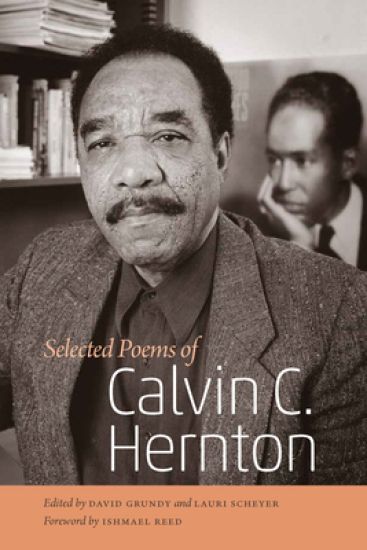
Selected Poems of Calvin C. Hernton
Calvin C Hernton; Ishmael Reed
WESLEYAN UNIVERSITY PRESS
2024
sidottu
The definitive guide to a major African American poet. This volume promises to be the definitive guide to Calvin C. Hernton's unparalleled poetic career, re-introducing readers to a major voice in American poetry. Hernton was a cofounder of the Umbra Poets Workshop; a participant in the Black Arts Movement, R. D. Laing's Kingsley Hall, and the Antiuniversity of London; and a teacher at Oberlin College who counted amongst his friends bell hooks, Toni Morrison, and Odetta. As a pioneer in the field of Black Studies, Hernton developed a theoretical and practical pedagogy with lasting impact on generations of students. He may be best known as an anti-sexist sociologist, following in the footsteps of W.E.B. Du Bois, but Hernton viewed himself, above all, as a poet. This volume includes a generous selection of Hernton's previously published poems, from classics like the often anthologized "The Distant Drum" to the visionary epic The Coming of Chronos to the House of Nightsong, reprinted in full for the first time since 1964, alongside uncollected and unpublished material from the Calvin C. Hernton papers at Ohio University, a new critical introduction, and detailed notes, chronology, and bibliography. [sample poem] The Distant Drum I am not a metaphor or symbol. This you hear is not the wind in the trees. Nor a cat being maimed in the street. I am being maimed in the street It is I who weep, laugh, feel pain or joy. Speak this because I exist. This is my voice These words are my words, my mouth Speaks them, my hand writes. I am a poet. It is my fist you hear beating Against your ear.
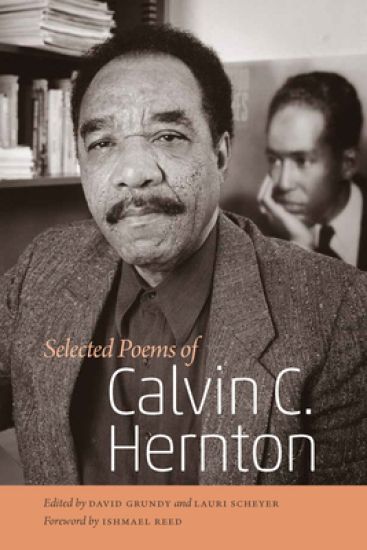
Selected Poems of Calvin C. Hernton
Calvin C Hernton; Ishmael Reed
WESLEYAN UNIVERSITY PRESS
2024
nidottu
The definitive guide to a major African American poet /> />This volume promises to be the definitive guide to Calvin C. Hernton's unparalleled poetic career, re-introducing readers to a major voice in American poetry. Hernton was a cofounder of the Umbra Poets Workshop; a participant in the Black Arts Movement, R. D. Laing's Kingsley Hall, and the Antiuniversity of London; and a teacher at Oberlin College who counted amongst his friends bell hooks, Toni Morrison, and Odetta. As a pioneer in the field of Black Studies, Hernton developed a theoretical and practical pedagogy with lasting impact on generations of students. He may be best known as an anti-sexist sociologist, following in the footsteps of W.E.B. Du Bois, but Hernton viewed himself, above all, as a poet. This volume includes a generous selection of Hernton's previously published poems, from classics like the often anthologized "The Distant Drum" to the visionary epic The Coming of Chronos to the House of Nightsong, reprinted in full for the first time since 1964, alongside uncollected and unpublished material from the Calvin C. Hernton papers at Ohio University, a new critical introduction, and detailed notes, chronology, and bibliography. /> />[sample poem] /> />The Distant Drum /> />I am not a metaphor or symbol. />This you hear is not the wind in the trees. />Nor a cat being maimed in the street. />I am being maimed in the street />It is I who weep, laugh, feel pain or joy. />Speak this because I exist. />This is my voice />These words are my words, my mouth />Speaks them, my hand writes. />I am a poet. />It is my fist you hear beating />Against your ear.
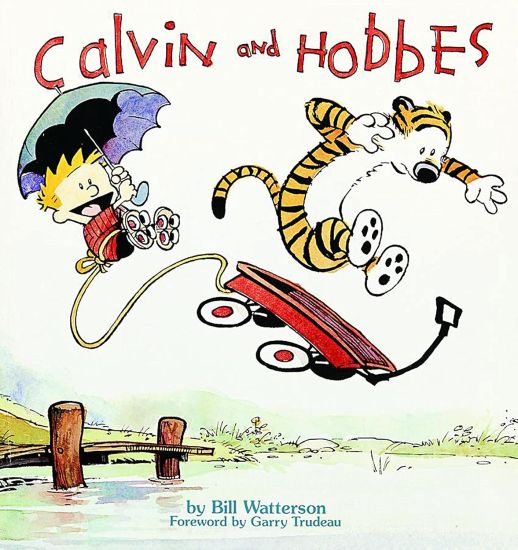
A collection of comic strips following the adventures of Calvin and his stuffed tiger Hobbes.

Few names in fashion are as recognisable as that of Calvin Klein. This unique book presents a stunning archive of images that reveal his timeless influence as a designer. From founding the company in New York in 1968, he went on to change the face of fashion, bringing his visionary minimalism to the fore and defining looks for generations. Divided by theme, with characteristic simplicity and sophistication, each of the three sections in this volume looks at one singular element of Klein s approach. In Provocative, we see the most controversial of his campaigns, from Brooke Shields s infamous teenage portraits to the seductive photography of underwear collections. In Minimalist, we understand the simplicity, refinement, and elegance in every collection. And in the final section, we read in the designer s own words the insights behind the campaigns and the secrets behind the successes. This magnificent survey is illustrated with era-defining photographs by many of the trendsetting names in fashion photography, from Irving Penn and Richard Avedon to Bruce Weber and Patrick Demarchelier. In the photographs are the world s most iconic models, from Christy Turlington to Kate Moss, captured in images that would define their careers. Irrespective of time or place, Calvin Klein has an aesthetic and an identity that is simply unrivalled.
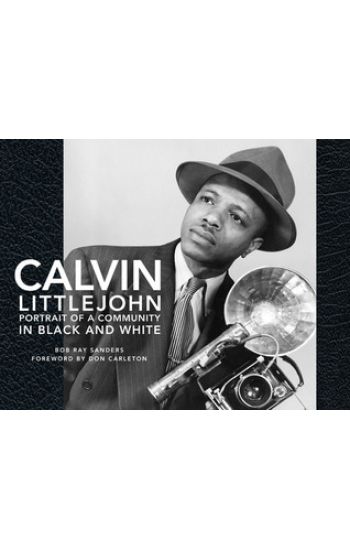
In 1934, the year Calvin Littlejohn came to Fort Worth, the city was a sleepy little burg. This was the Jim Crow era, when mainstream newspapers wouldn't publish pictures of black citizens and white photographers wouldn't take pictures in black schools. In Fort Worth, Littlejohn began what would become a life-long career of documenting the black community. And there would be nothing remotely related to the white culture's depictions of Amos 'n' Andy or black kids grinning over a slice of watermelon in Littlejohn's portrayal of his adopted home and the people he came to appreciate and love. Littlejohn's natural aptitude for drawing had been honed by correspondence courses in graphic design and a stint in a photo shop where he learned about the camera, lighting, and the use of shadows. When Littlejohn was assigned to be the official photographer at I. M. Terrell - the city's only black high school at the time - his professional career was launched. Unlike many segregated cities, where blacks lived only in one section, blacks in Cowtown lived in every quadrant of the city. There was a thriving black business district, with hotels, restaurants, a movie theater, a bank, and a major hospital, pharmacy, and nursing school. And of course, there were the schools and churches. All would eventually be seen through Littlejohn's lens. Although he never set out to be the documentarian of Fort Worth's black community, he did what he set out to do: to capture the best of a community, focusing on its good times. This book features more than 150 shots Littlejohn captured over the course of his career.
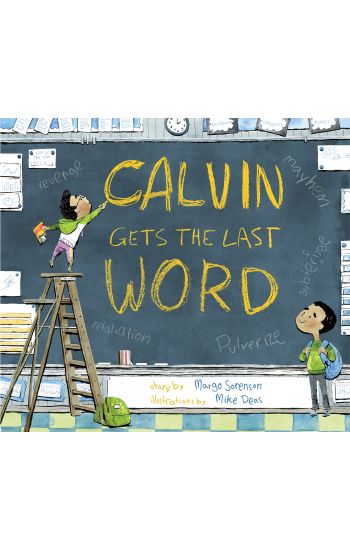
Calvin’s dictionary is proud to be carried everywhere Calvin goes—the breakfast table, school then home again—because Calvin is determined to find the perfect word to attach to his annoying older brother. The word isn’t exactly revenge, mayhem, bewilderment, subterfuge, pulverise or even retaliation, though all those words are close and very tempting. When Calvin finally finds the right word for his rascally brother, his dictionary is surprised and delighted, and readers will enjoy celebrating the triumphant discovery of Calvin’s perfect word along with his dictionary.