Kirjojen hintavertailu. Mukana 12 083 983 kirjaa ja 12 kauppaa.

Kirjahaku

Etsi kirjoja tekijän nimen, kirjan nimen tai ISBN:n perusteella.

1000 tulosta hakusanalla "Civilization"

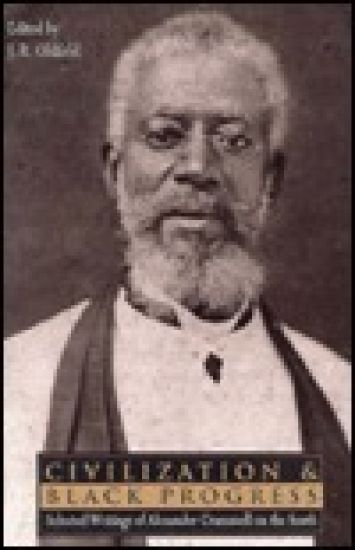
Civilization and Black Progress

Civilization and Black Progress

Alexander Crummell

University of Virginia Press
1995
sidottu
Alexander Crummell played a pivotal role in later 19th-century debates over race and black intellect. This is a collection of Crummell's most significant writings on the South. It includes a biography in the introduction, and detailed annotations in the text.
Civilization And Violence

Civilization And Violence

Rojas Cristina

University of Minnesota Press
2001
sidottu
Civilization and violence are not necessarily the antagonists we presume-withcivilization taming violence, and violence unmaking civilization. Focusing on postindependence Colombia, this book brings to light the ways in which violenceand civilization actually intertwined and reinforced each other in the development of postcolonial capitalism.The narratives of civilization and violence, Cristina Rojas contends, play key roles in the formation of racial, gender, and class identities; they also provide pivotal logic to both the formation of the nation and the processes of capitalist development. During the Liberal era of Colombian history (1849-1878), a dominant creole elite enforced a "will to civilization" that sought to create a new world in its own image. Rojas explores different arenas in which this pursuit meant the violent imposition of white, liberal, laissez-faire capitalism. Drawing on a wide range of social theory, Rojas develops a new way of understanding the relationship between violence and the formation of national identity-not just in the history of Colombia, but also in the broader narratives of civilization.
Civilization And Violence

Civilization And Violence

Cristina Rojas

University of Minnesota Press
2001
nidottu
Civilization and violence are not necessarily the antagonists we presume-withcivilization taming violence, and violence unmaking civilization. Focusing on postindependence Colombia, this book brings to light the ways in which violenceand civilization actually intertwined and reinforced each other in the development of postcolonial capitalism.The narratives of civilization and violence, Cristina Rojas contends, play key roles in the formation of racial, gender, and class identities; they also provide pivotal logic to both the formation of the nation and the processes of capitalist development. During the Liberal era of Colombian history (1849-1878), a dominant creole elite enforced a "will to civilization" that sought to create a new world in its own image. Rojas explores different arenas in which this pursuit meant the violent imposition of white, liberal, laissez-faire capitalism. Drawing on a wide range of social theory, Rojas develops a new way of understanding the relationship between violence and the formation of national identity-not just in the history of Colombia, but also in the broader narratives of civilization.
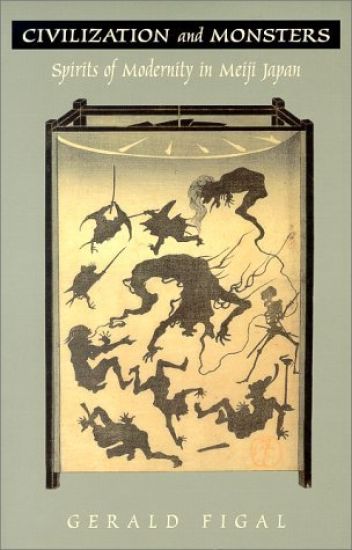
Civilization and Monsters

Civilization and Monsters

Gerald Figal

Duke University Press
2000
sidottu
Monsters, ghosts, the supernatural, the fantastic, the mysterious. These are not usually considered the “stuff” of modernism. More often they are regarded as inconsequential to the study of the modern, or, at best, seen as representative of traditional beliefs that are overcome and left behind in the transformation toward modernity. In Civilization and Monsters Gerald Figal asserts that discourse on the fantastic was at the heart of the historical configuration of Japanese modernity-that the representation of the magical and mysterious played an integral part in the production of modernity beginning in Meiji Japan (1868–1912).After discussing the role of the fantastic in everyday Japan at the eve of the Meiji period, Figal draws new connections between folklorists, writers, educators, state ideologues, and policymakers, all of whom crossed paths in a contest over supernatural terrain. He shows the ways in which a determined Meiji state was engaged in a battle to suppress, denigrate, manipulate, or reincorporate folk belief as part of an effort toward the consolidation of a modern national culture. Modern medicine and education, functioning as a means for the state to exercise its power, redefined folk practices as a source of evil. Diverse local spirits were supplanted by a new Japanese Spirit, embodied by the newly constituted emperor, the supernatural source of the nation’s strength. The monsters of folklore were identified, catalogued, and characterized according to a new regime of modern reason. But whether engaged to support state power and forge a national citizenry or to critique the arbitrary nature of that power, the fantastic, as Figal maintains, is the constant condition of Japanese modernity in all its contradictions. Furthermore, he argues, modernity in general is born of fantasy in ways that have scarcely been recognized. Bringing unexplored and provocative new ideas to the Japan specialist, Civilization and Monsters will also appeal to readers concerned with issues of modernity in general.
Civilization and Monsters

Civilization and Monsters

Gerald Figal

Duke University Press
2000
pokkari
Monsters, ghosts, the supernatural, the fantastic, the mysterious. These are not usually considered the “stuff” of modernism. More often they are regarded as inconsequential to the study of the modern, or, at best, seen as representative of traditional beliefs that are overcome and left behind in the transformation toward modernity. In Civilization and Monsters Gerald Figal asserts that discourse on the fantastic was at the heart of the historical configuration of Japanese modernity-that the representation of the magical and mysterious played an integral part in the production of modernity beginning in Meiji Japan (1868–1912).After discussing the role of the fantastic in everyday Japan at the eve of the Meiji period, Figal draws new connections between folklorists, writers, educators, state ideologues, and policymakers, all of whom crossed paths in a contest over supernatural terrain. He shows the ways in which a determined Meiji state was engaged in a battle to suppress, denigrate, manipulate, or reincorporate folk belief as part of an effort toward the consolidation of a modern national culture. Modern medicine and education, functioning as a means for the state to exercise its power, redefined folk practices as a source of evil. Diverse local spirits were supplanted by a new Japanese Spirit, embodied by the newly constituted emperor, the supernatural source of the nation’s strength. The monsters of folklore were identified, catalogued, and characterized according to a new regime of modern reason. But whether engaged to support state power and forge a national citizenry or to critique the arbitrary nature of that power, the fantastic, as Figal maintains, is the constant condition of Japanese modernity in all its contradictions. Furthermore, he argues, modernity in general is born of fantasy in ways that have scarcely been recognized. Bringing unexplored and provocative new ideas to the Japan specialist, Civilization and Monsters will also appeal to readers concerned with issues of modernity in general.
Civilization and the Human Subject

Civilization and the Human Subject

John Mandalios

Rowman Littlefield
1999
nidottu
Recent debates have highlighted the importance of the self to a better understanding of the nature of culture and its relation to power. In his new book, John Mandalios incorporates the current 'postmodern' debate on these issues with a deeper, philosophical exploration of identity and cultural formation, and the dynamics of social power underlying them. He takes up identity formation within an analysis of the historical, social, political, religious, and psychoanalytical dimensions of civilized life that can be traced back to the classical world. Questions ordinarily associated with the 'postmodern condition'_otherness, fragmentation, power, the situated self, disciplinary practices, and multiplicity_are related to the problematic of human subjectivity and how civilized modes of conduct of the self cannot simply be explained by national cultural traditions. Mandalios argues that self-identity is not reducible to the effects of globalization or power or any one single collective identity representation. The self is enveloped within a complex which requires a 'civilization-analytic' perspective into the world and the inner life.
Civilization in Transition (1789-1870)

Civilization in Transition (1789-1870)

Vanguard Press New York; Harrison Cook 1888-1969 Thomas; William Albert 1892- Author Hamm

Hassell Street Press
2021
nidottu
This work has been selected by scholars as being culturally important and is part of the knowledge base of civilization as we know it.This work is in the public domain in the United States of America, and possibly other nations. Within the United States, you may freely copy and distribute this work, as no entity (individual or corporate) has a copyright on the body of the work.Scholars believe, and we concur, that this work is important enough to be preserved, reproduced, and made generally available to the public. To ensure a quality reading experience, this work has been proofread and republished using a format that seamlessly blends the original graphical elements with text in an easy-to-read typeface.We appreciate your support of the preservation process, and thank you for being an important part of keeping this knowledge alive and relevant.
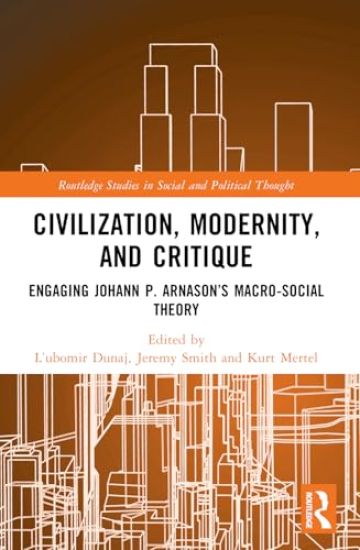
Civilization, Modernity, and Critique
Civilization, Modernity, and Critique provides the first comprehensive, cutting-edge engagement with the work of one of the most foundational figures in civilizational analysis: Jóhann P. Árnason. In order to do justice to Árnason’s seminal and wide-ranging contributions to sociology, social theory and history, it brings together distinguished scholars from a variety of disciplinary backgrounds and geographical contexts. Through a critical, interdisciplinary dialogue, it offers an enrichment and expansion of the methodological, theoretical, and applicative scope of civilizational analysis, by addressing some of the most complex and pressing problems of contemporary global society. A unique and timely contribution to the ongoing task of advancing the project of a critical theory of society, this volume will appeal to scholars of sociology and social theory with interests in historical sociology, critical theory and civilizational analysis.
Civilization, Modernity, and Critique
Civilization, Modernity, and Critique provides the first comprehensive, cutting-edge engagement with the work of one of the most foundational figures in civilizational analysis: Jóhann P. Árnason. In order to do justice to Árnason’s seminal and wide-ranging contributions to sociology, social theory and history, it brings together distinguished scholars from a variety of disciplinary backgrounds and geographical contexts. Through a critical, interdisciplinary dialogue, it offers an enrichment and expansion of the methodological, theoretical, and applicative scope of civilizational analysis, by addressing some of the most complex and pressing problems of contemporary global society. A unique and timely contribution to the ongoing task of advancing the project of a critical theory of society, this volume will appeal to scholars of sociology and social theory with interests in historical sociology, critical theory and civilizational analysis.
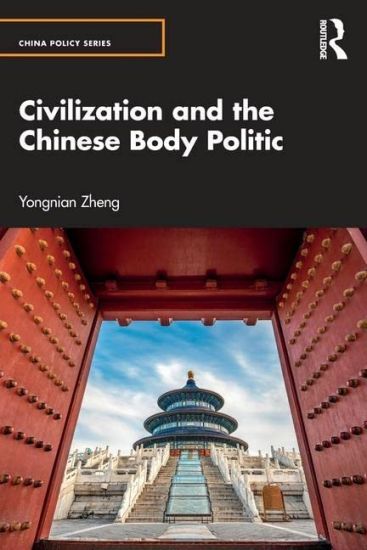
Civilization and the Chinese Body Politic

Civilization and the Chinese Body Politic

Yongnian Zheng

TAYLOR FRANCIS LTD
2022
sidottu
In this important and hugely ambitious book, one of the world’s leading political scientists working on China demonstrates how Western views of China are flawed because the long tradition of Western scholarship studying China views China from the Western philosophical and intellectual perspective rather than viewing China on its own terms through the lens of China’s own long-established and reputable philosophical and intellectual tradition. Providing a deep analysis of Western scholarship on China, including work from Leibniz to Marx to Weber and then to Wittfogel, and a thorough account of the evolution of China’s own thinking about governance as expressed in the practices of successive Chinese dynasties, the book goes on to examine how the current Chinese body politic fits with and is the natural outcome of China’s own long, well-thought-through and well-practiced intellectual consideration of what the nature of civilized governance should be. By focusing on philosophical and intellectual approaches rather than on theoretical or methodological ones, the book shows how the huge and increasing disconnect between non-Chinese views of China and Chinese ones has come about.
Civilization and the Chinese Body Politic

Civilization and the Chinese Body Politic

Yongnian Zheng

TAYLOR FRANCIS LTD
2022
nidottu
In this important and hugely ambitious book, one of the world’s leading political scientists working on China demonstrates how Western views of China are flawed because the long tradition of Western scholarship studying China views China from the Western philosophical and intellectual perspective rather than viewing China on its own terms through the lens of China’s own long-established and reputable philosophical and intellectual tradition. Providing a deep analysis of Western scholarship on China, including work from Leibniz to Marx to Weber and then to Wittfogel, and a thorough account of the evolution of China’s own thinking about governance as expressed in the practices of successive Chinese dynasties, the book goes on to examine how the current Chinese body politic fits with and is the natural outcome of China’s own long, well-thought-through and well-practiced intellectual consideration of what the nature of civilized governance should be. By focusing on philosophical and intellectual approaches rather than on theoretical or methodological ones, the book shows how the huge and increasing disconnect between non-Chinese views of China and Chinese ones has come about.
Civilization in Transition

Civilization in Transition

C. G. Jung

TAYLOR FRANCIS LTD
2023
sidottu
For this second edition of Civilization in Transition, essential corrections have been made in the text, and the bibliographical references have been brought up to date.This volume contains essays bearing on the contemporary scene and, in particular, on the relation of the individual to society. In the earliest one (1918), Jung advanced the theory that the European conflict was basically a psychological crisis originating in the collective unconscious of individuals. He pursued this theory in papers written during the '20s and '30s, focusing on the upheaval in Germany, and he gave it a much wider application in two major works of his last years ^DDL The Undiscovered Self, concerned with the relation between the individual and a mass society, and Flying Saucers, on the birth of a myth which Jung regarded as compensating the scientistic trends of our technological era. An appendix contains documents relating to Jung's association with the International General Medical Society for Psychotherapy.