
Kirjahaku
Etsi kirjoja tekijän nimen, kirjan nimen tai ISBN:n perusteella.
548 tulosta hakusanalla "Matthieu"
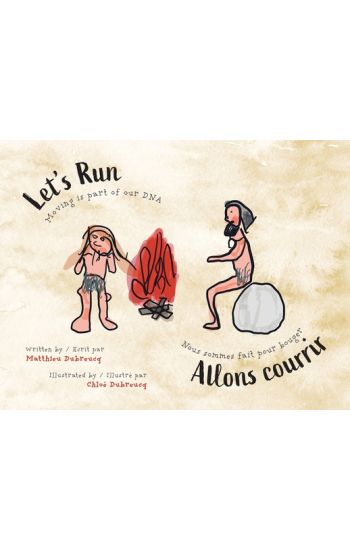
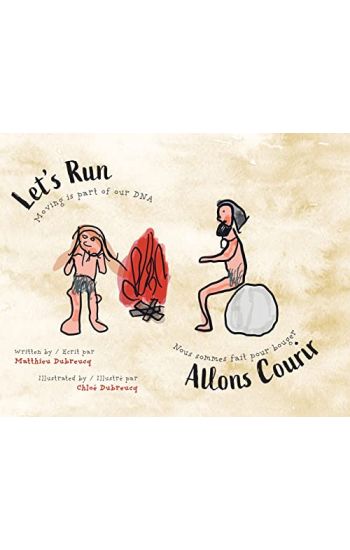
Ready, set . . . Go It's time to learn about the benefits of a life on the move Humans are uniquely suited to running long distances. Running helped the first humans hunt, and it helps present-day humans stay healthy and have fun In Let's Run, follow a tribe of hunters as they run to survive and take care of their families. While you're at it, learn about how you can race toward your own goals Let's Run is about fitness and health for the whole family. Join the fun: get out and run Trois, deux, un . . . C'est parti C'est le temps d'apprendre au sujet des plaisirs d'une vie active Les humains ont l'unique habilet de parcourir de longues distances la course. Cette habilet a permis aux premiers humains de chasser et elle aide les humains d'aujourd'hui rester en forme, tout en prouvant du plaisir Dans ces pages, suivez une tribu de chasseurs pour qui la course permet la survie et le bien- tre de leurs familles. En m me temps, vous apprendrez comment vous lancer vers vos propres objectifs Allons courir est au sujet de la sant physique pour toute la famille. Sortez courir: il y a tout un monde d couvrir

Dans une petite ville paum e des tats Unis, deux bandes rivales de jeunes lyc ens se font constamment la guerre. D'un c t Body et ses amis, de l'autre Edwin et sa bande, surnomm e la bande des Chiens Fous . Au fil du temps Body semble perturb par de petits malaises et saignements de nez. Il fait la rencontre d'Edward, un vieil Indien antiquaire et rebouteux. Celui-ci l'avertit qu'il est en possession d'un don peu ordinaire, le SKIRHI. Body peut maintenant rentrer dans le corps des gens, et leur insu, les manipuler sa convenance pour changer le cours des choses. Edwin, fils papa d jant , va en subir les cons quences. Body va t'il utiliser le SKIRHI bon escient ?
L'Art De Senrichir Promptement Par L'Agriculture (1763)
Matthieu Auroux Despommiers
KESSINGER PUBLISHING CO
2009
pokkari
The Alpine Missionary Or The Life Of J. L. Rostan
Matthieu Lelievre
KESSINGER PUBLISHING, LLC
2009
pokkari

Conformite De La Discipline Ecclesiastique Des Protestans De France
Matthieu De Larroque
Kessinger Pub
2009
pokkari

This book presents the first comprehensive history of the interplay of public and private provision that made the Swiss 'three-pillar' pension system into a model for the World Bank and other pension reformers during the last two decades of the twentieth century. Through a study of business federations', private pension lobbyists' and insurance companies' archives, Matthieu Leimgruber charts the century-long battle waged over the boundaries of state and private pensions. He shows how a distinctive path towards social provision has laid the foundation for a pension fund industry rivalling that of the United States and the United Kingdom. Through this comparative approach Matthieu Leimgruber is also able to question current assumptions about the strict dichotomy between 'Anglo-Saxon' and 'continental' models of welfare provision. This study will appeal to scholars of twentieth-century European history, economic history, political economy and welfare economics.
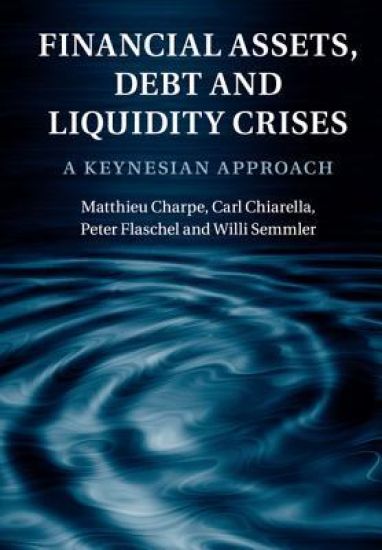
Financial Assets, Debt and Liquidity Crises
Matthieu Charpe; Carl Chiarella; Peter Flaschel; Willi Semmler
Cambridge University Press
2015
pokkari
The macroeconomic development of most major industrial economies is characterised by boom-bust cycles. Normally such boom-bust cycles are driven by specific sectors of the economy. In the financial meltdown of the years 2007–9 it was the credit sector and the real-estate sector that were the main driving forces. This book takes on the challenge of interpreting and modelling this meltdown. In doing so it revives the traditional Keynesian approach to the financial-real economy interaction and the business cycle, extending it in several important ways. In particular, it adopts the Keynesian view of a hierarchy of markets and introduces a detailed financial sector into the traditional Keynesian framework. The approach of the book goes beyond the currently dominant paradigm based on the representative agent, market clearing and rational economic agents. Instead it proposes an economy populated with heterogeneous, rationally bounded agents attempting to cope with disequilibria in various markets.
Traite Des Proprietes Communes A Toutes Les Courbes
Matthieu Bernard Goudin
KESSINGER PUBLISHING, LLC
2009
pokkari
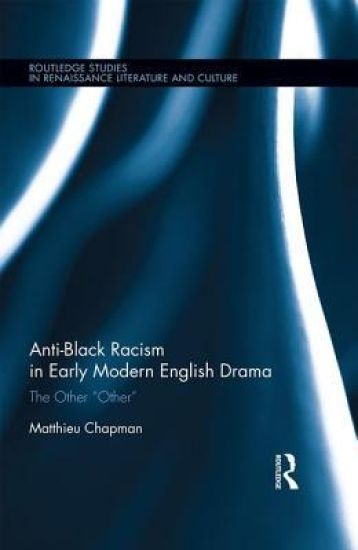
This is the first book to deploy the methods and ensemble of questions from Afro-pessimism to engage and interrogate the methods of Early Modern English studies. Using contemporary Afro-pessimist theories to provide a foundation for structural analyses of race in the Early Modern Period, it engages the arguments for race as a fluid construction of human identity by addressing how race in Early Modern England functioned not only as a marker of human identity, but also as an a priori constituent of human subjectivity. Chapman argues that Blackness is the marker of social death that allows for constructions of human identity to become transmutable based on the impossibility of recognition and incorporation for Blackness into humanity. Using dramatic texts such as Othello, Titus Andronicus, and other Early Modern English plays both popular and lesser known, the book shifts the binary away from the currently accepted standard of white/non-white that defines "otherness" in the period and examines race in Early Modern England from the prospective of a non-black/black antagonism. The volume corrects the Afro-pessimist assumption that the Triangle Slave Trade caused a rupture between Blackness and humanity. By locating notions of Black inhumanity in England prior to chattel slavery, the book positions the Triangle Trade as a result of, rather than the cause of, Black inhumanity. It also challenges the common scholarly assumption that all varying types of human identity in Early Modern England were equally fluid by arguing that Blackness functioned as an immutable constant. Through the use of structural analysis, this volume works to simplify and demystify notions of race in Renaissance England by arguing that race is not only a marker of human identity, but a structural antagonism between those engaged in human civil society opposed to those who are socially dead. It will be an essential volume for those with interest in Renaissance Literature and Culture, Shakespeare, Contemporary Performance Theory, Black Studies, and Ethnic Studies.
Recits Historiques Sur L'Ancien Pays De Liege (1866)
Matthieu Lambert Polain
KESSINGER PUBLISHING, LLC
2010
pokkari