Kirjojen hintavertailu. Mukana 11 244 527 kirjaa ja 12 kauppaa.

Kirjahaku

Etsi kirjoja tekijän nimen, kirjan nimen tai ISBN:n perusteella.

1000 tulosta hakusanalla "Protest"

Protest on Trial

Protest on Trial

Kit Bakke

Washington State University Press
2018
pokkari
The Seattle 7 embodied late 1960s counterculture--young, idealistic, active organizers against racism and the Vietnam War, and fond of long hair, rock'n'roll, sex, drugs, and parties. In January 1970 they founded the Seattle Liberation Front (SLF). Nationally, the FBI was using tactics such as wiretapping, warrantless break-ins, and the placing of informers and provocateurs to destroy organizations like the SLF. But in Seattle, it went a step further.After a protest at Seattle's downtown federal building turned violent, seven SLF leaders--Michael Abeles, Jeff Dowd, Joe Kelly, Michael Lerner, Roger Lippman, Chip Marshall, and Susan Stern--faced federal conspiracy and intent to riot indictments. Their chaotic trial became a crash course in the real American judicial system. Carl Maxey and Michael Tigar led the defense team; the U.S. prosecuting attorney was Stan Pitkin. When Pitkin's key witness faltered and the government's case appeared doomed, the presiding judge issued a surprise ruling to end the trial and send the defendants to prison.For this solidly researched oral history, the author conducted dozens of interviews with defendants, attorneys, FBI agents, jurors, and others. She also accessed the trial transcript, appeals briefs and depositions, media articles, books, and more.
Protest Tautohetohe

Protest Tautohetohe

Stephanie Gibson; Matariki Williams; Puawai Cairns

Te Papa Press
2019
nidottu
For a small, peaceful democracy in the South Pacific, New Zealand has had its fair share of major protest issues, and over the decades New Zealanders have become adept at mobilising around causes. From protest about war - be it the New Zealand Wars, the Great War, the Vietnam War or the invasion of Iraq - to trade union action, protests against apartheid and nuclear ship visits, protest for the rights of women and LGBTQI people, protests for better race relations and to protect the environment, and protest to save key services and protect heritage, Aotearoa New Zealand has a long legacy of activism. This richly illustrated book brings together the objects made by protesters to proclaim and symbolise their causes and their struggles. From banners to badges, t-shirts to teatowels, posters to photographs, it is a vivid reflection of 250 years of resistance and persistence.
Protest Walls

Protest Walls

Yao-Tai Li; Katherine Whitworth

Cambridge University Press
2025
pokkari
Protest walls have played an important role in movement communication and mobilizing the public. We focus on contentious performances and the way diverse actors co-authored spaces into the protest walls that were seen in Hong Kong and other countries including Lebanon, Iraq, and Taiwan. We argue that once created, protest walls can become objects symbolic of dissent. They exist as a lexicon-a complex language of symbols and spatial practices. This language is now an internationally understood method of protest which has a high degree of transferability and can be adapted into local contentious contexts or used to transmit local concerns into the international consciousness. Finally, we show that the protest wall can shed new light on the relationship between activists, their claims and their targets that does not exist in other types of contentious performance.
Protest Walls

Protest Walls

Yao-Tai Li; Katherine Whitworth

Cambridge University Press
2025
sidottu
Protest walls have played an important role in movement communication and mobilizing the public. We focus on contentious performances and the way diverse actors co-authored spaces into the protest walls that were seen in Hong Kong and other countries including Lebanon, Iraq, and Taiwan. We argue that once created, protest walls can become objects symbolic of dissent. They exist as a lexicon-a complex language of symbols and spatial practices. This language is now an internationally understood method of protest which has a high degree of transferability and can be adapted into local contentious contexts or used to transmit local concerns into the international consciousness. Finally, we show that the protest wall can shed new light on the relationship between activists, their claims and their targets that does not exist in other types of contentious performance.
Protest and Policy in the Iraq, Nuclear Freeze and Vietnam Peace Movements
This Element addresses questions about social movement effectiveness and the strategies and methods that are most likely to achieve policy change. It examines the nature of peace movements through a comparative analysis of three major movements, focusing on their policy impacts. It assesses social movement dynamics and the mechanisms through which movements gain influence. The purpose is to mine campaign experiences from the past to develop action guidelines for more effective citizen activism against war and nuclear weapons in the future. The Element examines non-institutional and institutional forms of politics and the relationship between the two, and how they can be mutually reinforcing. It traces examples of inside-outside approaches within the three peace movements and their effects. Lessons from the analysis and case studies are applied in the final section to proposals for a new global freeze movement to stop the emerging international arms race.
Protest and Policy in the Iraq, Nuclear Freeze and Vietnam Peace Movements
This Element addresses questions about social movement effectiveness and the strategies and methods that are most likely to achieve policy change. It examines the nature of peace movements through a comparative analysis of three major movements, focusing on their policy impacts. It assesses social movement dynamics and the mechanisms through which movements gain influence. The purpose is to mine campaign experiences from the past to develop action guidelines for more effective citizen activism against war and nuclear weapons in the future. The Element examines non-institutional and institutional forms of politics and the relationship between the two, and how they can be mutually reinforcing. It traces examples of inside-outside approaches within the three peace movements and their effects. Lessons from the analysis and case studies are applied in the final section to proposals for a new global freeze movement to stop the emerging international arms race.
Protest Movements in Asylum and Deportation
This open access book deals with contestations "from below" of legal policies and implementation practices in asylum and deportation. Consequently, it covers three types of mobilization: solidarity protests against the deportation of refused asylum seekers, refugee activism campaigning for residence rights and inclusion, and restrictive protests against the reception of asylum seekers. By applying both a longitudinal analysis of protest events and a series of in-depth case studies in three immigration countries, this edited volume provides comparative insights into these three types of movement in Austria, Germany, and Switzerland over a time span of twenty-five years. Embedded in concepts of political change, limited state sovereignty, and migration control, the findings shed light on actors, repertoires, and the effects of protest activities. The contributions illustrate how local contexts, national political settings, issue specifics, and social ties lead to distinctly different forms of protest emergence, dynamics, and strategies. Additionally, they give a profound understanding of the mechanisms and constellations that contribute to protest success, both in terms of preventing deportations of individuals as well as changing policies. In sum, this book constitutes a major contribution to empirically informed theoretical reflections on collective contestation in the fields of refugee studies and social protest movements. This work was published by Saint Philip Street Press pursuant to a Creative Commons license permitting commercial use. All rights not granted by the work's license are retained by the author or authors.
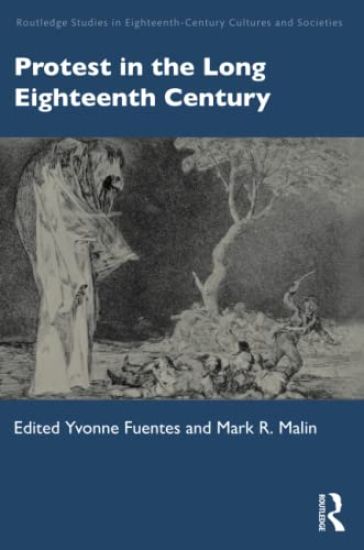
Protest in the Long Eighteenth Century
This edited collection of essays focuses on the topic of protest during the Enlightenment of the long eighteenth century (roughly 1670-1833). Resistance in the eighteenth century was extensive, and the act of protest to foment meaningful societal change took on many forms from the circulation of ballads, swearing of oaths, to riots and work stoppages, or the composition of essays, novels, posters, caricatures, political cartoons, as well as theater and opera. The contributors to this volume examine the causes of protest as well as the broad ways in which common artifacts such as poles, trees, drums, conchs, and songs acted as flashpoints for conflict and vehicles of protest. Rather than approaching the topic with strict geographical, temporal, and structural limitations, this book focuses on the time period from an international perspective and an interdisciplinary scope. Because of its wide scope, this book is an important contribution to the subject that will be of interest to both faculty and students of the history of protest, resistance and the changes that these forces bring as it also reminds us that the protests of today are rooted in historical resistances of the past.
Protest in Late Modern Societies
This book discusses a broadly understood phenomenon of protest from several perspectives, including historical, cultural, social, political, environmental and semiotic. Through their analyses, the authors undertake to envision the possible evolution of the forms of contestation in the further decades of the 21st century, taking into account the specificity of the globalisation processes.A multidimensional approach offered in this volume makes it possible to capture and identify new features of contemporary contestation and those that seem unchanged despite the passage of time and altering audiences. Examples from Europe (France, the United Kingdom, Italy, Ireland, Malta, Bulgaria, Poland, Belarus, Russia), America (the United States, Mexico, Chile) and Far East (Hong Kong and China) are relevant case studies that show the faces of contestation while reaching for new or modified rhetoric, symbolism, communication channels and the so-called modus operandi of protest initiators, active and passive participants and short- and long-distant observers.The book will be of value to a wide audience, particularly to the researchers studying contestation, social resistance, individual and collective disobedience, crisis management and cultural/social dynamic of protests. It will also be of interest to experts and individuals from outside the academia like civil activists, practitioners and NGOs compelled by contemporary processes (tensions) occurring between the state, power, society and individuals.
Protest in Late Modern Societies
This book discusses a broadly understood phenomenon of protest from several perspectives, including historical, cultural, social, political, environmental and semiotic. Through their analyses, the authors undertake to envision the possible evolution of the forms of contestation in the further decades of the 21st century, taking into account the specificity of the globalisation processes.A multidimensional approach offered in this volume makes it possible to capture and identify new features of contemporary contestation and those that seem unchanged despite the passage of time and altering audiences. Examples from Europe (France, the United Kingdom, Italy, Ireland, Malta, Bulgaria, Poland, Belarus, Russia), America (the United States, Mexico, Chile) and Far East (Hong Kong and China) are relevant case studies that show the faces of contestation while reaching for new or modified rhetoric, symbolism, communication channels and the so-called modus operandi of protest initiators, active and passive participants and short- and long-distant observers.The book will be of value to a wide audience, particularly to the researchers studying contestation, social resistance, individual and collective disobedience, crisis management and cultural/social dynamic of protests. It will also be of interest to experts and individuals from outside the academia like civil activists, practitioners and NGOs compelled by contemporary processes (tensions) occurring between the state, power, society and individuals.
Protest and Reform

Protest and Reform

Joseph Kestner

TAYLOR FRANCIS LTD
2022
sidottu
The social novel in nineteenth-century Britain has been considered the effort of a predominantly male canon of writers. In this ground-breaking study, originally published in 1985, Joseph Kestner challenges that assumption, arguing that it was a succession of female writers – women often meriting only a footnote in literary history – who initiated and advanced the tradition of using narrative fiction to register protest, expose abuses, and promote reform.Kestner explores the contributions to Victorian social policy by the fiction of these neglected authors (Hannah More, Elizabeth Stone, Frances Trollope, Charlotte Tonna, Camilla Toulmin, Geraldine Jewsbury, Fanny Mayne, Julia Kavanagh, Dinah Mulock Craik) as well as more prominent female authors (Maria Edgeworth, Harriet Martineau, Elizabeth Gaskell, Charlotte Brontë, George Eliot) and male writers (Charles Dickens, Benjamin Disraeli, G. M. W. Reynolds, John Galt, Charles Kingsley). This is an important work for every scholar, student, and reader of nineteenth-century literature and history, women’s studies, and sociology. Kestner’s book will encourage a reappraisal of women writers and their role in Victorian Britain and advance a long-needed reassessment of the traditional canon of nineteenth-century literature.In rediscovering the literary and social contribution of these undervalued writers, Kestner provides a chronological assessment of the female social narrative. Tracing the form from its inception in the late eighteenth century to its evolution in the 1830s and 1840s and to its maturation in the 1850s and 1860s, he reveals the continuity of a developing literary tradition that included early writers like More and later practitioners like Tonna, Stone, Jewsbury, and Mayne. In the process Kestner establishes a new basis for assessing major writers such as Eliot and Gaskell. In consciously using fiction for social protest purposes, these novelists were responding to a society marked by transition. Their common emphasis was on the plight of the disenfranchised in a new era and the need for manifold reforms in such areas as housing, labor legislation, education, childcare, access to employment, sanitation, and marital law. Reform was necessary as England evolved from an agricultural to an industrial economic system.Kestner uses evidence such as Parliamentary investigations and early social reporting by James Kay, William Cooke Taylor, Peter Gaskell, and others to assess the validity of the protests of these novelists. Their impassioned novels supplemented the legislative findings of male-dominated Parliamentary committees and reached an audience, often specifically addressed as female, that government documents could not. Galvanizing readers through their narratives, the socially conscious female writers gained new political influence that contributed to legislative process. These writers also won artistic ground, commanding a serious literary attention and respect never before accorded women writers. It is that serious literary status, Kestner argues, unjustly neglected for so long, that must be reclaimed today as we rethink and revise our view of Victorian fiction.
Protest and Reform

Protest and Reform

Joseph Kestner

TAYLOR FRANCIS LTD
2024
nidottu
The social novel in nineteenth-century Britain has been considered the effort of a predominantly male canon of writers. In this ground-breaking study, originally published in 1985, Joseph Kestner challenges that assumption, arguing that it was a succession of female writers – women often meriting only a footnote in literary history – who initiated and advanced the tradition of using narrative fiction to register protest, expose abuses, and promote reform.Kestner explores the contributions to Victorian social policy by the fiction of these neglected authors (Hannah More, Elizabeth Stone, Frances Trollope, Charlotte Tonna, Camilla Toulmin, Geraldine Jewsbury, Fanny Mayne, Julia Kavanagh, Dinah Mulock Craik) as well as more prominent female authors (Maria Edgeworth, Harriet Martineau, Elizabeth Gaskell, Charlotte Brontë, George Eliot) and male writers (Charles Dickens, Benjamin Disraeli, G. M. W. Reynolds, John Galt, Charles Kingsley). This is an important work for every scholar, student, and reader of nineteenth-century literature and history, women’s studies, and sociology. Kestner’s book will encourage a reappraisal of women writers and their role in Victorian Britain and advance a long-needed reassessment of the traditional canon of nineteenth-century literature.In rediscovering the literary and social contribution of these undervalued writers, Kestner provides a chronological assessment of the female social narrative. Tracing the form from its inception in the late eighteenth century to its evolution in the 1830s and 1840s and to its maturation in the 1850s and 1860s, he reveals the continuity of a developing literary tradition that included early writers like More and later practitioners like Tonna, Stone, Jewsbury, and Mayne. In the process Kestner establishes a new basis for assessing major writers such as Eliot and Gaskell. In consciously using fiction for social protest purposes, these novelists were responding to a society marked by transition. Their common emphasis was on the plight of the disenfranchised in a new era and the need for manifold reforms in such areas as housing, labor legislation, education, childcare, access to employment, sanitation, and marital law. Reform was necessary as England evolved from an agricultural to an industrial economic system.Kestner uses evidence such as Parliamentary investigations and early social reporting by James Kay, William Cooke Taylor, Peter Gaskell, and others to assess the validity of the protests of these novelists. Their impassioned novels supplemented the legislative findings of male-dominated Parliamentary committees and reached an audience, often specifically addressed as female, that government documents could not. Galvanizing readers through their narratives, the socially conscious female writers gained new political influence that contributed to legislative process. These writers also won artistic ground, commanding a serious literary attention and respect never before accorded women writers. It is that serious literary status, Kestner argues, unjustly neglected for so long, that must be reclaimed today as we rethink and revise our view of Victorian fiction.

Protest and the Ambiguous Politics of Indignation
What makes indignation ‘political’? And why should we care about it? Drawing on field-work among four movements in Belgium (2017–2021) – The Youth for Climate movement, the Citizen platform for refugee support, the Yellow Vests movement and the radical-right movement Schild & Vrienden – this book investigates both the meanings and implications of indignation in the context of mobilization. In particular, the book argues that what is often reduced to a form of ‘moral anger’ which triggers protest is in fact much more complex and ambiguous. Indignation is not just anger: it is rooted in hate and love. It may also harbour textures of compassion and disgust. It may be a culmination of resentful feelings or a reaction to fear. In some contentious contexts, it displays a distinctive righteous connotation; in others, it is rooted in historical forms of injustice and discrimination. It triggers some of the most disruptive forms of contention, while also reinforcing hegemonic norms and beliefs. Indignation, overall, is one of the most explicitly political affects of mobilization, while also reinforcing broader trends of depoliticization. By unveiling the affective complexity of indignation, the author shows the multiple ways in which the indignation expressed by social movements both politicizes and depoliticizes and what this means for the role played by emotions and affects in today’s landscape of conflictuality.
Protest, Upliftment and Identity

Protest, Upliftment and Identity

Bipul Mandal

TAYLOR FRANCIS LTD
2022
sidottu
The period from 1872-1947 witnessed the rise of many movements in Bengal, where those who were considered lower castes were mobilised to protest against the inequality and injustice meted out to them in various fields, including religion, politics and education. The focus of their struggle was the social injustice within the Hindu caste hierarchy. Unlike in south and western India where caste movements were often associated with anti-Brahmanical movements, in Bengal it was upgradation of caste from Sudra to Kshatriya varna.The main focus of the study is the Kshatriyaization movement of Rajbansis, the Matua movement of Namasudras, and the colonial policy of ‘Protective Discrimination’ and its impact.It studies the attempt by Rajbansi community to establish themselves as Kshatriyas in the first half of the twentieth century, though the movement started in the late nineteenth century itself. It also includes their struggle against the Brahmanical dominance and the elites of their own community. Alongside the Kshatriyaization movement, a parallel movement for the social uplift started among the Namasudra community, which later spread to northern Bengal. Their struggle actually began from the time of the first Census in 1872, when the census authorities classified the Namasudras as Chandals in the census report. The Namasudra protest movement, hereafter, developed through a different channel provided by a Vaishnava religious sect named Matua, started under a Namasudra leader Harichand Thakur. This book is essential for those wishing to understand the socio-religious movement of the Namasudra and the Rajbansi communities in their historical context. Print edition not for sale in India, Pakistan, Nepal, Bhutan, Bangladesh and Sri Lanka.
Protest, Upliftment and Identity

Protest, Upliftment and Identity

Bipul Mandal

TAYLOR FRANCIS LTD
2024
nidottu
The period from 1872-1947 witnessed the rise of many movements in Bengal, where those who were considered lower castes were mobilised to protest against the inequality and injustice meted out to them in various fields, including religion, politics and education. The focus of their struggle was the social injustice within the Hindu caste hierarchy. Unlike in south and western India where caste movements were often associated with anti-Brahmanical movements, in Bengal it was upgradation of caste from Sudra to Kshatriya varna.The main focus of the study is the Kshatriyaization movement of Rajbansis, the Matua movement of Namasudras, and the colonial policy of ‘Protective Discrimination’ and its impact.It studies the attempt by Rajbansi community to establish themselves as Kshatriyas in the first half of the twentieth century, though the movement started in the late nineteenth century itself. It also includes their struggle against the Brahmanical dominance and the elites of their own community. Alongside the Kshatriyaization movement, a parallel movement for the social uplift started among the Namasudra community, which later spread to northern Bengal. Their struggle actually began from the time of the first Census in 1872, when the census authorities classified the Namasudras as Chandals in the census report. The Namasudra protest movement, hereafter, developed through a different channel provided by a Vaishnava religious sect named Matua, started under a Namasudra leader Harichand Thakur. This book is essential for those wishing to understand the socio-religious movement of the Namasudra and the Rajbansi communities in their historical context. Print edition not for sale in India, Pakistan, Nepal, Bhutan, Bangladesh and Sri Lanka.
Protest and Democracy

Protest and Democracy

TAYLOR FRANCIS LTD
2025
sidottu
This book offers an interdisciplinary analysis of the interplay between protest and institutions during an era of multiple crises in Denmark, Germany, Hungary, Italy, Romania and the UK. Focusing on the interaction between citizens, social movements and movement parties, and questions of democratic quality related to participation, competition and responsiveness, it considers the role of traditional and social media when connecting institutional and non-institutional arenas. Building on insights from political science, sociology and communication studies, it combines an original cross-national survey, interviews, media analysis, document analysis, statistical analytical techniques, critical discourse analysis, social network analysis and natural language processing, in a comparative perspective.
Protest Music in Latin America
Protest Music in Latin America: Politics, Faith, and Social Justice addresses the impact of protest music in Latin America between the late 1950s and the 2000s. This was a time of continental fervor for revolutionary change and social transformation. This book analyzes the interplay between faith and politics in the music of social protest across the region. It places these songs in historical context and offers a window into the religious and cultural life, language, and thought of social actors in Latin American history. This vital resource for teaching students about Latin American cultures and societies offers in-depth analysis of twelve songs from different countries. An opening section provides the theoretical framework and historical background for understanding Latin American protest music and its relationship to faith and social change. Each of the remaining chapters focuses on one key song. The chapters move chronologically from the 1950s to the 2000s in their analysis of the composers and performers, historical and political contexts, lyrics, musical elements, religious themes, and messages of social change. Discussion questions and further resources at the end of each chapter allow readers to engage more deeply with the music. The full lyrics of each song are included in the original language with an English translation. Broadening the resources available for courses in Latin American music, history, culture, and language, while offering new insights for researchers and academics, Protest Music in Latin America: Politics, Faith, and Social Justice is an essential resource for scholars of sociology, religion, world music, and Latin American studies.
Protest Music in Latin America
Protest Music in Latin America: Politics, Faith, and Social Justice addresses the impact of protest music in Latin America between the late 1950s and the 2000s. This was a time of continental fervor for revolutionary change and social transformation. This book analyzes the interplay between faith and politics in the music of social protest across the region. It places these songs in historical context and offers a window into the religious and cultural life, language, and thought of social actors in Latin American history. This vital resource for teaching students about Latin American cultures and societies offers in-depth analysis of twelve songs from different countries. An opening section provides the theoretical framework and historical background for understanding Latin American protest music and its relationship to faith and social change. Each of the remaining chapters focuses on one key song. The chapters move chronologically from the 1950s to the 2000s in their analysis of the composers and performers, historical and political contexts, lyrics, musical elements, religious themes, and messages of social change. Discussion questions and further resources at the end of each chapter allow readers to engage more deeply with the music. The full lyrics of each song are included in the original language with an English translation. Broadening the resources available for courses in Latin American music, history, culture, and language, while offering new insights for researchers and academics, Protest Music in Latin America: Politics, Faith, and Social Justice is an essential resource for scholars of sociology, religion, world music, and Latin American studies.
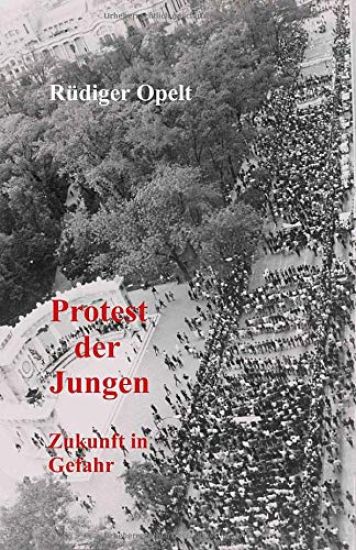
Protest der Jungen: Zukunft in Gefahr

Protest der Jungen: Zukunft in Gefahr

Rudiger Opelt

Independently Published
2019
nidottu
Die M chtigen hinterlassen den Jungen ein schweres Erbe, in Sachen Rente, Staatsverschuldung, kologie, Bildung, Wohnen und Arbeitsmarkt. Nun ist der Aufstand da. Greta Thunberg und die demonstrierenden Sch ler treiben die s umige Politik vor sich her. Die Natur zerbr selt vor ihren Augen, Insekten, Biotope, heile Landschaft, gesundes Klima - alles wird es nicht mehr geben, wenn sie einmal die Verantwortung tragen werden. Sie d rfen hohe Pensionszahlungen leisten, werden aber nie eine Pension erhalten oder erst. Ein Korruptionsskandal jagt den n chsten, die M chtigen bereichern sich hemmungslos und dass f r die Jungen nichts mehr brigbleibt, wen k mmert das?Sie haben die Nase voll und zeigen das auch. Sie werden nicht aufh ren zu demonstrieren, bis man sie ernst nimmt. Sie haben begonnen, sich um die Zukunft zu k mmern, damit sie noch eine haben.
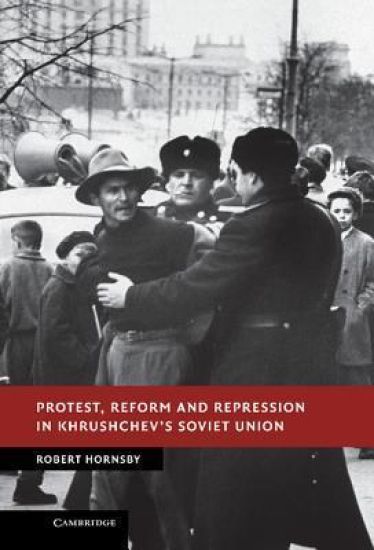
Protest, Reform and Repression in Khrushchev's Soviet Union

Protest, Reform and Repression in Khrushchev's Soviet Union

Robert Hornsby

Cambridge University Press
2013
sidottu
Protest, Reform and Repression in Khrushchev's Soviet Union explores the nature of political protest in the USSR during the decade following the death of Stalin. Using sources drawn from the archives of the Soviet Procurator's office, the Communist Party, the Komsomol and elsewhere, Hornsby examines the emergence of underground groups, mass riots and public attacks on authority as well as the ways in which the Soviet regime under Khrushchev viewed and responded to these challenges, including deeper KGB penetration of society and the use of labour camps and psychiatric repression. He sheds important new light on the progress and implications of de-Stalinization, the relationship between citizens and authority and the emergence of an increasingly materialistic social order inside the USSR. This is a fascinating study which significantly revises our understanding of the nature of Soviet power following the abandonment of mass terror.