Kirjojen hintavertailu. Mukana 11 342 296 kirjaa ja 12 kauppaa.

Kirjahaku

Etsi kirjoja tekijän nimen, kirjan nimen tai ISBN:n perusteella.

820 tulosta hakusanalla Adamson Ged

Philosophy in the Islamic World

Philosophy in the Islamic World

Peter Adamson

Oxford University Press
2018
nidottu
The latest in the series based on the popular History of Philosophy podcast, this volume presents the first full history of philosophy in the Islamic world for a broad readership. It takes an approach unprecedented among introductions to this subject, by providing full coverage of Jewish and Christian thinkers as well as Muslims, and by taking the story of philosophy from its beginnings in the world of early Islam all the way through to the twentieth century. Major figures like Avicenna, Averroes, and Maimonides are covered in great detail, but the book also looks at less familiar thinkers, including women philosophers. Attention is also given to the philosophical relevance of Islamic theology (kalam) and mysticism--the Sufi tradition within Islam, and Kabbalah among Jews--and to science, with chapters on disciplines like optics and astronomy. The book is divided into three sections, with the first looking at the first blossoming of Islamic theology and responses to the Greek philosophical tradition in the world of Arabic learning. This 'formative period' culminates with the work of Avicenna, the pivotal figure to whom most later thinkers feel they must respond. The second part of the book discusses philosophy in Muslim Spain (Andalusia), where Jewish philosophers come to the fore, though this is also the setting for such thinkers as Averroes and Ibn Arabi. Finally, a third section looks in unusual detail at later developments, touching on philosophy in the Ottoman, Mughal, and Safavid empires and showing how thinkers in the nineteenth to the twentieth century were still concerned to respond to the ideas that had animated philosophy in the Islamic world for centuries, while also responding to political and intellectual challenges from the European colonial powers.
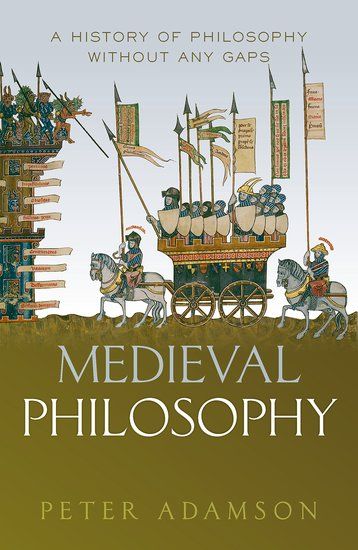
Medieval Philosophy

Medieval Philosophy

Peter Adamson

Oxford University Press
2019
sidottu
Peter Adamson presents a lively introduction to six hundred years of European philosophy, from the beginning of the ninth century to the end of the fourteenth century. The medieval period is one of the richest in the history of philosophy, yet one of the least widely known. Adamson introduces us to some of the greatest thinkers of the Western intellectual tradition, including Peter Abelard, Anselm of Canterbury, Thomas Aquinas, John Duns Scotus, William of Ockham, and Roger Bacon. And the medieval period was notable for the emergence of great women thinkers, including Hildegard of Bingen, Marguerite Porete, and Julian of Norwich. Original ideas and arguments were developed in every branch of philosophy during this period - not just philosophy of religion and theology, but metaphysics, philosophy of logic and language, moral and political theory, psychology, and the foundations of mathematics and natural science.
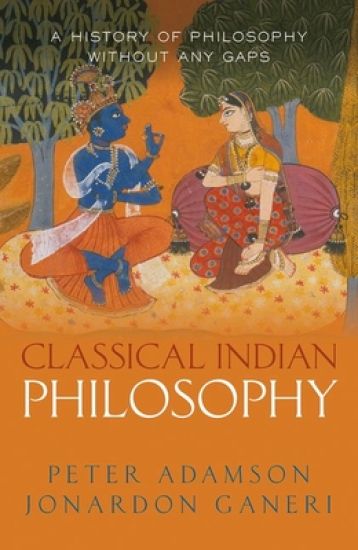
Classical Indian Philosophy

Classical Indian Philosophy

Peter Adamson; Jonardon Ganeri

Oxford University Press
2020
sidottu
Peter Adamson and Jonardon Ganeri present a lively introduction to one of the world's richest intellectual traditions: the philosophy of classical India. They begin with the earliest extant literature, the Vedas, and the explanatory works that these inspired, known as Upani?ads. They also discuss other famous texts of classical Vedic culture, especially the Mahabharata and its most notable section, the Bhagavad-Gita, alongside the rise of Buddhism and Jainism. In this opening section, Adamson and Ganeri emphasize the way that philosophy was practiced as a form of life in search of liberation from suffering. Next, the pair move on to the explosion of philosophical speculation devoted to foundational texts called 'sutras,' discussing such traditions as the logical and epistemological Nyaya school, the monism of Advaita Vedanta, and the spiritual discipline of Yoga. In the final section of the book, they chart further developments within Buddhism, highlighting Nagarjuna's radical critique of 'non-dependent' concepts and the no-self philosophy of mind found in authors like Dignaga, and within Jainism, focusing especially on its 'standpoint' epistemology. Unlike other introductions that cover the main schools and positions in classical Indian philosophy, Adamson and Ganeri's lively guide also pays attention to philosophical themes such as non-violence, political authority, and the status of women, while considering textual traditions typically left out of overviews of Indian thought, like the Carvaka school, Tantra, and aesthetic theory as well. Adamson and Ganeri conclude by focusing on the much-debated question of whether Indian philosophy may have influenced ancient Greek philosophy and, from there, evaluate the impact that this area of philosophy had on later Western thought.
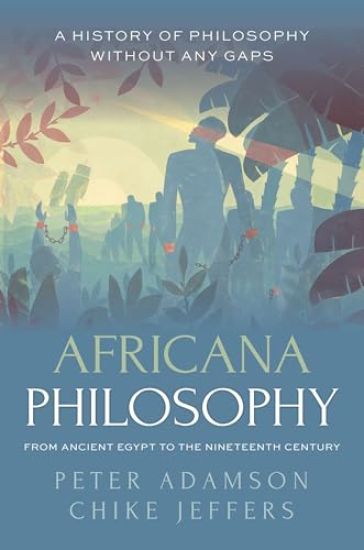
Africana Philosophy from Ancient Egypt to the Nineteenth Century

Africana Philosophy from Ancient Egypt to the Nineteenth Century

Peter Adamson; Chike Jeffers

Oxford University Press
2025
sidottu
In this latest instalment of the series A History of Philosophy Without Any Gaps, Peter Adamson and Chike Jeffers delve into the fascinating world of Africana Philosophy. Africana Philosophy from Ancient Egypt to the Nineteenth Century is the first of two volumes in the History of Philosophy Without Any Gaps series to bring readers the story of Africana philosophy. This diverse topic is defined as philosophy emerging from and distinctively related to Africa or the African diaspora. The story starts at the very beginning by asking what it would mean to engage philosophically with evidence left by prehistoric peoples of Africa, and proceeds to discuss the philosophical traditions of ancient Egypt, late ancient and early modern Ethopia, and Islamic philosophy in West Africa. A number of chapters then explore the idea of philosophy in African oral traditions, considering the methodological debates that have raged between African philosophers like John Mbiti, Paulin Hountondji, and Henry Odera Oruka. Peter Adamson and Chike Jeffers also consider philosophical responses to the situation brought about by the transatlantic slave trade and the early colonization of Africa. Starting from early figures like Anton Wilhelm Amo and Phillis Wheatley, and the ideas that drove the Haitian Revolution, extensive discussion is then given to Africana philosophy of the nineteenth century. The incendiary ideas of David Walker, the nuanced rhetoric of Frederick Douglass, and the clashing approaches of Booker T. Washington and W.E.B. Du Bois are among the highlights here. Significant attention is given to female thinkers like Maria W. Stewart, Sojourner Truth, Anna Julia Cooper, and Ida B. Wells. The coverage is also geographically diverse, with chapters on figures who worked not only in Africa and the United States, but also Brazil, Canada, Britain, France, and the Caribbean.
Byzantine and Renaissance Philosophy

Byzantine and Renaissance Philosophy

Peter Adamson

Oxford University Press
2025
nidottu
Peter Adamson presents an engaging and wide-ranging introduction to the thinkers and movements of two great intellectual cultures: Byzantium and the Italian Renaissance. First, he traces the development of philosophy in the Eastern Christian world, from such early figures as John of Damascus in the eighth century to the late Byzantine scholars of the fifteenth century. Adamson introduces major figures like Michael Psellos, Anna Komnene, and Gregory Palamas, and examines the philosophical significance of such cultural phenomena as iconoclasm and conceptions of gender. We discover the little-known traditions of philosophy in Syriac, Armenian, and Georgian. These chapters also explore the scientific, political, and historical literature of Byzantium. There is a close connection to the second half of the book, since thinkers of the Greek East helped to spark the humanist movement in Italy. Adamson tells the story of the rebirth of philosophy in Italy in the fifteenth and sixteenth centuries. We encounter such famous names as Christine de Pizan, Niccolò Machiavelli, Giordano Bruno, and Galileo, but as always in this book series such major figures are read alongside contemporaries who are not so well known, including fascinating figures like Lorenzo Valla, Girolamo Savonarola, and Bernardino Telesio. Major historical themes include the humanist engagement with ancient literature, the emergence of women humanists, the flowering of Republican government in Renaissance Italy, the continuation of Aristotelian and scholastic philosophy alongside humanism, and breakthroughs in science. All areas of philosophy, from theories of economics and aesthetics to accounts of the human mind, are featured. This is the sixth volume of Adamson's History of Philosophy Without Any Gaps series, taking us to the threshold of the early modern era.
Philosophy in the Reformation

Philosophy in the Reformation

Peter Adamson

Oxford University Press
2026
sidottu
In this latest volume of A History of Philosophy Without Any Gaps, Peter Adamson presents a lively and accessible introduction to European philosophy during the fifteenth and sixteenth centuries. Philosophy in the Reformation focuses on the parallel and intertwining emergence of humanism and of religious reform, as figures like Erasmus, Luther, and Calvin remade the intellectual and spiritual life of Europe. In the first three parts of the book, philosophical developments in central Europe, France, and Britain are examined. A wide range of topics and controversies are discussed, from debates over free will to the legitimacy of tyrannicide. This was also the time of the Northern Renaissance, which saw a resurgence of ancient concepts like skepticism and atomist theories of matter. The volume's final section charts the Catholic reaction to these epochal events in the Counter-Reformation, and especially the ideas of Spanish thinkers like Molina and Suárez. Quite a few familiar figures are discussed, such as Montaigne and Copernicus. But as always in this series, Adamson lavishes attention on fascinating figures who are often ignored in the history of philosophy, like John Dee, Robert Fludd, and Oliva Sabuco (who is just one of numerous women intellectuals covered). Another feature of the book is its attention to literature and the arts: the reader will learn how the achievements of Dürer, Michelangelo, Shakespeare, and Cervantes relate to philosophical currents of the time. The eighth volume in the A History of Philosophy Without Any Gaps series takes us to the threshold of the early modern era and sets the stage for the developments that unfolded during the Enlightenment.
Philosophy in the Islamic World

Philosophy in the Islamic World

Peter Adamson

Oxford University Press
2016
sidottu
The latest in the series based on the popular History of Philosophy podcast, this volume presents the first full history of philosophy in the Islamic world for a broad readership. It takes an approach unprecedented among introductions to this subject, by providing full coverage of Jewish and Christian thinkers as well as Muslims, and by taking the story of philosophy from its beginnings in the world of early Islam all the way through to the twentieth century. Major figures like Avicenna, Averroes, and Maimonides are covered in great detail, but the book also looks at less familiar thinkers, including women philosophers. Attention is also given to the philosophical relevance of Islamic theology (kalam) and mysticism--the Sufi tradition within Islam, and Kabbalah among Jews--and to science, with chapters on disciplines like optics and astronomy. The book is divided into three sections, with the first looking at the first blossoming of Islamic theology and responses to the Greek philosophical tradition in the world of Arabic learning. This 'formative period' culminates with the work of Avicenna, the pivotal figure to whom most later thinkers feel they must respond. The second part of the book discusses philosophy in Muslim Spain (Andalusia), where Jewish philosophers come to the fore, though this is also the setting for such thinkers as Averroes and Ibn Arabi. Finally, a third section looks in unusual detail at later developments, touching on philosophy in the Ottoman, Mughal, and Safavid empires and showing how thinkers in the nineteenth to the twentieth century were still concerned to respond to the ideas that had animated philosophy in the Islamic world for centuries, while also responding to political and intellectual challenges from the European colonial powers.
Classical Philosophy

Classical Philosophy

Peter Adamson

Oxford University Press
2014
sidottu
Classical Philosophy is the first of a series of books in which Peter Adamson aims ultimately to present a complete history of philosophy, more thoroughly but also more enjoyably than ever before. In short, lively chapters, based on the popular History of Philosophy podcast, he offers an accessible, humorous, and detailed look at the emergence of philosophy with the Presocratics, the probing questions of Socrates, and the first full flowering of philosophy with the dialogues of Plato and the treatises of Aristotle. The story is told 'without any gaps', discussing not only such major figures but also less commonly discussed topics like the Hippocratic Corpus, the Platonic Academy, and the role of women in ancient philosophy. Within the thought of Plato and Aristotle, the reader will find in-depth introductions to major works, such as the Republic and the Nicomachean Ethics, which are treated in detail that is unusual in an introduction to ancient philosophy. Adamson looks at fascinating but less frequently read Platonic dialogues like the Charmides and Cratylus, and Aristotle's ideas in zoology and poetics. This full coverage allows him to tackle ancient discussions in all areas of philosophy, including epistemology, metaphysics, philosophy of language, philosophy of science, ethics and politics. Attention is also given to the historical and literary context of classical philosophy, with exploration of how early Greek cosmology responded to the poets Homer and Hesiod, how Socrates was presented by the comic playwright Aristophanes and the historian Xenophon, and how events in Greek history may have influenced Plato's thought. This is a new kind of history which will bring philosophy to life for all readers, including those coming to the subject for the first time.
Philosophy in the Islamic World

Philosophy in the Islamic World

Peter Adamson

Oxford University Press
2015
nidottu
In the history of philosophy, few topics are so relevant to today's cultural and political landscape as philosophy in the Islamic world. Yet, this remains one of the lesser-known philosophical traditions. In this Very Short Introduction, Peter Adamson explores the history of philosophy among Muslims, Jews, and Christians living in Islamic lands, from its historical background to thinkers in the twentieth century. Introducing the main philosophical themes of the Islamic world, Adamson integrates ideas from the Islamic and Abrahamic faiths to consider the broad philosophical questions that continue to invite debate: What is the relationship between reason and religious belief? What is the possibility of proving God's existence? What is the nature of knowledge? Drawing on the most recent research in the field, this book challenges the assumption of the cultural decline of philosophy and science in the Islamic world by demonstrating its rich heritage and overlap with other faiths and philosophies.
Ghost Stories

Ghost Stories

Judith Adamson

MCGILL-QUEEN'S UNIVERSITY PRESS
2024
nidottu
A biographer is, in a sense, the ghostwriter of someone else’s life, trying to keep out of the way but inevitably leaving an imprint and being changed in the enterprise. In her memoir Judith Adamson, a professional biographer, tells the ghost’s side of the story.Adamson reveals the questions she asked herself as she researched and wrote, as well as the personal challenges she faced in producing a lively sense of the figure she was recreating on the page, drawing an unbreakable connection between the personal and the professional. Crossing paths with literary luminaries of the twentieth century, she went on to collaborate with Graham Greene on Reflections, the last of his books published in his lifetime. She recounts how she was entrusted with the publication of Leonard Woolf and Trekkie Ritchie’s love letters; how she found a way to hunt down Charlotte Haldane, one of the first women on Fleet Street; and how she came to write the biography of Max Reinhardt, the man behind the finest English publishing house of the mid-twentieth century.A sharply observant and self-effacing narrator, Adamson brings vividly to life an anglophone upbringing in mid-century Montreal, the London literary scene, and the struggles faced by the women intellectuals of her time. Ghost Stories is a tale of good luck and the hard sleuthing of biographical work before the digital age.
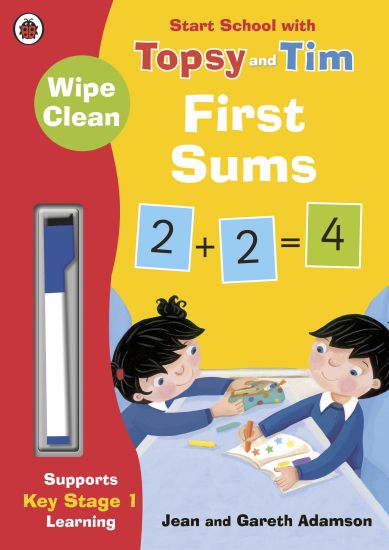
Wipe-Clean First Sums: Start School with Topsy and Tim
This Topsy and Tim activity book has shiny, wipe-clean pages and also comes with a special pen to make practising first sums as easy as 1, 2, 3!Number bonds from 1-10 are introduced in the order that they are taught in schools and content has been approved by an educational consultant. Simple sums and interesting maths activities help to reinforce first adding and subtracting skills, while colourful pictures of Topsy and Tim and their world are fun and reassuring. Help your child to fill in the answers, then they can wipe clean using the special eraser on top of the pen and practise again! The last page has space for your child to practise their own sums, too.Perfect to help support children learning to add and subtract single numbers at school, and the ideal companion to Topsy and Tim's Wipe-Clean First Numbers.
Wipe-Clean First Spellings: Start School with Topsy and Tim
This Topsy and Tim activity book has shiny, wipe-clean pages and a special pen to make practising first spellings as easy as A, B, C!Each page has a selection of themed, high-frequency words to practise that children will come across often and that are based on the new English curriculum to help support school learning. Content includes key phonics spelling patterns such as 'ai', 'er' and 'igh', nouns, verbs, tricky words, numbers and family words. The last page can be used as a place for your child to practise their own school spellings using the 'look, cover, write, check' approach.Help your child to copy over the words or write them out themselves, then they can wipe clean using the special eraser on top of the pen and practise again!Written in conjuntion with an educational consultant and teacher, this book is perfect to help support children learning to spell simple words at school and is the ideal companion to Topsy and Tim's Wipe-Clean First Letters.
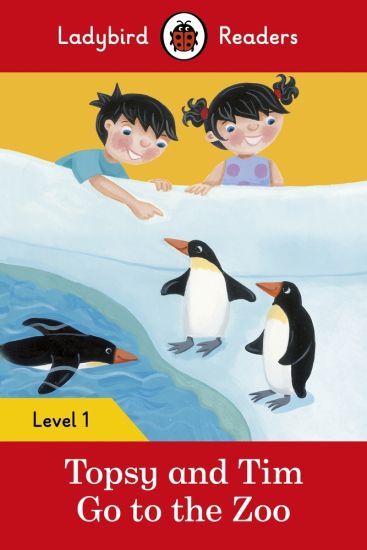
Ladybird Readers Level 1 - Topsy and Tim - Go to the Zoo (ELT Graded Reader)
Ladybird Readers is an ELT graded reader series for children aged 3­-11 learning English as a foreign or second language. The series includes traditional tales, favourite characters, modern stories and non-fiction. Written by experts, it uses proven methods to help children learn English and grasp key grammar and vocabulary points. Perfect for learning English in school or at homeDevelops reading, writing, speaking, listening and critical thinking skillsFeatures much-loved characters and authors such as Peter Rabbit, Peppa Pig, Roald Dahl and Eric Carle Eight levels follow the Common European Framework of Reference for language learning (CEFR)Language activities in every book provide preparation for the Cambridge English Pre-A1 to A2 (YLE) testsFeatures free online resources including audio, answer keys, lesson plans and tips for parentsTopsy and Tim: Go to the Zoo, a Level 1 Reader, is Pre-A1 in the CEFR framework and includes practice for the Cambridge English Pre-A1 Starters tests. Short sentences contain a maximum of two clauses, using the present tense and some simple adjectives.Topsy and Tim like going to the zoo. They like seeing the animals. There are penguins, parrots, and monkeys at the zoo!Visit the Ladybird Education website for more information.
Topsy and Tim: Go to the Zoo Activity Book – Ladybird Readers Level 1
Topsy and Tim like going to the zoo. They like seeing the animals. There are penguins, parrots, and monkeys at the zoo!Ladybird Readers is a graded reading series of traditional tales, popular characters, modern stories, and non-fiction, written for young learners of English as a foreign or second language.Beautifully illustrated and carefully written, the series combines the best of Ladybird content with the structured language progression that will help children develop their reading, writing, speaking, listening and critical thinking skills.The eight levels of Readers and Activity Books follow the CEFR framework and include language activities that provide preparation for the Cambridge English: Young Learners (YLE) exams.Topsy and Tim Go to the Zoo, a Level 1 Activity Book, is Pre-A1 in the CEFR framework and supports YLE Starters exams. The activities encourage children to practice short sentences containing a maximum of two clauses, using the present tense and some simple adjectives.
Ladybird Readers Level 2 - Topsy and Tim - The Big Race (ELT Graded Reader)
It is sports day at school. Topsy and Tim want to come first in all the races. But they do not come first and they are not happy.Ladybird Readers is a graded reading series of traditional tales, popular characters, modern stories, and non-fiction, written for young learners of English as a foreign or second language.Beautifully illustrated and carefully written, the series combines the best of Ladybird content with the structured language progression that will help children develop their reading, writing, speaking, listening and critical thinking skills.The eight levels of Readers and Activity Books follow the CEFR framework and include language activities that provide preparation for the Cambridge English: Young Learners (YLE) exams. Topsy and Tim The Big Race, a Level 2 Reader, is A1 in the CEFR framework and supports YLE Movers exams. Short sentences contain a maximum of two clauses, introducing the past tense and some simple adverbs.
Topsy and Tim: Have Their Eyes Tested
Topsy and Tim find fun and adventure in the real world. Their engaging stories are reassuring for young children having first experiences of their own. In Topsy and Tim: Have Their Eyes Tested, Topsy needs to see the optometrist to make sure that she doesn't need glasses. Find out what happens when you have your eyes tested with Topsy and Tim! A trusted and well-loved pair who can help guide parents and children through 'first experiences', Topsy and Tim books have been beautifully updated with contemporary artwork. Topsy & Tim remain instantly recognizable to parents while in a fresh style that will appeal to a new generation of fans.
Topsy and Tim: Go on Holiday

Topsy and Tim: Go on Holiday

Jean Adamson; Gareth Adamson

Ladybird
2017
nidottu
Topsy and Tim find fun and adventure in the real world. Their engaging stories are reassuring for young children having first experiences of their own. In Topsy and Tim: Go on Holiday Topsy, Tim, Mummy and Dad are off on holiday, but the journey there is an eventful one! A trusted and well-loved pair who can help guide parents and children through 'first experiences', Topsy and Tim books have been beautifully updated with contemporary artwork. Topsy & Tim remain instantly recognizable to parents while in a fresh style that will appeal to a new generation of fans.
Ladybird Readers Level 1 - Topsy and Tim - Go to the Farm (ELT Graded Reader)
Ladybird Readers is an ELT graded reader series for children aged 3­-11 learning English as a foreign or second language. The series includes traditional tales, favourite characters, modern stories and non-fiction. Written by experts, it uses proven methods to help children learn English and grasp key grammar and vocabulary points. Perfect for learning English in school or at homeDevelops reading, writing, speaking, listening and critical thinking skillsFeatures much-loved characters and authors such as Peter Rabbit, Peppa Pig, Roald Dahl and Eric Carle Eight levels follow the Common European Framework of Reference for language learning (CEFR)Language activities in every book provide preparation for the Cambridge English Pre-A1 to A2 (YLE) testsFeatures free online resources including audio, answer keys, lesson plans and tips for parentsTopsy and Tim Go to the Farm, a Level 1 Reader, is Pre-A1 in the CEFR framework and includes practice for the Cambridge English Pre-A1 Starters tests. Short sentences contain a maximum of two clauses, using the present tense and some simple adjectives.Topsy and Tim like going to the farm. They help the farmer, get some eggs, see the animals, and give a calf some milk.Visit the Ladybird Education website for more information.
Ladybird Readers Level 1 - Topsy and Tim - Go to London (ELT Graded Reader)
Ladybird Readers is an ELT graded reader series for children aged 3­-11 learning English as a foreign or second language. The series includes traditional tales, favourite characters, modern stories and non-fiction. Written by experts, it uses proven methods to help children learn English and grasp key grammar and vocabulary points.Perfect for learning English in school or at homeDevelops reading, writing, speaking, listening and critical thinking skillsFeatures much-loved characters and authors such as Peter Rabbit, Peppa Pig, Roald Dahl and Eric Carle Eight levels follow the Common European Framework of Reference for language learning (CEFR)Language activities in every book provide preparation for the Cambridge English Pre-A1 to A2 (YLE) testsFeatures free online resources including audio, answer keys, lesson plans and tips for parentsTopsy and Tim: Go to London, a Level 1 Reader, is Pre-A1 in the CEFR framework and supports YLE Starters exams. Short sentences contain a maximum of two clauses, using the present tense and some simple adjectives.Topsy and Tim are going to London with Mommy and Dad. They see the Tower of London and go on a boat. London is great!Visit the Ladybird Education website for more information.