
Kirjahaku
Etsi kirjoja tekijän nimen, kirjan nimen tai ISBN:n perusteella.
1000 tulosta hakusanalla Adolf Harnack
The Expansion of Christianity in the First Three Centuries
Adolf Harnack; James (TRN) Moffatt
Kessinger Pub
2008
sidottu

Von Harnack was the most outstanding student of early Christianity in modern times, and one of the most persuasive exponents of Liberal Theology.


Adolf Von Harnack ALS Zeitgenosse
de Gruyter
1996
sidottu
Der Briefwechsel zwischen Adolf von Harnack und Martin Rade
Adolf Von Harnack; Martin Rade
de Gruyter
1996
sidottu

Der Berliner Kirchenhistoriker und Wissenschaftsorganisator Adolf von Harnack gehörte zu den prägenden Gestalten des liberalen Protestantismus in Deutschland um 1900. Christian Nottmeier geht unter Rückgriff auf bisher kaum ausgewertetes Quellenmaterial dem Zusammenhang von Harnacks kulturtheologischem Entwurf und seinem politischem Engagement seit 1890 nach. Aus Rezensionen zur 1. Auflage: "[...] Nottmeiers biographische Studie […] stellt eine herausragende Leistung dar. Der […] Verfasser liefert eine glänzend recherchierte, klug reflektierende, zurückhaltend wertende und abwägend urteilende Studie, die […] bis zum Erscheinen einer umfassenden Harnack-Biographie die maßgebende Darstellung bleiben wird." Hans-Christof Kraus in Jahrbuch für die Geschichte Mittel- und Ostdeutschlands, Band 52, 2006, S. 374-377 "Nottmeier besitzt ein hohes Stilempfinden. Er schreibt eindrücklich und sachlich zugleich, ganz ohne akademischen Jargon, […] so daß dieses Buch nicht nur ein bedeutender Forschungsbeitrag ist, sondern auch eine helle Lesefreude." Johann Hinrich Claussen in Mitteilungen der Ernst-Troeltsch-Gesellschaft, 17. Band, 2004, S. 121-127

Adolf von Harnack, Werner Jaeger, and the Crisis of Weimar Culture
Robert L. Powers
Mohr Siebeck
2025
sidottu
The theologian Adolf von Harnack (1851-1930) and the philologist Werner Jaeger (1888-1961) bear witness to the rich, boundary-defying diversity of academic - and bourgeois - culture during the Weimar Republic. Separated in age by nearly half a century but united by common concern for pressing theological and societal problems and professional ties to the University of Berlin, Harnack and Jaeger both acted as representatives of theology and classical studies who sought to reassert the broad educational and political significance of their disciplines amid the cultural crisis occasioned by World War I and by the subsequent collapse of the Kaiserreich. Both moderates, Harnack and Jaeger set themselves the tasks of combatting political extremity and, most importantly, preparing their compatriots for proper self-government by deploying their unique brands of religious, philhellenic humanism.

Adolf von Harnack als Systematiker. Systematisch-theologische Erwägungen im Anschluss an Claus-Dieter Osthövener
Jan Mark Budde
GRIN Verlag
2020
nidottu
Adolf von harnack
Ilmamaa
2023
sidottu
Adolf von Harnack (1851-1930) oli Tartus sündinud baltisaksa päritolu teoloog ja kirikuloolane, keda on peetud tähtsaimaks protestantlikuks teoloogiks ja teadustöö organisaatoriks omaaegsel Saksamaal. Temast jäid maha tuhandet leheküljed kirjavahetust ja märkmeid, mis andsid ta tütrele Agnes von Zahn-Harnackile isiklike mälupiltide kõrval piisavalt materjali ja vabad käed valida isa eluloo talletamiseks meelepärane vorm ja stiil. Raamat ilmus esmakordselt 1936. aastal Saksamaal ning just see kärpimata väljaanne on aluseks käesolevale Kadri Lääsi tõlkele. Nii avaneb saksa kultuuriruumi panoraamne ülevaade tänasele lugejale selle suurmehe nooruse vaatenurgast küll ülikoolilinnas Tartus, kuid laieneb seejärel kiiresti ja jõudsalt kogu Saksa riigi käekäiku kuni 1930. aastani saatvaks elulooks.

Adolf Von Harnack: Christentum, Wissenschaft Und Gesellschaft: Wissenschaftliches Symposion Aus Anlass Des 150. Geburtstags
Kurt Nowak
Vandenhoeck and Ruprecht
2003
sidottu

Adolf Von Harnack- «Das Wesen Des Christentums»
Peter Lang AG
2003
nidottu
Der beruhmte Historiker Adolf von Harnack hielt im Wintersemester 1899/1900 fur Hoerer aller Fakultaten eine Vorlesung UEber das Wesen des Christentums, die nach ihrem Druck im Jahr 1900 viel Zustimmung und noch mehr Kritik im kirchlichen Raum fand. Denn sie reduzierte die Botschaft Jesu auf einfache Aussagen und mass an ihnen die nachfolgenden kirchengeschichtlichen Epochen. Der Verfasser stellt die kritische Frage, ob Harnack nicht einem philosophischen Schema folgt. Die Begriffe "Induktion" und "Werturteile" weisen darauf hin.

Das Apostolikum, der Apostolikumsstreit und die Sicht von Adolf von Harnack
Nina Schibielsky
Grin Publishing
2016
pokkari
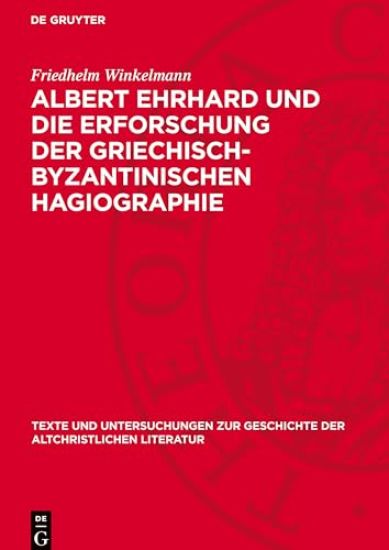
Albert Ehrhard Und Die Erforschung Der Griechisch-Byzantinischen Hagiographie: Dargestellt an Hand Des Briefwechsels Ehrhards Mit Adolf Von Harnack, C
Friedhelm Winkelmann
De Gruyter
1971
sidottu


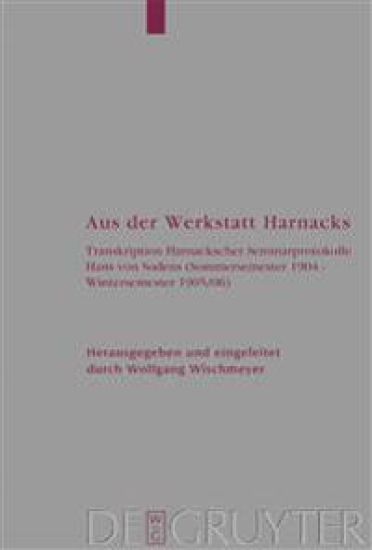
Only recently three notebooks by Hans von Soden (1881-1945) were found in which he recorded four seminars Adolf Harnack taught between the summer of 1904 and early 1906. The seminars were devoted to the following subjects: Justin's Apologies, Gnosticism, Augustin's Confessions (Books 1 to 6), and the Works of Sulpicius Severus. These records with their detailed accounts provide a precise insight not only into patristic research a hundred years ago, but also into the teaching in a department of the Berlin University at that time. Harnack's scholarly interests in the very varied patristic topics from the 1st to 5th centuries are clearly expressed, as too is his strong theological interest in education, which becomes apparent through his polemics.
Harnack, A: Acta Archelai und das Diatessaron Tatians
Adolf Von Harnack
Antigonos Verlag
2025
nidottu
Harnack, A: Der angebliche Evangeliencommentar des Theophilu
Adolf Von Harnack
Antigonos Verlag
2025
sidottu
Harnack, A: Acta Archelai und das Diatessaron Tatians
Adolf Von Harnack
Antigonos Verlag
2025
sidottu