All school districts have written statements of the educational values and goals that members of the school community believe are important and worth pursuing. They display these on the front page of all school district public relations packets and on the walls of school and district offices. While all segments of the school community enthusiastically embrace the values and goals stated in the documents, rarely, if ever, do they practice these goals and values in classrooms or administrative offices.The gap between the educational ideals spoken from auditorium stages and the instructional regimes students experience in classrooms is the result of schools designed to achieve institutional goals—accountability, standardization, and efficiency—rather than educational goals—thoughtfulness, deep knowledge, and critically-informed citizens. This book is aimed at school administrators whose goal is restoring the why of schooling to the organizational structures and instructional routines that currently govern public schooling in this nation.
All school districts have written statements of the educational values and goals that members of the school community believe are important and worth pursuing. They display these on the front page of all school district public relations packets and on the walls of school and district offices. While all segments of the school community enthusiastically embrace the values and goals stated in the documents, rarely, if ever, do they practice these goals and values in classrooms or administrative offices.The gap between the educational ideals spoken from auditorium stages and the instructional regimes students experience in classrooms is the result of schools designed to achieve institutional goals—accountability, standardization, and efficiency—rather than educational goals—thoughtfulness, deep knowledge, and critically-informed citizens. This book is aimed at school administrators whose goal is restoring the why of schooling to the organizational structures and instructional routines that currently govern public schooling in this nation.
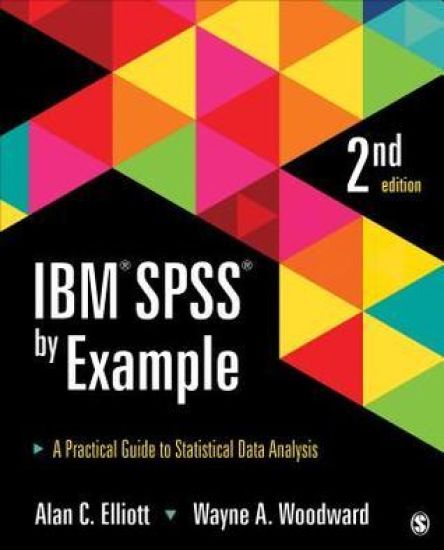
The updated Second Edition of Alan C. Elliott and Wayne A. Woodward's "cut to the chase" IBM SPSS guide quickly explains the when, where, and how of statistical data analysis as it is used for real-world decision making in a wide variety of disciplines. This one-stop reference provides succinct guidelines for performing an analysis using SPSS software, avoiding pitfalls, interpreting results, and reporting outcomes. Written from a practical perspective, IBM SPSS by Example, Second Edition provides a wealth of information-from assumptions and design to computation, interpretation, and presentation of results-to help users save time, money, and frustration.New to this edition:Step-by-step SPSS instructions have been integrated into every example.An all-new chapter describes the three methods used by SPSS to create graphics.A new Chapter 10 on Factor Analysis has been added.Examples in every chapter have been enhanced with added discussion and more detail.Additional screen shots and a redesigned format make the book easier to read and information easier to locate.All examples have been updated to reflect features in the latest version of SPSS.
Book 2 of the Emerald Flame seriesMagick is unstable the world over since Michael Spring was defeated. Le Travail De Dieu limit their mages much to the disgust of Vallyla. Dark powers across the world can tip the scales of fortune with merely the tiniest spells. Puinet and Vallyla struggle against the tide among other new lords of the Order until Vallyla makes an impetuous mistake with dire consequences. With chaos on the horizon, Le Travail De Dieu's mission is to find out how to dismiss the magick of El Dios Demoniaco once and for all. While others attempt to control the powers themselves, Vallyla seeks to travel back in time to find out what created the power in the first place.While she battles in the past, Puinet and the others must protect the future to ensure another god does not awaken.
Sin cuenta cuentos cruentos, no es m s que la fusion entre la fantas a del cuchicheo (que a fuerza de repetirse, se torna en factor de referencia) y alg n consabido hecho -no comprobado- que puede o no tener base real; y que el poder del rumor convierte en verdad irrefutable. "A mi no me consta, pero que es cierto, es cierto " dec an las viejas chismosas de mi pueblo al referir pasajes relevantes de la vida pueblerina. En esta colecci n narrativa, no obstante, trascendemos las fronteras umbilicales; y algunas narraciones tienen car cter cosmopolitizado, producto de la emigraci n que nos llev a sentar bases en geograf as antes ajenas, adoptadas ahora como propias. Los Versos Concomitantes, que apendizamos a los cuentos, no son mas que un ensayo, un experimento para corroborar el hecho cierto de que la inspiraci n literaria puede ser expresada en diferentes g neros creativos; pero que en definitiva, tal uni n lleva inmersa la intenci n de crear un estilo. No necesariamente sujeto a paradigmas rigurosos sino, como el verso libre, sometido tan solo a la espontaneidad y el deseo urgente de comunicar sentimientos, nost lgicos o recientes en el paraninfo de la universidad de la vida.
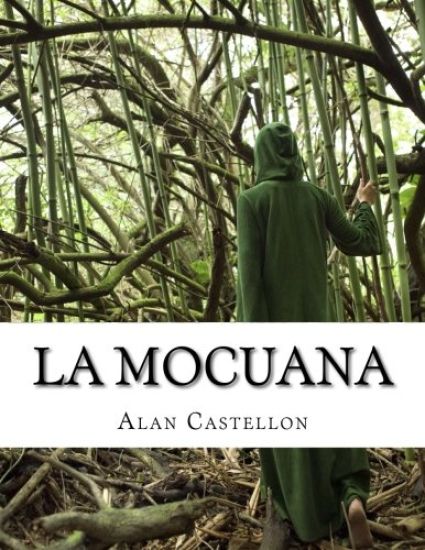
La Mocuana es una leyenda nicarag ense surgida durante la colonizaci n del pa s, que refiere el reiterativo enamoramiento entre un soldado espa ol y una princesa ind gena como estrategia de dominio y penetraci n cultural y politico de parte de los ib ricos. Fen meno cl sico plasmado en versiones convergentes en distintos puntos geogr ficos mesoamericanos y caribe os, entre las que sobresale, sin dudas, en M jico el entendimiento amoroso entre Hern n Cortez y La Malinche. Nuestra versi n es desarrollada en el contexto segoviano nicarag ense; aclarando que existen otras versiones en Estel y en S baco, tambi n asentamientos norte os de ese pa s, donde le atribuyen un car cter maligno a la imagen legendaria. La nuestra en cambio, es referente a una bruja buena, provista de poderes especiales de naturaleza isot rica y dotada por los dioses con capacidad de generar riquezas;y as se desarrolla la leyenda, hasta convertirse en cuento de caminos aplicado a un personaje central, Fortunato Medina quien tiene ciertas similitudes con algunos vecinos reales de la regi n, quienes por distinguirse en su capacidad empresarial, provocaba que la mayor a empobrecida de la zona justificara la capacidad de hacinamiento de riqueza de aquellos por ser protegidos de La Mocuana, equivalencia en la creencia popular a tener pacto con el diablo.
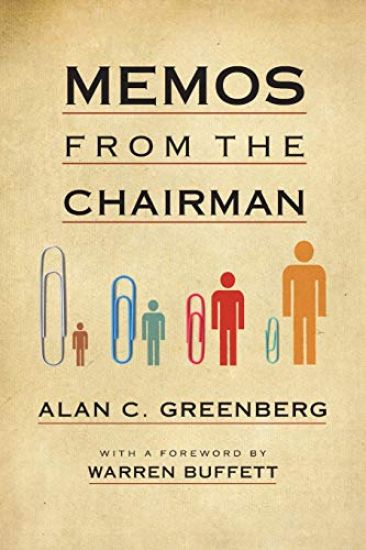
“Ace Greenberg did almost everything better than I do—bridge, magic tricks, dog training, and arbitrage—all the important things in life.” —WARREN BUFFETT Alan C. Greenberg, the former chairman of Bear, Stearns, and a celebrated philanthropist, was known throughout the financial world for his biting, quirky but invaluable and wise memos. Read by everyone from Warren Buffett to Jeff Bezos to Tom Peters (“I love this book,” the coauthor of In Search of Excellence said), Greenberg’s MEMOS FROM THE CHAIRMAN comprise a unique—and uniquely simple—management philosophy. Make decisions based on common sense. Avoid the herd mentality. Control expenses with unrelenting vigil. Run your business at the highest level of morality. Free your motivated, intelligent people from the chain of command. Always return phone calls promptly and courteously. Never believe your own body odor is perfume. And stay humble, humble, humble.
Texas Ingenuity: Lone Star Inventions, Inventors & Innovators is a collection of informative, and sometimes quirky, stories about Lone Star innovators, inventors and inventions. Each story emphasizes a Texas connection and shows how Texas ingenuity, determination or sheer dumb luck made the person or product famous and successful. Every Texan and Texas visitor hankering for a chuckle and interesting tidbits of history will enjoy reading Texas Ingenuity. Pull up a chair and enjoy stories about: The I s of Texas Inventions, Inventors & Innovators Tasty Texas From Cattle Drive to Casual Dining Texas Entertainment Big Stars from the Lone Star State Texas Sports Ready, Set, Innovate "
A perfect supplement for an introductory statics course. Quick Guide to IBM® SPSS®: Statistical Analysis With Step-by-Step Examples gives students the extra guidance with SPSS they need without taking up valuable in-class time. A practical, accessible guide for using software while doing data analysis in the social sciences, students can learn SPSS on their own, allowing instructors to focus on the concepts and calculations in their lectures, rather than SPSS tutorials. Designed to work across disciplines, the authors have provided a number of SPSS "step-by-step" examples in chapters showing the user how to plan a study, prepare data for analysis, perform the analysis and interpret the output from SPSS. The new Third Edition covers IBM® SPSS® version 25, includes a new section on Syntax, and all chapters have been updated to reflect current menu options along with many SPSS screenshots, making the process much simpler for the user. In addition, helpful hints and insights are provided through the features "Tips and Caveats" and "Sidebars."
Book 3 of the Emerald Flame Trilogy.What is Michael Spring?The magicks of El Dios Demoniaco destroyed the minds of everyone it possessed. But not Michael Spring who had become twisted and depraved, but never the animal that had ravaged the 11th century. He'd even managed to control the power for a while.In this series finale, Vallyla, the reckless but powerful mage and her husband Daniel Fredericks, the new Lord of Le Travail De Dieu must solve the final mystery of the Demonic God. But the sinister truths and their consequences may prove to destroy not only the sacred Order. But also Spring himself and existence entirely.
Explores the impact of changing medical practices on ordinary people in nineteenth-century America. How does the experience of sickness, death, and loss change over time? We know that the incidence and virulence of particular diseases have varied from one period to another, as has their medical treatment. But what was it like for the individuals who suffered and died from those illnesses, for the health practitioners and institutions that attended to them, and for the families who buried and mourned them? In ""Shadows in the Valley"", Alan Swedlund addresses these questions by closely examining the history of mortality in several small communities in western Massachusetts from the mid-nineteenth to the early twentieth century - from just before the acceptance of the germ theory of disease through the early days of public health reform in the United States. This was a time when most Americans lived in rural areas or small towns rather than large cities. It was also a time when a wide range of healing practices was available to the American public, and when the modern form of Western medicine was striving for dominance and authority. As Swedlund shows, this juncture of competing practices and ideologies provides a rich opportunity for exploring the rise of modern medicine and its impact on the everyday lives of ordinary Americans. To indicate how individuals in different stages of their lives were exposed to varying assaults on their health, the book is structured in a way that superimposes what the author calls 'life-course time' onto chronological time. Thus the early chapters look at issues of infancy and childhood in the 1840s and 1850s and the last chapters at the problems of old age after 1900. The reader becomes familiar with specific individuals and families as they cope with the recurrent loss of children, struggle to understand the causes of new contagions, and seek to find meaning in untimely death. By using a broad time frame and a narrow geographical lens, Swedlund is able to engage with both the particularities and the generalities of evolving medical knowledge and changing practice, and to highlight the differences in personal as well as collective responses to illness and loss.