Kirjojen hintavertailu. Mukana 12 390 323 kirjaa ja 12 kauppaa.

Kirjahaku

Etsi kirjoja tekijän nimen, kirjan nimen tai ISBN:n perusteella.

1000 tulosta hakusanalla Alan G. Greer

Clinical Decision Making in Developmental Language Disorders

Clinical Decision Making in Developmental Language Disorders

Alan G. Kamhi; Julie J. Masterson; Kenn Apel

Brookes Publishing Co
2007
nidottu
This book addresses assessment and intervention for children and adolescents with developmental language disorders. The first section discusses assessment and target selection for children across a broad span of ages (birth to 3 through postsecondary education) and also addresses the topics of regional dialects, English Language Learning, and the influence of current legislation. The intervention section deals with language disorders specific to certain areas of language development (spoken language, written language, and transition and alternative modalities). A concluding chapter summarizes the information presented throughout the book and offers implications for future directions.
Reflections o' Hawick

Reflections o' Hawick

Alan G Brydon; Ian W Landles

Torchflame Books
2019
pokkari
A book on Hawick compiled and edited by Ian W, Landles and Alan G, Brydon in which local folk contribute chapters across a wide spectrum of subject areas.This collective "Reflections o' Hawick" with over 500 photographs gives a flavour of Hawick's history, heritage, surroundings and community including chapters on Geology, Stones, The Reivers, 1514, Castles and keeps, Wildlife, Architecture, William Beattie, Place Names, The Parish of Wilton, Wilton Lodge Park, Hawick Museum, Common Riding, Woolen Trade, Railway, Postal History, Law and Order, Politics, Education, Medical, Services, Floods, Boer War, First World War, Stobs Camp, Second World War, Church, Freemasonry, Characters and Worthies, The Hawick Tongue, Music, Art, Sir Chay Blyth, Rugby, Cricket, Golf, Motor Racing, Hizzy, Football, Flapping, Cycling, Teviotdale Harriers, Professional Running, Bowling, Archery, Vision 2014, and Notable Dates. This is Hawick, as interpreted by its people, the town's greatest asset.
Bones and Bodies

Bones and Bodies

Alan G Morris

Wits University Press
2022
pokkari
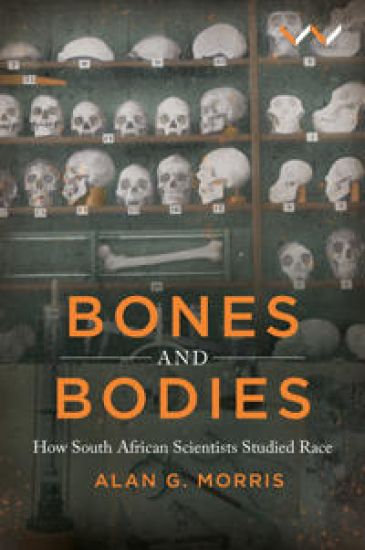
Alan G. Morris critically examines the history of evolutionary anthropology in South Africa, uncovering the often racist philosophical motivations of these physical anthropology researchers and the discipline itself South Africa is famed for its contribution to the study of human evolution. In Bones and Bodies Alan G. Morris takes us back over the past century of anthropological discovery in South Africa and uncovers the stories of the individual scientists and how they contributed to our knowledge of the peoples of southern Africa, both ancient and modern. Not all of this history is one which we should feel comfortable with, as much of the earlier anthropological studies have been tainted with the tarred brush of race science. Morris critically examines the work of Raymond Dart, Thomas Dreyer, Matthew Drennan, and Robert Broom who all described their fossil discoveries with the mirror of racist interpretation, as well as the life and times in which they worked. Morris also considers how modern anthropology tried to rid itself of the stigma of these early racist accounts. In the 1960s and 1970s, Ronald Singer and Phillip Tobias introduced modern methods into the discipline that jettisoned much of what the public wished to believe about race and human evolution. Modern methods in physical anthropology rely on sophisticated mathematics and molecular genetics but are difficult to translate and sometimes fail to challenge preconceived assumptions. In an age where the authority of the expert and empirical science is questioned, this book shows the battle facing modern anthropology in how to explain science in a context that seems to be at odds with life experience. In this highly accessible insider account, Morris examines the philosophical motivations of these researchers and the discipline itself. Much of the material draws on old correspondence and interviews as well as from published resources.
Bones and Bodies

Bones and Bodies

Alan G Morris

WITS UNIVERSITY PRESS
2022
sidottu
Alan G. Morris critically examines the history of evolutionary anthropology in South Africa, uncovering the often racist philosophical motivations of these physical anthropology researchers and the discipline itself South Africa is famed for its contribution to the study of human evolution. In Bones and Bodies Alan G. Morris takes us back over the past century of anthropological discovery in South Africa and uncovers the stories of the individual scientists and how they contributed to our knowledge of the peoples of southern Africa, both ancient and modern. Not all of this history is one which we should feel comfortable with, as much of the earlier anthropological studies have been tainted with the tarred brush of race science. Morris critically examines the work of Raymond Dart, Thomas Dreyer, Matthew Drennan, and Robert Broom who all described their fossil discoveries with the mirror of racist interpretation, as well as the life and times in which they worked. Morris also considers how modern anthropology tried to rid itself of the stigma of these early racist accounts. In the 1960s and 1970s, Ronald Singer and Phillip Tobias introduced modern methods into the discipline that jettisoned much of what the public wished to believe about race and human evolution. Modern methods in physical anthropology rely on sophisticated mathematics and molecular genetics but are difficult to translate and sometimes fail to challenge preconceived assumptions. In an age where the authority of the expert and empirical science is questioned, this book shows the battle facing modern anthropology in how to explain science in a context that seems to be at odds with life experience. In this highly accessible insider account, Morris examines the philosophical motivations of these researchers and the discipline itself. Much of the material draws on old correspondence and interviews as well as from published resources.
Out of the Depths

Out of the Depths

Alan G. Jamieson

REAKTION BOOKS
2022
sidottu
Out of the Depths explores all aspects of shipwrecks across 4,000 years, examining their historical context and significance, and showing how shipwrecks can be time capsules, shedding new light on long-departed societies and civilizations. Alan G. Jamieson not only informs readers of the technological developments over the last sixty years that have made the true appreciation of shipwrecks possible, but covers shipwrecks in culture, maritime archaeology, treasure hunters and their environmental impacts.Although shipwrecks have become less common in recent decades, their implications have become more wide-ranging: since the 1960s, foundering supertankers have caused massive environmental disasters, and in 2021 the blocking of the Suez Canal by the giant container ship Ever Given had a serious impact on global trade.
Out of the Depths

Out of the Depths

Alan G. Jamieson

REAKTION BOOKS
2024
nidottu
Out of the Depths explores all aspects of shipwrecks across 4,000 years, examining their historical context and significance and showing how shipwrecks can be time capsules, shedding new light on long-departed societies and civilizations. Alan G. Jamieson not only informs readers of the technological developments over the last sixty years that have made the true appreciation of shipwrecks possible, but covers shipwrecks in culture, maritime archaeology, treasure hunters and their environmental impacts.Although shipwrecks have become less common in recent decades, their implications have become more wide-ranging: since the 1960s, foundering supertankers have caused massive environmental disasters, and in 2021 the blocking of the Suez Canal by the giant container ship Ever Given had a serious impact on global trade.
Human Psychology 202

Human Psychology 202

Alan G Fields

Createspace Independent Publishing Platform
2017
pokkari
Humans are complex creatures. When confronted with all that life has to offer, they are still able to twist their thinking into negativity and self-defeating behavior.Why and how does that happen? To understand how people behave, it's important to be aware of how distorted thinking can undermine even the smartest people. It has nothing to do with intelligence. Our behavior is the result of how we react to our thoughts.In this book, Human Psychology 202: Understanding How People Really Think So That You Know How To Deal With Them, we will discuss some of many ways incomplete or immature thinking can derail people's lives. Our thoughts are the results of our feelings, and what is important is how we process those feelings into thoughts. Feelings are automatic. Thoughts are not. We have a choice in how we think and react. This book shows that when we limit our thoughts, we limit the way we live. When we narrow our thinking to all-or nothing, catastrophic, must, or emotional thinking, we limit our possibilities accordingly.When we are alive, we think. It's the content of our thoughts that determines the quality of our lives. We may blame ability, luck or circumstances, but those are simply excuses for the refusal to broaden our thinking.Human Psychology 202 will show you how thinking affects your actions, and how to deal with frustrating people who refuse to examine or change their way of thinking.
Foresight

Foresight

Alan G Vitters

Outskirts Press
2023
pokkari
Leaders, face new issues and challenges with confidence In this time of rapid social and technological change "FORESIGHT" is a critical leadership characteristic. Vision helps leaders plan for the future, but foresight enables them to deal with inevitable future changes. Foresight can be developed through critical thinking, questioning biases and assumptions, looking from the outside in, and proactive, intentional anticipation. "FORESIGHT-LEADERSHIP LESSONS FOR THE 21st CENTURY" shares lessons and insights- some classical and some cutting edge- on this critical yet undervalued trait of effective leadership.FORESIGHT highlights concepts, theories, cases, and examples derived from the social and behavioral sciences and applies them to leadership qualities required in modern times. It is designed for current and aspiring leaders from all walks of life- business, the military, first responders, and other service-oriented volunteers and workers. It is written for front-line supervisors, middle managers, executives, and students of leadership and management. Ultimately, the book is designed to help YOU make a difference in YOUR organization as an effective, forward-thinking leader.The book is divided into 3-parts- INDIVIDUAL COMPETENCE- (Management Basics, Problem-solving & Decision-making, Emotional Intelligence, Leadership, Motivation, Stress, Learning; GROUP PROCESSES- (High-Performing Teams, Diversity and Multi-generational Teams) and ORGANIZATION DYNAMICS- (Strategy, Organization Culture, Organization Development/Effectiveness (OD/OE), Organization Conflict and Innovation, Ethics and Social Responsibility, and Organization Design.)The book includes in-text citations and extensive References that facilitate and encourage readers to venture deeper in their leadership/ management discovery.
Foresight

Foresight

Alan G Vitters

Outskirts Press
2023
sidottu
Leaders, face new issues and challenges with confidence In this time of rapid social and technological change "FORESIGHT" is a critical leadership characteristic. Vision helps leaders plan for the future, but foresight enables them to deal with inevitable future changes. Foresight can be developed through critical thinking, questioning biases and assumptions, looking from the outside in, and proactive, intentional anticipation. "FORESIGHT-LEADERSHIP LESSONS FOR THE 21st CENTURY" shares lessons and insights- some classical and some cutting edge- on this critical yet undervalued trait of effective leadership.FORESIGHT highlights concepts, theories, cases, and examples derived from the social and behavioral sciences and applies them to leadership qualities required in modern times. It is designed for current and aspiring leaders from all walks of life- business, the military, first responders, and other service-oriented volunteers and workers. It is written for front-line supervisors, middle managers, executives, and students of leadership and management. Ultimately, the book is designed to help YOU make a difference in YOUR organization as an effective, forward-thinking leader.The book is divided into 3-parts- INDIVIDUAL COMPETENCE- (Management Basics, Problem-solving & Decision-making, Emotional Intelligence, Leadership, Motivation, Stress, Learning; GROUP PROCESSES- (High-Performing Teams, Diversity and Multi-generational Teams) and ORGANIZATION DYNAMICS- (Strategy, Organization Culture, Organization Development/Effectiveness (OD/OE), Organization Conflict and Innovation, Ethics and Social Responsibility, and Organization Design.)The book includes in-text citations and extensive References that facilitate and encourage readers to venture deeper in their leadership/ management discovery.
Treasure Your Exceptions

Treasure Your Exceptions

Alan G. Cock; Donald R. Forsdyke

Springer Nature Switzerland AG
2022
sidottu
William Bateson brought the work of Mendel (and much more) to the attention of the English-speaking world. He commanded the biological sciences in the decades after Darwin's death in 1882. To understand these years we must first understand Bateson. Through examination of the life of a major contributor to the turn-of-the-nineteenth-century revolution in biology, the authors reconcile the genocentrism of George Williams and Richard Dawkins with the hierarchical thinking of Richard Goldschmidt and Stephen Jay Gould. Aided by Rebecca Saunders, Bateson invented much of the basic terminology of modern genetics and, when addressing Darwin's great problem – the origin of species, introduced the mysterious term "the residue." While the first edition of this work (2008) related "residue" to relative concentrations of bases in DNA, the second edition reveals this as reflecting fundamental differences in short strings of bases. Thus, the book has come to represent not only Bateson’s science and life, but also a revised history of the biosciences that is likely to be increasingly visited, both by scientists and by those who wish to fully understand contemporary debates on racial, eugenic and gender aspects of genetics. In a nutshell, the book describes what we, in modern terms, would call a "colossal intelligence failure." Mendel handed it to us "on a plate" in 1865 when Bateson was only 4. It took 35 years to "join the dots" with Bateson a primary joiner. Shrugged off by many 20th century scientists as a freak "blip" in what was really an orderly advance, the Mendel episode was but one of a succession of such "blips." Thus, a multiplicity of post-Mendelian "Mendels" emerge as the story of Bateson's life unfolds.Peter Harper in Human Genetics (2009): "This book puts the record straight and one is left with a feeling of admiration for Bateson as both a scientist and a man, and with no doubt that he, more than anyone else, was largely responsible for the rapid progress in modern genetics during the first decade of the twentieth century."Michael J. Wade in Evolution (2009): "I strongly recommend this book for its information on an important central figure and for its bringing to life the several controversies at the origins of Genetics. It greatly illuminates the conceptual foundations of evolutionary genetics."Elof Axel Carlson in Quarterly Review of Biology (2009): "This volume will be of enormous benefit to historians of science who like to follow how ideas are born or die and why participants of different sides of each controversy held such rigid views of their own work and saw little merit in their competitor’s research."Joel S. Schwartz in Choice (2009): "This work includes key events in Bateson's career and is strengthened by discussion of the rediscovery of Mendelian principles by early 20th-century geneticists. Its basic premise isthat Bateson was not merely one of the founders of genetics but played a pivotal role in the development of evolutionary biology by serving as the link between Victorian naturalists and early 20th-century biologists."Amitabh Joshi in Journal of Genetics (2010): "There is much in this book that I was not aware of, despite a formal training in genetics and a strong amateur interest in the history of biology.… It is certainly a book that any serious student of either genetics or evolution would greatly benefit from reading."
Treasure Your Exceptions

Treasure Your Exceptions

Alan G. Cock; Donald R. Forsdyke

Springer Nature Switzerland AG
2023
nidottu
William Bateson brought the work of Mendel (and much more) to the attention of the English-speaking world. He commanded the biological sciences in the decades after Darwin's death in 1882. To understand these years we must first understand Bateson. Through examination of the life of a major contributor to the turn-of-the-nineteenth-century revolution in biology, the authors reconcile the genocentrism of George Williams and Richard Dawkins with the hierarchical thinking of Richard Goldschmidt and Stephen Jay Gould. Aided by Rebecca Saunders, Bateson invented much of the basic terminology of modern genetics and, when addressing Darwin's great problem – the origin of species, introduced the mysterious term "the residue." While the first edition of this work (2008) related "residue" to relative concentrations of bases in DNA, the second edition reveals this as reflecting fundamental differences in short strings of bases. Thus, the book has come to represent not only Bateson’s science and life, but also a revised history of the biosciences that is likely to be increasingly visited, both by scientists and by those who wish to fully understand contemporary debates on racial, eugenic and gender aspects of genetics. In a nutshell, the book describes what we, in modern terms, would call a "colossal intelligence failure." Mendel handed it to us "on a plate" in 1865 when Bateson was only 4. It took 35 years to "join the dots" with Bateson a primary joiner. Shrugged off by many 20th century scientists as a freak "blip" in what was really an orderly advance, the Mendel episode was but one of a succession of such "blips." Thus, a multiplicity of post-Mendelian "Mendels" emerge as the story of Bateson's life unfolds.Peter Harper in Human Genetics (2009): "This book puts the record straight and one is left with a feeling of admiration for Bateson as both a scientist and a man, and with no doubt that he, more than anyone else, was largely responsible for the rapid progress in modern genetics during the first decade of the twentieth century."Michael J. Wade in Evolution (2009): "I strongly recommend this book for its information on an important central figure and for its bringing to life the several controversies at the origins of Genetics. It greatly illuminates the conceptual foundations of evolutionary genetics."Elof Axel Carlson in Quarterly Review of Biology (2009): "This volume will be of enormous benefit to historians of science who like to follow how ideas are born or die and why participants of different sides of each controversy held such rigid views of their own work and saw little merit in their competitor’s research."Joel S. Schwartz in Choice (2009): "This work includes key events in Bateson's career and is strengthened by discussion of the rediscovery of Mendelian principles by early 20th-century geneticists. Its basic premise isthat Bateson was not merely one of the founders of genetics but played a pivotal role in the development of evolutionary biology by serving as the link between Victorian naturalists and early 20th-century biologists."Amitabh Joshi in Journal of Genetics (2010): "There is much in this book that I was not aware of, despite a formal training in genetics and a strong amateur interest in the history of biology.… It is certainly a book that any serious student of either genetics or evolution would greatly benefit from reading."
Commodities as an Asset Class

Commodities as an Asset Class

Alan G. Futerman; Ivo A. Sarjanovic

Springer International Publishing AG
2022
sidottu
This book challenges the notion that commodities are always good hedges against inflation, which is the conventional belief today in financial markets. Specifically, it focuses on gold as a traditional hedge and the ways in which crypto assets are argued to be positioned as an alternative hedge against inflationary risk.The book engages with emerging debates around the performance of gold since the 2008 financial crisis, analyzing its characteristics, relationship with inflation, and the role of mining companies, and discusses ways that cryptocurrencies have replaced precious metals as an attractive asset class during an inflationary scenario. In considering the case of crypto as being or not a good inflation hedge, the book devotes particular attention to the theoretical financial and macroeconomic implications of a monetary system based on Bitcoin, dealing with the concept of money and the determination of Bitcoin’s supply and purchasing power. Additionally, it outlines theconsequences that such a system would entail for the banking industry, and financial conditions involving interest rates, exchange rates, and the inflation-deflation dynamic. The book also analyses the relative impact of past and future events on the different commodity families.This work will be of interest to students and researchers in financial economics, macroeconomics, and monetary economics, as well as analysts and traders in financial and commodity markets.
Los monstruos bajo la cama

Los monstruos bajo la cama

Alan G Ramírez R

Ediquid
2023
pokkari
Alan G. Ram rez R. es un cuentacuentos, en ello reside el valor de sus relatos. Escudri a la realidad para desvelar los misterios que habitan en la vida cotidiana y nos muestra, con sencillez, que los sue os que no so amos acaban por despertarnos. Cuenta para contar, es decir, observa, describe y analiza para explicar, en una prosa sencilla y profunda, por qu somos como somos o por qu hacemos lo que hacemos.Dr. Alejandro Byrd OrozcoSecretario de Extensi n Universitaria y Vinculaci n Institucional de la Facultadde Estudios Superiores Acatl n. Alan G. Ram rez R.Es escritor, docente y agente capacitador. Tiene varias publicaciones de corte acad mico. Asimismo, fue miembro del cabildo de la cr nica de la Ciudad de M xico, lo que le ha llevado a publicar numerosas cr nicas que datan la historia de aquella ciudad. Es maestro en docencia para la Educaci n Media Superior en el rea de Espa ol, egresado de la Universidad Nacional Aut noma de M xico y es licenciado en Comunicaci n en la misma universidad.Naci en la ciudad de M xico el 4 de junio de 1984. Siempre ha cre do que las letras son el camino m s corto para llegar a expresar todo aquello de lo que vive en su mente.
Macleod's Clinical Diagnosis 2nd edition

Macleod's Clinical Diagnosis 2nd edition

Alan G. Japp; Colin Robertson

Duodecim
2020
nidottu
Teoksessa kuvataan, kuinka lukija voi hyödyntää tärkeimpiä kliinisen diagnostiikan taitoja mahdollisimman tehokkaasti. Kirja tarjoaa nykyaikaisen ja realistisen lähestymistavan kliiniseen arviointiin ja kertoo, miten yhdistää potilaan esitietojen, kliinisen tutkimisen ja laboratoriokokeiden tulosten antama tieto.
The Austro-Libertarian Point of View

The Austro-Libertarian Point of View

Alan G. Futerman; Walter E. Block

SPRINGER VERLAG, SINGAPORE
2021
sidottu
This book covers several areas of economic theory and political philosophy from the perspective of Austrian Economics and libertarianism. As such, it deals with Epistemology and Methodology, Microeconomics, Macroeconomics, Labor Economics, International Economics, Political Philosophy, Law and Public Policy, all from the Austro-libertarian perspective.Hence, this book offers an integrated view of libertarianism and Austrian economics in the light of recent debates in the areas of economic science and political philosophy. Moreover, it builds from the foundations of the Austrian approach (epistemology and methodology), while the latter material deals with its application to the individual from the microeconomic perspective, which in turn allows an exploration of subjects in macroeconomics. Additionally, this work applies Austro-libertarianism to law, politics, and public policy. Thus, it offers a unified view of the entire approach, in a logical progression, allowing thereaders to judge this perspective in full.Futerman and Block say that their book is not a manual, which I suppose it is not. But it is a collection of highly pertinent essays, from which you can understand what is mistaken in the orthodoxy of economics, law, and politics. The central term of art in Austrian economics is that phrase “human action.” It is the exercise of human will, not the blind bumping of one molecule against another or one organism against another, as in the physical sciences…Futerman and Block distinguish Austrian economics as a scientific enterprise based on liberty of the will from “libertarianism” as an advocacy based on policies implied by such liberty. “Although Austrian economics is positive and libertarianism is normative,” they write, “this book shows how both are related; how each can support the other.” Indeed they do.Deirdre N. McCloskey, PhDUIC Distinguished Professor of Economics and ofHistory Emerita,Professor of English Emerita,Professor of Communication Emerita,University of Illinois at Chicago