Kirjojen hintavertailu. Mukana 11 342 296 kirjaa ja 12 kauppaa.

Kirjahaku

Etsi kirjoja tekijän nimen, kirjan nimen tai ISBN:n perusteella.

1000 tulosta hakusanalla Alan Simpson

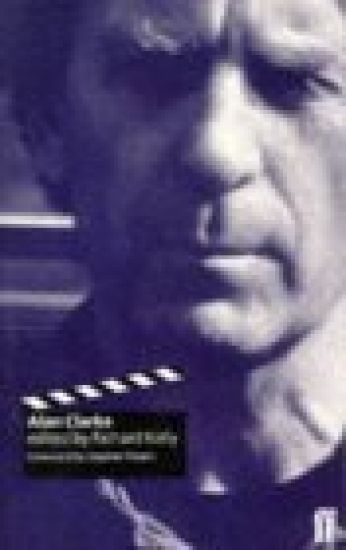
Alan Clarke

Alan Clarke

Richard T. Kelly

Faber Faber
1998
pokkari
An unusually brilliant generation of film-makers emerged from British television drama in the 1960-70s - none more formidable than Alan Clarke. Yet Clarke enjoyed only a vague renown among the public, even though some of his most incendiary productions - Scum, The Firm, Made in Britain - attracted great controversy. But he was greatly admired by his fellow professionals: 'He became the best of all of us', Stephen Frears observed after Clarke's untimely death in 1990. In his work Clarke explored working-class lives and left-wing themes with unflinching directness and humour. He forged alliances with gifted writers and producers, and his facility for encouraging stunning performaces (from Gary Oldman, Tim Roth, Ray Winstone) made him a hero amongst actors. As a man, Clarke's wit, vigour and generosity were legendary. Yet he retained a privacy which made him enigmatic and imbued his work with much of its austere radiance. This volume is a tribute to Clarke, made out of the thoughts and memories of those who worked with him and knew him best, and includes a celebatory essay by eminent critic, David Thomson.
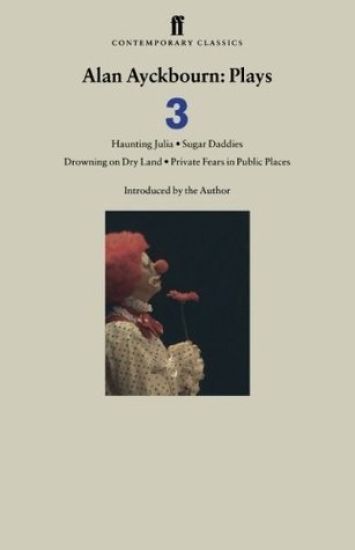
Alan Ayckbourn Plays 3

Alan Ayckbourn Plays 3

Alan Ayckbourn

Faber Faber
2005
pokkari
This third volume of Alan Ayckbourn plays includes Haunting Julia, Sugar Daddies, Drowning on Dry Land and Private Fears in Public Places, with an introduction by the author. Haunting Julia 'A play for today. It touches on the failures of education and parenting, on media pressure and overdoses. Kurt Cobain comes to mind. More universally, Haunting Julia mourns how in adolescence and adulthood, we do our loves wrong.' Financial Times Sugar Daddies 'A timely warning about the dangers of role-playing and pretence . . . But the real fascination lies in watching Ayckbourn's own transformation from social observer to impassioned moralist.' Guardian Drowning on Dry Land 'Ayckbourn at the top of his game.' Guardian 'A coruscatingly acid and funny play.' The Times Private Fears in Public Places 'Ayckbourn's construction has a masterly clarity; his writing combines ruthless observation with mature tolerance. Nobody else writing today can create a sense of a complicated little world in 90 minutes, or make banal lives seem so unforgivably interesting. Listen: it's a master's voice.' Sunday Times
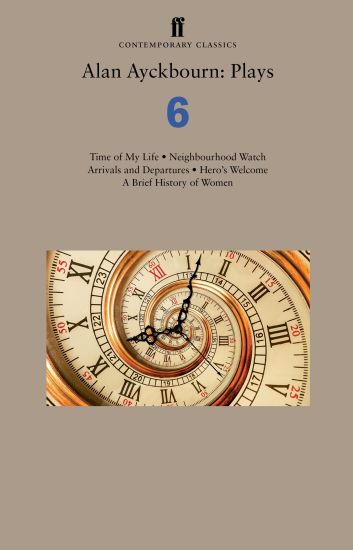
Alan Ayckbourn: Plays 6

Alan Ayckbourn: Plays 6

Alan Ayckbourn

Faber Faber
2018
pokkari
With an Introduction by the author.'The prolific master of suburban mayhem has still got his mojo.' Evening StandardTime of My Life'One of Mr. Ayckbourn's most virtuosic experiments in postmodern narrative.' Wall Street JournalNeighbourhood Watch'Ayckbourn's tartly topical, pitch-black comedy, a startling evocation of the panic induced by nightmarish notions of "broken Britain"... An arresting, nastily comic cautionary tale.' The TimesArrivals and Departures'Ayckbourn's genius lies in his ability to write what you might call 'sad comedies,' uproariously funny farces that are at second glance deeply serious, at times despairing portraits of modern middle-class life and its discontents. On occasion, as in Arrivals & Departures, he puts the despair at centre stage, and what results is a play that at bottom can no longer be called a comedy at all.' Wall Street JournalHero's Welcome 'Alan Ayckbourn is the poet laureate of missed connections. In play after pensive, droll and acid play, Ayckbourn anatomizes how we fail to understand and trust our lovers and friends.' GuardianA Brief History of Women'As A Brief History of Women follows Spates at twenty year intervals through the next sixty years, it becomes progressively more funny, more tender, more Ayckbourn. Ayckbourn knows that moments of real connection between people are hard-won and hard to forget.' The Times
Alan Purring and the Tangled Strands

Alan Purring and the Tangled Strands

Eva Prakash

Parkmoor Publishing
2019
nidottu
After engineering the artificial-intelligence-powered catbot Alan Purring three years ago, seventeen-year-old Esperanza Suarez is now a machine learning aficionado and has befriended her former bullies. But her seemingly perfect life starts to unravel when her best friend Noelle moves back to California and butts heads with her. What's worse, Esperanza's abuelita slowly begins to succumb to a deadly disease. Can Esperanza use artificial intelligence to decode the tangled strands of her grandmother's DNA and save her? Or will time slip through Esperanza's fingers and make her lose everything?
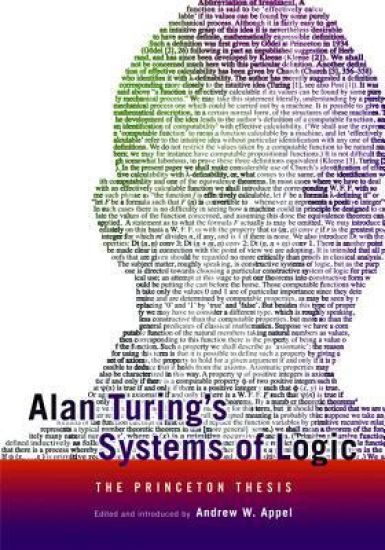
Alan Turing's Systems of Logic

Alan Turing's Systems of Logic

Princeton University Press
2012
sidottu
Between inventing the concept of a universal computer in 1936 and breaking the German Enigma code during World War II, Alan Turing (1912-1954), the British founder of computer science and artificial intelligence, came to Princeton University to study mathematical logic. Some of the greatest logicians in the world--including Alonzo Church, Kurt Godel, John von Neumann, and Stephen Kleene--were at Princeton in the 1930s, and they were working on ideas that would lay the groundwork for what would become known as computer science. This book presents a facsimile of the original typescript of Turing's fascinating and influential 1938 Princeton PhD thesis, one of the key documents in the history of mathematics and computer science. The book also features essays by Andrew Appel and Solomon Feferman that explain the still-unfolding significance of the ideas Turing developed at Princeton. A work of philosophy as well as mathematics, Turing's thesis envisions a practical goal--a logical system to formalize mathematical proofs so they can be checked mechanically. If every step of a theorem could be verified mechanically, the burden on intuition would be limited to the axioms. Turing's point, as Appel writes, is that "mathematical reasoning can be done, and should be done, in mechanizable formal logic." Turing's vision of "constructive systems of logic for practical use" has become reality: in the twenty-first century, automated "formal methods" are now routine. Presented here in its original form, this fascinating thesis is one of the key documents in the history of mathematics and computer science.
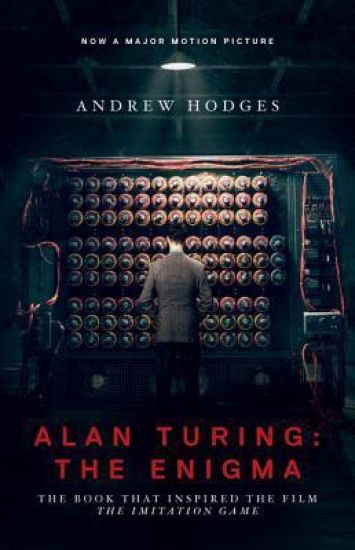
Alan Turing: The Enigma: The Book That Inspired the Film the Imitation Game - Updated Edition
A NEW YORK TIMES BESTSELLER The official book behind the Academy Award-winning film The Imitation Game, starring Benedict Cumberbatch and Keira Knightley It is only a slight exaggeration to say that the British mathematician Alan Turing (1912-1954) saved the Allies from the Nazis, invented the computer and artificial intelligence, and anticipated gay liberation by decades--all before his suicide at age forty-one. This New York Times bestselling biography of the founder of computer science, with a new preface by the author that addresses Turing's royal pardon in 2013, is the definitive account of an extraordinary mind and life. Capturing both the inner and outer drama of Turing's life, Andrew Hodges tells how Turing's revolutionary idea of 1936--the concept of a universal machine--laid the foundation for the modern computer and how Turing brought the idea to practical realization in 1945 with his electronic design. The book also tells how this work was directly related to Turing's leading role in breaking the German Enigma ciphers during World War II, a scientific triumph that was critical to Allied victory in the Atlantic. At the same time, this is the tragic account of a man who, despite his wartime service, was eventually arrested, stripped of his security clearance, and forced to undergo a humiliating treatment program--all for trying to live honestly in a society that defined homosexuality as a crime. The inspiration for a major motion picture starring Benedict Cumberbatch and Keira Knightley, Alan Turing: The Enigma is a gripping story of mathematics, computers, cryptography, and homosexual persecution.
Alan Turing's Systems of Logic

Alan Turing's Systems of Logic

Princeton University Press
2014
pokkari
Between inventing the concept of a universal computer in 1936 and breaking the German Enigma code during World War II, Alan Turing (1912-1954), the British founder of computer science and artificial intelligence, came to Princeton University to study mathematical logic. Some of the greatest logicians in the world--including Alonzo Church, Kurt Godel, John von Neumann, and Stephen Kleene--were at Princeton in the 1930s, and they were working on ideas that would lay the groundwork for what would become known as computer science. This book presents a facsimile of the original typescript of Turing's fascinating and influential 1938 Princeton PhD thesis, one of the key documents in the history of mathematics and computer science. The book also features essays by Andrew Appel and Solomon Feferman that explain the still-unfolding significance of the ideas Turing developed at Princeton. A work of philosophy as well as mathematics, Turing's thesis envisions a practical goal--a logical system to formalize mathematical proofs so they can be checked mechanically. If every step of a theorem could be verified mechanically, the burden on intuition would be limited to the axioms. Turing's point, as Appel writes, is that "mathematical reasoning can be done, and should be done, in mechanizable formal logic." Turing's vision of "constructive systems of logic for practical use" has become reality: in the twenty-first century, automated "formal methods" are now routine. Presented here in its original form, this fascinating thesis is one of the key documents in the history of mathematics and computer science.
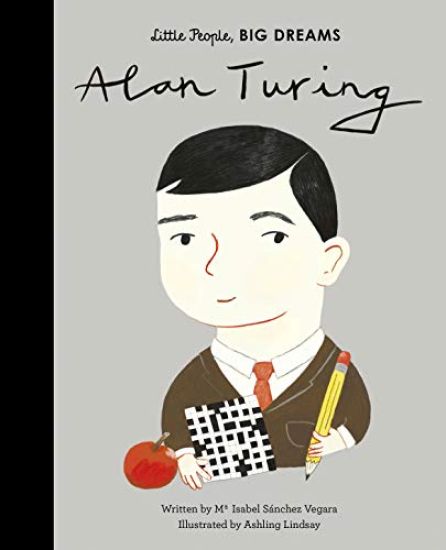
Alan Turing

Alan Turing

Maria Isabel Sanchez Vegara

Frances Lincoln Childrens Books
2020
sidottu
In this book from the critically acclaimed, multimillion-copy bestselling Little People, BIG DREAMS series, discover the life of Alan Turing, the genius code cracker and father of theoretical computer science and artificial intelligence. Alan grew up in England, where his best friends were numbers and a little boy called Christopher. When his young friend died, Alan retreated to the world of numbers and codes, where he discovered how to crack the code of the Nazi Enigma machine. This moving book features stylish and quirky illustrations and extra facts at the back, including a biographical timeline with historical photos and a detailed profile of the brilliant mathematician's life.Little People, BIG DREAMS is a bestselling biography series for kids that explores the lives of outstanding people, from designers and artists to scientists and activists. All of them achieved incredible things, yet each began life as a child with a dream. This empowering series of books offers inspiring messages to children of all ages, in a range of formats. The board books are told in simple sentences, perfect for reading aloud to babies and toddlers. The hardback and paperback versions present expanded stories for beginning readers. With rewritten text for older children, the treasuries each bring together a multitude of dreamers in a single volume. You can also collect a selection of the books by theme in boxed gift sets. Activity books and a journal provide even more ways to make the lives of these role models accessible to children.Inspire the next generation of outstanding people who will change the world with Little People, BIG DREAMS!
Alan Moorehead

Alan Moorehead

Tom Pocock

VINTAGE
1991
pokkari
Alan Moorehead was lionised as a literary man of action: the most famous war correspondent of the Second World War; Drawing on Moorehead's diaries and correspondence, as well as interviews with his family and friends, Tom Pocock tells the story of a thrilling, but ultimately tragic, life.
Alan Fletcher; 100 Maverick Postcards
This collection of one hundred quirky and original postcards, inspired by the award-winning The Art of Looking Sideways, has been created and chosen by Alan Fletcher, one of the world's leading designers, and a founder member of the design group Pentagram. A witty and entertaining feast for the eye and the mind, these postcards are presented in an attractive wooden box and will especially appeal to the creative and visually aware.
Alan Bennett

Alan Bennett

Kara McKechnie

Manchester University Press
2007
nidottu
Alan Bennett is one of the UK’s most well-known and successful writers. His oeuvre is one where populist art forms and intellectually complex arguments co-exist seamlessly, allowing the work to appeal to a wide audience. Bennett’s familiar voice combines both an appreciation for the past with a critical assessment of contemporary Britain, often through relentlessly detailed observation of himself and of others. Bennett has acted, written, directed, presented or edited in almost every conceivable dramatic medium, including stage, television, radio, film and print media. This book is the first to focus on his often neglected work for television, from the mid-1960s right through to the present. It encompasses formats such as the single play (the rarely seen 1970s collaborations with Stephen Frears and Lindsay Anderson), the two Talking Heads series, perceived as a reinvention of the television monologue, and his autobiographical documentaries. While providing a context of television drama in which Bennett’s output is embedded, this study also provides compact overviews of his work in other media. The book is intended for those interested in Alan Bennett, his many voices and the history of television drama.
Alan Clarke

Alan Clarke

Dave Rolinson

Manchester University Press
2005
sidottu
The British television director Alan Clarke is primarily associated with the visceral social realism of such works as his banned borstal play 'Scum', and his study of football hooliganism, 'The Firm'. This book uncovers the full range of his work from the mythic fantasy of Penda’s Fen, to the radical short film on terrorism, 'Elephant'. Dave Rolinson uses original research to examine the development of Clarke’s career from the theatre and the ‘studio system’ of provocative television play strands of the 1960s and 1970s, to the increasingly personal work of the 1980s, which established him as one of Britain’s greatest auteur directors.'Alan Clarke' examines techniques of television direction, and proposes new methodologies as it questions the critical neglect of directors in what is traditionally seen as a writer’s medium. It raises crucial issues in television studies, including aesthetics, authorship, censorship, the convergence of film and television, drama-documentary form, narrative and realism.
Alan Clarke

Alan Clarke

Dave Rolinson

Manchester University Press
2011
nidottu
The British television director Alan Clarke is primarily associated with the visceral social realism of such works as his banned borstal play Scum, and his study of football hooliganism, The Firm. This book uncovers the full range of his work from the mythic fantasy of Penda's Fen, to the radical short film on terrorism, Elephant. Dave Rolinson uses original research to examine the development of Clarke's career from the theatre and the 'studio system' of provocative television play strands of the 1960s and 1970s, to the increasingly personal work of the 1980s, which established him as one of Britain's greatest directors.Alan Clarke examines techniques of television direction, and proposes new methodologies as it questions the critical neglect of directors in what is traditionally seen as a writer's medium. It raises crucial issues in television studies, including aesthetics, authorship, censorship, the convergence of film and television, drama-documentary form, narrative and realism.
Alan Moore and the Gothic Tradition

Alan Moore and the Gothic Tradition

Manchester University Press
2013
sidottu
The first book-length study to address Moore’s significance to the Gothic, this volume is also the first to provide in-depth analyses of his spoken-word performances, poetry and prose, as well as his comics and graphic novels. The essays collected here identify the Gothic tradition as perhaps the most significant cultural context for understanding Moore’s work, providing unique insight into its wider social and political dimensions as well as addressing key theoretical issues in Gothic Studies, Comics Studies and Adaptation Studies. Scholars, students and general readers alike will find fresh insights into Moore’s use of horror and terror, homage and parody, plus allusion and adaptation. The international list of contributors includes leading researchers in the field and the studies presented here enhance the understanding of Moore’s works while at the same time exploring the ways in which these serve to advance a broader appreciation of Gothic aesthetics.