
Kirjahaku
Etsi kirjoja tekijän nimen, kirjan nimen tai ISBN:n perusteella.
1000 tulosta hakusanalla Albrecht Erlenmeyer

Albrecht Du Rer's Tagebuch Der Reise in Die Niederlande. Erste Vollsta Ndige Ausgabe, Nach Der Handschrift J. Hauer's. Mit Einleitung Und Anmerkungen Herausgegeben Von F. Leitschuh
Albrecht Duerer; Friedrich Leitschuh
British Library, Historical Print Editions
2011
pokkari

Engravings and Etching by Albrecht Durer: May 1-25, 1929
Albrecht Durer
Literary Licensing, LLC
2012
sidottu
Engravings and Etchings by Albrecht Durer: May 1-25, 1929 is a book that showcases the works of the famous German artist Albrecht Durer. The book was published by Knoedler and Company, a renowned art dealer and gallery based in New York City. The book contains a collection of engravings and etchings created by Durer, who is considered one of the greatest artists of the Renaissance period. The engravings and etchings featured in the book are from an exhibition held at Knoedler and Company from May 1-25, 1929. The book includes detailed descriptions of each artwork, as well as background information on Durer's life and artistic style. This book is a must-have for art enthusiasts and collectors who appreciate the works of Albrecht Durer.This scarce antiquarian book is a facsimile reprint of the old original and may contain some imperfections such as library marks and notations. Because we believe this work is culturally important, we have made it available as part of our commitment for protecting, preserving, and promoting the world's literature in affordable, high quality, modern editions, that are true to their original work.

Engravings and Etching by Albrecht Durer: May 1-25, 1929
Albrecht Durer
Literary Licensing, LLC
2012
nidottu

This work has been selected by scholars as being culturally important, and is part of the knowledge base of civilization as we know it. This work was reproduced from the original artifact, and remains as true to the original work as possible. Therefore, you will see the original copyright references, library stamps (as most of these works have been housed in our most important libraries around the world), and other notations in the work.This work is in the public domain in the United States of America, and possibly other nations. Within the United States, you may freely copy and distribute this work, as no entity (individual or corporate) has a copyright on the body of the work.As a reproduction of a historical artifact, this work may contain missing or blurred pages, poor pictures, errant marks, etc. Scholars believe, and we concur, that this work is important enough to be preserved, reproduced, and made generally available to the public. We appreciate your support of the preservation process, and thank you for being an important part of keeping this knowledge alive and relevant.

Albrecht Krause's Darstellung Der Kantischen Raumtheorie Und Der Kantischen Lehre Von Den Gegenstanden
John Mourly Vold
Kessinger Pub
2009
pokkari

Albrecht Ritschl Und Seine Schuler Im Verhaltnis Zur Theologie, Zur Philosophie Und Zur Frommigkeit Unsrer Zeit
Johannes Wendland
Kessinger Pub
2009
pokkari

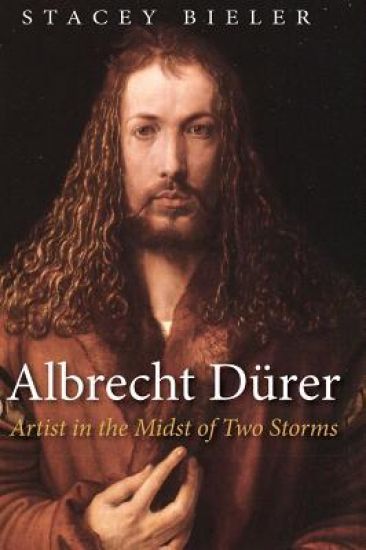
The artist and entrepreneur Albrecht Durer lived in Germany in the early 1500s, when two storms were threatening the Holy Roman Empire. First, Suleiman the Magnificent and his army of Ottoman Turks were expanding from Constantinople to Vienna, the doorstep of Europe. Second, Martin Luther, a German monk and professor, wrote his Ninety-Five Theses identifying corruption within the Roman Catholic Church. This challenged the authority of both Emperor Charles V and Pope Leo X, who responded by accusing Luther of heresy. Albrecht Durer influenced art and media throughout Europe as strongly as Martin Luther influenced people's views of life, death, and their relationship with God. Durer's art and writing reveal how this creative and thoughtful man responded to the changes offered by Luther. Why was Durer so attracted to Luther's writings? Why would he risk being accused of being a heretic? Both of these men inspired changes in art, religion, and politics that still underlie the foundation of today's social structures and Western culture. ""Stacey Bieler's beautifully (and intelligently) illustrated study of Albrecht Durer shows convincingly why she is such an important guide to the reformation era. Her text and well-chosen Durer prints and paintings explain with particular clarity why Luther became such an important figure in the artist's life. It is a book to broaden historical understanding but also to delight the eye."" --Mark Noll, McAnaney Professor of History Emeritus at the University Notre Dame Stacey Bieler, an independent historian, also wrote ""Patriots"" or ""Traitors""? A History of American-Educated Chinese Students (2004) and coedited (with Carol Hamrin) the three-volume set about Chinese Christians called Salt and Light (Pickwick, 2009-2011).
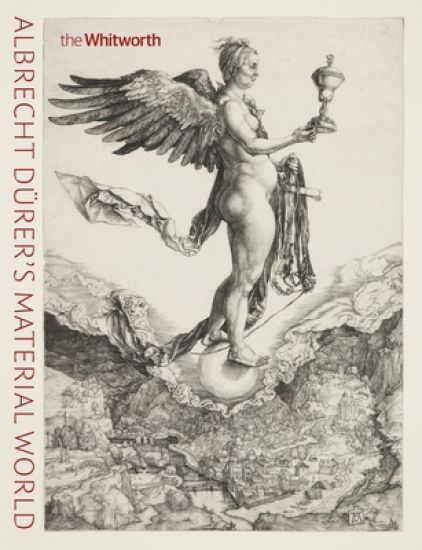
Albrecht DüRer’s Material World
MANCHESTER UNIVERSITY PRESS
2023
nidottu
The painter and printmaker Albrecht Dürer is one of the most important figures of the German Renaissance. This book accompanies the first major exhibition of the Whitworth Art Gallery’s outstanding Dürer collection in over half a century. It offers a new perspective on Dürer as an intense observer of the worlds of manufacture, design and trade that fill his graphic art.Artworks and artefacts examined here expose understudied aspects of Dürer’s art and practice, including his attentive examination of objects of daily domestic use, his involvement in economies of local manufacture and exchange, the microarchitectures of local craft and, finally, his attention to cultures of natural and philosophical inquiry and learning.

The artist and entrepreneur Albrecht Durer lived in Germany in the early 1500s, when two storms were threatening the Holy Roman Empire. First, Suleiman the Magnificent and his army of Ottoman Turks were expanding from Constantinople to Vienna, the doorstep of Europe. Second, Martin Luther, a German monk and professor, wrote his Ninety-Five Theses identifying corruption within the Roman Catholic Church. This challenged the authority of both Emperor Charles V and Pope Leo X, who responded by accusing Luther of heresy.Albrecht Durer influenced art and media throughout Europe as strongly as Martin Luther influenced people's views of life, death, and their relationship with God. Durer's art and writing reveal how this creative and thoughtful man responded to the changes offered by Luther. Why was Durer so attracted to Luther's writings? Why would he risk being accused of being a heretic? Both of these men inspired changes in art, religion, and politics that still underlie the foundation of today's social structures and Western culture.

This valuable collection of essays reveals the insights of a brilliant soil scientist who was ahead of his time. In this volume, readers will find a carefully organized and convincing explanation of the relationship between plants and animals. Dr. William Albrecht sustains his theory and observation that a declining soil fertility, due to a lack of organic material, major elements, and trace minerals - or a marked imbalance in these nutrients - was responsible for poor crops and in turn for pathological conditions in animals fed deficient feeds from soils. These papers addressed to scientists, and especially to farmers who worked with nature are an invaluable foundation for anyone interested in sustainable agriculture.

The first independent or ‘pure’ landscapes in Western art were produced in southern Germany in the first decades of the sixteenth century. They were painted, drawn and etched by Albrecht Altdorfer of Regensburg and his only slightly less flamboyant contemporary Wolf Huber of Passau. These radical experiments in landscape appeared without advance notice and disappeared from view almost as suddenly.Altdorfer converted outdoor settings into a theatre for stylish draughtsmanship and extravagant colour effects. At the same time, his landscapes offered a densely textured interpretation of that quintessentially German locus, the forest interior. In this revealing study, now available in a revised and expanded second edition, Christopher S. Wood shows how Altdorfer prised landscape out of its subsidiary role as setting and background for narrative history painting and devotional works, and gave it a new, independent life of its own.