Kirjojen hintavertailu. Mukana 12 390 323 kirjaa ja 12 kauppaa.

Kirjahaku

Etsi kirjoja tekijän nimen, kirjan nimen tai ISBN:n perusteella.

1000 tulosta hakusanalla Alexis Martin

Alexis

Alexis

Dianne Harman

Createspace Independent Publishing Platform
2016
pokkari
Is Alexis doomed to a life of food misery or is there a happy ever after for her?A gift of weight loss surgery... A string of event no one could have foreseen.A woman who now has a glamorous face and body...and a romance.But will her midlife victory become hollow when his ex-wife wants to reconcile?You can't read about Alexis' trials and tribulations without rooting for her every step of the way.From a two-time USA Today Bestselling Author comes the first in the Midlife Journey Series.Scroll up and click on Buy Now.
Alexis

Alexis

Nancy Kleso Szabo

Hawes Jenkins
2024
pokkari
Matt had been sexually abusing Alexis for fourteen years. It started after their son, Jimmy, had been born. After sexually abusing her with a mini-baseball bat, Matt gave her the option, "Okay, Alexis, you or the baby. Make your choice now."She pleaded with him. "Matt, please don't touch the baby. Do anything to me, but please, please don't touch the baby.""Okay, Alexis, one word to authorities, one sound comes out of you, and I go straight to that miserable piece of crap that came out of you. You know I can't control myself once I get that urge. Yeah, yeah, I know he's my kid, but I have no control, you know that. Watch what you say and do. It might turn out to be both of you when I get like this," said Matt.Just after he turned fourteen, Jimmy was killed in a drive-by shooting. Alexis was devastated. She missed her baby. She was heartbroken. It was a horrible way for it to happen, but it became her way out. Now all her fantasies of how to leave Matt could be realized.Will she make it? Will she be able to get away before the urge to use the bat on her again overtakes him? She knew if she got away and he found her, he would kill her. He had a girlfriend. In the past, it always saved her when he had a girlfriend. She didn't understand why that worked in her favor, but she'd take it.
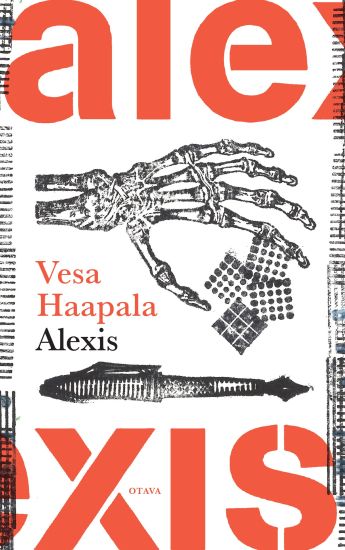
Alexis

Alexis

Vesa Haapala

Otava
2023
sidottu
Rujonkaunis romaani Aleksis Kiven kohtalonvuosista on traaginen kuvaus kirjailijasta, joka ei löydä paikkaansa maailmassa.Nälkävuosien kaataessa kansaa Alexis elää Charlotta Lönnqvistin hyväntahdon varassa Fanjunkarsin torpassa ja kirjoittaa kirjaa seitsemästä miehestä. Hän on demoniensa riivaama eikä tunne kuuluvansa joukkoon missään: ei talonpoikain työteliäässä seurassa eikä Helsingin seurapiireissä, joiden tunnustuksesta ja taloudellisesta tuesta hän on riippuvainen. Luonto, haaveet ja kirjallisuus ovat hänen kotinsa.”Täällä pitkien taivalten ja vähien lukijoiden maassa ei kirjoittajalla ole muuta kuin oma uskonsa ja hiukan niiden uskoa, jotka näkevät kauemmaksi.”
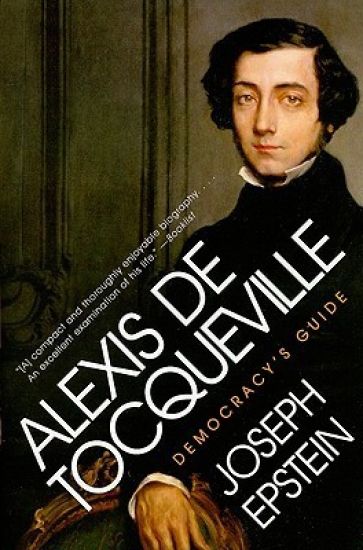
Alexis de Tocqueville

Alexis de Tocqueville

Joseph Epstein

HARPERCOLLINS PUBLISHERS INC
2009
nidottu
Part of the acclaimed Eminent Lives series, Alexis de Tocqueville dissects the legacy of the celebrated cultural observer. Joseph Epstein, distinguished literary historian and author of the bestselling Snobbery: The American Version, provides a fresh account of the celebrated writer's classic travels in America, and compares what de Tocqueville witnessed to the current state of our nation.
Alexis de Tocqueville: Selected Letters on Politics and Society

Alexis de Tocqueville: Selected Letters on Politics and Society

Alexis de Tocqueville

University of California Press
2022
pokkari
This title opens a new window into the life and thought of Alexis de Tocqueville, presenting him as not only a political thinker but also a person deeply shaped by the tensions and ideals of his time. Known for Democracy in America, Tocqueville’s insights into American democracy have often overshadowed his reflections on French society, friendship, and personal struggles. This compilation of letters, many unpublished in English before, spans his political career, his friendships, and his inner conflicts, revealing his ongoing battle between intellectual ideals and the harsh realities of the political landscape. His letters bring to light a Tocqueville who was both drawn to political action and increasingly disillusioned by the self-serving nature of his era’s middle class. Tocqueville’s correspondence reveals a figure influenced by both Enlightenment rationalism and Romanticism’s emphasis on feeling and individuality. While often critical of Romantic melancholy, he was himself plagued by existential doubt and frustration over the limited impact of his political actions. He viewed society’s growing emphasis on materialism and self-interest as symptoms of a broader decline, leaving him torn between admiration for civic virtues and disappointment in the era’s lack of ambition. Religion and friendship emerge as stabilizing forces in his life, with his close bond with Gustave de Beaumont standing out as a source of both comfort and challenge. The letters show how Tocqueville’s personal relationships and ethical convictions shaped his intellectual pursuits and his concerns for France’s future. The editors, Roger Boesche and James Toupin, present these letters with careful translation and thorough contextual notes, giving readers both the historical background and access to Tocqueville’s unique literary style. The work provides readers with a portrait of a man wrestling with the challenges of his age, caught between democratic ideals and the evolving reality of French society. For modern readers, these letters illuminate how Tocqueville’s personal struggles informed his enduring political insights, highlighting his belief in community and civic duty as essential defenses against tyranny. This title is part of UC Press's Voices Revived program, which commemorates University of California Press’s mission to seek out and cultivate the brightest minds and give them voice, reach, and impact. Drawing on a backlist dating to 1893, Voices Revived makes high-quality, peer-reviewed scholarship accessible once again using print-on-demand technology. This title was originally published in 1985.
Alexis de Tocqueville: Selected Letters on Politics and Society

Alexis de Tocqueville: Selected Letters on Politics and Society

Alexis de Tocqueville

University of California Press
2022
sidottu
This title opens a new window into the life and thought of Alexis de Tocqueville, presenting him as not only a political thinker but also a person deeply shaped by the tensions and ideals of his time. Known for Democracy in America, Tocqueville’s insights into American democracy have often overshadowed his reflections on French society, friendship, and personal struggles. This compilation of letters, many unpublished in English before, spans his political career, his friendships, and his inner conflicts, revealing his ongoing battle between intellectual ideals and the harsh realities of the political landscape. His letters bring to light a Tocqueville who was both drawn to political action and increasingly disillusioned by the self-serving nature of his era’s middle class. Tocqueville’s correspondence reveals a figure influenced by both Enlightenment rationalism and Romanticism’s emphasis on feeling and individuality. While often critical of Romantic melancholy, he was himself plagued by existential doubt and frustration over the limited impact of his political actions. He viewed society’s growing emphasis on materialism and self-interest as symptoms of a broader decline, leaving him torn between admiration for civic virtues and disappointment in the era’s lack of ambition. Religion and friendship emerge as stabilizing forces in his life, with his close bond with Gustave de Beaumont standing out as a source of both comfort and challenge. The letters show how Tocqueville’s personal relationships and ethical convictions shaped his intellectual pursuits and his concerns for France’s future. The editors, Roger Boesche and James Toupin, present these letters with careful translation and thorough contextual notes, giving readers both the historical background and access to Tocqueville’s unique literary style. The work provides readers with a portrait of a man wrestling with the challenges of his age, caught between democratic ideals and the evolving reality of French society. For modern readers, these letters illuminate how Tocqueville’s personal struggles informed his enduring political insights, highlighting his belief in community and civic duty as essential defenses against tyranny. This title is part of UC Press's Voices Revived program, which commemorates University of California Press’s mission to seek out and cultivate the brightest minds and give them voice, reach, and impact. Drawing on a backlist dating to 1893, Voices Revived makes high-quality, peer-reviewed scholarship accessible once again using print-on-demand technology. This title was originally published in 1985.
Alexis de Tocqueville, the First Social Scientist

Alexis de Tocqueville, the First Social Scientist

Jon Elster

Cambridge University Press
2009
sidottu
The book proposes a new interpretation of Alexis de Tocqueville that views him first and foremost as a social scientist rather than as a political theorist. Drawing on his earlier work on the explanation of social behavior, Elster argues that Tocqueville's main claim to our attention today rests on the large number of exportable causal mechanisms to be found in his work, many of which are still worthy of further exploration. Elster proposes a novel reading of Democracy in America in which the key explanatory variable is the rapid economic and political turnover rather than equality of wealth at any given point in time. He also offers a reading of The Ancien Régime and the Revolution as grounded in the psychological relations among the peasantry, the bourgeoisie, and the nobility. Consistently going beyond exegetical commentary, he argues that Tocqueville is eminently worth reading today for his substantive and methodological insights.
Alexis de Tocqueville, the First Social Scientist

Alexis de Tocqueville, the First Social Scientist

Jon Elster

Cambridge University Press
2009
pokkari
The book proposes a new interpretation of Alexis de Tocqueville that views him first and foremost as a social scientist rather than as a political theorist. Drawing on his earlier work on the explanation of social behavior, Elster argues that Tocqueville's main claim to our attention today rests on the large number of exportable causal mechanisms to be found in his work, many of which are still worthy of further exploration. Elster proposes a novel reading of Democracy in America in which the key explanatory variable is the rapid economic and political turnover rather than equality of wealth at any given point in time. He also offers a reading of The Ancien Régime and the Revolution as grounded in the psychological relations among the peasantry, the bourgeoisie, and the nobility. Consistently going beyond exegetical commentary, he argues that Tocqueville is eminently worth reading today for his substantive and methodological insights.
Alexis Piron, Poete (1689-1773)

Alexis Piron, Poete (1689-1773)

Pascale Verèb

Voltaire Foundation
1997
sidottu
L’échec de Piron fascine: homme de scène parmi les plus doués de son siècle, il fut l’un des trois premiers auteurs dramatiques de son temps, poète d’une virtuosité presque sans exemple depuis les rhétoriqueurs, si redoutable bretteur dans l’art de manier l’épigramme qu’il fut reconnu au moins aussi talentueux polémiste que Voltaire, dialoguiste de théâtre éblouissant particulièrement dans l’art si difficile du vers dramatique, Piron n’est plus, dans nos manuels de littérature, que le ‘célèbre poète grivois’ d’une Ode a Priape. Ce volume dans la tradition monographique française interroge ce cliché en présentant la vie et l’œuvre d’Alexis Piron (1689-1773), auteur d’origine bourguignonne aujourd’hui relégué parmi les minores. Cette étude, en s’appuyant sur nombre de manuscrits, éditions rares et archives jusque-là inédites, dessine dans sa première partie une sociologie comparée fort éclairante de la vie littéraire parisienne dans les dernières décennies de l’Ancien Régime. Tel un Fréron qui aurait troqué une sévérité bas-bretonne pour le laisser-aller bachique du Bourguignon, Piron, chroniqueur littéraire et épistolier infatigable, évoque sans aménité le statut de l’écrivain de théâtre face aux Comédiens et aux libraires, et met en scène l’équivoque rapport que l’amuseur-poète, homme de lettres ‘sans état ni condition’, doit entretenir avec ses protecteurs, leur dédiant pièces de circonstance mais aussi bacchanales et autres hymnes ithyphalliques. Son œuvre foraine, ensemble de pièce oxymoriques alliant réalisme et merveilleux et usant de tous les procèdes de ce genre protéiforme, lui permit de se faire connaître mais ce sont surtout ses comédies, dont la plus célèbre, La Métromanie ou le Poète, qui le rendirent célèbre. Ces pièces sont révélatrices d’une ‘dramaturgie mêlée’ qui tente de concilier, parfois avec succès, projets de renouvellement et forme soumise aux attentes du public. Quant à son œuvre tragique, elle est significative d’un théâtre de transition aboutissant au drame historique du siècle suivant dont les tragédies hésitante de Gustave Wasa ou de Fernand Cortès ne sont que le ferment. De l’œuvre se dégage une esthétique particulière, réhabilitation du baroque et du burlesque, du désordre, de l’irrégularité, que l’analyse a cherché à mettre en évidence. L’étude de cet auteur plus parisien que dijonnais, au style épistolaire et poétique si brillant à en rendre jaloux Voltaire, permet aussi de mieux appréhender ce qu’est ‘un poète’ au temps de la ‘crise de la poésie française’.
Alexis de Tocqueville and the Art of Democratic Statesmanship
In 1835, Alexis de Tocqueville famously called for 'a new political science' that could address the problems and possibilities of a 'world itself quite new.' For Tocqueville, the democratic world needed not just a new political science but also new arts of statesmanship and leadership. In this volume, Brian Danoff and L. Joseph Hebert, Jr., have brought together a diverse set of essays revealing that Tocqueville's understanding of democratic statesmanship remains highly relevant today. The first chapter of the book is a new translation of Tocqueville's 1852 address to the Academy of Moral and Political Sciences, in which Tocqueville offers a profound exploration of the relationship between theory and practice, and between statesmanship and political philosophy. Subsequent chapters explore the relationship between Tocqueville's ideas on statesmanship, on the one hand, and the ideas of Plato, Aristotle, Machiavelli, Montesquieu, the Puritans, the Framers of the U.S. Constitution, Oakeshott, Willa Cather, and the Second Vatican Council, on the other. Timely and provocative, these essays show the relevance of Tocqueville's theory of statesmanship for thinking about such contemporary issues as the effects of NGOs on civic life, the powers of the American presidency, the place of the jury in a democratic polity, the role of religion in public life, the future of democracy in Europe, and the proper balance between liberalism and realism in foreign policy.
Alexis de Tocqueville and the Art of Democratic Statesmanship
In 1835, Alexis de Tocqueville famously called for 'a new political science' that could address the problems and possibilities of a 'world itself quite new.' For Tocqueville, the democratic world needed not just a new political science but also new arts of statesmanship and leadership. In this volume, Brian Danoff and L. Joseph Hebert, Jr., have brought together a diverse set of essays revealing that Tocqueville's understanding of democratic statesmanship remains highly relevant today. The first chapter of the book is a new translation of Tocqueville's 1852 address to the Academy of Moral and Political Sciences, in which Tocqueville offers a profound exploration of the relationship between theory and practice, and between statesmanship and political philosophy. Subsequent chapters explore the relationship between Tocqueville's ideas on statesmanship, on the one hand, and the ideas of Plato, Aristotle, Machiavelli, Montesquieu, the Puritans, the Framers of the U.S. Constitution, Oakeshott, Willa Cather, and the Second Vatican Council, on the other. Timely and provocative, these essays show the relevance of Tocqueville's theory of statesmanship for thinking about such contemporary issues as the effects of NGOs on civic life, the powers of the American presidency, the place of the jury in a democratic polity, the role of religion in public life, the future of democracy in Europe, and the proper balance between liberalism and realism in foreign policy.
Alexis de Tocqueville and American Intellectuals

Alexis de Tocqueville and American Intellectuals

Matthew Mancini

Rowman Littlefield Publishers
2005
sidottu
In this groundbreaking new work, Matthew Mancini tells the surprising story of Alexis de Tocqueville's reception in American thought and culture from the time of his 1831 visit to the United States to the turn of the twenty-first century. The author uncovers an historical record that is replete with unmistakable evidence of Tocqueville's continuing importance to American intellectuals throughout the post-Civil War period of his supposed oblivion, and also of his reputation being exaggerated by recent historians referring to the post-World War II decades. Through comprehensive analysis of Tocqueville's published works, Mancini critically examines the ways in which Tocqueville's ideas have been received and, at times, misunderstood. Mancini challenges almost every element of the common understanding of Tocqueville's reception into American intellectual culture while recovering and re-examining many important intellectuals of the last 150 years. In doing so, Mancini inscribes an important chapter in American cultural history, namely the idea of Tocqueville himself.
Alexis Korner

Alexis Korner

Harry Shapiro

Bloomsbury Publishing PLC
1997
nidottu
By the time Alexis Korner died, aged 55, on New Years Day 1984, he had secured himself a place in history. Dubbed "the father of British blues", he had become a mentor to generations of musicians. Out of Blues Incorporated, Korner's original band, came bands, such as the Rolling Stones, Cream, the Animals, Free and Led Zeppelin. Others to come under his influence ranged from the Beatles and Elton John to Alison Moyet and Paul Young. In writing Korner's life-story, Harry Shapiro has had the co-operation of his subject's family and estate, access to her personal papers, tapes and memorabilia, and the assistance of many of the rock stars, including Keith Richards, Mick Jagger, Bill Wyman and Pete Townshend, who benefited so much from Korner's friendship and influence.This biography recounts: Korner's early life travelling around Europe and North Africa; his settling in wartime London and pretending to be in the Free French Army while discovering jazz and blues from records stolen from Soho shops; his membership of Chris Barber's jazz band; his role in the development of skiffle; his founding, with Cyril Davies, of the Blues and Barrelhouse Club and of Blues Incorporated; his inspirational effect on younger musicians; and his immense success with his Sunday evening Radio 1 show, "Blues is Where You Hear It", which ran for 20 years. The book includes a comprehensive discography of Alexis Korner's numerous recordings. Harry Shapiro is the author of "Waiting for the Man: The Story of Drugs and Popular Music", "Slowhand: The Story of Eric Clapton", "Jimi Hendrix: Electric Gypsy", "Eric Clapton: Lost in the Blues" and "Graham Bond: The Mighty Shadow".
Alexis de Tocqueville and the Second Republic, 1848-1852

Alexis de Tocqueville and the Second Republic, 1848-1852

Sharon B. Watkins

University Press of America
2003
nidottu
Drawing upon a variety of primary sources, this work scrutinizes Tocqueville's actual political action in 1848-1852 and suggests his famous Souvenirs (Recollections) reflect second thoughts more than deeds. As a pragmatic strategist operating from a small left-center faction, Tocqueville attempted to construct a future France uniting political liberty (including universal manhood suffrage) with social stability. The book details Tocqueville's contribution to the new constitution and concludes he deliberately strengthened the executive branch to counterbalance the strong unicameral legislature. While opposed to socialism, he advocated major advances in public education and government assistance to the poor. The work explores his relationship with Louis Napoléon Bonaparte. Tocqueville cultivated friendship with President Bonaparte, whom he hoped to utilize for his own political purposes. Tocqueville eagerly became Lois Napoléon's Foreign Minister and shared his desire for liberalizing the Papal government of Rome while suppressing domestic radicalism. As President Bonaparte approached the end of his constitutionally allowable term, Tocqueville advocated amendment of the constitution (unsuccessfully) and an illegal election to allow Louis Napoléon to retain power. He considered this the best option for preserving order and some liberty. However, he opposed Presidential use of military force and protested the coup of December 2, 1851. Ultimately Tocqueville blamed extremists, both socialists and reactionaries, for the destruction of the moderate republic he had labored to found.
Alexis in America

Alexis in America

Lee A. Farrow

Louisiana State University Press
2014
sidottu
In the autumn of 1871, Alexis Romanov, the fourth son of Tsar Alexander II of Russia, set sail from his homeland for an extended journey through the United States and Canada. A major milestone in U.S.-Russia relations, the tour also served Duke Alexis's family by helping to extricate him from an unsuitable romantic entanglement with the daughter of a poet. Alexis in America recounts the duke's progress through the major American cities, detailing his meetings with celebrated figures such as Samuel Morse and Henry Wadsworth Longfellow and describing the national self-reflection that his presence spurred in the American people. The first Russian royal ever to visit the United States, Alexis received a tour through post-Civil War America that emphasized the nation's cultural unity. While the enthusiastic American media breathlessly reported every detail of his itinerary and entourage, Alexis visited Niagara Falls, participated in a bison hunt with Buffalo Bill Cody, and attended the Krewe of Rex's first Mardi Gras parade in New Orleans. As word of the royal visitor spread, the public flocked to train depots and events across the nation to catch a glimpse of the grand duke. Some speculated that Russia and America were considering a formal alliance, while others surmised that he had come to the United States to find a bride. The tour was not without incident: many city officials balked at spending public funds on Alexis's reception, and there were rumors of an assassination plot by Polish nationals in New York City. More broadly, the visit highlighted problems on the national level, such as political corruption and persistent racism, as well as the emerging cultural and political power of ethnic minorities and the continuing sectionalism between the North and the South. Lee Farrow joins her examination of these cultural underpinnings to a lively narrative of the grand duke's tour, creating an engaging record of a unique moment in international relations.